Matthew 11
Η Καινή Διαθήκη · Tap a verse to see its cross-references.
The Pharisees reject Jesus as Messiah
1Καὶ ἐγένετο, ὅτε ἐτέλεσεν ὁ Ἰησοῦς διατάσσων τοῖς δώδεκα μαθηταῖς αὐτοῦ, μετέβη ἐκεῖθεν τοῦ διδάσκειν καὶ κηρύσσειν ἐν ταῖς πόλεσιν αὐτῶν.
John needs reassuring
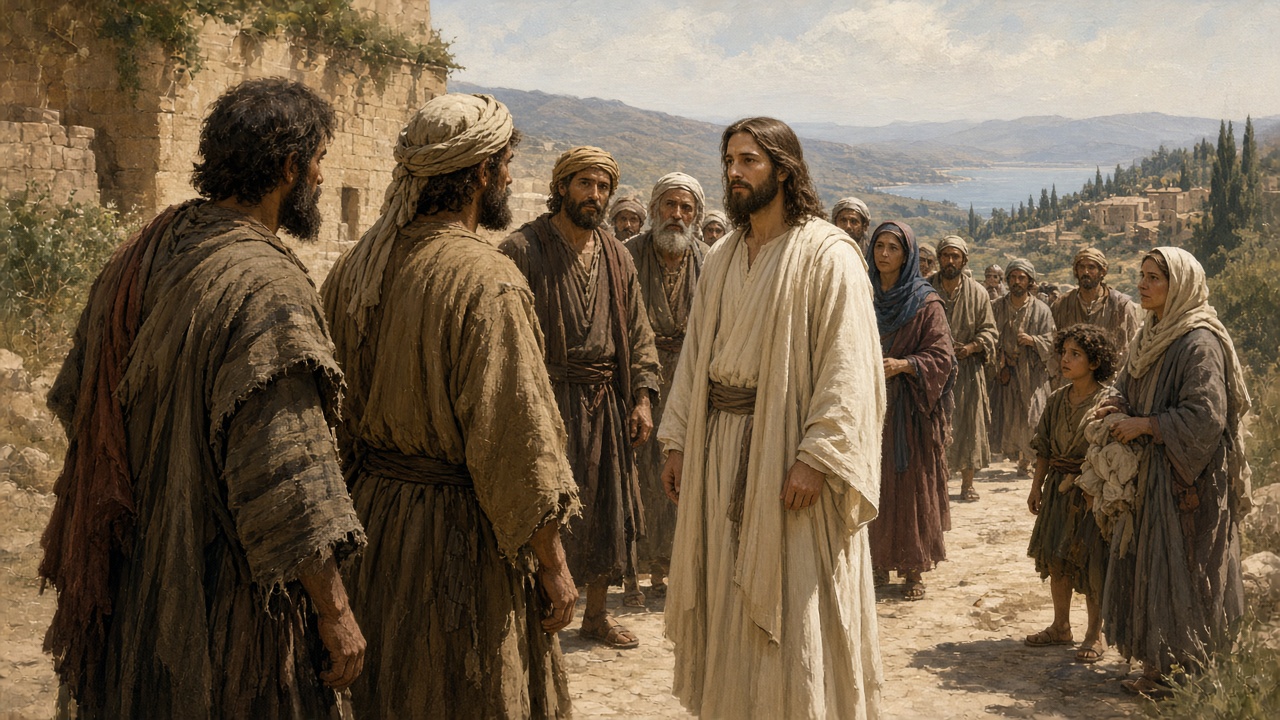
2Ὁ δὲ Ἰωάννης, ἀκούσας ἐν τῷ δεσμωτηρίῳ τὰ ἔργα τοῦ Χριστοῦ, πέμψας δύο τῶν μαθητῶν αὐτοῦ 3εἶπεν αὐτῷ, «Σὺ εἶ ὁ ἐρχόμενος ἢ ἕτερον προσδοκῶμεν;» 4Καὶ ἀποκριθεὶς ὁ Ἰησοῦς εἶπεν αὐτοῖς· «Πορευθέντες ἀπαγγείλατε Ἰωάννῃ ἃ ἀκούετε καὶ βλέπετε· 5τυφλοὶ ἀναβλέπουσιν καὶ χωλοὶ περιπατοῦσιν, λεπροὶ καθαρίζονται καὶ κωφοὶ ἀκούουσιν, νεκροὶ ἐγείρονται καὶ πτωχοὶ εὐαγγελίζονται. 6Καί, μακάριός ἐστιν ὃς ἐὰν μὴ σκανδαλισθῇ ἐν ἐμοί.»
Jesus eulogizes John the Baptizer
7Τούτων δὲ πορευομένων, ἤρξατο ὁ Ἰησοῦς λέγειν τοῖς ὄχλοις περὶ Ἰωάννου· «Τί ἐξήλθετε εἰς τὴν ἔρημον θεάσασθαι, κάλαμον ὑπὸ ἀνέμου σαλευόμενον; 8Ἀλλὰ τί ἐξήλθετε ἰδεῖν, ἄνθρωπον ἐν μαλακοῖς ἱματίοις ἠμφιεσμένον; Ἰδού, οἱ τὰ μαλακὰ φοροῦντες ἐν τοῖς οἴκοις τῶν βασιλείων εἰσίν. 9Ἀλλὰ τί ἐξήλθετε ἰδεῖν, προφήτην; Ναί, λέγω ὑμῖν, καὶ περισσότερον προφήτου. 10Οὗτος γάρ ἐστιν περὶ οὗ γέγραπται· ‹Ἰδού, ἐγὼ ἀποστέλλω τὸν ἄγγελόν μου πρὸ προσώπου σου, ὃς κατασκευάσει τὴν ὁδόν σου ἔμπροσθέν σου.› 11Ἀμὴν λέγω ὑμῖν, οὐκ ἐγήγερται ἐν γεννητοῖς γυναικῶν μείζων Ἰωάννου τοῦ Βαπτιστοῦ· ὁ δὲ μικρότερος ἐν τῇ βασιλείᾳ τῶν οὐρανῶν μείζων αὐτοῦ ἐστιν. 12Ἀπὸ δὲ τῶν ἡμερῶν Ἰωάννου τοῦ Βαπτιστοῦ ἕως ἄρτι ἡ βασιλεία τῶν οὐρανῶν βιάζεται, καὶ βιασταὶ ἁρπάζουσιν αὐτήν. 13Πάντες γὰρ οἱ προφῆται καὶ ὁ νόμος ἕως Ἰωάννου προεφήτευσαν· 14καὶ εἰ θέλετε δέξασθαι, αὐτός ἐστιν Ἠλίας ὁ μέλλων ἔρχεσθαι. 15Ὁ ἔχων ὦτα ἀκούειν ἀκουέτω.
16»Τίνι δὲ ὁμοιώσω τὴν γενεὰν ταύτην; Ὁμοία ἐστὶν παιδίοις ἐν ἀγορᾷ καθημένοις, καὶ προσφωνοῦσιν τοῖς ἑταίροις αὐτῶν 17καὶ λέγουσιν, ‹Ηὐλήσαμεν ὑμῖν καὶ οὐκ ὠρχήσασθε· ἐθρηνήσαμεν ὑμῖν καὶ οὐκ ἐκόψασθε.› 18Ἦλθεν γὰρ Ἰωάννης μήτε ἐσθίων μήτε πίνων, καὶ λέγουσιν, ‹Δαιμόνιον ἔχει›· 19ἦλθεν ὁ Υἱὸς τοῦ Ἀνθρώπου ἐσθίων καὶ πίνων, καὶ λέγουσιν, ‹Ἰδού, ἄνθρωπος φάγος καὶ οἰνοπότης, τελωνῶν φίλος καὶ ἁμαρτωλῶν.› Καί, ἐδικαιώθη ἡ σοφία ἀπὸ τῶν τέκνων αὐτῆς.»
Jesus denounces three cities
20Τότε ἤρξατο ὁ Ἰησοῦς ὀνειδίζειν τὰς πόλεις ἐν αἷς ἐγένοντο αἱ πλεῖσται δυνάμεις αὐτοῦ, ὅτι οὐ μετενόησαν. 21«Οὐαί σοι, Χωραζίν, οὐαί σοι, Βηθσαϊδά· ὅτι εἰ ἐν Τύρῳ καὶ Σιδῶνι ἐγένοντο αἱ δυνάμεις αἱ γενόμεναι ἐν ὑμῖν, πάλαι ἂν ἐν σάκκῳ καὶ σποδῷ μετενόησαν. 22Πλὴν λέγω ὑμῖν, Τύρῳ καὶ Σιδῶνι ἀνεκτότερον ἔσται ἐν ἡμέρᾳ κρίσεως ἢ ὑμῖν. 23Καὶ σύ, Καπερναούμ, ἣ ‹ἕως τοῦ οὐρανοῦ ὑψωθῇς,› ἕως ᾍδου καταβιβασθήσῃ· ὅτι εἰ ἐν Σοδόμοις ἐγένοντο αἱ δυνάμεις αἱ γενόμεναι ἐν σοί, ἔμειναν ἂν μέχρι τῆς σήμερον. 24Πλὴν λέγω ὑμῖν ὅτι γῇ Σοδόμων ἀνεκτότερον ἔσται ἐν ἡμέρᾳ κρίσεως ἢ σοί.»
“I praise you, Father”
25Ἐν ἐκείνῳ τῷ καιρῷ ἀποκριθεὶς ὁ Ἰησοῦς εἶπεν· «Ἐξομολογοῦμαί σοι, Πάτερ, Κύριε τοῦ οὐρανοῦ καὶ τῆς γῆς, ὅτι ἀπέκρυψας ταῦτα ἀπὸ σοφῶν καὶ συνετῶν καὶ ἀπεκάλυψας αὐτὰ νηπίοις. 26Ναί, ὁ Πατήρ, ὅτι οὕτως ἐγένετο εὐδοκία ἔμπροσθέν σου.
27»Πάντα μοι παρεδόθη ὑπὸ τοῦ Πατρός μου, καὶ οὐδεὶς ἐπιγινώσκει τὸν Υἱὸν εἰ μὴ ὁ Πατήρ· οὐδὲ τὸν Πατέρα τις ἐπιγινώσκει εἰ μὴ ὁ Υἱός, καὶ ᾧ ἐὰν βούληται ὁ Υἱὸς ἀποκαλύψαι. 28Δεῦτε πρός με πάντες οἱ κοπιῶντες καὶ πεφορτισμένοι, κἀγὼ ἀναπαύσω ὑμᾶς. 29Ἄρατε τὸν ζυγόν μου ἐφ᾿ ὑμᾶς καὶ μάθετε ἀπ᾿ ἐμοῦ, ὅτι πρᾷός εἰμι καὶ ταπεινὸς τῇ καρδίᾳ, καὶ εὑρήσετε ἀνάπαυσιν ταῖς ψυχαῖς ὑμῶν· 30ὁ γὰρ ζυγός μου χρηστὸς καὶ τὸ φορτίον μου ἐλαφρόν ἐστιν.»
Did you know?
John's question and the cities that did not repent
- From prison, John sent his disciples to ask whether Jesus was the one who was to come. Jesus told the crowds that John was more than a prophet—the messenger sent ahead to prepare the way—and, if they were willing to accept it, the Elijah who was to come. A Bible dictionary calls John the forerunner and says his mission was already the subject of prophecy, citing Isaiah 40:3 and Malachi 3:1; it also introduces Elijah as the Elias of the New Testament.Sources: the Bible text itself · John the Baptist · Elijah
- Jesus then denounced Chorazin, Bethsaida, and Capernaum, where most of his miracles had been performed, because they did not repent. A dictionary identifies Chorazin with modern Kerazeh, about two and a half miles up the Wady Kerazeh from Capernaum, and says that Capernaum, absent from the Old Testament, became Jesus' own city after he left Nazareth. It places Bethsaida on the east side of the lake, two miles up the Jordan in Gaulonitis, enlarged by Philip the tetrarch and named Julias after the emperor's daughter, though some have supposed there was only one Bethsaida, near where the Jordan enters the lake.Sources: the Bible text itself · Chorazin · Capernaum · Bethsaida
- He set those cities against Tyre and Sidon, which he said would have repented long ago in sackcloth and ashes, and against Sodom, which he said would have remained to this day. Sidon, on the Mediterranean coast about twenty-five miles north of Tyre, was the oldest Phoenician city there and the mother city of Tyre. A dictionary says the commerce of the whole world was gathered into Tyre's warehouses, and that Sodom, in the vale of Siddim, was destroyed by fire from heaven so completely that no trace of it has been found.Sources: the Bible text itself · Sidon · Tyre · Sodom
Notes written with AI assistance from open sources (Theographic Bible Metadata, CC BY-SA 4.0; Easton’s Bible Dictionary, public domain) and reviewed before publishing.
Places in this chapter
- Galilee · 32.760, 35.527 · verse 1
- Sidon · Today: Sandikli archaeological site in Sidon · 33.561, 35.372 · verses 21, 22
- Tyre · 33.271, 35.196 · verses 21, 22
Only places identified with high confidence are shown (90% or more according to the scholarly sources compiled by OpenBible). Period map: DARE (Digital Atlas of the Roman Empire), CC BY 4.0; modern map: © OpenStreetMap contributors; places: OpenBible.info (CC BY 4.0).
Credits and license for this translation
Η Καινή Διαθήκη
The Greek New Testament According to Family 35, Wilbur Pickering
Copyright © 2020 Wilbur N. Pickering
Language: Ελληνικά (Greek, Ancient)
Dialect: Koine
Contributor: Dwayne Green, Robert A. Boyd
This translation is made available to you under the terms of the
Creative Commons Attribution-Noncommercial-No Derivatives license 4.0.
You may share and redistribute this Bible translation or extracts from it in any format, provided that:
You include the above copyright and source information.
You do not sell this work for a profit.
You do not change any of the words or punctuation of the Scriptures.
Pictures included with Scriptures and other documents on this site are licensed just for use with those Scriptures and documents.
For other uses, please contact the respective copyright owners.
2026-08-08
Source: http://ebible.org/grcf35/ · eBible.org