Galatians 2
Η Καινή Διαθήκη · Tap a verse to see its cross-references.
How he was recognized by the apostolate
1Ἔπειτα διὰ δεκατεσσάρων ἐτῶν πάλιν ἀνέβην εἰς Ἱεροσόλυμα, μετὰ Βαρνάβα, συμπαραλαβὼν καὶ Τίτον. 2Ἀνέβην δὲ κατὰ ἀποκάλυψιν καὶ ἀνεθέμην αὐτοῖς τὸ εὐαγγέλιον ὃ κηρύσσω ἐν τοῖς ἔθνεσιν. Κατ᾿ ἰδίαν δὲ τοῖς δοκοῦσιν, μή πως εἰς κενὸν τρέχω, ἢ ἔδραμον. 3Ἀλλ᾿ οὐδὲ Τίτος, ὁ σὺν ἐμοί, Ἕλλην ὤν, ἠναγκάσθη περιτμηθῆναι· 4διὰ δὲ τοὺς παρεισάκτους ψευδαδέλφους (οἵτινες παρεισῆλθον κατασκοπῆσαι τὴν ἐλευθερίαν ἡμῶν, ἣν ἔχομεν ἐν Χριστῷ Ἰησοῦ, ἵνα ἡμᾶς καταδουλώσωνται), 5οἷς οὐδὲ πρὸς ὥραν εἴξαμεν τῇ ὑποταγῇ, ἵνα ἡ ἀλήθεια τοῦ εὐαγγελίου διαμείνῃ πρὸς ὑμᾶς.— 6Ἀπὸ δὲ τῶν δοκούντων εἶναί τι (ὁποῖοί ποτε ἦσαν οὐδέν μοι διαφέρει· πρόσωπον Θεὸς ἀνθρώπου οὐ λαμβάνει)—ἐμοὶ γὰρ οἱ δοκοῦντες οὐδὲν προσανέθεντο, 7ἀλλὰ τοὐναντίον, ἰδόντες ὅτι πεπίστευμαι τὸ εὐαγγέλιον τῆς ἀκροβυστίας, καθὼς Πέτρος τῆς περιτομῆς 8(ὁ γὰρ ἐνεργήσας Πέτρῳ εἰς ἀποστολὴν τῆς περιτομῆς ἐνήργησεν καὶ ἐμοὶ εἰς τὰ ἔθνη), 9καὶ γνόντες τὴν χάριν τὴν δοθεῖσάν μοι, Ἰάκωβος καὶ Κηφᾶς καὶ Ἰωάννης, οἱ δοκοῦντες στῦλοι εἶναι, δεξιὰς ἔδωκαν ἐμοὶ καὶ Βαρνάβᾳ κοινωνίας, ἵνα ἡμεῖς μὲν εἰς τὰ ἔθνη, αὐτοὶ δὲ εἰς τὴν περιτομήν· 10μόνον τῶν πτωχῶν ἵνα μνημονεύωμεν, ὃ καὶ ἐσπούδασα αὐτὸ τοῦτο ποιῆσαι.
Paul has to rebuke Peter
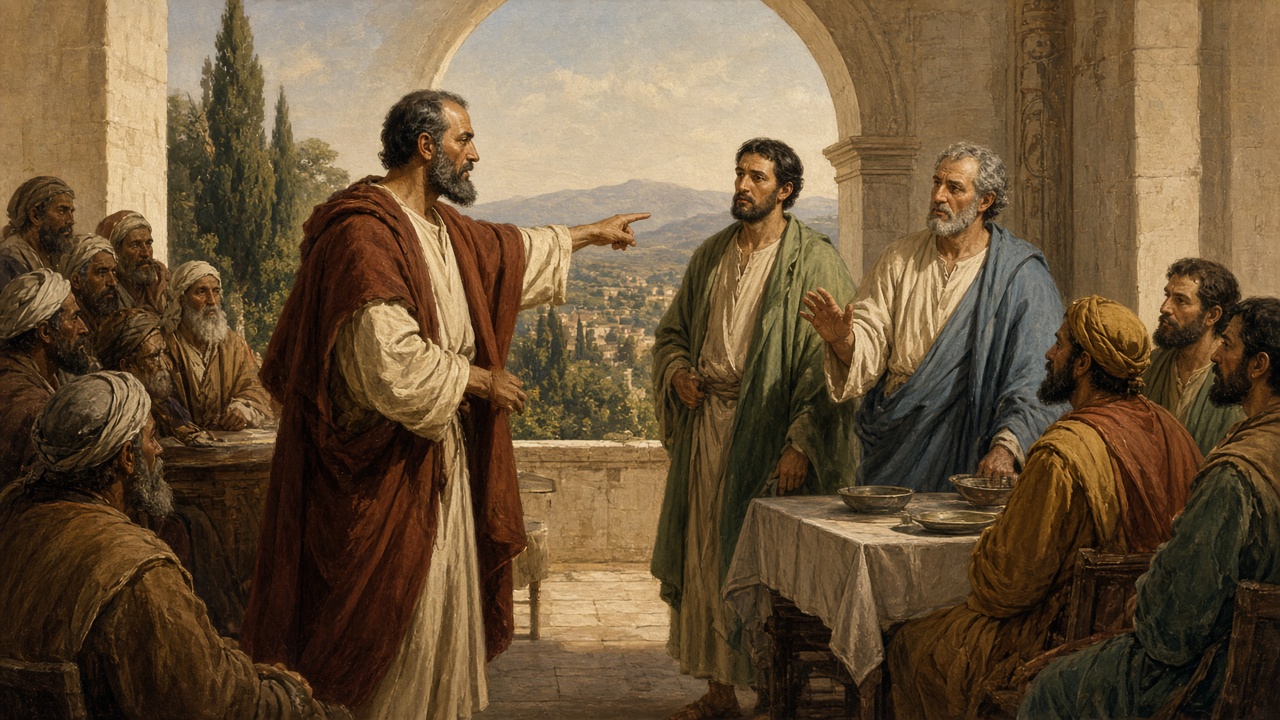
11Ὅτε δὲ ἦλθεν Πέτρος εἰς Ἀντιόχειαν, κατὰ πρόσωπον αὐτῷ ἀντέστην, ὅτι κατεγνωσμένος ἦν. 12Πρὸ τοῦ γὰρ ἐλθεῖν τινας ἀπὸ Ἰακώβου, μετὰ τῶν ἐθνῶν συνήσθιεν· ὅτε δὲ ἦλθον ὑπέστελλεν καὶ ἀφώριζεν ἑαυτόν, φοβούμενος τοὺς ἐκ περιτομῆς. 13Καὶ συνυπεκρίθησαν αὐτῷ καὶ οἱ λοιποὶ Ἰουδαῖοι, ὥστε καὶ Βαρνάβας συναπήχθη αὐτῶν τῇ ὑποκρίσει. 14Ἀλλ᾿ ὅτε εἶδον ὅτι οὐκ ὀρθοποδοῦσιν πρὸς τὴν ἀλήθειαν τοῦ εὐαγγελίου, εἶπον τῷ Πέτρῳ ἔμπροσθεν πάντων· «Εἰ σύ, Ἰουδαῖος ὑπάρχων, ἐθνικῶς ζῇς καὶ οὐκ Ἰουδαϊκῶς, τί τὰ ἔθνη ἀναγκάζεις Ἰουδαΐζειν; 15Ἡμεῖς φύσει Ἰουδαῖοι (καὶ οὐκ ἐξ ‹ἐθνῶν ἁμαρτωλοί›), 16εἰδότες ὅτι οὐ δικαιοῦται ἄνθρωπος ἐξ ἔργων νόμου ἐὰν μὴ διὰ πίστεως Ἰησοῦ Χριστοῦ, καὶ ἡμεῖς εἰς Χριστὸν Ἰησοῦν ἐπιστεύσαμεν, ἵνα δικαιωθῶμεν ἐκ πίστεως Χριστοῦ καὶ οὐκ ἐξ ἔργων νόμου· διότι οὐ δικαιωθήσεται ἐξ ἔργων νόμου πᾶσα σάρξ. 17Εἰ δὲ ζητοῦντες δικαιωθῆναι ἐν Χριστῷ εὑρέθημεν καὶ αὐτοὶ ἁμαρτωλοί, ἆρα Χριστὸς ἁμαρτίας διάκονος; Μὴ γένοιτο.
18»Εἰ γὰρ ἃ κατέλυσα ταῦτα πάλιν οἰκοδομῶ, παραβάτην ἐμαυτὸν συνίστημι. 19Ἐγὼ γὰρ διὰ νόμου νόμῳ ἀπέθανον ἵνα Θεῷ ζήσω. 20Χριστῷ συνεσταύρωμαι, ζῶ δὲ οὐκέτι ἐγὼ ζῇ δὲ ἐν ἐμοὶ Χριστός· ὃ δὲ νῦν ζῶ ἐν σαρκὶ ἐν πίστει ζῶ τῇ τοῦ Υἱοῦ τοῦ Θεοῦ, τοῦ ἀγαπήσαντός με καὶ παραδόντος ἑαυτὸν ὑπὲρ ἐμοῦ. 21Οὐκ ἀθετῶ τὴν χάριν τοῦ Θεοῦ· εἰ γὰρ διὰ νόμου δικαιοσύνη, ἄρα Χριστὸς δωρεὰν ἀπέθανεν.»
Did you know?
Gentiles, Fellowship, and a Clash at Antioch
- Titus went with Paul and Barnabas to Jerusalem. Easton's Bible Dictionary (1897) says he appears to have been a Gentile and that his name never appears in Acts. Paul writes that Titus, though a Greek, was not compelled to be circumcised.Sources: Titus · the Bible text itself
- The later clash took place at Antioch in Syria, on the Orontes, some three hundred miles north of Jerusalem. The city ranked third among the cities of the Roman Empire, after Rome and Alexandria, and it was there that believers were first called Christians.Sources: Antioch (Syria) · the Bible text itself
- Easton's Bible Dictionary (1897) describes James, named with Cephas and John as one of the pillars, as head of the church at Jerusalem, where he presided at the council on the Gentiles. Paul says that before certain men came from James, Cephas used to eat with the Gentiles, but then drew back for fear of the circumcision group.Sources: James (Brother of Jesus) · the Bible text itself
Notes written with AI assistance from open sources (Theographic Bible Metadata, CC BY-SA 4.0; Easton’s Bible Dictionary, public domain) and reviewed before publishing.
Places in this chapter
- Jerusalem · 31.777, 35.234 · verse 1
- Antioch · Today: Antioch on the Orontes · 36.227, 36.172 · verse 11
Only places identified with high confidence are shown (90% or more according to the scholarly sources compiled by OpenBible). Period map: DARE (Digital Atlas of the Roman Empire), CC BY 4.0; modern map: © OpenStreetMap contributors; places: OpenBible.info (CC BY 4.0).
Credits and license for this translation
Η Καινή Διαθήκη
The Greek New Testament According to Family 35, Wilbur Pickering
Copyright © 2020 Wilbur N. Pickering
Language: Ελληνικά (Greek, Ancient)
Dialect: Koine
Contributor: Dwayne Green, Robert A. Boyd
This translation is made available to you under the terms of the
Creative Commons Attribution-Noncommercial-No Derivatives license 4.0.
You may share and redistribute this Bible translation or extracts from it in any format, provided that:
You include the above copyright and source information.
You do not sell this work for a profit.
You do not change any of the words or punctuation of the Scriptures.
Pictures included with Scriptures and other documents on this site are licensed just for use with those Scriptures and documents.
For other uses, please contact the respective copyright owners.
2026-08-08
Source: http://ebible.org/grcf35/ · eBible.org