Psalms 69
μετάφραση των εβδομήκοντα · Tap a verse to see its cross-references.
1Εἰς τὸ τέλος, τῷ Δαυὶδ εἰς ἀνάμνησιν, εἰς τὸ σῶσαί με Κύριον.
2Ὁ Θεὸς εἰς τὴν βοήθειάν μου πρόσχες. 3Αἰσχυνθείησαν καὶ ἐντραπείησαν οἱ ζητοῦντες τὴν ψυχήν μου, ἀποστραφείησαν εἰς τὰ ὀπίσω, καὶ καταισχυνθείησαν οἱ βουλόμενοί μοι κατά· 4Ἀποστραφείησαν παραυτίκα αἰσχυνόμενοι οἱ λέγοντές μοι, εὖγε, εὖγε. 5Ἀγαλλιάσθωσαν καὶ εὐφρανθήτωσαν ἐπὶ σοὶ πάντες οἱ ζητοῦντές σε, καὶ λεγέτωσαν διαπαντὸς, μεγαλυνθήτω ὁ Θεὸς, οἱ ἀγαπῶντες τὸ σωτήριόν σου. 6Ἐγὼ δὲ πτωχὸς καὶ πένης, ὁ Θεὸς βοήθησόν μοι· βοηθός μου, καὶ ῥύστης μου εἶ σὺ, Κύριε μὴ χρονίσῃς.
Did you know?
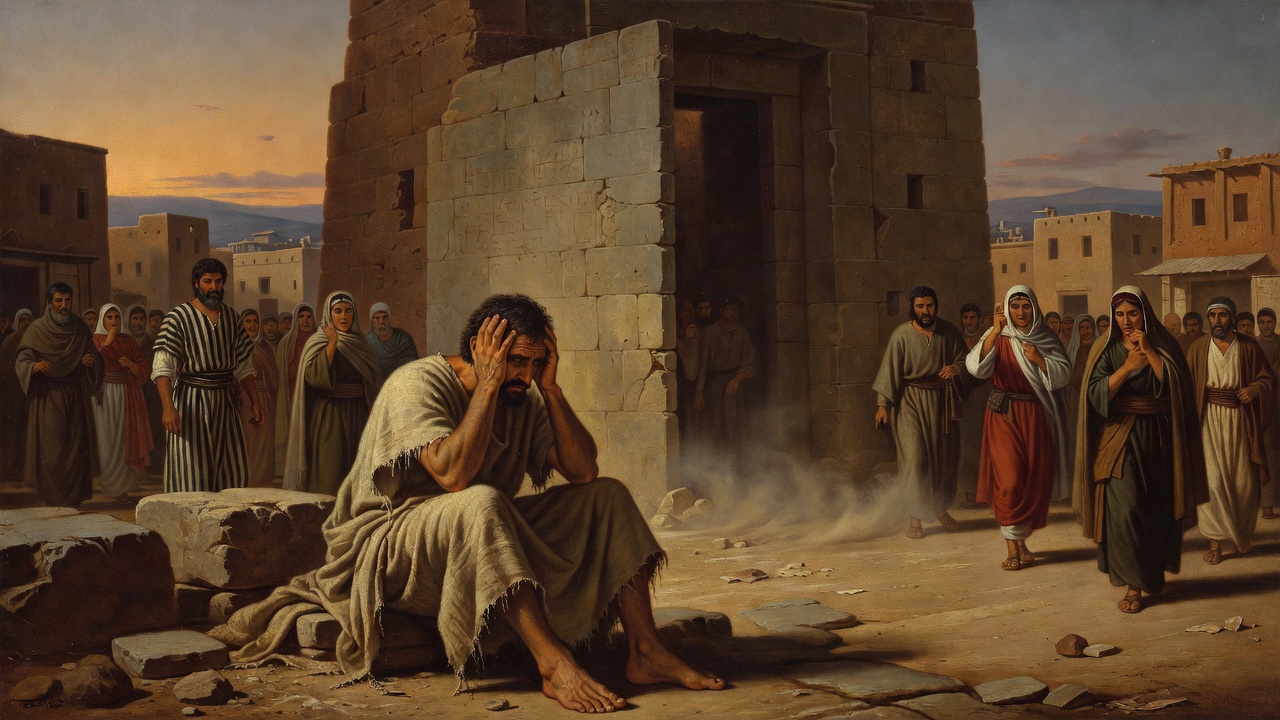
A Cry from Deep Waters
- Psalm 69 employs vivid metaphors of drowning in deep waters and sinking into bottomless mud to depict overwhelming distress and the pressure of unprovoked enemies.Sources: the Bible text itself
- The speaker describes profound social alienation, noting that his fasting and wearing of sackcloth made him an object of public ridicule among those sitting at the city gate and the subject of drinking songs.Sources: the Bible text itself
- The psalm concludes with hope for restoration, anticipating that God will save Zion—the southeastern hill of Jerusalem—and rebuild the cities of Judah for His servants to inhabit.Sources: Zion · the Bible text itself
Notes written with AI assistance from open sources (Theographic Bible Metadata, CC BY-SA 4.0; Easton’s Bible Dictionary, public domain) and reviewed before publishing.
Places in this chapter
- Zion · Today: Jerusalem · 31.777, 35.234 · verse 35
Only places identified with high confidence are shown (90% or more according to the scholarly sources compiled by OpenBible). Period map: DARE (Digital Atlas of the Roman Empire), CC BY 4.0; modern map: © OpenStreetMap contributors; places: OpenBible.info (CC BY 4.0).
Credits and license for this translation
μετάφραση των εβδομήκοντα
The Greek Septuagint with Apocrypha, compiled by Sir Lancelot C. L. Brenton
Public Domain
Language: Ἑλληνική (Greek, Ancient)
Dialect: Koine
2026-04-08
Source: http://ebible.org/grcbrent/ · eBible.org