Psalms 130
μετάφραση των εβδομήκοντα · Tap a verse to see its cross-references.
1Ὠδὴ τῶν ἀναβαθμῶν.
Κύριε, οὐχ ὑψώθη ἡ καρδία μου, οὐδὲ ἐμετεωρίσθησαν οἱ ὀφθαλμοί μου· οὐδὲ ἐπορεύθην ἐν μεγάλοις, οὐδὲ ἐν θαυμασίοις ὑπὲρ ἐμέ. 2Εἰ μὴ ἐταπεινοφρόνουν, ἀλλὰ ὕψωσα τὴν ψυχήν μου· ὡς τὸ ἀπογεγαλακτισμένον ἐπὶ τὴν μητέρα αὐτοῦ, ὡς ἀνταποδώσεις ἐπὶ τὴν ψυχήν μου. 3Ἐλπισάτω Ἰσραὴλ ἐπὶ τὸν Κύριον ἀπὸ τοῦ νῦν καὶ ἕως τοῦ αἰῶνος.
Did you know?
A Cry from the Depths and Hope for Redemption
- Psalm 130 is identified in its opening heading as a song of ascents, beginning with a personal plea from the depths where the speaker acknowledges that no one could stand if the LORD kept track of iniquities.Sources: the Bible text itself
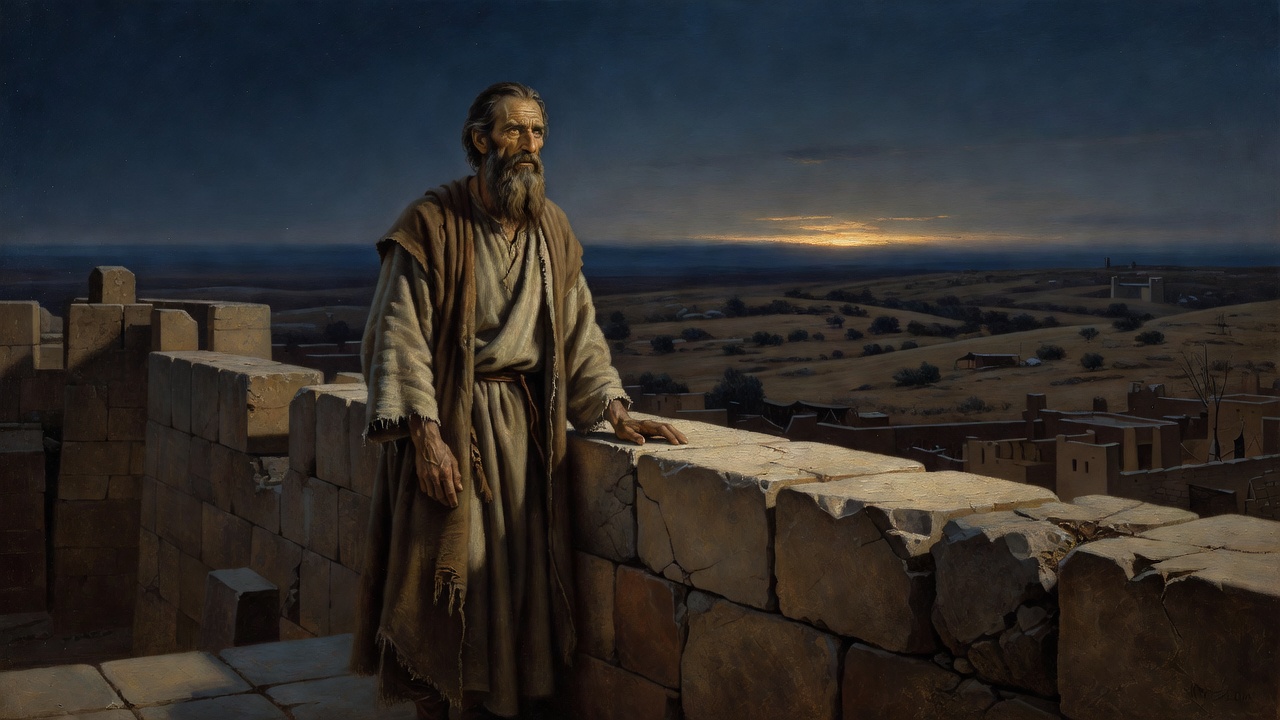
- The psalm uses the vivid image of night watchmen eagerly waiting for the morning light to describe deep longing and patience for the Lord, before expanding this hope to all of Israel for full redemption from iniquity.Sources: the Bible text itself
Notes written with AI assistance from open sources (Theographic Bible Metadata, CC BY-SA 4.0; Easton’s Bible Dictionary, public domain) and reviewed before publishing.
Places in this chapter
- Jerusalem · 31.777, 35.234 · verse 1
Only places identified with high confidence are shown (90% or more according to the scholarly sources compiled by OpenBible). Period map: DARE (Digital Atlas of the Roman Empire), CC BY 4.0; modern map: © OpenStreetMap contributors; places: OpenBible.info (CC BY 4.0).
Credits and license for this translation
μετάφραση των εβδομήκοντα
The Greek Septuagint with Apocrypha, compiled by Sir Lancelot C. L. Brenton
Public Domain
Language: Ἑλληνική (Greek, Ancient)
Dialect: Koine
2026-04-08
Source: http://ebible.org/grcbrent/ · eBible.org