Psalms 125
μετάφραση των εβδομήκοντα · Tap a verse to see its cross-references.
1Ὠδὴ τῶν ἀναβαθμῶν.
Ἐν τῷ ἐπιστρέψαι Κύριον τὴν αἰχμαλωσίαν Σιὼν, ἐγενήθημεν ὡσεὶ παρακεκλημένοι. 2Τότε ἐπλήσθη χαρᾶς τὸ στόμα ἡμῶν, καὶ ἡ γλῶσσα ἡμῶν ἀγαλλιάσεως· τότε ἐροῦσιν ἐν τοῖς ἔθνεσιν, ἐμεγάλυνε Κύριος τοῦ ποιῆσαι μετʼ αὐτῶν. 3Ἐμεγάλυνε Κύριος τοῦ ποιῆσαι μεθʼ ἡμῶν, ἐγενήθημεν εὐφραινόμενοι.
4Ἐπίστρεψον, Κύριε, τὴν αἰχμαλωσίαν ἡμῶν ὡς χειμάῤῥους ἐν τῷ Νότῳ. 5Οἱ σπείροντες ἐν δάκρυσιν, ἐν ἀγαλλιάσει θεριοῦσι. 6Πορευόμενοι ἐπορεύοντο, καὶ ἔκλαιον βάλλοντες τὰ σπέρματα αὐτῶν· ἐρχόμενοι δὲ ἥξουσιν ἐν ἀγαλλιάσει αἴροντες τὰ δράγματα αὐτῶν.
Did you know?
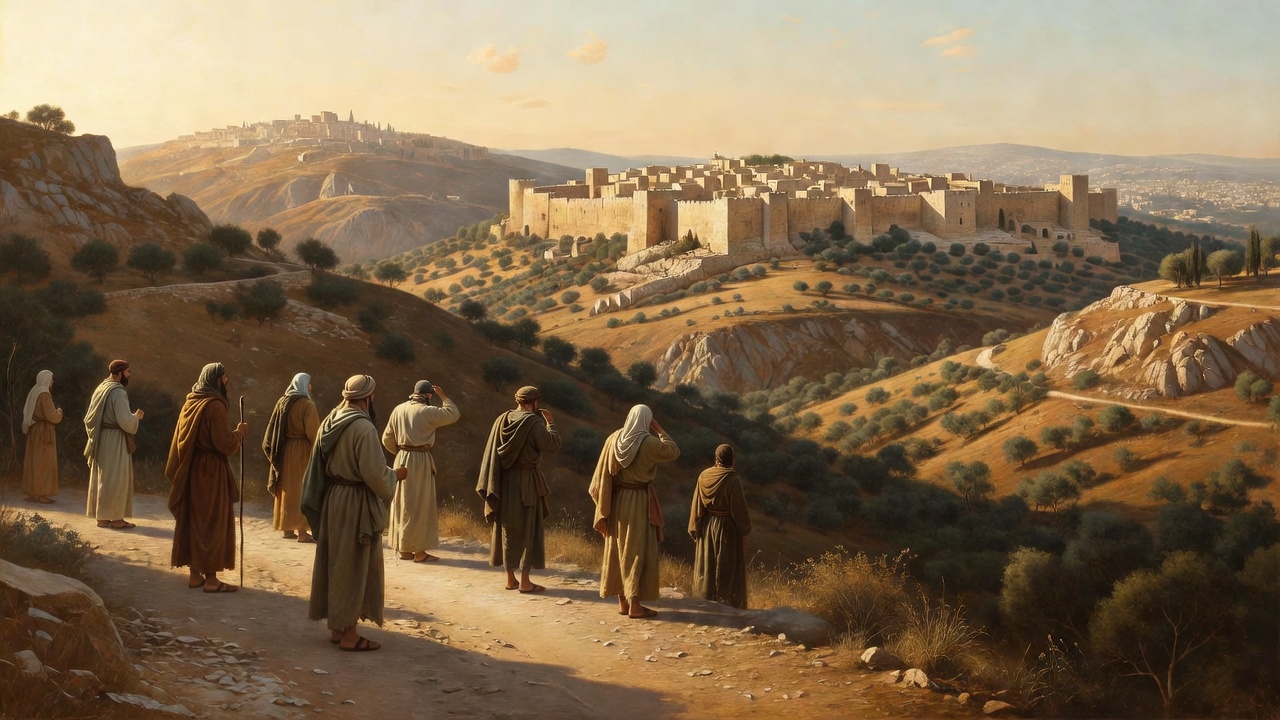
Unshakable Security in Jerusalem
- Psalm 125 is one of the Songs of Ascents, comparing those who trust in God to Mount Zion. Mount Zion was a naturally fortified hill in Jerusalem, surrounded by deep valleys on nearly all sides, making it a fitting symbol of permanence and stability.Sources: the Bible text itself · Mount Zion
- The psalmist draws on local geography by noting how mountains encircle Jerusalem. Built as a mountain fortress among neighboring heights, the city provided an evocative physical illustration of divine protection surrounding the community.Sources: the Bible text itself · Jerusalem
- The psalm concludes with a prayer for peace upon Israel, which resonates with the traditional interpretation of Jerusalem's Hebrew name as a foundation or possession of peace.Sources: the Bible text itself · Jerusalem
Notes written with AI assistance from open sources (Theographic Bible Metadata, CC BY-SA 4.0; Easton’s Bible Dictionary, public domain) and reviewed before publishing.
Places in this chapter
Only places identified with high confidence are shown (90% or more according to the scholarly sources compiled by OpenBible). Period map: DARE (Digital Atlas of the Roman Empire), CC BY 4.0; modern map: © OpenStreetMap contributors; places: OpenBible.info (CC BY 4.0).
Credits and license for this translation
μετάφραση των εβδομήκοντα
The Greek Septuagint with Apocrypha, compiled by Sir Lancelot C. L. Brenton
Public Domain
Language: Ἑλληνική (Greek, Ancient)
Dialect: Koine
2026-04-08
Source: http://ebible.org/grcbrent/ · eBible.org