Psalms 109
μετάφραση των εβδομήκοντα · Tap a verse to see its cross-references.
1Ψαλμὸς τῷ Δαυίδ.
Εἶπεν ὁ Κύριος τῷ Κυρίῳ μου, κάθου ἐκ δεξιῶν μου, ἕως ἂν θῶ τοὺς ἐχθρούς σου ὑποπόδιον τῶν ποδῶν σου. 2Ῥάβδον δυνάμεως ἐξαποστελεῖ σοι Κύριος ἐκ Σιὼν, κατακυρίευε ἐν μέσῳ τῶν ἐχθρῶν σου. 3Μετὰ σοῦ ἡ ἀρχὴ ἐν ἡμέρᾳ τῆς δυνάμεώς σου, ἐν ταῖς λαμπρότησι τῶν ἁγίων σου· ἐκ γαστρὸς πρὸ Ἑωσφόρου ἐγέννησά σε. 4Ὤμοσε Κύριος καὶ οὐ μεταμεληθήσεται, σὺ ἱερεὺς εἰς τὸν αἰῶνα, κατὰ τὴν τάξιν Μελχισεδέκ. 5Κύριος ἐκ δεξιῶν σου συνέθλασεν ἐν ἡμέρᾳ ὀργῆς αὐτοῦ βασιλεῖς. 6Κρινεῖ ἐν τοῖς ἔθνεσι, πληρώσει πτώματα, συνθλάσει κεφαλὰς ἐπὶ γῆν πολλῶν. 7Ἐκ χειμάῤῥου ἐν ὁδῷ πίεται, διὰ τοῦτο ὑψώσει κεφαλήν.
Did you know?
A Plea Against False Accusers
- The psalm asks for an accuser or adversary to stand at the enemy's right hand in judgment (verse 6). This legal imagery uses the term behind the Hebrew name Satan, which fundamentally denotes an adversary or accuser, contrasting with verse 31 where the Lord Himself stands at the right hand of the needy.Sources: the Bible text itself · Satan
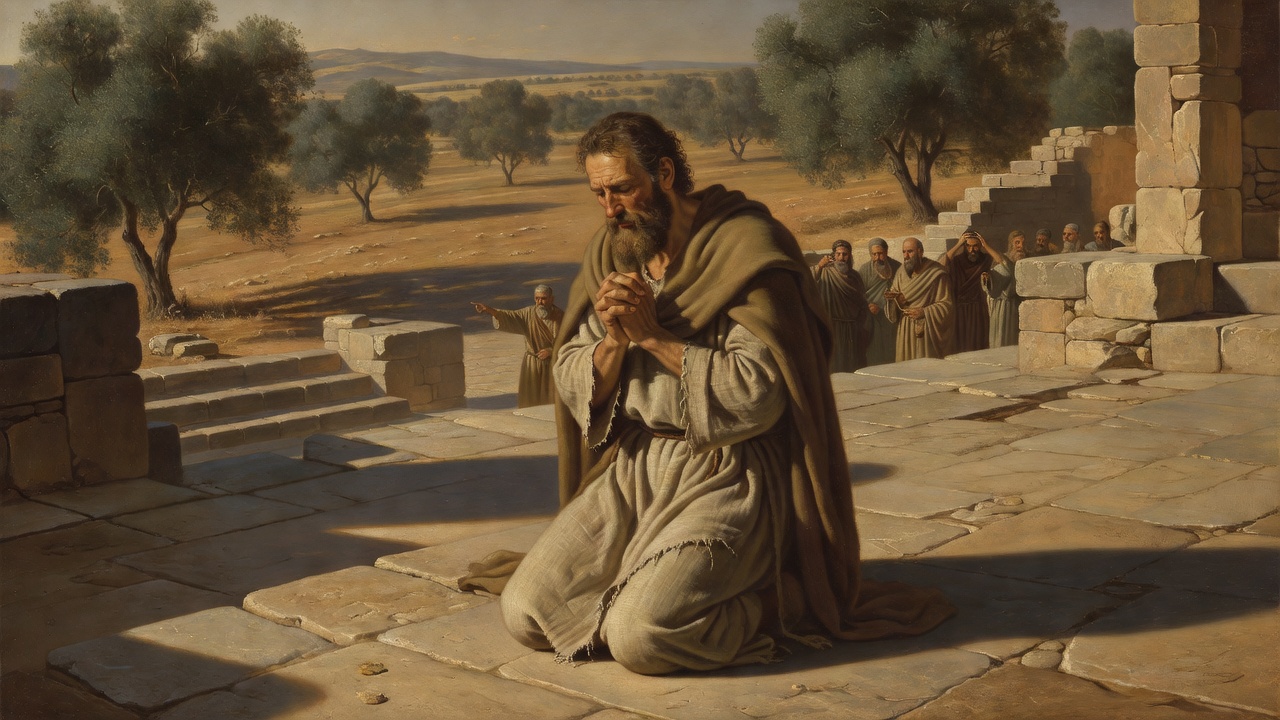
- The author portrays severe personal suffering while enduring malicious slanders, describing knees weakened by fasting, physical emaciation, and feeling shaken off like a locust as life fades like an evening shadow.Sources: the Bible text itself
Notes written with AI assistance from open sources (Theographic Bible Metadata, CC BY-SA 4.0; Easton’s Bible Dictionary, public domain) and reviewed before publishing.
Credits and license for this translation
μετάφραση των εβδομήκοντα
The Greek Septuagint with Apocrypha, compiled by Sir Lancelot C. L. Brenton
Public Domain
Language: Ἑλληνική (Greek, Ancient)
Dialect: Koine
2026-04-08
Source: http://ebible.org/grcbrent/ · eBible.org