Leviticus 1
μετάφραση των εβδομήκοντα · Tap a verse to see its cross-references.
About this book
About Leviticus
- Easton's Bible Dictionary (1897) presents Leviticus as the third book of the Pentateuch and as the third book of Moses. The name, used in the Vulgate following the LXX, reflects the book's chief concern: the Levitical service.Sources: Easton: Leviticus
- Easton states that every ordinance in the book was delivered within one month, the first month of the second year after the Exodus. His entry on Sinai, also called Horeb, says the Hebrews reached that mountain district in the third month after the Exodus and remained encamped for about a whole year, and that the whole of Leviticus records what occurred there.Sources: Easton: Leviticus · Mount Sinai
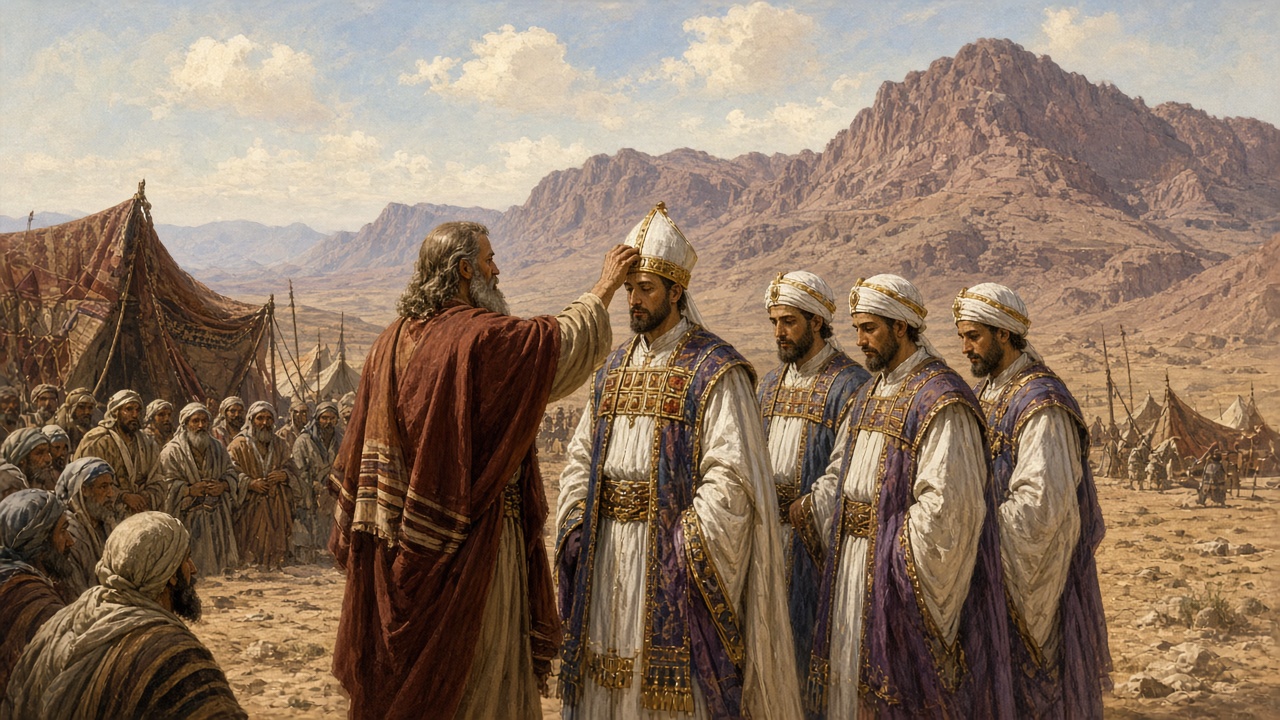
- Chapters 1–7 give laws for burnt offerings, meat offerings, and thank offerings, then for sin offerings and trespass offerings, and for the priests' duties in offering sacrifice. Chapters 8–10 recount the consecration of Aaron and his sons, Aaron's first offering for himself and the people, and the death of Nadab and Abihu, who were struck dead and buried outside the camp after offering strange, or common, fire not taken from the great brazen altar. Chapters 11–16 concern purity and the sacrifices and ordinances for putting impurity away.Sources: Easton: Leviticus · Nadab · Abihu
- Easton describes chapters 17–20 as laws marking the separation between Israel and other peoples. Further laws concern the priests' personal purity and their eating of holy things, offerings without blemish, and the due celebration of the great festivals in chapters 23 and 25. Promises and warnings about obedience follow, the book closes with a section on vows, and Easton notes that God is the direct speaker through almost the whole of it.Sources: Easton: Leviticus
- In the rites of chapter 16, one goat is associated with Azazel, which the Authorized Version renders scapegoat and the Revised Version leaves as Azazel. Easton reports that some Jewish interpreters take it as a place in the wilderness about twelve miles east of Jerusalem, while others take it as an evil spirit or even Satan, and he also notes a root meaning of separation.Sources: Azazel
Notes written with AI assistance from open sources (Theographic Bible Metadata, CC BY-SA 4.0; Easton’s Bible Dictionary, public domain) and reviewed before publishing.
1ΚΑΙ ἀνεκάλεσε Μωυσῆν, καὶ ἐλάλησε Κύριος αὐτῷ ἐκ τῆς σκηνῆς τοῦ μαρτυρίου, λέγων, 2λάλησον τοῖς υἱοῖς Ἰσραὴλ, καὶ ἐρεῖς πρὸς αὐτοὺς, ἄνθρωπος ἐξ ὑμῶν ἐὰν προσαγάγῃ δῶρα τῷ Κυρίῳ, ἀπὸ τῶν κτηνῶν καὶ ἀπὸ τῶν βοῶν καὶ ἀπὸ τῶν προβάτων προσοίσετε τὰ δῶρα ὑμῶν. 3Ἐὰν ὁλοκαύτωμα τὸ δῶρον αὐτοῦ, ἐκ τῶν βοῶν ἄρσεν ἄμωμον προσάξει πρὸς τὴν θύραν τῆς σκηνῆς τοῦ μαρτυρίου, προσοίσει αὐτὸ δεκτὸν ἐναντίον Κυρίου. 4Καὶ ἐπιθήσει τὴν χεῖρα ἐπὶ τὴν κεφαλὴν τοῦ καρπώματος δεκτὸν αὐτῷ, ἐξιλάσασθαι περὶ αὐτοῦ. 5Καὶ σφάξουσι τὸν μόσχον ἔναντι Κυρίου· καὶ προσοίσουσιν οἱ υἱοὶ Ἀαρὼν οἱ ἱερεῖς τὸ αἷμα, καὶ προσχεοῦσι τὸ αἷμα ἐπὶ τὸ θυσιαστήριον κύκλῳ τὸ ἐπὶ τῶν θυρῶν τῆς σκηνῆς τοῦ μαρτυρίου· 6καὶ ἐκδείραντες τὸ ὁλοκαύτωμα, μελιοῦσιν αὐτὸ κατὰ μέλη. 7Καὶ ἐπιθήσουσιν οἱ υἱοὶ Ἀαρὼν οἱ ἱερεῖς πῦρ ἐπὶ τὸ θυσιαστήριον, καὶ ἐπιστοιβάσουσι ξύλα ἐπὶ τὸ πῦρ. 8Καὶ ἐπιστοιβάσουσιν οἱ υἱοὶ Ἀαρὼν οἱ ἱερεῖς τὰ διχοτομήματα, καὶ τὴν κεφαλὴν, καὶ τὸ στέαρ ἐπὶ τὰ ξύλα τὰ ἐπὶ τοῦ πυρὸς τὰ ὄντα ἐπὶ τοῦ θυσιαστηρίου. 9Τὰ δὲ ἐγκοίλια καὶ τοὺς πόδας πλυνοῦσιν ὕδατι· καὶ ἐπιθήσουσιν οἱ ἱερεῖς τὰ πάντα ἐπὶ τὸ θυσιαστήριον· κάρπωμά ἐστι θυσία ὀσμὴ εὐωδίας τῷ Κυρίῳ. 10Ἐὰν δὲ ἀπὸ τῶν προβάτων τὸ δῶρον αὐτοῦ τῷ Κυρίῳ, ἀπό τε τῶν ἀρνῶν, καὶ τῶν ἐρίφων εἰς ὁλοκαυτώματα, ἄρσεν ἄμωμον προσάξει αὐτό. 11Καὶ ἐπιθήσει τὴν χεῖρα ἐπὶ τὴν κεφαλὴν αὐτοῦ· καὶ σφάξουσιν αὐτὸ ἐκ πλαγίων τοῦ θυσιαστηρίου πρὸς βοῤῥᾶν ἔναντι Κυρίου· καὶ προσχεοῦσιν οἱ υἱοὶ Ἀαρὼν οἱ ἱερεῖς τὸ αἷμα αὐτοῦ ἐπὶ τὸ θυσιαστήριον κύκλῳ. 12Καὶ διελουσιν αὐτὸ κατὰ μέλη, καὶ τὴν κεφαλὴν, καὶ τὸ στέαρ· καὶ ἐπιστοιβάσουσιν οἱ ἱερεῖς αὐτὰ ἐπὶ τὰ ξύλα τὰ ἐπὶ τοῦ πυρὸς τὰ ἐπὶ τοῦ θυσιαστηρίου. 13Καὶ τὰ ἐγκοίλια, καὶ τοὺς πόδας πλυνοῦσιν ὕδατι· καὶ προσοίσει ὁ ἱερεὺς τὰ πάντα, καὶ ἐπιθήσει ἐπὶ τὸ θυσιαστήριον· κάρπωμά ἐστι θυσία ὀσμὴ εὐωδίας τῷ Κυρίῳ. 14Ἐὰν δὲ ἀπὸ τῶν πετεινῶν κάρπωμα προσφέρει δῶρον αὐτοῦ τῷ κυρίῳ, καὶ προσοίσει ἀπὸ τῶν τρυγόνων, ἢ ἀπὸ τῶν περιστερῶν τὸ δῶρον αὐτοῦ. 15Καὶ προσοίσει αὐτὸ ὁ ἱερεὺς πρὸς τὸ θυσιαστήριον, καὶ ἀποκνίσει τὴν κεφαλήν, καὶ ἐπιθήσει ὁ ἱερεὺς ἐπὶ τὸ θυσιαστήριον, καὶ στραγγιεῖ τὸ αἷμα πρὸς τὴν βάσιν τοῦ θυσιαστηρίου. 16Καὶ ἀφελεῖ τὸν πρόλοβον σὺν τοῖς πτεροῖς, καὶ ἐκβαλεῖ αὐτὸ παρὰ τὸ θυσιαστήριον κατʼ ἀνατολὰς εἰς τὸν τόπον τῆς σποδοῦ· 17Καὶ ἐκκλάσει αὐτὸ ἐκ τῶν πτερύγων, καὶ οὐ διελεῖ, καὶ ἐπιθήσει αὐτὸ ὁ ἱερεὺς ἐπὶ τὸ θυσιαστήριον ἐπὶ τὰ ξύλα τὰ ἐπὶ τοῦ πυρός· κάρπωμά ἐστι θυσία ὀσμὴ εὐωδίας τῷ Κυρίῳ.
Did you know?
The Burnt Offering
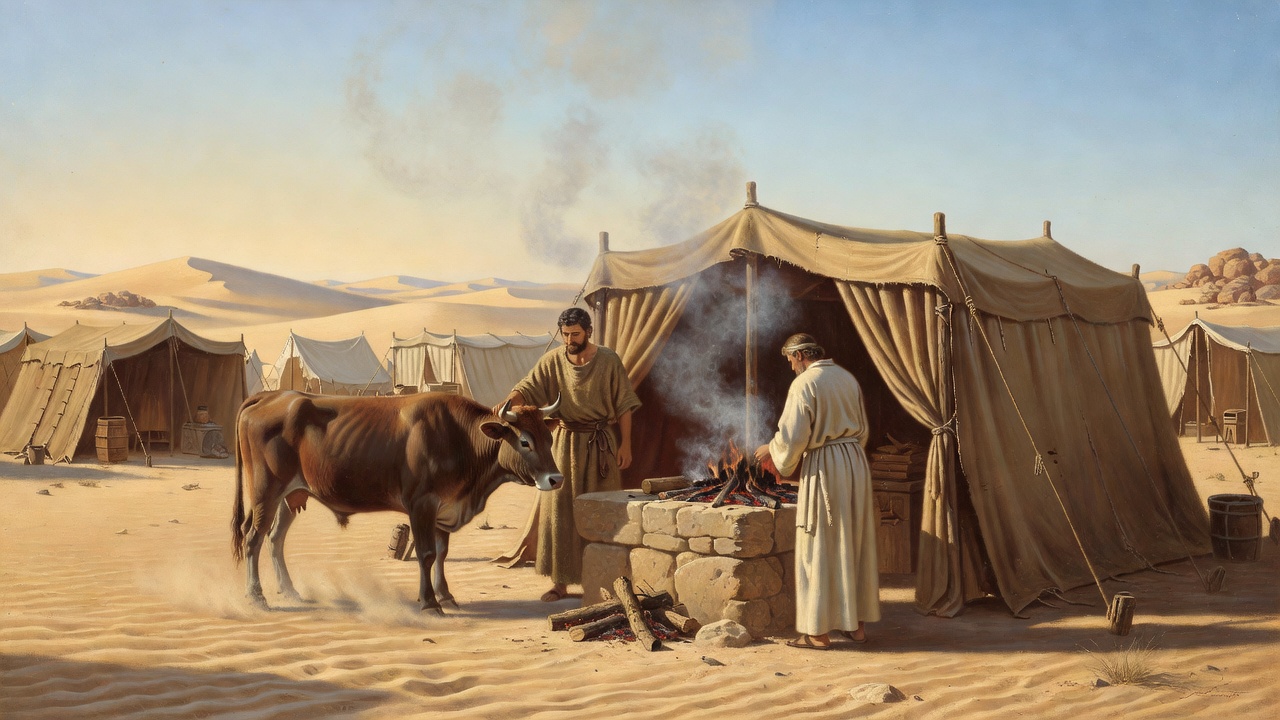
- The instructions for the burnt offering accommodate different economic means by allowing offerings from the herd, the flock (sheep or goats), or birds (turtledoves or young pigeons). For livestock, the animal was required to be a male without blemish.Sources: the Bible text itself
- The ritual required a clear division of roles between the worshiper and the priests. The worshiper brought the animal, laid a hand on its head for atonement, slaughtered it, skinned it, and washed its inner parts, while the sons of Aaron sprinkled the blood and burned the entire offering on the altar.Sources: the Bible text itself · Aaron
Notes written with AI assistance from open sources (Theographic Bible Metadata, CC BY-SA 4.0; Easton’s Bible Dictionary, public domain) and reviewed before publishing.
Credits and license for this translation
μετάφραση των εβδομήκοντα
The Greek Septuagint with Apocrypha, compiled by Sir Lancelot C. L. Brenton
Public Domain
Language: Ἑλληνική (Greek, Ancient)
Dialect: Koine
2026-04-08
Source: http://ebible.org/grcbrent/ · eBible.org