Jeremiah 40
μετάφραση των εβδομήκοντα · Tap a verse to see its cross-references.
1Καὶ ἐγένετο λόγος Κυρίου πρὸς Ἱερεμίαν δεύτερον, καὶ αὐτὸς ἦν ἔτι δεδεμένος ἐν τῇ αὐλῇ τῆς φυλακῆς, λέγων,
2Οὕτως εἶπε Κύριος, ποιῶν γῆν, καὶ πλάσσων αὐτὴν, τοῦ ἀνορθῶσαι αὐτὴν, Κύριος ὄνομα αὐτῷ· 3Κέκραξον πρὸς μὲ, καὶ ἀποκριθήσομαί σοι, καὶ ἀπαγγελῶ σοι μεγάλα καὶ ἰσχυρὰ, ἃ οὐκ ἔγνως αὐτά. 4Ὅτι οὕτως εἶπε Κύριος περὶ οἴκων τῆς πόλεως ταύτης, καὶ περὶ οἴκων βασιλεως Ἰούδα τῶν καθῃρημένων εἰς χάρακας καὶ προμαχῶνας, 5τοῦ μάχεσθαι πρὸς τοὺς Χαλδαίους, καὶ πληρῶσαι αὐτὴν τῶν νεκρῶν τῶν ἀνθρώπων, οὓς ἐπάταξα ἐν ὀργῇ μου, καὶ ἐν θυμῷ μου· καὶ ἀπέστρεψα τὸ πρόσωπόν μου ἀπʼ αὐτῶν, περὶ πασῶν τῶν πονηριῶν αὐτῶν. 6Ἰδοὺ ἐγὼ ἀνάγω αὐτῇ συνούλωσιν καὶ ἴαμα, καὶ φανερώσω αὐτοῖς, καὶ ἰατρεύσω αὐτὴν, καὶ ποιήσω καὶ εἰρήνην καὶ πίστιν.
7Καὶ ἀποστρέψω τὴν ἀποικίαν Ἰούδα, καὶ ἀποικίαν Ἰσραὴλ, καὶ οἰκοδομήσω αὐτοὺς καθὼς καὶ τοπρότερον. 8Καὶ καθαριῶ αὐτοὺς ἀπὸ πασῶν τῶν ἀδικιῶν αὐτῶν, ὧν ἡμάρτοσάν μοι, καὶ οὐ μὴ μνησθήσομαι ἁμαρτιῶν αὐτῶν, ὧν ἥμαρτόν μοι, καὶ ἀπέστησαν ἀπʼ ἐμοῦ. 9Καὶ ἔσται εἰς εὐφροσύνην καὶ αἴνεσιν, καὶ εἰς μεγαλειότητα παντὶ τῷ λαῷ τῆς γῆς, οἵτινες ἀκούσονται πάντα τὰ ἀγαθὰ ἃ ἐγὼ ποιήσω, καὶ φοβηθήσονται καὶ πικρανθήσονται περὶ πάντων τῶν ἀγαθῶν, καὶ περὶ πάσης τῆς εἰρήνης ἧς ἐγὼ ποιήσω αὐτοῖς.
10Οὕτως εἶπε Κύριος, ἔτι ἀκουσθήσεται ἐν τῷ τόπῳ τούτῳ, ᾧ ὑμεῖς λέγετε, ἔρημός ἐστιν ἀπὸ ἀνθρώπων καὶ κτηνῶν, ἐν πόλεσιν Ἰούδα, καὶ ἔξωθεν Ἱερουσαλὴμ, ταῖς ἠρημωμέναις, παρὰ τὸ μὴ εἶναι ἄνθρωπον καὶ κτήνη· 11Φωνὴ εὐφροσύνης, καὶ φωνὴ χαρμοσύνης, φωνὴ νυμφίου, καὶ φωνὴ νύμφης, φωνὴ λεγόντων, ἐξομολογεῖσθε Κυρίῳ παντοκράτορι, ὅτι χρηστὸς Κύριος, ὅτι εἰς τὸν αἰῶνα τὸ ἔλεος αὐτοῦ· καὶ εἰσοίσουσι δῶρα εἰς οἶκον Κυρίου, ὅτι ἀποστρέψω πᾶσαν τὴν ἀποικίαν τῆς γῆς ἐκείνης κατὰ τοπρότερον, εἶπε Κύριος. 12Οὕτως εἶπε Κύριος τῶν δυνάμεων, ἔτι ἔσται ἐν τῷ τόπῳ τούτῳ τῷ ἐρήμῳ, παρὰ τὸ μὴ εἶναι ἄνθρωπον καὶ κτῆνος, ἐν πάσαις ταῖς πόλεσιν αὐτοῦ καταλύματα ποιμένων κοιταζόντων πρόβατα, 13ἐν πόλεσι τῆς ὀρεινῆς, καὶ ἐν πόλεσι τῆς σεφηλὰ, καὶ ἐν πόλεσι τῆς ναγὲβ, καὶ ἐν γῇ Βενιαμὶν, καὶ ἐν ταῖς κύκλῳ Ἱερουσαλὴμ, καὶ ἐν πόλεσιν Ἰούδα· ἔτι παρελεύσεται πρόβατα ἐπὶ χεῖρα ἀριθμοῦντος, εἶπε Κύριος.
Did you know?
Gedaliah and the Remnant at Mizpah
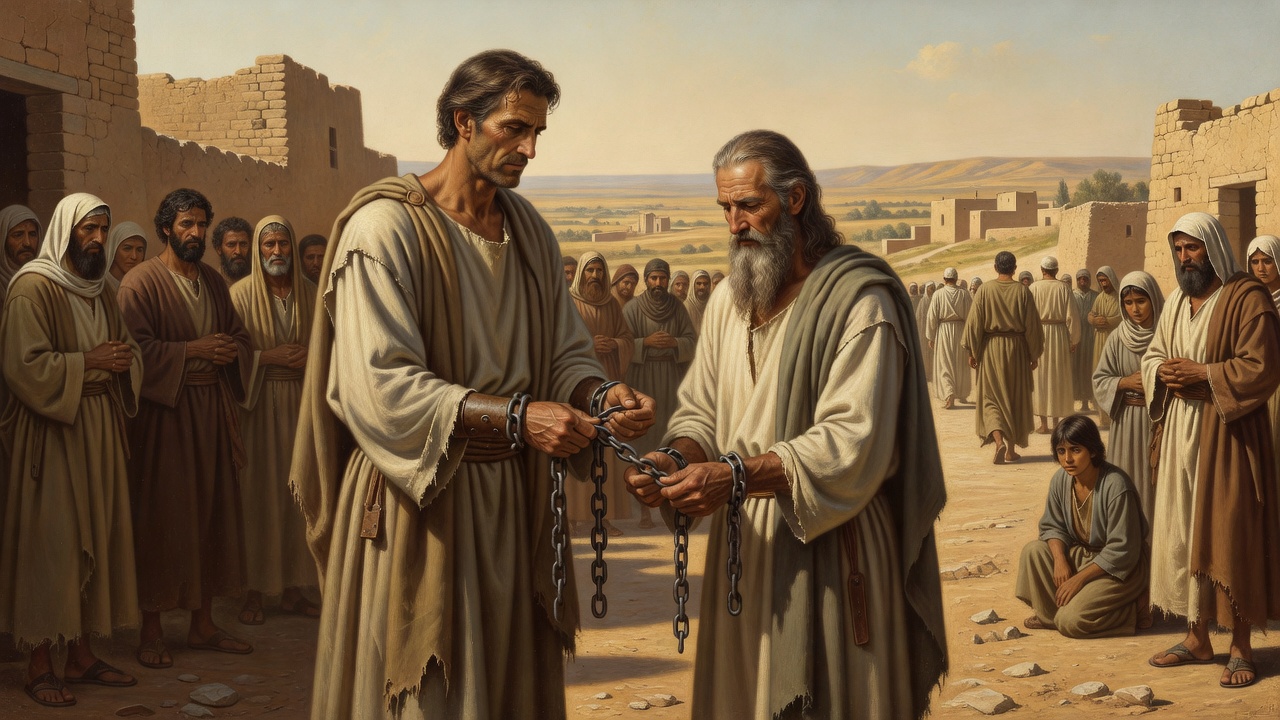
- At Ramah, the Babylonian captain of the guard, Nebuzaradan, released Jeremiah from chains and offered him the choice to travel comfortably to Babylon or remain in Judah. Jeremiah chose to stay and joined Gedaliah son of Ahikam at Mizpah.Sources: the Bible text itself · Nebuzar-adan · Ramah
- Nebuchadnezzar appointed Gedaliah, whose family had previously protected Jeremiah, as governor over the poorest people remaining in the land. Gedaliah established his base at Mizpah and urged returning Judean refugees and military officers to settle down and harvest crops under Babylonian rule.Sources: the Bible text itself · Gedaliah · Ahikam · Mizpah
- The military commander Johanan warned Gedaliah that Ishmael son of Nethaniah had been sent by the Ammonite king to assassinate him. Gedaliah refused to believe the report and rejected Johanan's offer to eliminate Ishmael secretly.Sources: the Bible text itself · Johanan · Ishmael · Gedaliah
Notes written with AI assistance from open sources (Theographic Bible Metadata, CC BY-SA 4.0; Easton’s Bible Dictionary, public domain) and reviewed before publishing.
Places in this chapter
- Babylon · 32.543, 44.422 · verses 1, 4, 5, 7, 9, 11
- Jerusalem · 31.777, 35.234 · verse 1
- Chaldea · 30.962, 46.104 · verses 9, 10
- Ammon · 31.955, 35.934 · verses 11, 14
- Edom · 30.746, 35.604 · verse 11
- Moab · Today: Moab 1 · 31.181, 35.701 · verse 11
Only places identified with high confidence are shown (90% or more according to the scholarly sources compiled by OpenBible). Period map: DARE (Digital Atlas of the Roman Empire), CC BY 4.0; modern map: © OpenStreetMap contributors; places: OpenBible.info (CC BY 4.0).
Credits and license for this translation
μετάφραση των εβδομήκοντα
The Greek Septuagint with Apocrypha, compiled by Sir Lancelot C. L. Brenton
Public Domain
Language: Ἑλληνική (Greek, Ancient)
Dialect: Koine
2026-04-08
Source: http://ebible.org/grcbrent/ · eBible.org