Isaiah 64
μετάφραση των εβδομήκοντα · Tap a verse to see its cross-references.
1ὡς κηρὸς ἀπὸ προσώπου πυρὸς τήκεται, καὶ κατακαύσει πῦρ τοὺς ὑπεναντίους, καὶ φανερὸν ἔσται τὸ ὄνομά σου ἐν τοῖς ὑπεναντίοις· ἀπὸ προσώπου σου ἔθνη ταραχθήσονται, 2ὅταν ποιῇς τὰ ἔνδοξα· τρόμος λήψεται ἀπὸ σοῦ ὄρη.
3Ἀπὸ τοῦ αἰῶνος οὐκ ἠκούσαμεν, οὐδὲ οἱ ὀφθαλμοὶ ἡμῶν εἶδον Θεὸν πλήν σου, καὶ τὰ ἔργα σου, ἃ ποιήσεις τοῖς ὑπομένουσιν ἔλεον. 4Συναντήσεται γὰρ τοῖς ποιοῦσι τὸ δίκαιον, καὶ τῶν ὁδῶν σου μνησθήσονται· ἰδοὺ σὺ ὠργίσθης, καὶ ἡμεῖς ἡμάρτομεν· διατοῦτο ἐπλανήθημεν, 5καὶ ἐγενήθημεν ὡς ἀκάθαρτοι πάντες ἡμεῖς, ὡς ῥάκος ἀποκαθημένης πᾶσα ἡ δικαιοσύνη ἡμῶν· καὶ ἐξεῤῥύημεν ὡς φύλλα διὰ τὰς ἀνομίας ἡμῶν· οὕτως ἄνεμος οἴσει ἡμᾶς. 6Καὶ οὐκ ἔστιν ὁ ἐπικαλούμενος τὸ ὄνομά σου, καὶ ὁ μνησθεὶς ἀντιλαβέσθαι σου· ὅτι ἀπέστρεψας τὸ πρόσωπόν σου ἀφʼ ἡμῶν, καὶ παρέδωκας ἡμᾶς διὰ τὰς ἁμαρτίας ἡμῶν.
7Καὶ νῦν Κύριε, πατὴρ ἡμῶν σὺ, ἡμεῖς δὲ πηλός, ἔργα τῶν χειρῶν σου πάντες. 8Μὴ ὀργίζου ἡμῖν σφόδρα, καὶ μὴ ἐν καιρῷ μνησθῇς ἁμαρτιῶν ἡμῶν· καὶ νῦν ἐπίβλεψον, ὅτι λαός σου πάντες ἡμεῖς. 9Πόλις τοῦ ἁγίου σου ἐγενήθη ἔρημος, Σιὼν ὡς ἔρημος ἐγενήθη, Ἱερουσαλὴμ εἰς κατάραν. 10Ὁ οἶκος τὸ ἅγιον ἡμῶν, καὶ ἡ δόξα ἣν εὐλόγησαν οἱ πατέρες ἡμῶν, ἑγενήθη πυρίκαυστος, καὶ πάντα ἔνδοξα ἡμῶν συνέπεσε. 11Καὶ ἐπὶ πᾶσι τούτοις ἀνέσχου Κύριε, καὶ ἐσιώπησας, καὶ ἐταπείνωσας ἡμᾶς σφόδρα.
Did you know?
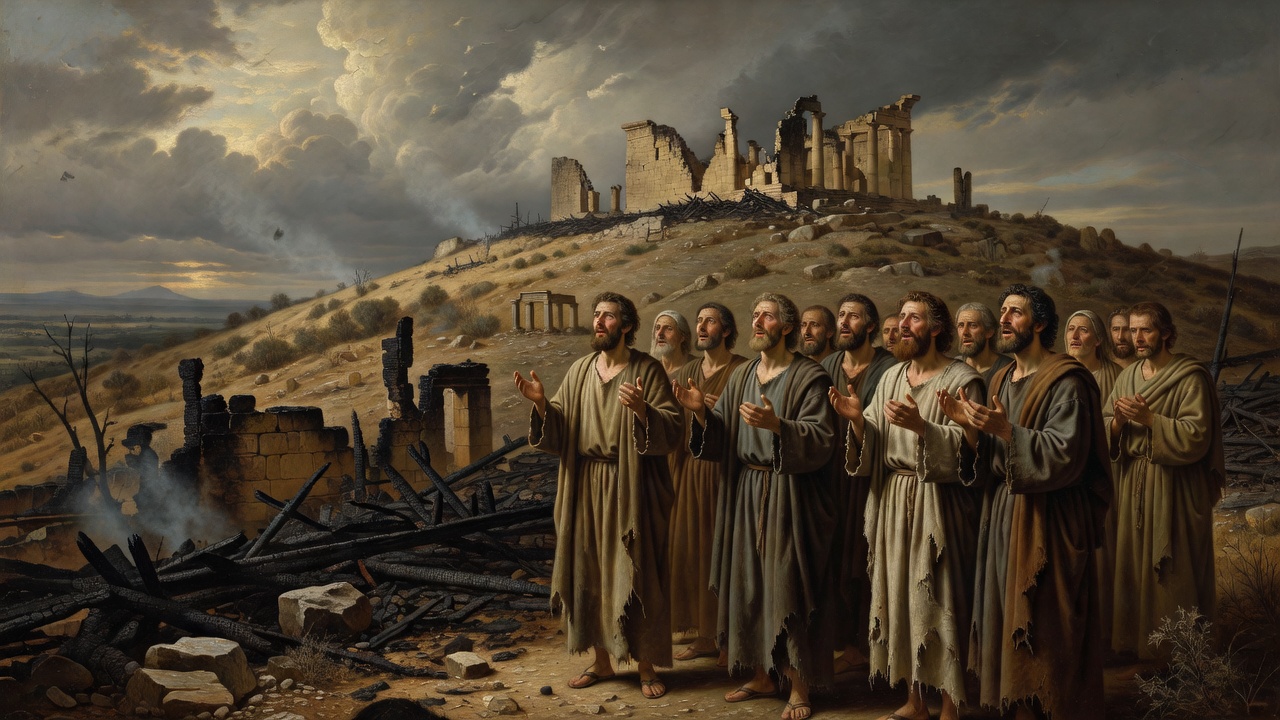
A Prayer for Mercy Amid Ruin
- The passage opens with a plea for God to rend the heavens and descend with world-shaking power, like fire that kindles brushwood. Yet it contrasts this desire for divine presence with a confession of human unworthiness, comparing people to withering leaves swept away by their own iniquities.Sources: the Bible text itself
- In Isaiah 64, the community appeals to God as a Father and craftsman, declaring, "we are the clay, and You are the potter." This imagery emphasizes human frailty and total dependence on God, pleading for divine mercy despite their acknowledged guilt.Sources: the Bible text itself
- The chapter laments the destruction of sacred spaces, describing Zion and Jerusalem as desolate wastelands. It specifically mourns the burning and ruin of the holy temple where past generations had offered praise.Sources: the Bible text itself · Zion · Jerusalem
Notes written with AI assistance from open sources (Theographic Bible Metadata, CC BY-SA 4.0; Easton’s Bible Dictionary, public domain) and reviewed before publishing.
Places in this chapter
Only places identified with high confidence are shown (90% or more according to the scholarly sources compiled by OpenBible). Period map: DARE (Digital Atlas of the Roman Empire), CC BY 4.0; modern map: © OpenStreetMap contributors; places: OpenBible.info (CC BY 4.0).
Credits and license for this translation
μετάφραση των εβδομήκοντα
The Greek Septuagint with Apocrypha, compiled by Sir Lancelot C. L. Brenton
Public Domain
Language: Ἑλληνική (Greek, Ancient)
Dialect: Koine
2026-04-08
Source: http://ebible.org/grcbrent/ · eBible.org