Genesis 2
μετάφραση των εβδομήκοντα · Tap a verse to see its cross-references.
1Καὶ συνετελέσθησαν ὁ οὐρανὸς καὶ ἡ γῆ, καὶ πᾶς ὁ κόσμος αὐτῶν.
2Καὶ συνετέλεσεν ὁ Θεὸς ἐν τῇ ἡμέρᾳ τῇ ἕκτῃ τὰ ἔργα αὐτοῦ, ἃ ἐποίησε· καὶ κατέπαυσε τῇ ἡμέρᾳ τῇ ἑβδόμῃ ἀπὸ πάντων τῶν ἔργων αὐτοῦ, ὧν ἐποίησε. 3Καὶ εὐλόγησεν ὁ Θεὸς τὴν ἡμέραν τὴν ἑβδόμην, καὶ ἡγίασεν αὐτήν, ὅτι ἐν αὐτῇ κατέπαυσεν ἀπὸ πάντων τῶν ἔργων αὐτοῦ, ὧν ἤρξατο ὁ Θεὸς ποιῆσαι.
4Αὕτη ἡ βίβλος γενέσεως οὐρανοῦ καὶ γῆς, ὅτε ἐγένετο, ᾗ ἡμέρᾳ ἐποίησε Κύριος ὁ Θεὸς τὸν οὐρανὸν καὶ τὴν γῆν, 5καὶ πᾶν χλωρὸν ἀγροῦ πρὸ τοῦ γενέσθαι ἐπὶ τῆς γῆς, καὶ πάντα χόρτον ἀγροῦ πρὸ τοῦ ἀνατεῖλαι· οὐ γὰρ ἔβρεξεν ὁ Θεὸς ἐπὶ τὴν γῆν, καὶ ἄνθρωπος οὐκ ἦν ἐργάζεσθαι αὐτήν. 6Πηγὴ δὲ ἀνέβαινεν ἐκ τῆς γῆς, καὶ ἐπότιζε πᾶν τὸ πρόσωπον τῆς γῆς. 7Καὶ ἔπλασεν ὁ Θεὸς τὸν ἄνθρωπον, χοῦν ἀπὸ τῆς γῆς· καὶ ἐνεφύσησεν εἰς τὸ πρόσωπον αὐτοῦ πνοὴν ζωῆς, καὶ ἐγένετο ὁ ἄνθρωπος εἰς ψυχὴν ζῶσαν.
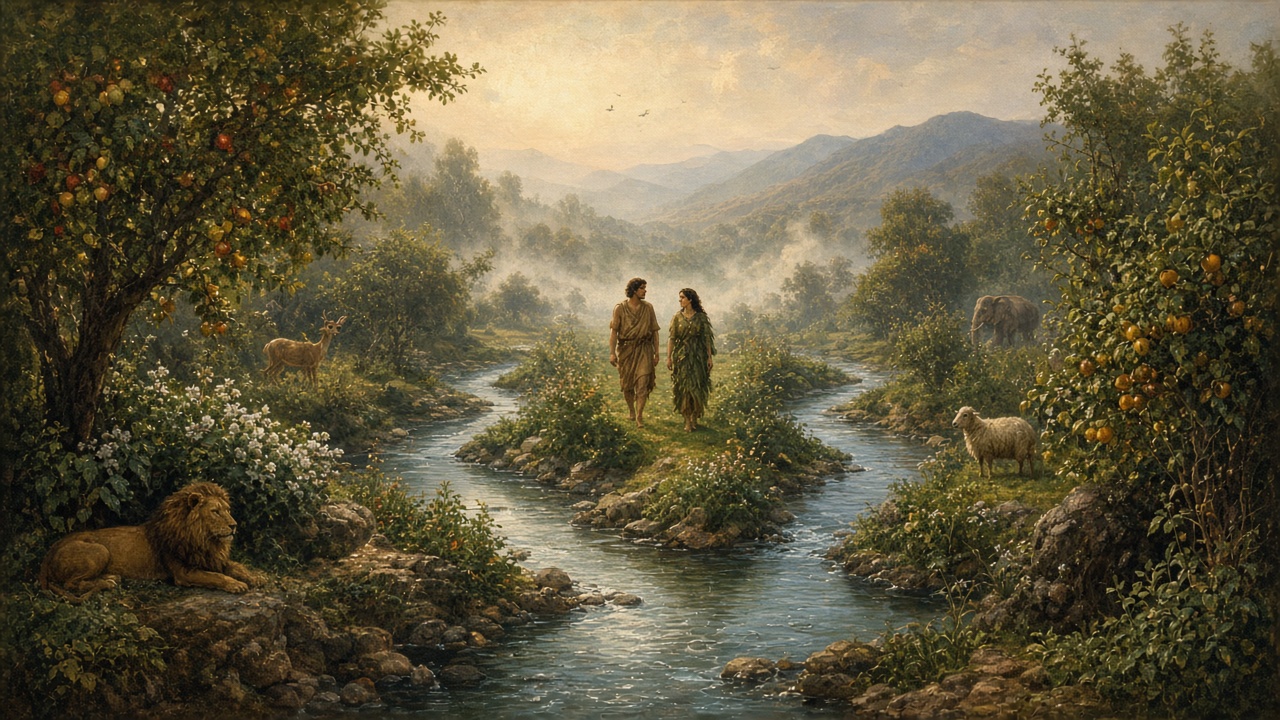
8Καὶ ἐφύτευσεν ὁ Θεὸς παράδεισον ἐν Ἐδὲμ κατὰ ἀνατολάς· καὶ ἔθετο ἐκεῖ τὸν ἄνθρωπον, ὃν ἔπλασε. 9Καὶ ἐξανέτειλεν ὁ Θεὸς ἔτι ἐκ τῆς γῆς πᾶν ξύλον ὡραῖον εἰς ὅρασιν, καὶ καλὸν εἰς βρῶσιν, καὶ τὸ ξύλον τῆς ζωῆς ἐν μέσῳ τοῦ παραδείσου, καὶ τὸ ξύλον τοῦ εἰδέναι γνωστὸν καλοῦ καὶ πονηροῦ. 10Ποταμὸς δὲ ἐκπορεύεται ἐξ Ἐδὲμ ποτίζειν τὸν παράδεισον· ἐκεῖθεν ἀφορίζεται εἰς τέσσαρας ἀρχάς. 11Ὄνομα τῷ ἑνὶ, Φισῶν· οὗτος ὁ κυκλῶν πᾶσαν τὴν γῆν Εὐιλάτ· ἐκεῖ οὗ ἐστι τὸ χρυσίον. 12Τὸ δὲ χρυσίον τῆς γῆς ἐκείνης καλόν· καὶ ἐκεῖ ἐστιν ὁ ἄνθραξ, καὶ ὁ λίθος ὁ πράσινος. 13Καὶ ὄνομα τῷ ποταμῷ τῷ δευτέρῳ, Γεῶν· οὗτος ὁ κυκλῶν πᾶσαν τὴν γὴν Αἰθιοπίας. 14Καὶ ὁ ποταμὸς ὁ τρίτος, Τίγρις· οὗτος ὁ προπορευόμενος κατέναντι Ἀσσυρίων· ὁ δὲ ποταμὸς ὁ τέταρτος, Εὐφράτης. 15Καὶ ἔλαβε Κύριος ὁ Θεὸς τὸν ἄνθρωπον ὃν ἔπλασε, καὶ ἔθετο αὐτὸν ἐν τῷ παραδείσῳ τῆς τρυφῆς, ἐργάζεσθαι αὐτὸν καὶ φυλάσσειν. 16Καὶ ἐνετείλατο Κύριος ὁ Θεὸς τῷ Ἀδὰμ, λέγων, ἀπὸ παντὸς ξύλου τοῦ ἐν τῷ παραδείσῳ βρώσει φαγῇ. 17Ἀπὸ δὲ τοῦ ξύλου τοῦ γινώσκειν καλὸν καὶ πονηρὸν, οὐ φάγεσθε ἀπʼ αὐτοῦ· ᾗ δʼ ἂν ἡμέρᾳ φάγητε ἀπʼ αὐτοῦ, θανάτῳ ἀποθανεῖσθε.
18Καὶ εἶπε Κύριος ὁ Θεὸς, οὐ καλὸν εἶναι τὸν ἄνθρωπον μόνον· ποιήσωμεν αὐτῷ βοηθὸν κατʼ αὐτόν. 19Καὶ ἔπλασεν ὁ Θεὸς ἔτι ἐκ τῆς γῆς πάντα τὰ θηρία τοῦ ἀγροῦ, καὶ πάντα τὰ πετεινὰ τοῦ οὐρανοῦ· καὶ ἤγαγεν αὐτὰ πρὸς τὸν Ἀδὰμ, ἰδεῖν τί καλέσει αὐτά· καὶ πᾶν ὃ ἐὰν ἐκάλεσεν αὐτὸ Ἀδὰμ ψυχὴν ζῶσαν, τοῦτο ὄνομα αὐτῷ. 20Καὶ ἐκάλεσεν Ἀδὰμ ὀνόματα πᾶσι τοῖς κτήνεσι, καὶ πᾶσι τοῖς πετεινοῖς τοῦ οὐρανοῦ, καὶ πᾶσι τοῖς θηρίοις τοῦ ἀγροῦ· τῷ δὲ Ἀδὰμ οὐχ εὑρέθη βοηθὸς ὅμοιος αὐτῷ. 21Καὶ ἐπέβαλεν ὁ Θεὸς ἔκστασιν ἐπὶ τὸν Ἀδὰμ, καὶ ὕπνωσε· καὶ ἔλαβε μίαν τῶν πλευρῶν αὐτοῦ, καὶ ἀνεπλήρωσε σάρκα ἀντʼ αὐτῆς. 22Καὶ ᾠκοδόμησεν ὁ Θεὸς τὴν πλευρὰν, ἣν ἔλαβεν ἀπὸ τοῦ Ἀδὰμ εἰς γυναῖκα· καὶ ἤγαγεν αὐτὴν πρὸς τὸν Ἀδάμ. 23Καὶ εἶπεν Ἀδάμ· τοῦτο νῦν ὀστοῦν ἐκ τῶν ὀστέων μου, καὶ σὰρξ ἐκ τῆς σαρκός μου· αὕτη κληθήσεται γυνὴ, ὅτι ἐκ τοῦ ἀνδρὸς αὐτῆς ἐλήφθη. 24Ἕνεκεν τούτου καταλείψει ἄνθρωπος τὸν πατέρα αὐτοῦ καὶ τὴν μητέρα, καὶ προσκολληθήσεται πρὸς τὴν γυναῖκα αὐτοῦ· καὶ ἔσονται οἱ δύο εἰς σάρκα μίαν. 25Καὶ ἦσαν οἱ δύο γυμνοὶ, ὅ, τε Ἀδὰμ καὶ ἡ γυνὴ αὐτοῦ, καὶ οὐκ ᾐσχύνοντο.
Did you know?
Adam, Eden, and the Four Rivers
- Adam, meaning “red,” is a Babylonian word and the ordinary name for a human being, with the same sense in Hebrew and in Assyrian. It was given to the first man. He was formed from the dust of the ground—hence the name—and God breathed into his nostrils the breath of life.Sources: Adam · the Bible text itself
- A river flowed out of Eden and divided into four headwaters: the Pishon, the Gihon, the Hiddekel, and the Euphrates. Some identify the Pishon with the Phasis or the Halys, others with the Indus, the Ganges, or still other rivers; the Gihon has been identified with the Nile, and others regard it as the Oxus, the Araxes, or the Ganges. The Hiddekel is the Tigris, called by the Accadians the river of Idikla; Gesenius understood the name as “the rapid Tigris.”Sources: the Bible text itself · Pison · Gihon · Hiddekel
- The site of Eden, the garden in which the first parents lived, has been discussed more than almost any other geographical question. It has been placed in Armenia, in the region west of the Caspian Sea, in Media, near Damascus, in Palestine, in southern Arabia, and in Babylonia. Easton's Bible Dictionary (1897) seeks it along the Tigris and the Euphrates of western Asia, in the land of Shinar, or Babylonia.Sources: Eden
Notes written with AI assistance from open sources (Theographic Bible Metadata, CC BY-SA 4.0; Easton’s Bible Dictionary, public domain) and reviewed before publishing.
Places in this chapter
- Assyria · 36.359, 43.153 · verse 14
- Euphrates · Today: Euphrates River · 31.004, 47.442 · verse 14
- Tigris · Today: Tigris River · 31.004, 47.442 · verse 14
Only places identified with high confidence are shown (90% or more according to the scholarly sources compiled by OpenBible). Period map: DARE (Digital Atlas of the Roman Empire), CC BY 4.0; modern map: © OpenStreetMap contributors; places: OpenBible.info (CC BY 4.0).
Credits and license for this translation
μετάφραση των εβδομήκοντα
The Greek Septuagint with Apocrypha, compiled by Sir Lancelot C. L. Brenton
Public Domain
Language: Ἑλληνική (Greek, Ancient)
Dialect: Koine
2026-04-08
Source: http://ebible.org/grcbrent/ · eBible.org