Exodus 1
μετάφραση των εβδομήκοντα · Tap a verse to see its cross-references.
About this book
About Exodus
- Easton's Bible Dictionary (1897) dates Israel's departure from Egypt to about 1490 B.C., four hundred and eighty years before Solomon's temple was built. How long they had sojourned there is disputed: Exodus 12:40 gives four hundred and thirty years, Genesis 15 speaks of about four hundred, and the Greek and Samaritan versions also count the years in Canaan, so some reckon only two hundred and fifteen years in Egypt.Sources: Easton: Exodus
- Easton's Bible Dictionary (1897) does not name the author of Exodus. The entry on Moses says Jacob and his sons went down into Egypt, probably about three hundred and fifty years before Moses was born, and that a Hyksos king, from a pastoral Semitic people of Asia who then ruled Egypt, settled them in Goshen. Moses later spent forty years in Midian, where that people pastured flocks on the Sinai peninsula, and became the son-in-law of Jethro, priest of Midian.Sources: Moses · Easton: Exodus · Midian · Jethro
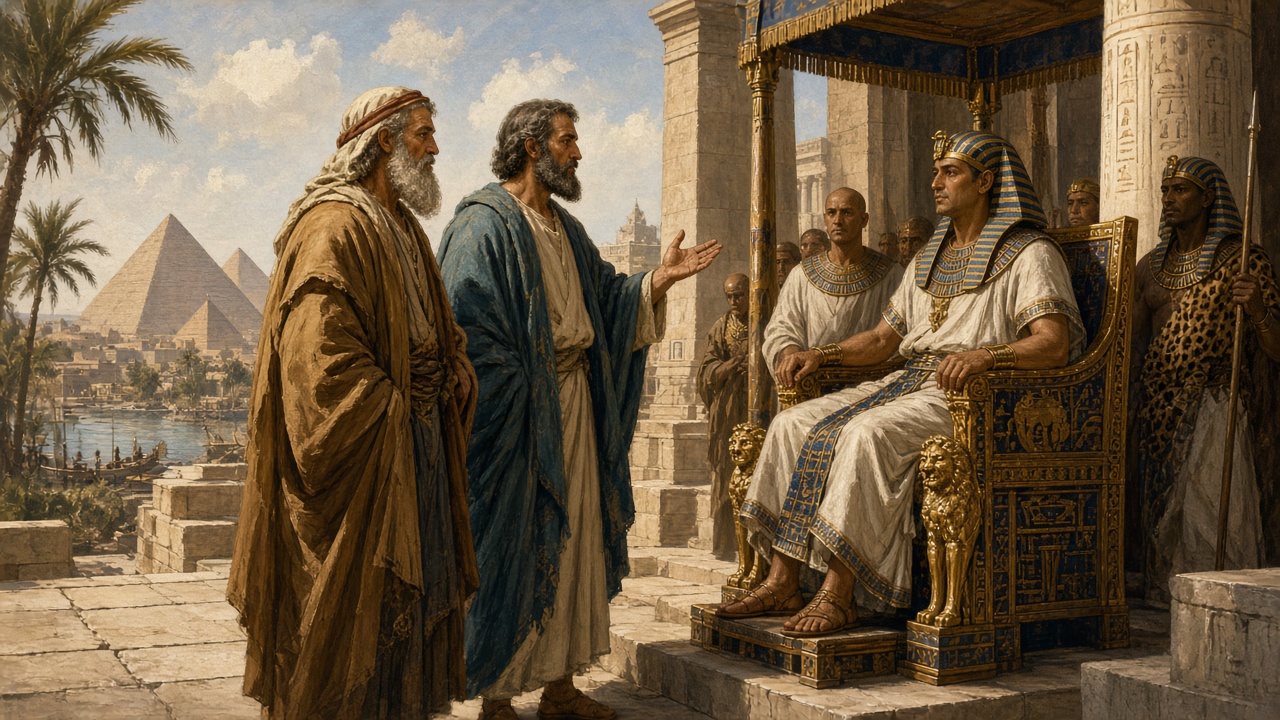
- Who was Pharaoh at the departure is also disputed. Easton's Bible Dictionary (1897) calls him probably Menephtah I, the fourteenth and eldest surviving son of Rameses II, who lived at Zoan and met Moses and Aaron there, while noting that some favor Seti II, whose reign began peacefully and ended in sudden disaster.Sources: Pharaoh (of the Exodus)
- The plagues, Easton writes, loosened Pharaoh's hold, and the Passover was instituted as a perpetual memorial, with the lamb's blood sprinkled on the doorposts. In the third month the people reached Mount Sinai, also called Horeb, about one hundred and fifty miles from the Red Sea, and camped there about a year. The last twenty-two chapters of Exodus record that stay, including the tabernacle, whose Holy Place had no opening for daylight and was lit only by the golden candlestick.Sources: Easton: Exodus · Mount Sinai · Holy Place
- Aaron, eldest son of Amram and Jochebed, was born in Egypt three years before Moses and was sent to meet him so the two could work together. At Rephidim, Joshua, also born in Egypt, commanded Israel's fighters when the Amalekites, a pastoral people living between the Dead Sea and the Red Sea, tried to bar their way.Sources: Aaron · Joshua · Amalek
Notes written with AI assistance from open sources (Theographic Bible Metadata, CC BY-SA 4.0; Easton’s Bible Dictionary, public domain) and reviewed before publishing.
1ΤΑΥΤΑ τὰ ὀνόματα τῶν υἱῶν Ἰσραὴλ τῶν εἰσπεπορευμένων εἰς Αἴγυπτον ἅμα Ἰακὼβ τῷ πατρὶ αὐτῶν, ἕκαστος πανοικὶ αὐτῶν εἰσήλθοσαν. 2Ῥουβὴν, Συμεών, Λευὶ, Ἰούδας, 3Ἰσσάχαρ, Ζαβουλὼν, Βενιαμὶν, 4Δὰν, καὶ Νεφθαλὶ, Γὰδ, καὶ Ἀσήρ. 5Ἰωσὴφ δὲ ἦν ἐν Αἰγύπτῳ· ἦσαν δὲ πᾶσαι ψυχαὶ ἐξ Ἰακὼβ, πέντε καὶ ἑβδομήκοντα. 6Ἐτελεύτησε δὲ Ἰωσὴφ, καὶ πάντες οἱ ἀδελφοὶ αὐτοῦ, καὶ πᾶσα ἡ γενεὰ ἐκείνη. 7Οἱ δὲ υἱοὶ Ἰσραὴλ ηὐξήθησαν, καὶ ἐπληθύνθησαν, καὶ χυδαῖοι ἐγένοντο, καὶ κατίσχυον σφόδρα σφόδρα· ἐπλήθυνε δὲ ἡ γῆ αὐτούς. 8Ἀνέστη δὲ βασιλεὺς ἕτερος ἐπʼ Αἴγυπτον, ὃς οὐκ ᾔδει τὸν Ἰωσήφ. 9Εἶπε δὲ τῷ ἔθνει αὐτοῦ, ἰδοὺ τὸ γένος τῶν υἱῶν Ἰσραὴλ μέγα πλῆθος, καὶ ἰσχύει ὑπὲρ ἡμᾶς. 10Δεῦτε οὖν κατασοφισώμεθα αὐτοὺς, μήποτε πληθυνθῇ, καὶ ἡνίκα ἂν συμβῇ ἡμῖν πόλεμος, προστεθήσονται καὶ οὗτοι πρὸς τοὺς ὑπεναντίους, καὶ ἐκπολεμήσαντες ἡμᾶς, ἐξελεύσονται ἐκ τῆς γῆς. 11Καὶ ἐπέστησεν αὐτοῖς ἐπιστάτας τῶν ἔργων, ἵνα κακώσωσιν αὐτοὺς ἐν τοῖς ἔργοις. Καὶ ᾠκοδόμησαν πόλεις ὀχυρὰς τῷ Φαραῷ, τήν τε Πειθὼ, καὶ Ῥαμεσσῆ, καὶ Ὢν, ἥ ἐστιν Ἡλιού πολις. 12Καθότι δὲ αὐτοὺς ἐταπείνουν, τοσούτῳ πλείους ἐγίνοντο, καὶ ἴσχυον σφόδρα σφόδρα· καὶ ἐβδελύσσοντο οἱ Αἰγύπτιοι ἀπὸ τῶν υἱῶν Ἰσραήλ. 13Καὶ κατεδυνάστευον οἱ Αἰγύπτιοι τοὺς υἱοὺς Ἰσραὴλ βίᾳ. 14Καὶ κατωδύνων αὐτῶν τὴν ζωὴν ἐν τοῖς ἔργοις τοῖς σκληροῖς, τῷ πηλῷ καὶ τῇ πλινθείᾳ, καὶ πᾶσι τοῖς ἔργοις τοῖς ἐν τοῖς πεδίοις, κατὰ πάντα τὰ ἔργα, ὧν κατεδουλοῦντο αὐτοὺς μετὰ βίας.
15Καὶ εἶπεν ὁ βασιλεὺς τῶν Αἰγυπτίων ταῖς μαίαις τῶν Ἐβραίων, τῇ μιᾷ αὐτῶν ὄνομα Σεπφώρα, καὶ τὸ ὄνομα τῆς δευτέρας Φουά· 16Καὶ εἶπεν, ὅταν μαιοῦσθε τὰς Ἐβραίας, καὶ ὦσι πρὸς τῷ τίκτειν, ἐὰν μὲν ἄρσεν ᾖ, ἀποκτείνατε αὐτό· ἐὰν δὲ θῆλυ, περιποιεῖσθε αὐτό. 17Ἐφοβήθησαν δὲ αἱ μαῖαι τὸν Θεὸν, καὶ οὐκ ἐποίησαν καθότι συνέταξεν αὐταῖς ὁ βασιλεὺς Αἰγύπτου, καὶ ἐζωογόνουν τὰ ἄρσενα. 18Ἐκάλεσε δὲ ὁ βασιλεὺς Αἰγύπτου τὰς μαίας, καὶ εἶπεν αὐταῖς, τί ὅτι ἐποιήσατε τὸ πρᾶγμα τοῦτο, καὶ ἐζωογονεῖτε τὰ ἄρσενα; 19Εἶπαν δὲ αἱ μαῖαι τῷ Φαραῷ, οὐχ ὡς γυναῖκες Αἰγύπτου αἱ Ἐβραῖαι· τίκτουσι γὰρ πρὶν ἢ εἰσελθεῖν πρὸς αὐτὰς τὰς μαίας· καὶ ἔτικτον. 20Εὖ δὲ ἐποίει ὁ Θεὸς ταῖς μαίαις· καὶ ἐπλήθυνεν ὁ λαὸς, καὶ ἴσχυε σφόδπα. 21Ἐπεὶ δὲ ἐφοβοῦντο αἱ μαῖαι τὸν Θεὸν, ἐποίησαν ἑαυταῖς οἰκίας. 22Συνέταξε δὲ Φαραὼ παντὶ τῷ λαῷ αὐτοῦ, λέγων, πᾶν ἄρσεν, ὃ ἐὰν τεχθῇ τοῖς Ἑβραίοις, εἰς τὸν ποταμὸν ῥίψατε, καὶ πᾶν θῆλυ, ζωογονεῖτε αὐτό.
Did you know?
Israel's Growth and Oppression in Egypt
- Easton's Bible Dictionary (1897) says that the Hebrews in Egypt were under Joseph's protection for about seventy years, and that after his death their condition changed only gradually. It notes that the new king who did not know Joseph was generally supposed to be Aahmes I, whom Josephus calls Amosis, though discoveries of that time led the dictionary to conclude that he was Seti, after the Hyksos were driven out and the former dynasty restored.Sources: Pharaoh · the Bible text itself
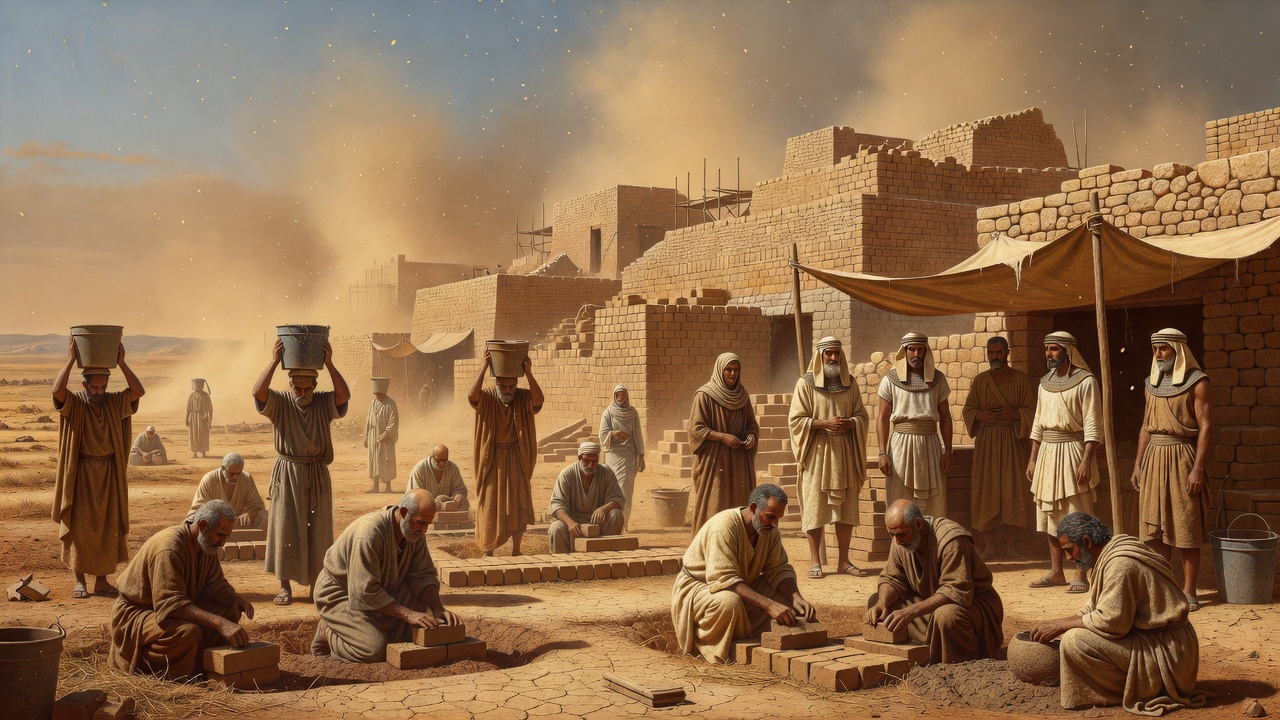
- Set to forced labor, the Israelites built Pithom and Rameses as store cities for Pharaoh. Easton's Bible Dictionary (1897) explains Pithom as Egyptian Pa-Tum, 'house of Tum,' the sun-god, and calls it a treasure city built for Pharaoh Rameses II; it identifies the site with Tell-el-Maskhuta, where ruins of supposed grain-chambers were reported in 1883.Sources: Pithom · Raamses · the Bible text itself
- Pharaoh then commanded that every son born to the Hebrews be thrown into the river. Easton's Bible Dictionary (1897) notes that the name Nile does not appear in Scripture; the Old Testament calls that river Sihor, 'the black stream,' or simply 'the river,' as in Exodus 1:22.Sources: Nile · the Bible text itself
Notes written with AI assistance from open sources (Theographic Bible Metadata, CC BY-SA 4.0; Easton’s Bible Dictionary, public domain) and reviewed before publishing.
Places in this chapter
- Egypt · 30.129, 31.308 · verses 1, 5, 8, 15, 17, 18
- Nile · Today: Nile River · 31.465, 30.367 · verse 22
Only places identified with high confidence are shown (90% or more according to the scholarly sources compiled by OpenBible). Period map: DARE (Digital Atlas of the Roman Empire), CC BY 4.0; modern map: © OpenStreetMap contributors; places: OpenBible.info (CC BY 4.0).
Credits and license for this translation
μετάφραση των εβδομήκοντα
The Greek Septuagint with Apocrypha, compiled by Sir Lancelot C. L. Brenton
Public Domain
Language: Ἑλληνική (Greek, Ancient)
Dialect: Koine
2026-04-08
Source: http://ebible.org/grcbrent/ · eBible.org