Numbers 6
Geeshsha Maxaafa · Tap a verse to see its cross-references.
Nazraawe Woga
1Goday Museko, 2“Isra7eele asaa haysada gada kiita; adde gidin woyko macca bana Godaas dummayidi Naazirawe gidanaw qangiko, 3woyne woyko hara mathoyiya ushshi uyopo. Caalabanne mathoyaba uyopo; woyne teera, tiyanne mela moopo. 4I bana Godaas dummayida wode ubban, woyne ayfiya gidin poquwa gidin woyko kochaa gidin moopo.
5“I bana Godaas dummayida wode ubban, ba huuphiya meedetofo woyko qanxetofo. I ba huuphe binaana adussidi dicho. I bana Godaas dummayida wodey poletana gakanaw geeshshi gidanaw koshshees. 6I bana Godaas dummayida woden ubban ahako shiiqopo. 7I bana dummayidaysa erisey iya huuphiya gidiya gisho, iya aaway woyko iya aayiya woyko iya ishay woyko iya michiya hayqiko enta aha bochidi bana tunisopo. 8I bana Godaas dummayida wode ubban Godaas geeshshi.
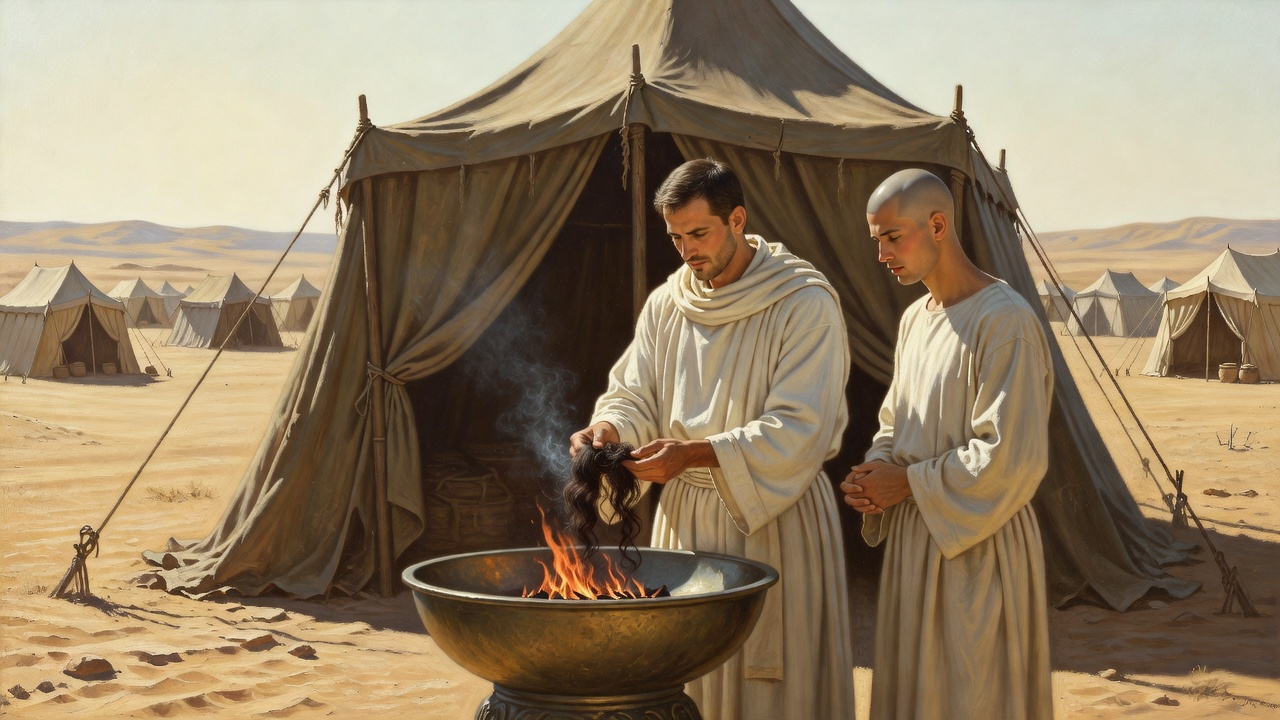
9“Asi iya matan qoponna hayqiko, Godaas geeshshi gidida ba huuphiya tunisiko laapun gallas gam7idi ba huuphiya meedeto. 10Hospuntha gallasan nam7u holleta woyko nam7u kuraachota Geeshsha Dunkaaniya pengen de7iya kahiniyas eho. 11Naazirawey aha bochidi tunida gisho nagarape iya geeshshanaw kahiney holletape issuwa nagara yarsho, hankuwa qassi xuussa yarsho oothidi yarsho. He gallas I ba huuphiya wogaada zaaridi Godaas geeshsho; 12I bana zaaridi Godaas dummayo. Yaatidi issi laytha maraze naaqo yarsho oothidi yarsho. I Godaas dummayida huuphey tunida gisho, kase I bana Godaas dummayidi de7ida wodey taybetenna.
13“Issi naazirawey ba qangetha wodiya ongida wode polana wogay haysa; Geeshsha Dunkaaniya penge bidi; 14borey bayna issi laytha dorsa urge xuussa yarshos, issi laytha uzzo dorsi nagara yarshos, issi maraze issifetetha yarshos he bessaa eho. 15Qassi katha yarshonne ushsha yarsho entara issife yarshanaw eho. He katha yarshoy irshoy geliboonna lo77o dhiille shamaho zaytera uuketida orde uythinne shamaho zayten tiyetida lee7o gaytan eho.
16“Kahiney he ubbaa nagara yarshonne xuussa yarsho oothidi Godaas yarsho. 17Kahiney maraziya gaytan de7iya uythaara Godaas issifetetha yarsho oothidi yarsho; kaallidi katha yarshuwanne ushsha yarshuwa yarsho. 18Naazirawey Godaas dummayida ba huuphiya Geeshsha Dunkaaniya pengen meedetidi, binaana issifetetha yarshoy eexiya taman yeggo.
19“Naazirawey ba huuphiya meedetidaape guye, kahiney doysetida maraziya gedaa ashuwa gaytan de7iya orde uythaafenne lee7o uythaafe ekidi, Naazirawiya kushen wotho. 20Yaatidi kahiney he ubbaa yuusho yarsho oothidi, Godaas yarsho. He ubbay kahiniya gisho gidiya angaasuwaranne gedaara kahiniyas geeshsha yarsho gidees. Hessafe Godaas Naazirawey woyne ushsha uyo. 21Hiza Godaas bana dummayida Naazirawey oothana mela imetida wogay haysa. Shin naazirawey yarshanaw koshshiya yarshotape aathidi immanaw qangidaba gidiko, ba qangetha gathanaw koshshees” yaagis.
Kahineti Anjiya Anjuwa
22Goday Museko, 23“Aaroninne iya adde nayti Isra7eele asaa anjiya wode haysada yaagidi anjite yaaga;
24“ ‘Goday hintena anjo, Goday hintena naago;
25Goday ba som7uwa hintew poo7iso; I hintew qadheto;
26Goday ba keeha ayfiyan xeello; I hintew sarotethi immo’ yaagidi anjite” yaaga.
27“Enti Isra7eele asaa ta sunthan anjiya wode ta enta anjana” yaagis.
Did you know?
The Nazirite Vow and the Priestly Blessing
- The Nazirite vow was a voluntary period of special consecration to God available to both men and women. During this time, the person had to abstain completely from grape products and fermented drinks, leave their hair uncut, and avoid ritual defilement from any dead body, even that of an immediate family member.Sources: the Bible text itself
- When the period of separation ended, the Nazirite brought sacrifices to the entrance of the Tent of Meeting, shaved their head of hair, and burned the hair in the fire beneath the peace offering sacrifice. After the priest offered the required portions before God, the vow concluded and the person was allowed to drink wine again.Sources: the Bible text itself
- The chapter concludes with the priestly blessing that God instructed Moses to give to Aaron and his sons. By invoking God's protection, shining face, grace, and peace, the priests placed the divine name upon the people of Israel.Sources: the Bible text itself · Moses · Aaron
Notes written with AI assistance from open sources (Theographic Bible Metadata, CC BY-SA 4.0; Easton’s Bible Dictionary, public domain) and reviewed before publishing.
Credits and license for this translation
Geeshsha Maxaafa
Gofa: Geeshsha Maxaafa (Bible) for Ethiopia, Latin script
copyright © 2024 The Word for the World International
Language: Goofa (Gofa)
Contributor: The Word for the World International
This translation is made available to you under the terms of the
Creative Commons Attribution Share-Alike license 4.0.
You have permission to share and redistribute this Bible translation in any format and to make reasonable revisions and adaptations of this translation, provided that:
You include the above copyright and source information.
If you make any changes to the text, you must indicate that you did so in a way that makes it clear that the original licensor is not necessarily endorsing your changes.
If you redistribute this text, you must distribute your contributions under the same license as the original.
Pictures included with Scriptures and other documents on this site are licensed just for use with those Scriptures and documents.
For other uses, please contact the respective copyright owners.
Note that in addition to the rules above, revising and adapting God's Word involves a great responsibility to be true to God's Word. See Revelation 22:18-19.
2025-05-03
Source: http://ebible.org/gofl/ · eBible.org