Malachi 1
Geeshsha Maxaafa · Tap a verse to see its cross-references.
About this book
About Malachi
- Easton's Bible Dictionary (1897) presents Malachi, a name meaning "messenger" or "angel," as the last of the minor prophets and the writer of the last book of the Old Testament canon. Nothing is known of him beyond what is contained in his book of prophecies.Sources: Easton: Malachi · Malachi
- Some have supposed that the name is simply a title for a messenger of Jehovah, not a proper name. Easton's Bible Dictionary (1897) concludes, however, that there is reason to regard Malachi as the prophet's ordinary name.Sources: Easton: Malachi · Malachi
- Easton's Bible Dictionary (1897) dates the prophecies to about 420 B.C., after Nehemiah's second return from Persia, or possibly before that return. Because Ezra does not mention him and he does not mention the restoration of the temple, the dictionary infers that he prophesied after Haggai and Zechariah.Sources: Easton: Malachi
- Easton's Bible Dictionary (1897) treats Malachi as a contemporary of Nehemiah, comparing Malachi 2:8 with Nehemiah 13:15 and Malachi 2:10-16 with Nehemiah 13:23. It also notes that the temple services were still in existence, citing Malachi 1:10, 3:1 and 3:10.Sources: Easton: Malachi
Notes written with AI assistance from open sources (Theographic Bible Metadata, CC BY-SA 4.0; Easton’s Bible Dictionary, public domain) and reviewed before publishing.
Yayqooba Dosetetha, Eesawe Ixetethaa
1Goday Milkiyaasa baggara Isra7eele asaas odida tinbite qaalay haysa.
2Goday ba asaako, “Ta hintena dosas” yaagees.
Shin hinte, “Ne nuna aybin dosadii?” yaageeta.
Goday zaaridi, “Eesawey Yayqooba isha gidenneyee? Shin taani Yayqooba dosas; 3Eesawe ixas. Taani derey dariya Eesawe biitta baysa oothas; iya laata workanati gupiya mela biitta oothas” yaagees.
4Eesawe koche gidida Edoome asay, “Nu katamati laaletikoka, nu enta zaaridi keexana” yaagikoka,
Ubbaafe Wolqaama Goday, “Enti zaaridi keexana, shin taani laallana. Asay enta, ‘Ha biittay iita biitta; ha asayka Goday merinaw hanqetida ase’ yaagana” yaagees.
5Hessa hinte, hinte ayfen be7idi, “Heko, Goday Isra7eele biittafe karenka wolqaama” yaagana.
Boretida Yarsho
6Ubbaafe Wolqaama Goday haysada yaagees: “Hinteno, ta sunthaa kawushiya kahineto, na7i ba aawa, aylley ba godaa bonchees. Yaatin, taani hintew aawa gidiko, hinte tana bonchiya bonchoy awunee? Taani hintew godaa gidiko, hinte taw yayiya yashay awunee? Hinte ta sunthaa kawushshideta. Hinte zaaridi, ‘Nuuni ne sunthaa waatidi kawushshido?’ yaageeta.
7“Hinte ta yarsho bessan tuna kathi wotheta. Qassi, ‘Nuuni nena waatidi tunisido?’ yaageeta. Hinte, ‘Godaa yarsho bessay kadhetidaba’ yaagidi tana tunisideta. 8Hinte qooqe mehe yarshiya wode hessi qoho gidenneyee? Hinte hargancho woyko wobe mehe yarshiya wode hessi qoho gidenneyee? Hinte hessa mela mehe hinte halaqaas immiyako, I hessa ekanabaanne iyan ufaytanaaba hintew daanii? yaagees Ubbaafe Wolqaama Goday.
9“Ha77i Xoossay hintew qadhetana mela iya woossite. Wona hinte hessa mela imota iyaw immin, I hintena maaddanee?” yaagees Ubbaafe Wolqaama Goday.
10“Hinte ta yarsho bessan hada tama eethonna mela xoossa keetha pengiya gordiya issi asi bentida gidereneshin! Ta hintenan ufaytike; hinte immiya imotaka ekike” yaagees Ubbaafe Wolqaama Goday.
11“Awi doliyasope wulliyaso gakanaw ta sunthay kawotethata giddon wolqaama. Ubba bessan ta sunthaas ixaane cuyisananne geeshsha yarsho yarshana; ta sunthay kawotethata giddon wolqaama” yaagees Ubbaafe Wolqaama Goday.
12“Shin hinte, ‘Godaa yarsho bessay tuna; iyan yarshetiya kathika kadhetidaba’ yaagidi iya kawushshideta. 13Qassi hinte, ‘Haysi coo daabursi’ yaagidi, qidhidi cuttideta.
“Hinte bonqidi ehidaba woyko wobe woyko hargancho mehe yarsheeta; yaatin, taani hessa hinte kushepe ekanaw bessii? 14Taani gita kawo; ta sunthayka kawotethata giddon bonchetidaysa gidiya gisho, Xoossas immana gidi doorida marazey iya mehiya giddon de7ishin, iya aggidi, boretida maraze yarsho shiishiya asinne cimmiya asi baadetidaba gido” yaagees Goday.
Did you know?
Honoring God and Defective Offerings
- The name Malachi means messenger or angel. While some have suggested it was a title rather than a proper name, scholars and traditions widely treat it as the prophet's personal name, placing his ministry during the period of Nehemiah, after Haggai and Zechariah.Sources: Malachi
- The opening dispute recalls the twin brothers Jacob and Esau, the ancestors of Israel and Edom. The text contrasts God's covenant love for Israel with the judgment and desolation coming upon the mountainous region of Edom.Sources: Esau (Edom) · Jacob (Israel) · Edom · the Bible text itself
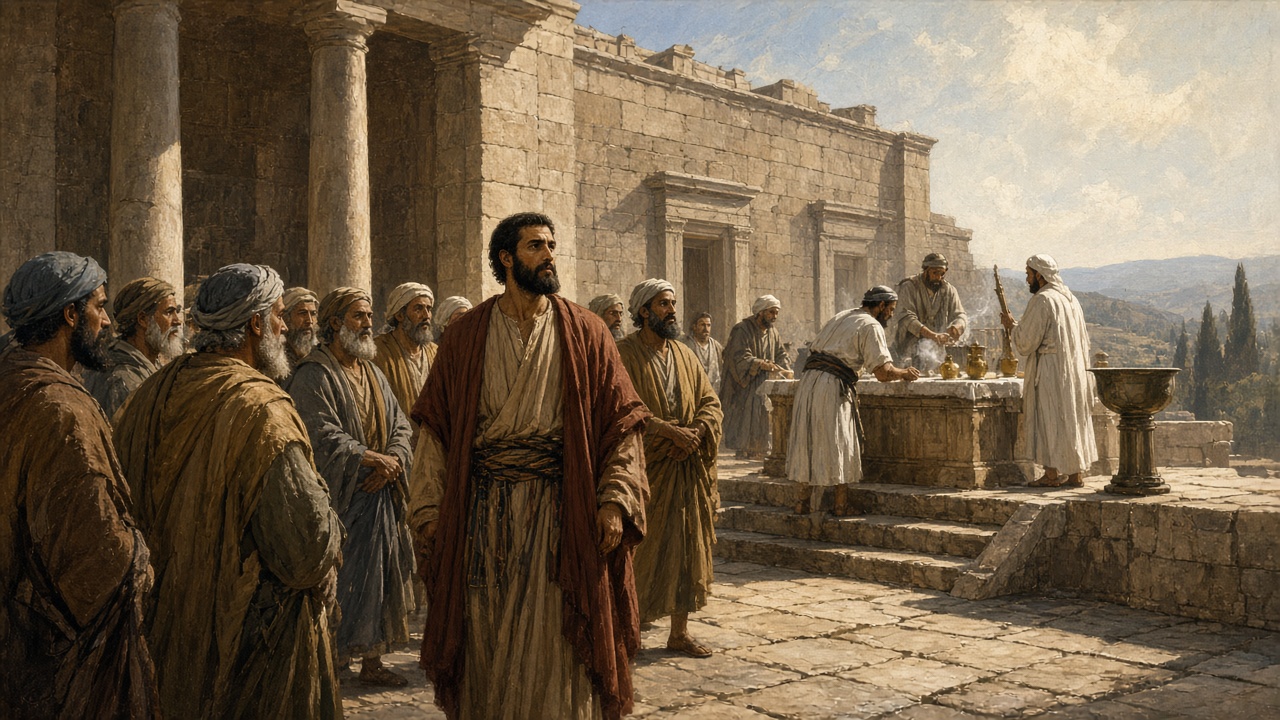
- The priests are rebuked for offering blind, lame, and diseased animals on the altar rather than unblemished livestock. Malachi exposes their disrespect by asking whether a civil governor would accept such inferior gifts.Sources: the Bible text itself
Notes written with AI assistance from open sources (Theographic Bible Metadata, CC BY-SA 4.0; Easton’s Bible Dictionary, public domain) and reviewed before publishing.
Places in this chapter
- Edom · 30.746, 35.604 · verse 4
Only places identified with high confidence are shown (90% or more according to the scholarly sources compiled by OpenBible). Period map: DARE (Digital Atlas of the Roman Empire), CC BY 4.0; modern map: © OpenStreetMap contributors; places: OpenBible.info (CC BY 4.0).
Credits and license for this translation
Geeshsha Maxaafa
Gofa: Geeshsha Maxaafa (Bible) for Ethiopia, Latin script
copyright © 2024 The Word for the World International
Language: Goofa (Gofa)
Contributor: The Word for the World International
This translation is made available to you under the terms of the
Creative Commons Attribution Share-Alike license 4.0.
You have permission to share and redistribute this Bible translation in any format and to make reasonable revisions and adaptations of this translation, provided that:
You include the above copyright and source information.
If you make any changes to the text, you must indicate that you did so in a way that makes it clear that the original licensor is not necessarily endorsing your changes.
If you redistribute this text, you must distribute your contributions under the same license as the original.
Pictures included with Scriptures and other documents on this site are licensed just for use with those Scriptures and documents.
For other uses, please contact the respective copyright owners.
Note that in addition to the rules above, revising and adapting God's Word involves a great responsibility to be true to God's Word. See Revelation 22:18-19.
2025-05-03
Source: http://ebible.org/gofl/ · eBible.org