Joshua 1
Geeshsha Maxaafa · Tap a verse to see its cross-references.
About this book
About Joshua
- Easton's Bible Dictionary (1897) explains Joshua's name as "Jehovah is his help" or "Jehovah the Saviour." He was the son of Nun, of the tribe of Ephraim, born in Egypt, and Moses' successor as leader of Israel; the wars of conquest he carried on are recorded in the book that bears his name. That entry does not name the book's author or give a date for its writing.Sources: Easton: Joshua · Joshua
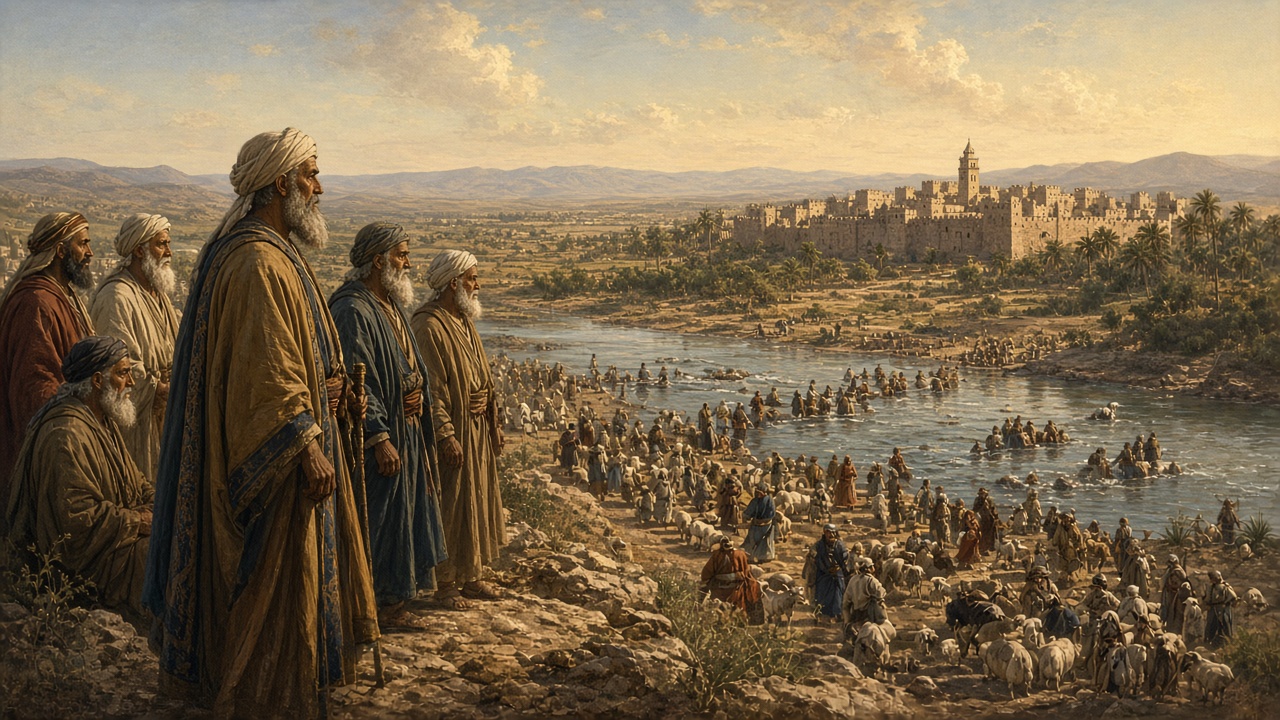
- When Joshua took command, the people were encamped at Shittim. They crossed the Jordan and camped at Gilgal, where, Easton says, he circumcised the people and kept the Passover. Jericho, a fortified city among palm trees about five miles west of the Jordan, is described as Canaan's strongest fortress and the key to western Palestine; Ai, east of Bethel, was the second Canaanite city taken, after an initial defeat.Sources: Easton: Joshua · Jericho · Ai
- Easton's Bible Dictionary (1897) says Joshua conquered six nations and thirty-one kings, then divided the land among the tribes, with Timnath-serah in Mount Ephraim assigned to himself. East of the Jordan, Gilead is described as a mountainous region held by the tribes of Gad and Reuben and the southern part of Manasseh.Sources: Easton: Joshua · Gilead
- Quoting Edersheim, the dictionary says Joshua's name was changed from Oshea, "help," to Jehoshua, "Jehovah is help," and notes that he is called Jesus in Acts 7:45 and Hebrews 4:8. It states that he died at the age of one hundred and ten, twenty-five years after crossing the Jordan, and was buried in his own city of Timnath-serah; of his father Nun, nothing more is recorded than that he was Joshua's father.Sources: Easton: Joshua · Joshua · Nun
- Before leading the conquest, Joshua commanded Israel's host against the Amalekites at Rephidim, served as Moses' minister, and was one of twelve sent to explore Canaan; only he and Caleb brought back an encouraging report. As Easton sketches the book, it runs from the crossing of the Jordan and the taking of Jericho through years of war to the division of the land and Joshua's last address.Sources: Easton: Joshua
Notes written with AI assistance from open sources (Theographic Bible Metadata, CC BY-SA 4.0; Easton’s Bible Dictionary, public domain) and reviewed before publishing.
Xoossay Iyyasu Kiittis
1Godaa aylley Musey hayqidaape guye, Goday Muse maaddiya Nawe na7aa Iyyasu, haysada yaagis. 2“Ta aylley, Musey hayqis. Hessa gisho, neeranne ha asa ubbay dendidi, taani Isra7eele asaas immanaw de7iya biitta gelanaw, Yordaanose shaafa pinnite. 3Taani Muses odidaysada, hinte tohoy yedhiyaso ubba hintew immas. 4Hinte zaway dugeha Negebe mela biittafe dendidi, pudehan de7iya Libaanose zuma gakanaasa. Qassi doloha baggan de7iya Efraxiisa wogga shaafape dendidi, Hiteta biitta ubba ekidi wuloha baggan de7iya Medetrane abba gakanaasa. 5Iyyasu, ne laytha ubban oonika neera eqetanaw danda7ena. Taani Musera gididaysada, neeraka gidana. Taani nena yeggike; aggike. 6Aykoy baawa minna. Taani enta mayzatas immana gada caaqida biitta neeni ha asaa laatisana. 7Aykoy baawa minna. Ta aylley Musey new immida higgiya ubbaa minthada naaga. Neeni biya bessa ubban new injetana mela iyape ushachi woyko haddirsi goopa. 8Ha higge maxaafay ne doonape shaaketofo. Iyan xaafetidaba ubbaa minthada naaganaw gallasinne qamma iya qopa. Hessa ne oothiko, new ubbabay injetananne poletana. 9Ne biya bessa ubban taani Goday ne Xoossay neera de7iya gisho, babofa; hirgofa; yaagada new odayis” yaagis.
10Hessafe guye, Iyyasuy deriya halaqata haysada yaagis; 11“Asay dunkaanidi de7iya guta bidi, heedzu gallasa garsan, ‘Goday, hinte Xoossay, hintew immiya biitta laattanaw Yordaanose shaafa pinniya gisho, hintew shinqe giigisite’ yaagidi deriyas odite” yaagis.
12Iyyasuy, Robeelanne Gaade kochata qassi Minaase kochatape bagga haysada yaagis; 13“Goday, hinte Xoossay, hintena shempisana, ha biittaa hintew immana yaagidi, Godaa aylley Musey odidaysa qopite. 14Hinte macheti, hinte naytinne hinte mehey Yordaanose Shaafape hafinthan Musey hintew immida biittan de7ishshona. Shin hinte olanchoti banta ola miishiya oykidi, hinte asaape sinthatidi, oletanaw Yordaanose shaafa pinnona. 15Goday hintena shempisidaysada, entaka shempisana gakanawunne Goday hinte Xoossay entaw immiya biitta enti laattana gakanaw, enta maaddite; oletite. Yaatidi, simmi yidi, Yordaanose Shaafape hafinthan doloha baggan, Godaa aylley Musey immida hinte buzo biittan de7ite” yaagis.
16Enti zaaridi Iyyasuko, “Ne nuna kiitida ubbaa nuuni oothana; ne kiittiyaso ubbaa baana. 17Nuuni Muses ubbaban kiitetidaysada, newuka kiitetana. Goday, ne Xoossay Musera gididaysada, neeraka gido. 18Neera eqeteynne ne kiita ixiya oonika de7iko, hayqo. Gidoshin neeni minna” yaagidosona.
Did you know?
Joshua Assumes Leadership
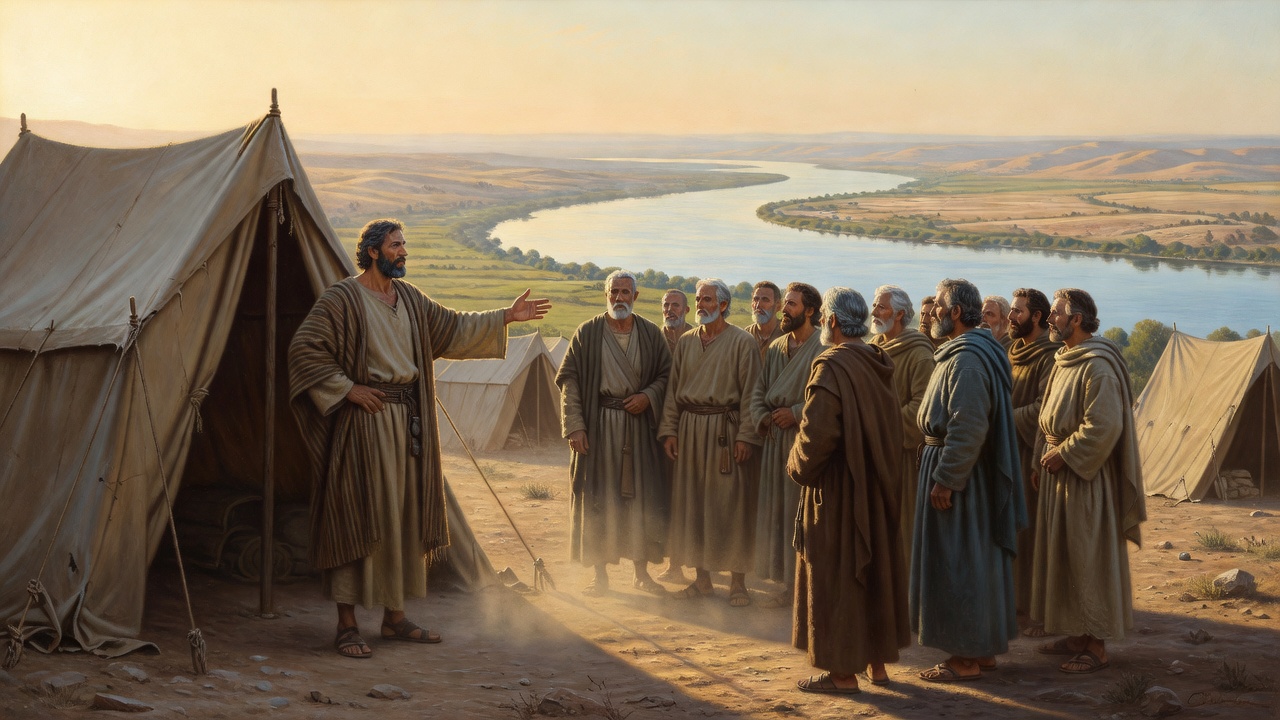
- Joshua, the son of Nun from the tribe of Ephraim, served as Moses' assistant and military commander before being commissioned to succeed him as leader of Israel. His name means "Jehovah is his help" or "Jehovah the Saviour."Sources: Joshua · the Bible text itself
- The territory outlined in God's commission to Joshua stretches from the southern wilderness and the Lebanon mountain range in the north to the Euphrates (called "the great river") in the east and the Mediterranean ("the Great Sea") to the west.Sources: the Bible text itself · Lebanon · Euphrates · Great Sea
- The tribes of Reuben, Gad, and the half-tribe of Manasseh had already received territory east of the Jordan River under Moses. However, their armed warriors were required to cross over ahead of the other tribes to assist them until the entire land was secured.Sources: the Bible text itself · Manasseh (son of Joseph)
Notes written with AI assistance from open sources (Theographic Bible Metadata, CC BY-SA 4.0; Easton’s Bible Dictionary, public domain) and reviewed before publishing.
Places in this chapter
- Jordan · Today: Jordan River · 31.761, 35.558 · verses 2, 11, 14, 15
- Euphrates · Today: Euphrates River · 31.004, 47.442 · verse 4
- Great Sea · Today: Mediterranean Sea · 31.805, 34.170 · verse 4
- Lebanon · 33.540, 35.584 · verse 4
- Negeb · 31.245, 34.841 · verse 4
- Syria · Today: Aram · 33.511, 36.306 · verse 4
Only places identified with high confidence are shown (90% or more according to the scholarly sources compiled by OpenBible). Period map: DARE (Digital Atlas of the Roman Empire), CC BY 4.0; modern map: © OpenStreetMap contributors; places: OpenBible.info (CC BY 4.0).
Credits and license for this translation
Geeshsha Maxaafa
Gofa: Geeshsha Maxaafa (Bible) for Ethiopia, Latin script
copyright © 2024 The Word for the World International
Language: Goofa (Gofa)
Contributor: The Word for the World International
This translation is made available to you under the terms of the
Creative Commons Attribution Share-Alike license 4.0.
You have permission to share and redistribute this Bible translation in any format and to make reasonable revisions and adaptations of this translation, provided that:
You include the above copyright and source information.
If you make any changes to the text, you must indicate that you did so in a way that makes it clear that the original licensor is not necessarily endorsing your changes.
If you redistribute this text, you must distribute your contributions under the same license as the original.
Pictures included with Scriptures and other documents on this site are licensed just for use with those Scriptures and documents.
For other uses, please contact the respective copyright owners.
Note that in addition to the rules above, revising and adapting God's Word involves a great responsibility to be true to God's Word. See Revelation 22:18-19.
2025-05-03
Source: http://ebible.org/gofl/ · eBible.org