Job 8
Geeshsha Maxaafa · Tap a verse to see its cross-references.
Baldadoosa Haasaya
1Shuha biittafe yida Beldadoosi zaaridi,
2“Neeni hessa awude gakanaw odetay?
Ne doonape keya qaalay wolqaama gote mela.
3Ubbaa Danda7iya Xoossay xillo pirdennee?
4Ne nayti Xoossaa bolla nagaraa oothida gisho,
I enta enta nagaraa gisho seeris.
5Shin neeni Xoossaako simmiko,
Ubbaa Danda7iya Xoossaa woossiko,
6neeni geeshshinne suure gidiko,
I ne gisho dendidi nena maaddana;
I kase ne de7uwa zaaridi woytana.
7Ne doomethay guutha daanikoka,
ne wursethay daro aadhidi darana.
8Kase yeletaa ane oycha;
nu mayzati ay tamaaridaako pilgada demma.
9Nuuni zine nayta aybaka eroko;
nu ha sa7an de7iya laythay kuya mela.
10Enti nena tamaarseynne new odey,
banta wozanan wothidabaape gidenneyee?
11Carey bayna bessan palki dolanaw danda7ii?
haathi bayna bessan mayrey cil7anaw danda7ii?
12Buroo diccidi qanxetonna de7ishe,
cil7o maatapeka eeson melees.
13Xoossaa dogiya asaa ubbaa wursethay hessa mela;
Xoosse eronna asaa ufaysay dhayana.
14I ammanetiyabay meqiyaba;
I ceeqetiyabayka shango haada mela.
15I ba shango haada bolla zempana, shin eqenna;
I iya oykana, shin duuxi wodhana.
16I awa wode haathe uyidi cil7iya atakilte mela;
ba xaphuwa biitta ubban yeddida mitha mela.
17Ba xaphuwa keelan yeddees;
gita shucha bolla ba xaphuwa xaaxees.
18Shin I ba bessaafe shodetiko,
he bessay, ‘Ta nena be7abike’ yaagana.
19Iita asata ufaysay hessa mela;
harati yidi enta bessaa oykana.
20“Xoossay borey bayna asaa yeggi aggenna;
iita ootheyisata maaddenna.
21I zaaridi nena miichananne ililsana.
22Nena ixeysati yeella ma7ana;
iitata keethay dhayana” yaagis.
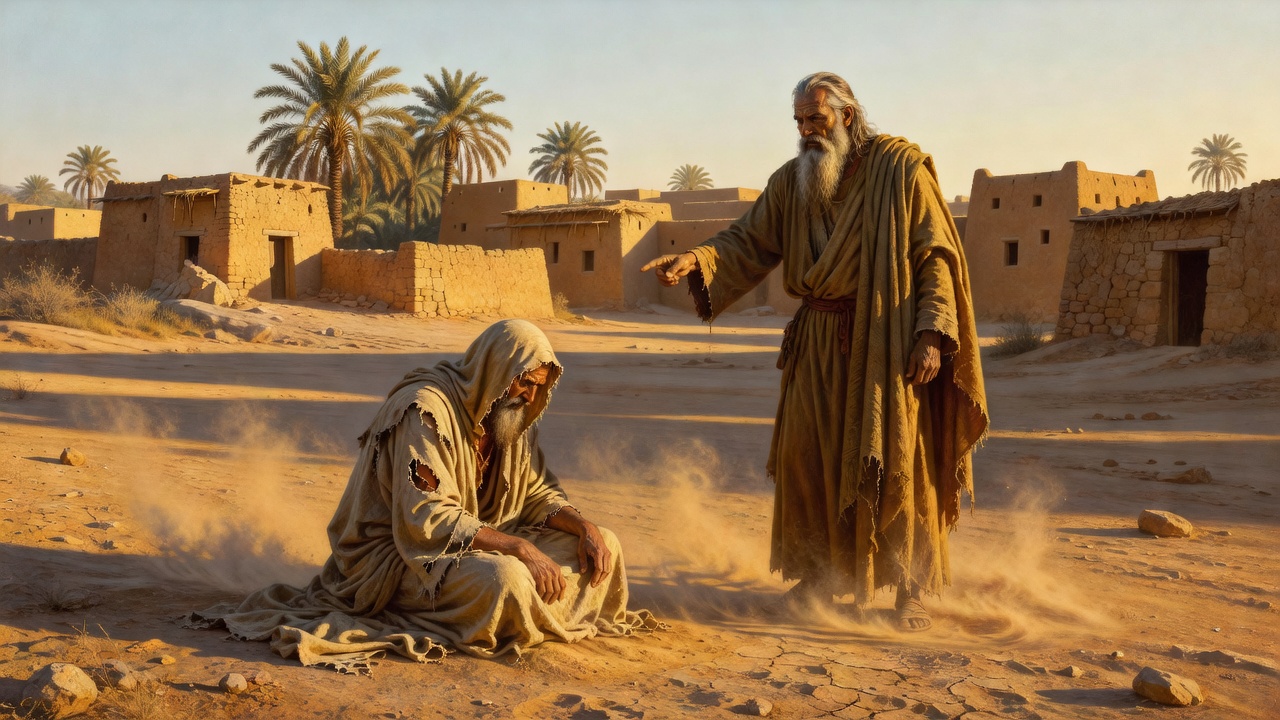
Did you know?
Bildad’s Appeal to Ancient Wisdom
- Bildad is identified as a Shuhite, which likely associates him with Shuah, an Arabian region settled by the descendants of Abraham and Keturah. In this chapter, he delivers the first of his three stern speeches to Job, maintaining that divine justice is absolute and unwavering.Sources: Bildad · the Bible text itself
- Rather than relying on personal experience, Bildad appeals to the accumulated knowledge of ancestral generations, describing human life as brief as a shadow. To argue that the wicked inevitably fall, he uses natural metaphors of marsh reeds withering without water and the fragility of a spider's web.Sources: the Bible text itself
Notes written with AI assistance from open sources (Theographic Bible Metadata, CC BY-SA 4.0; Easton’s Bible Dictionary, public domain) and reviewed before publishing.
Credits and license for this translation
Geeshsha Maxaafa
Gofa: Geeshsha Maxaafa (Bible) for Ethiopia, Latin script
copyright © 2024 The Word for the World International
Language: Goofa (Gofa)
Contributor: The Word for the World International
This translation is made available to you under the terms of the
Creative Commons Attribution Share-Alike license 4.0.
You have permission to share and redistribute this Bible translation in any format and to make reasonable revisions and adaptations of this translation, provided that:
You include the above copyright and source information.
If you make any changes to the text, you must indicate that you did so in a way that makes it clear that the original licensor is not necessarily endorsing your changes.
If you redistribute this text, you must distribute your contributions under the same license as the original.
Pictures included with Scriptures and other documents on this site are licensed just for use with those Scriptures and documents.
For other uses, please contact the respective copyright owners.
Note that in addition to the rules above, revising and adapting God's Word involves a great responsibility to be true to God's Word. See Revelation 22:18-19.
2025-05-03
Source: http://ebible.org/gofl/ · eBible.org