1 Kings 1
Geeshsha Maxaafa · Tap a verse to see its cross-references.

About this book
About 1 Kings
- Easton's Bible Dictionary (1897) treats the authorship of the books of Kings as uncertain. A tradition that Jeremiah wrote them is, in Easton's view, supported by passages almost identical with parts of Jeremiah and by events Jeremiah knew personally, yet Easton thinks it more probable that Ezra, after the Captivity, compiled the books from earlier documents, perhaps written by David, Solomon, Nathan, Gad, and Iddo. Easton dates the composition between 561 B.C., when Jehoiachin was released from captivity by Evil-merodach, and 538 B.C., the decree of Cyrus.Sources: Easton: Kings, The Books of
- Easton says these books contain the annals of the kingdom from Solomon's accession until Nebuchadnezzar and the Babylonians subdued it, a period he estimates at about 453 years. 1 Kings opens while David is dying: Adonijah, his fourth son, who had become heir-apparent to the throne after the deaths of Amnon and Absalom, has himself proclaimed king, but Nathan and Bathsheba persuade David to enthrone Solomon at once. Solomon, David's son by Bathsheba, whose history is recorded in 1 Kings 1-11, came to the throne, Easton suggests, at about sixteen or eighteen.Sources: Easton: Kings, The Books of · Adonijah · Solomon
- In the Hebrew Scriptures the two books of Kings originally formed one book; the Septuagint first divided them and, with the Vulgate, numbers them as the third and fourth books of Kings, the books of Samuel being the first and second. Easton notes that Chronicles gives greater prominence to the priestly or Levitical office, while Kings gives greater prominence to the royal office, and that in the threefold division of the Scriptures by the Jews these books are ranked among the Prophets. The narrative points to earlier sources: the book of the acts of Solomon and the chronicles of the kings of Judah and of Israel.Sources: Easton: Kings, The Books of
- After Solomon's death the ten tribes revolted and invited Jeroboam, son of Nebat, to be their king; Easton calls him the first king of those tribes and dates his reign from 976 to 945 B.C. He had fled to Egypt under the protection of Shishak I, and later moved his residence from Shechem, his first capital, to Tirzah, which remained the chief residence of Israel's kings until Omri bought the hill of Shomeron from Shemer for two talents of silver and built Samaria. The later narrative includes Ahab, Omri's son and the seventh king of Israel, whose wife was Jezebel: to the calf worship introduced by Jeroboam he added the worship of Baal, and he was severely admonished by the prophet Elijah.Sources: Jeroboam · Tirzah · Samaria · Ahab
Notes written with AI assistance from open sources (Theographic Bible Metadata, CC BY-SA 4.0; Easton’s Bible Dictionary, public domain) and reviewed before publishing.
Adoniyaasi Kawotanaw Koyis
1Kawoy Dawiti daro cimidi wode sugis. Iya aylleti ma7o iya bolla doorinka iya ho77onna ixis. 2Hessa gisho, iya moorinnati, “Kawa matan daana melanne iya heemmana mela issi geela7o nu new koyana. Nu godaa kawa ho7ethanaw iya matan zin7anaw danda7awusu” yaagidosona. 3Enti Isra7eele biitta ubban koyidi Abisa geetetiya issi mala lo77o geela7o Sunaama katamaape demmidi, kawas ehidosona. 4He geela7iya daro mala lo77o. Iya kawa heemmasunne iyaw oothasu; shin kawoy iira aqi erenna.
5Haagita na7ay Adooni, “Ta kawotanaw koyayis” yaagidi dendis; para gaareta, paratanne ba sinthan woxiya ishatamu asata giigisis. 6Iya aaway, “Ne haysa ayis oothay?” gidi iya oychi erenna. Adoniyaasi daro mala lo77o; I Abeseloome kaallidi yeletis. 7Adoniyaasi Xaruya na7aa Iyo7abaranne kahiniya Abyataarara zoretin, enti iya maaddanaw giigidosona. 8Shin kahiniya Saadoqi, Yoodahe na7ay Banayi, nabiya Naatani, Saami, Resimnne Dawita naageysati Adoniyaasara dookona. 9Issi gallas Adoniyaasi Enrogeela pultuwa matan Zoheleta Zaalla geetetiya bessan dorsata, mehetanne marata yarshis. Kawo nayta ba ishata ubbaanne kawas oothiya Yihuda asata ubbaa ba yarsho bessa xeegis. 10Shin nabey Naatana, Banaya, kawa naageysatanne ba isha Solomone xeegibeenna.
11Hessafe guye, Naatani Solomone aayiw Barsaabeko bidi, “Nu goday, Dawiti eronna de7ishin, Haagita na7ay Adoniyaasi kawotidaysa ne si7abikii? 12Ne ne shempuwanne ne na7aa Solomone shempuwa waatada ashshaneko ta nena zorayis. 13Kawa Dawitako gelada, ‘Ta godaw, Kawaw tuma, taape guye ne na7ay Solomoney kawotana; I ta araatan uttana’ yaagada taw ne ayllees caaqabikii? Yaatin, Adoniyaasi waanidi kawotidee? 14Neeni kawuwara haasayishin ta gelada, ne oday tuma gideysa odana” yaagis.
15Barsaaba kawa haasayisanaw I de7iya keethaa gelasu; Sunaamape yida Abisa kawa heemmawusu. 16Barsaaba kawa sinthan bonchon som7uwa sa7a gathada ziggasu.
Kawoy, “Ay koyadii?” yaagidi oychis.
17Iya, “Ta godaw, taw ne ayllees, ‘Taape guye ne na7ay Solomoney kawotana; I ta araatan uttana’ gada Godan, ne Xoossan, taw caaqadasa. 18Heko, ha77i Adoniyaasi kawotis; ne ta goday, kawoy hessa eraka. 19I daro meheta, maratanne dorsata yarshidi, kawa nayta ubbaa, kahiniya Abyataaranne toora mocona Iyo7aaba xeegis; shin ne aylliya Solomone xeegibeenna. 20Ta godaw kawaw, ta godaape kawuwape guye ooni ne araatan uttaneeko eranaw Isra7eele asa ubbaa ayfey nena xeellees. 21Hessi hanonna ixiko ta goday kawoy hayqidi ba mayzatan gahetiya wode tanne ta na7ay Solomoney daafaba oothida asada taybetana” yaagasu.
22Barsaaba buroo kawuwara haasayishin, nabey Naatani kawo keethi gakis. 23Nabey yidaysa asay kawas odidosona. Naatani kawa sinthe aadhidi, ba som7uwa sa7a gathidi ziggis.
24Naatani, “Ta godaw kawaw, neepe guye Adoniyaasi kawotanaysanne ne araatan uttanaysa odadii? 25Hachi I daro meheta, maratanne dorsata yarshidi, kawa nayta ubbaa, toora moconatanne kahiniya Abyataara xeegis. Enti ha77i iyara mishenne uyishe, ‘Kawoy Adoniyaasi birata tuussi gido’ yaagishe de7oosona. 26Shin tana ne aylliya, kahiniya Saadoqa, Yoodahe na7aa Banayanne ne aylliya Solomone xeegibeenna. 27Haysi ta godaa kawuwape guye iya araatan ooni uttaneeko ba aylleta erisonna de7ishe ta goday kawoy oothidabayee?” yaagis.
Dawiti Solomone Kawothis
28Kawoy Dawiti, “Barsaabo taw xeegite” yaagin kawoy de7iya bessaa gelada iya sinthan eqasu. 29He wode kawoy, “Tana meto ubbaafe ashshida Goday eriya mela. 30Godan, Isra7eele Xoossan ta new caaqida caaquwa tuma hachi polana; taape guye ne na7ay Solomoney kawotana; ta araatan, I ta bessan uttana” yaagidi caaqis.
31Barsaaba kawa sinthan ba som7uwa sa7a gathada ziggada, “Ta goday, Kawoy Dawiti merinaw kawoto!” yaagasu.
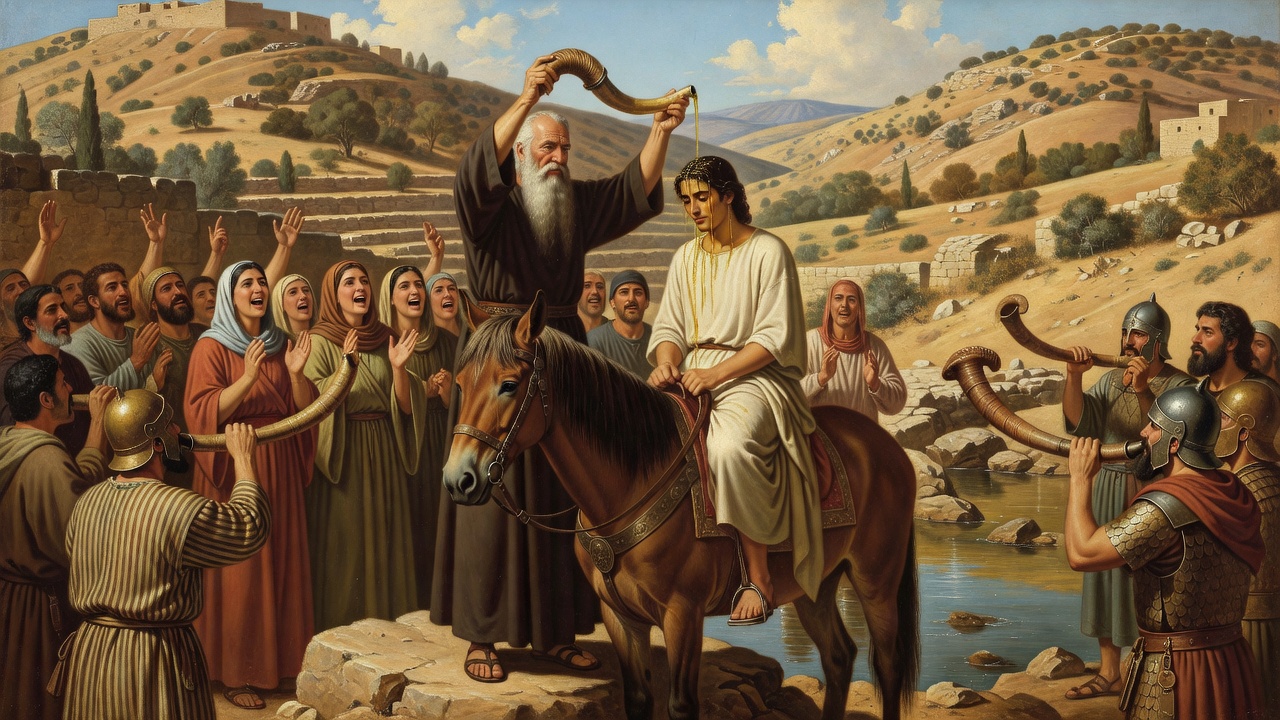
32Hessafe guye Kawoy Dawiti, “Taw kahiniya Saadoqa, nabiya Naatananne Yoodahe na7aa Banaya xeegite” yaagin, enti gelidi, kawa sinthan eqidosona. 33Kawoy “Ta aylleta hintera ekidi bidi, ta na7aa Solomone ta toggiya baquluwa togisidi, Giyoone pultuwako efite. 34Yan kahiniya Saadoqinne nabiya Naatani iya tiyidi Isra7eele bolla kawoyo. Moyze punnishe, hinte qaala dhoqu oothidi, ‘Kawoy Solomoney birata tuussu gido’ yaagite. 35Hinte iya ajabidi iyara biite; I ta araatan uttidi, ta bessan kawoto. Taani Isra7eelenne Yihuda haariya asi oothada iya shuumas” yaagis.
36Yoodahe na7aa Banayi zaaridi, “Amin7i! Goday, ta godaa kawa Xoossay hessa polo! 37Goday ta godaara kawuwara gididaysada Solomonera gido; iya araata ta godaa Kawa Dawita araatape aathidi gitayo” yaagis.
38Hessa gisho, kahiney Saadoqi, nabey Naatani, Yoodahe na7ay Banayinne kawa naageysati Solomone Kawoy Dawiti toggiya baquluwa togisidi, Giyoone efidosona. 39Kahiney Saadoqi Geeshsha Dunkaaniyape zayte kacen tigi ekidi, Solomone tiyidi kawothis. Enti moyze punnin, asa ubbay ba qaala dhoqu oothidi, “Kawoy Solomoney merinaw kawoto!” yaagidosona. 40Asa ubbay iya kaallidi bidosona; enti biitti qaaxana gakanaw suusul7e punnishenne durishe daro ufaytidosona.
41Adoniyaasinne iyara de7iya imathati gibira midi wursishe hessa si7idosona. Iyo7aabi Moyze puno si7idi, “Ha kataman si7etiya wocama girsay aybee?” yaagidi oychis.
42I buroo odetishin, kahiniya Abyataara na7ay Yoonataani gaki wodhis. Adoniyaasi, “Ane haa gela. Ne mela lo77o asi lo77o wore ehonna aggenna” yaagis.
43Yoonataani, “Akay, taani lo77o wore ehabike! Nu goday Kawoy Dawiti Solomone kawothis. 44Iya ajabana mela kawoy kahiniya Saadoqa, nabiya Naatana, Yoodahe na7aa Banayanne kawa naageysata iyara yeddis; enti kawoy toggiya baquluwa iya togisidosona. 45Kahiney Saadoqinne nabey Naatani, Giyoone pultuwa matan iya tiyidi kawothidosona; enti ililishenne durishe bidosona; kataman si7etiya girsay hessa. 46Solomoney araatan uttis. 47Hessa bollaka, kawa moorinnati nu godaa Kawa Dawitako shiiqidi, ‘Ne Xoossay Solomone sunthaa neysafe aathidi kesso; iya araata neysafe aathidi gitayo!’ yaagidi anjidosona. Kawoy ba algan de7ishe hokidi Xoossa goyinnis. 48Gujidika, ‘Ta bessan kawothidi, ta araatan utisidi, tana hachi ta ayfen bessiya Goday, Isra7eele Xoossay galatetto!’ ” yaagis.
49Adoniyaasa imathati ubbay hessa si7ida wode dagammidi, laaletidosona. 50Adoniyaasi Solomone yayyidi, yarsho bessa kaceta oykidi woossis. 51Asay Solomone, “Adoniyaasi Kawa Solomone yayyidi, yarsho bessa kaceta oykidi, ‘Kawoy Solomoney tana ba aylliya mashshan wodhike gidi hachi taw caaqo’ ” yaagees gidi odidosona.
52Solomoney zaaridi, “I ba hanuwa loythiko, hari attoshin iya huuphe binaanape issoyka boshetenna; shin iyan iitatethi bentiko I hayqana” yaagis. 53Kawoy Solomoney, Adoniyaasa yarsho bessaafe ehana mela ase kiittis. Adoniyaasi yidi, Solomones ziggis; Solomoney iyako, “Ne soo ba” yaagis.
Did you know?
The Succession to David's Throne
- As David's oldest surviving son after the deaths of Amnon and Absalom, Adonijah claimed the royal succession, backed by the military commander Joab and the high priest Abiathar. However, David chose his younger son Solomon, who was supported by the prophet Nathan, the priest Zadok, and the royal bodyguard under Benaiah.Sources: Adonijah · Solomon · the Bible text itself
- Riding the king's own mule was a decisive public declaration of royal authority. By David's explicit instruction, Solomon was escorted down to the spring of Gihon, where Zadok anointed him king with oil taken from the tabernacle to the sound of ram's horns and popular celebration.Sources: Gihon · Zadok · the Bible text itself
- Upon hearing of Solomon's public coronation, Adonijah fled in terror and sought asylum by taking hold of the horns of the sacrificial altar. Solomon granted him conditional clemency, sparing his life so long as he proved himself a worthy man.Sources: Adonijah · the Bible text itself
Notes written with AI assistance from open sources (Theographic Bible Metadata, CC BY-SA 4.0; Easton’s Bible Dictionary, public domain) and reviewed before publishing.
Places in this chapter
- Shunem · Today: Sulam · 32.606, 35.334 · verse 3
- Serpent’s Stone · Today: within 100 m of Bir Ayub · 31.767, 35.236 · verse 9
- Gihon · Today: Gihon Spring · 31.773, 35.236 · verses 33, 38, 44, 45
- Jerusalem · 31.777, 35.234 · verse 40
Only places identified with high confidence are shown (90% or more according to the scholarly sources compiled by OpenBible). Period map: DARE (Digital Atlas of the Roman Empire), CC BY 4.0; modern map: © OpenStreetMap contributors; places: OpenBible.info (CC BY 4.0).
Credits and license for this translation
Geeshsha Maxaafa
Gofa: Geeshsha Maxaafa (Bible) for Ethiopia, Latin script
copyright © 2024 The Word for the World International
Language: Goofa (Gofa)
Contributor: The Word for the World International
This translation is made available to you under the terms of the
Creative Commons Attribution Share-Alike license 4.0.
You have permission to share and redistribute this Bible translation in any format and to make reasonable revisions and adaptations of this translation, provided that:
You include the above copyright and source information.
If you make any changes to the text, you must indicate that you did so in a way that makes it clear that the original licensor is not necessarily endorsing your changes.
If you redistribute this text, you must distribute your contributions under the same license as the original.
Pictures included with Scriptures and other documents on this site are licensed just for use with those Scriptures and documents.
For other uses, please contact the respective copyright owners.
Note that in addition to the rules above, revising and adapting God's Word involves a great responsibility to be true to God's Word. See Revelation 22:18-19.
2025-05-03
Source: http://ebible.org/gofl/ · eBible.org