Job 5
ጌሻ ማፃፋ · Tap a verse to see its cross-references.
1“እዮባ፥ ነዉ ኮያና አስ ደእኮ አነ ፄጋ!
ኪታንቾታፐ ኦደኮ ነ ፄላኔ?”
2ኤያ ኡራ ላንጨይ ዎስ፤
አኬክ ባይና ኡራ ቃናተይ ይሴስ።
3ኤያ ኡራይ ምንድ ደእሽን በአስ፤
ሽን ቆፖና እያ ኬይ ባደትስ።
4እያ ናይት ሳሮይ ባይና ዳና፤
ፕርዳ ዳባባን ኤንታዉ ኤቅያ አስ ባይና ግሾ ኤንቲ ቆሄታና።
5እ ሺሽዳ ካ ኮሻትዳ አሳይ ማና፤
ሀር አቶሽን አጉን ግዶን ዶልዳይሳካ አጎኮና።
ሳሞትዳይሳት እያ ሻሉዋ ኤካናዉ አሞቶሶና።
6መቶይ ሳአፐ ከየና፤
ዋየይ ቢታፈ ዶለና።
7ታም ፕንፅድ ዎይሳዳ፥
አስ መቶስ የለትስ።
8“ታ ነና ግድያኮ ታ ፆሳኮ ሺቃና፤
ታ ሞቱዋካ እያ ስንን ዎና።
9እ ታይበቶና ማላታታ፥
ፕልገቶና ዎልቃማባታ ኦስ።
10እራ ቢታን ቡክሴስ፤
ጎሻ ጋድያስ ሃ የዴስ።
11ካዉሻታ ቁ ቁ ኦስ፤
ካዮተይሳታ ምንድ ኡፋይሴስ።
12ኤንታ ቆፋይ ፖለቶና መላ፥
ገናንቾታ ሀልቹዋ ሀዳ ኦስ።
13ጭንጫታ ኤንታ ገነ ኦሱዋን ኦይኬስ፤
ገናንቾታ ማቁዋ አድ የጌስ።
14ጋላሳይ ኤንታዉ ማ ግዳና፤
ሴታ ጋላስ ማን ሄመትያ አሳዳ ታታፋና።
15ማንቆታ ኤንታ ሞርከታ ማሻፈ አሼስ፤
ኤንታ ዎልቃማታ ኩሽያፐ ዎ ኤኬስ።
16ሄሳ ግሾ፥ ማንቆታስ ኡፋይስ ደኤስ፤
ጌላተ ስእ ኦስ።”
17“ፆሳይ ሴርያ አስ አንጀትዳይሳ፤
ሄሳ ግሾ፥ ኡባ ዳንዳእያ ፆሳ ሴራ ካፓ።
18እ መንስ፥ ሽን ዛሪድ ኮሌስ፤
እ ማዱንፅሴስ፥ ሽን እያ ኩሸይ ሌስ።
19ኡሱፑን ቆሞ ቆሆታፐ እ ነና አሻና፤
ላፑንይ ነና ቦቸና።
20ኮሻ ላይ ሀይቆፐ፥
ኦላ ዎደ ማሻፈ ነና አሼስ።
21እ ነና ኢታ እንፃርሳፈ ናጋና፤
ቦሽ ጋክያ ዎደ ያያካ።
22ቦሻ ቦላነ ኮሻ ቦላ ነ ሚጫና፤
ባዞ ዶአታስ ያያካ።
23ነ ጎሻ ቢታን ሹች ዴና፤
ባዞ ዶአታራ ነ ሳሮን ዳና።
24ነ ዱንካነይ ሳሮ ግደይሳ ነ ኤራና፤
ነ ዳራ ነ ፆሞስያ ዎደ አይብካ ፓጨና።
25ነ የለታይ ዳራናይሳነ
ነ ኮቻይ ማታ መላ ግዳናይሳ ነ ኤራና።
26ካ ዎደ ናግድ ጫከተይሳዳ፥
ኔኒ ጭማተ ካላዳ ዱፎ ባና።
27“እዮባ፥ ኑኒ ሄሳ ኡባ ፕልግድ ፄልዳ።
ሄስ ቱማ ግድያ ግሾ አኬካዳ ኤካ” ያግስ።
Did you know?
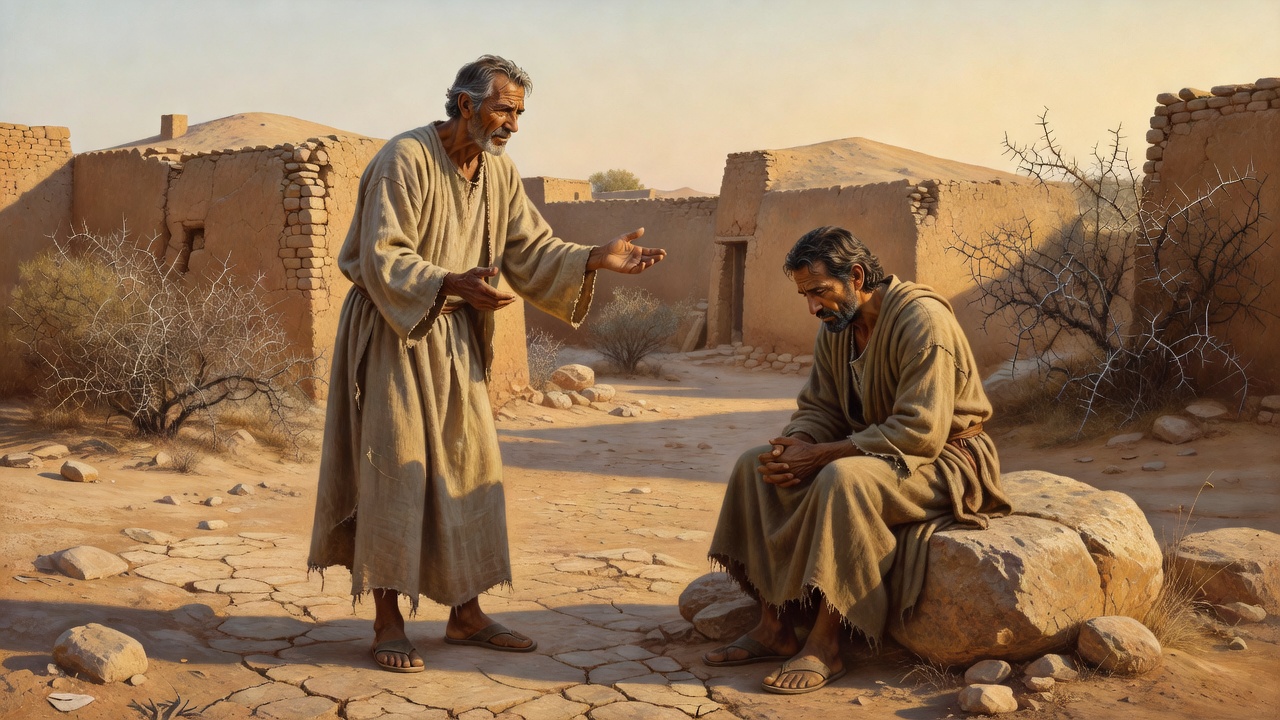
Eliphaz's Counsel on Suffering and Divine Correction
- Eliphaz portrays suffering as purposeful divine discipline rather than arbitrary misfortune, asserting that trouble does not arise without cause from the soil. He urges Job not to despise the correction of the Almighty, who wounds only to heal and restore.Sources: the Bible text itself
- In promising deliverance from six calamities and even seven, Eliphaz employs a traditional poetic formula known as graded numerical parallelism. This rhetorical pattern, common in ancient Near Eastern wisdom poetry, builds emphasis to express comprehensive and complete protection.Sources: the Bible text itself
- Eliphaz describes ultimate restoration in vivid agricultural and pastoral terms, depicting a life where wild beasts and stony soil cease to be hostile. He envisions a peaceful death occurring in full vigor, likened to a sheaf of grain harvested at the proper season.Sources: the Bible text itself
Notes written with AI assistance from open sources (Theographic Bible Metadata, CC BY-SA 4.0; Easton’s Bible Dictionary, public domain) and reviewed before publishing.
Credits and license for this translation
ጌሻ ማፃፋ
Gofa: ጌሻ ማፃፋ Bible of Ethiopia, Ethiopic script
copyright © 2024 The Word for the World International
Language: Goofa
Contributor: The Word for the World International
This translation is made available to you under the terms of the
Creative Commons Attribution Share-Alike license 4.0.
You have permission to share and redistribute this Bible translation in any format and to make reasonable revisions and adaptations of this translation, provided that:
You include the above copyright and source information.
If you make any changes to the text, you must indicate that you did so in a way that makes it clear that the original licensor is not necessarily endorsing your changes.
If you redistribute this text, you must distribute your contributions under the same license as the original.
Pictures included with Scriptures and other documents on this site are licensed just for use with those Scriptures and documents.
For other uses, please contact the respective copyright owners.
Note that in addition to the rules above, revising and adapting God's Word involves a great responsibility to be true to God's Word. See Revelation 22:18-19.
2025-05-02
Source: http://ebible.org/gofe/ · eBible.org