Luke 16
Nuevo Testamento Guaraní Pe · Tap a verse to see its cross-references.
Uyeyocui vae ipatrón imbaembae opa umɨngasta vae
1Jare Jesús jei jemimboe reta pe: —Ico penti patrón icocatu vae jare ime güɨreco jembiocui. Jerãcua patrón pe quirãi jembiocui opa umɨngasta imbaembae —jei—. 2Jayave jocua patrón ueni jembiocui jare jei chupe: ‘¿Mbae pa co cua nererãcua cheve vae? Emɨmbeu cheve mbae ndiyapo opaete chembaembae ndive vae. Echa'ã nomoẽta co’ —jei, jei—. 3Jayave uyeyocui vae jei iyupe ipɨa pe: ‘¿Mbae ra ayapota? Echa'ã chepatrón chemoẽta. Chepuere'ã ayoo ɨvɨ corepoti amɨngana vaerã. Chepuere'ã vi ayerure ĩru vae reta pe mbaembae re. Echa'ã chemarata co’ —jei, jei—. 4‘Aicuaa ma mbae ayapota vae. Cuarãi ayapo yave, chepatrón chemoẽ ma yave, ĩru vae reta uyandarecota cheré’ —jei, jei—. 5Jayave omondo umɨmbeu vaerã opaete ipatrón pe mbae re ipía vae reta yugüeru vaerã ipɨ. Jayave upɨrandu tenonde ou vae pe: ‘¿Mbovɨ pa ndepía chepatrón pe?’ —jei, jei—. 6‘Cien lata aceite’ —jei, jei—. Jayave uyeyocui vae jei chupe: ‘Co oĩ ndetupapire. Eguapɨ voi jare icuatía cincuenta lata’ —jei, jei—. 7Jayave upɨrandu ĩru vae pe: ‘¿Mbovɨ pa ndepía chepatrón pe?’ —jei, jei—. ‘Cien arroba trigo’ —jei, jei—. Jayave uyeyocui vae jei chupe: ‘Co oĩ ndetupapire. Icuatía ochenta arroba’ —jei, jei—. 8Jare patrón icocatu vae jei jembiocui jupi mbae vae uyapo vae pe: ‘Icavi ete ndiyapo ndiyupe. Ndearacuaa co’ —jei, jei—. Echa'ã cua ɨvɨ pegua reta iyaracuaa ete corepoti re Tumpa pe uyeyocui vae reta güi —jei—.
9Che pumbɨaracuaa piporu vaerã pecorepoti pemborɨ vaerã ĩru vae reta. Jayave jae reta uyeyapota peamigo retarã. Echa'ã pemano yave, opata peeya pecorepoti. Ẽrei ara pe peamigo reta pembɨresiveta jare joco pe picota jaeño mai pegua —jei Jesús chupe reta—. 10Ime yave quía yandepuere yarovia catu mbae michi vae re vae, yandepuere vi yarovia catu mbae tuicha vae re. Jae ramiño vi ime yave quía upurumbɨtavɨ mbae michi vae re vae, upurumbɨtavɨta vi mbae tuicha vae re —jei—. 11Jáeramo Tumpa ipuere'ã yave pererovia catu corepoti re, ndarau vi pererovia catu mbaembae icavi vae ara pegua re —jei—. 12Jare ime yave quía yandepuere'ã yarovia catu ĩru vae icorepoti re vae, ndarau ñamee chupe corepoti güɨnoi vaerã iyupeguarã —jei—.
13Penti uyeyocui vae uipota yave uyeyocui mocui patrón pe, umɨtarẽɨta penti patrón jare uauta ĩru vae, ani uparavɨquɨ cavita penti patrón pe jare güɨrɨ̃rota ĩru vae. Pepuere'ã piyeyocui Tumpa pe corepoti peau reve —jei.
14Jare fariseo reta cua uyandu yave, oyoyai Jesús. Echa'ã jae reta uipota ete corepoti. 15Jayave Jesús jei chupe reta:
—Pe reta piyembujupi ĩru vae reta jovaque. Ẽrei Tumpa uicuaa pepɨa pe oĩ vae. Jare yepe tẽi ĩru vae reta pepɨu, ẽrei Tumpa uicuaa piyapo vae icavi mbae co —jei—.
Mboroyocui jare Tumpa iporoyocuia
16Ndei Juan ou mbove, Tumpa umɨmbeu yandeve yayapo vaerã mboroyocui jare Tumpa iñee aracae umɨmbeu vae reta jei vae. Ẽrei Juan umbɨpɨ umɨmbeu ñee icavi vae Tumpa iporoyocuia regua, jare opaete vae uipota uique Tumpa iporoyocuia pe —jei—. 17Ara jare ɨvɨ opata. Ẽrei yandepuere'ã etei yambai mboroyocui —jei—.
Omombo jembireco vae
18Ime yave quía omombo jembireco vae, güɨreco yave ĩru vae jembirecorã, uyuvanga menda re. Jare ime yave quía uyemombo ma vae güɨreco vae, jae vi uyuvanga menda re —jei—.
Cuimbae icocatu vae jare Lázaro
19Ico penti cuimbae icocatu vae. Jecuaeño uyemonde icavi ete jare opa ara rupi uyapoca tembíu icavi vae —jei—. 20Jare ico vi ĩru cuimbae Lázaro jee vae. Jae co iparavete vae. Lázaro ituyu yepai ico. Opa ara rupi uguapɨ cuimbae icocatu vae jonque jovai —jei—. 21Lázaro uipota jou tembíu usururucue cuimbae icocatu vae imesa güi oa vae. Jare yɨmba reta yugüeru uere Lázaro ituyu —jei—. 22Jare penti ara jocua cuimbae iparavete vae umano, jare ángel reta güɨraa ara pe Abraham oĩ vae pe. Jae ramiño vi cuimbae icocatu vae umano jare uñeñotɨca —jei—. 23Jare cañɨtei pe cuimbae icocatuse vae uiporara ete oĩ. Jayave jovaɨva jare uecha Abraham mbɨrɨ oĩ chugüi. Uecha vi Lázaro Abraham ndive —jei—. 24Jayave iñeeãta reve jei: ‘Cheru Abraham, cheparareco. Embou Lázaro oñono vaerã ipoãca ɨ pe umãquɨ vaerã checũ. Echa'ã aiporara ete aĩ cua tata pe’ —jei, jei—. 25Ẽrei Abraham jei chupe: ‘Cheraɨ, nemandúa quirãi nde ndico ɨvɨ pe yave, nde nenoise mbaembae icavi vae. Jae ramiño vi Lázaro ico ɨvɨ pe yave, mbaembae icavi mbae vae uyeyapo chupe. Ẽrei añave jae ipɨacatu oĩ jare nde ndiporara neĩ’ —jei, jei—. 26‘Jae ramiño vi ime oĩ mbae ñanepãu pe yandepuere'ã yaasa vae. Jáeramo nduipota yave ndoo pepɨ, ndarau orepuere. Jae ramiño vi pipota yave peyu orepɨ, ndarau pepuere’ —jei, jei—. 27Jayave cuimbae icocatuse vae jei Abraham pe: ‘Cua jeco pegua ayerure ndeve, cheru, nemondo vaerã Lázaro cheru jenta pe’ —jei, jei—. 28‘Echa'ã che ime anoi pandepo cherɨvɨ reta. Emondo umɨmbeu vaerã chupe reta, agüɨye vaerã jae reta vi yugüeru cua jasɨ catu noĩ vae pe’ —jei, jei—. 29Jayave Abraham jei chupe: ‘Ime güɨnoi Moisés iporoyocui jare Tumpa iñee aracae umɨmbeu vae reta uicuatía vae. Tumɨngueta reta jocua’ —jei, jei—. 30Jayave cuimbae icocatuse vae jei Abraham pe: ‘Ndarau umɨngueta reta, cheru Abraham. Ẽrei uyecuaa yave chupe reta umanocue vae, ueyata reta iyemɨngueta icavi mbae vae ipɨa pe oĩ vae’ —jei, jei—. 31Jayave Abraham jei chupe: ‘Uipota'ã yave uyapɨsaca Moisés iporoyocui jare Tumpa iñee aracae umɨmbeu vae reta uicuatía vae re, ndarau uyapo Tumpa jei uyapo vaerã vae yepe tẽi quía icove ye oo chupe reta umanocue vae reta ipɨte güi’ —jei, jei.
Did you know?
Wealth, two masters, and Lazarus
- In Jesus' words about the rich man and Lazarus, the rich man cries out, 'Father Abraham,' and Abraham answers, 'Child.' Easton's Bible Dictionary (1897) explains the name Abraham as 'Father of a multitude' and describes him as the heir of the promises.Sources: the Bible text itself · Abraham
- Speaking to Pharisees who were scoffing at him, Jesus says that the Law and the Prophets were proclaimed until John, and that since then the gospel of the kingdom of God is being preached. Easton's Bible Dictionary (1897) calls John the Baptist the 'forerunner of our Lord,' says that his mission was the subject of prophecy, including Isaiah 40:3 and Malachi 3:1, and states that his birth took place six months before that of Jesus.Sources: the Bible text itself · John the Baptist
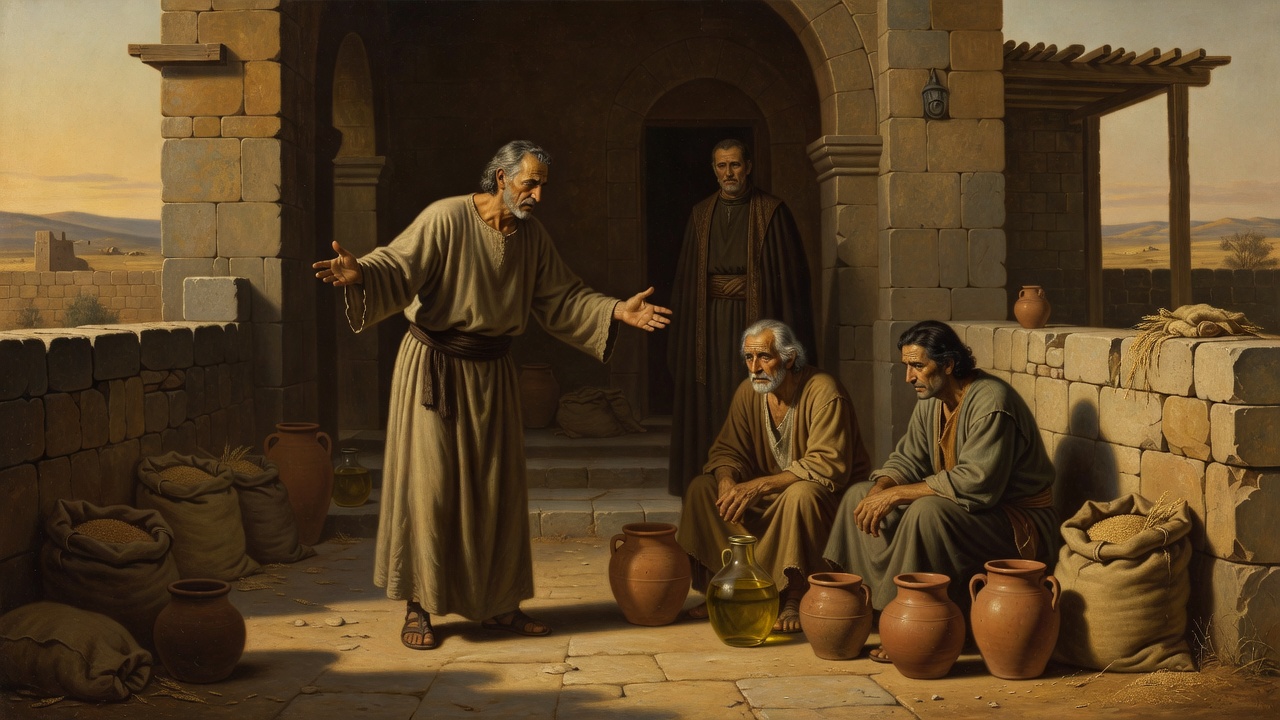
- A manager accused of wasting his master's possessions is told to turn in an account and give up his position. He has the debtors rewrite their bills, reducing a hundred measures of olive oil to fifty and a hundred measures of wheat to eighty, and the master commends the dishonest manager because he had acted shrewdly. Jesus then says that no servant can serve two masters, and that no one can serve both God and money.Sources: the Bible text itself
Notes written with AI assistance from open sources (Theographic Bible Metadata, CC BY-SA 4.0; Easton’s Bible Dictionary, public domain) and reviewed before publishing.
Credits and license for this translation
Nuevo Testamento Guaraní Pe
New Testament in Guaraní, Western Bolivian (BL:gnw:Guaraní, Western Bolivian)
copyright © 2012 Wycliffe Bible Translators, Inc.
Language: Guaraní, Western Bolivian
Translation by: Wycliffe Bible Translators, Inc.
Guaraní, Western Bolivian [gnw], Bolivia
Copyright Information
© 2012, Wycliffe Bible Translators, Inc. All rights reserved.
This translation text is made available to you under the
terms of the Creative Commons License: Attribution-Noncommercial-No Derivative Works.
( http://creativecommons.org/licenses/by-nc-nd/3.0/ )
In addition, you have permission to port the text to different file formats, as long as you
do not change any of the text or punctuation of the Bible.
You may share, copy, distribute, transmit, and extract portions
or quotations from this work, provided that you include the above copyright
information:
You must give Attribution to the work.
You do not sell this work for a profit.
You do not make any derivative works that change any of the actual words or punctuation of the Scriptures.
Permissions beyond the scope of this license may be
available if you contact
us with your request.
The New Testament
in Guaraní, Western Bolivian
© 2012, Wycliffe Bible Translators, Inc. All rights reserved.
This translation is made available to you under the terms of the
Creative Commons Attribution-Noncommercial-No Derivatives license 4.0.
You may share and redistribute this Bible translation or extracts from it in any format, provided that:
You include the above copyright and source information.
You do not sell this work for a profit.
You do not change any of the words or punctuation of the Scriptures.
Pictures included with Scriptures and other documents on this site are licensed just for use with those Scriptures and documents.
For other uses, please contact the respective copyright owners.
2014-04-25
Source: http://ebible.org/gnwNT/ · eBible.org