John 17
Nuevo Testamento Guaraní Pe · Tap a verse to see its cross-references.
Jesús uyerure Tumpa pe jemimboe reta re
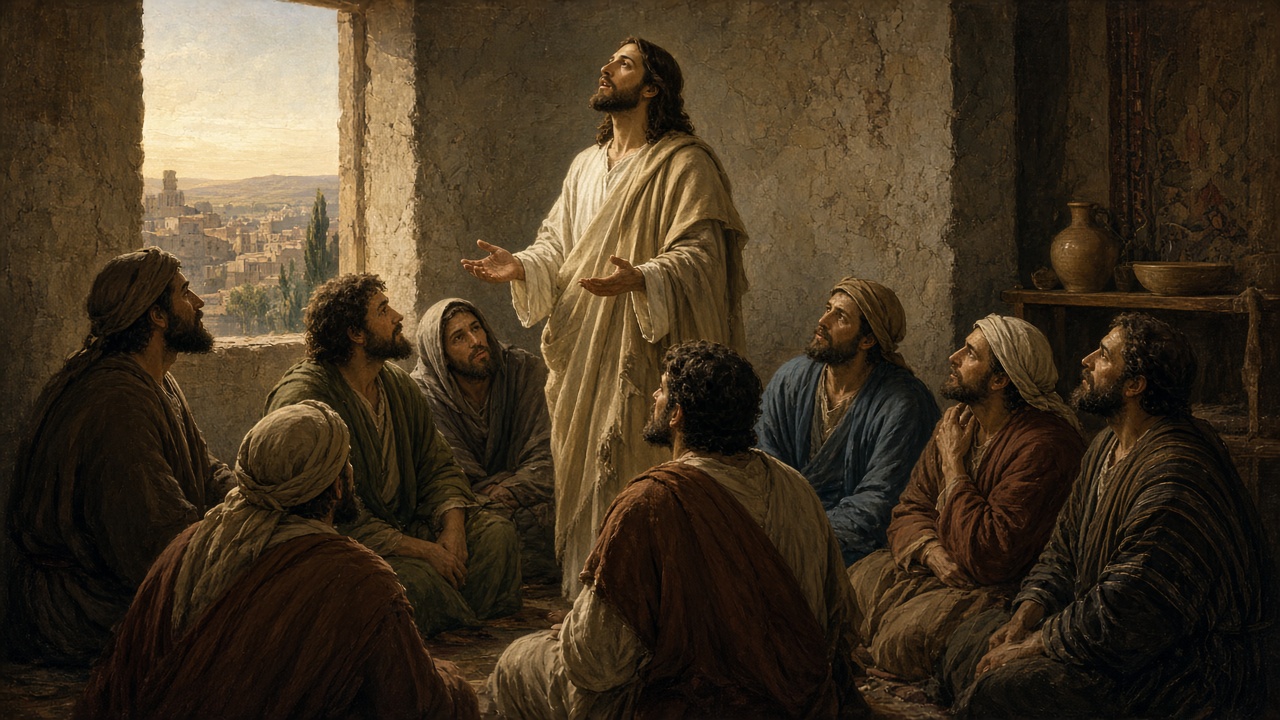
1Cua jei ma yave, Jesús umae ara cotɨ jare jei:
—CheRu, ara uvãe ma. Che co jae ndeRaɨ. Chembɨadoraca, chepuere vaerã numbɨadoraca vi —jei—. 2Echa'ã nde cheapo ma opaete vae iYarã, amee vaerã tecove opa mbae vae opaete nde nemee cheve vae reta pe —jei—. 3Ime yave quía yandecuaa vae, jae güɨnoi tecove opa mbae vae. Nde co jae pentiño Tumpa añetete vae. Che co jae Jesucristo. Nde chembou —jei—.
4Che numbɨadoraca cua ɨvɨ pe. Echa'ã opa ma ayapo mbaravɨquɨ nde nemee cheve ayapo vaerã vae —jei—. 5Ndei ɨvɨ uyeyapo mbove aico nde ndive yave ayembɨadoraca co. Jae ramiño vi añave chembɨadoraca ye nderovai —jei—. 6Nde nemee ma cheve cua cuimbae reta upurugüɨrovia mbae vae reta ipɨte güi. Che amɨmbeu ma nderegua cua reta pe. Jae reta nembae co jare nde nemee ma cheve. Jae reta uyapo nde ndere chupe reta uyapo vaerã vae —jei—. 7Jae reta uicuaa opaete nde nemee cheve vae ou co ndegüi. 8Echa'ã che amee ma chupe reta ñee nde nemee cheve vae, jare jae reta güɨrovia niñee. Uicuaa cavi che ayu co ndegüi. Güɨrovia ma nde co chembou —jei—.
9Ayerure ndeve jese reta. Ayerure'ã upurugüɨrovia mbae vae reta re. Ayerure ndeve nde nemee cheve vae reta re. Echa'ã jae reta nembae co —jei—. 10Opaete chembae nembae co, jare nembae chembae co. Jare che ayembɨadoraca ma jae reta jeco pegua —jei—. 11Jare ndarau ma aico cua ɨvɨ pe. Ẽrei jae reta upɨtañota cua ɨvɨ pe. Che aata ma ndepɨ. CheRu, nde co jae jupi vae. Cua reta nemee ma cheve. Emborɨ nembaepuere pe, agüɨye vaerã uyerova ndegüi, jare yugüɨreco vaerã penti ramiño. Echa'ã jucuarãi yande yaico penti ramiño —jei—. 12Che aico jae reta ndive rambueve, che amborɨ nembaepuere pe cua nemee cheve vae reta, agüɨye vaerã uyerova ndegüi. Pentiño oota cañɨtei pe, niñee pe uyecuatía oĩ vae uyeyapo vaerã. Ẽrei amborɨ ĩru reta, agüɨye vaerã yugüɨraa cañɨtei pe —jei—.
13Ẽrei aata ma ndepɨ. Cuarãi chemiari chupe reta ɨvɨ pe aico rambueve, jae reta uyerovia ete vaerã che ayerovia rami —jei—. 14Amee ma chupe reta niñee, jare uñemɨtarẽɨca upurugüɨrovia mbae vae reta pe. Che aico'ã upurugüɨrovia mbae vae reta yugüɨreco rami. Jae ramiño vi jae reta yugüɨreco'ã upurugüɨrovia mbae vae reta yugüɨreco rami —jei—. 15Ayerure'ã ndeve nde nderaa vaerã cua ɨvɨ güi. Ayerure ndeve nemborɨ vaerã, agüɨye vaerã icavi mbae vae iya umɨamɨri —jei—. 16Che aico'ã upurugüɨrovia mbae vae reta yugüɨreco rami. Jae ramiño vi jae reta yugüɨreco'ã upurugüɨrovia mbae vae reta yugüɨreco rami. 17Iñono tee reta ndiyupeguarã añete vae rupi. Niñee co jae añete vae —jei Jesús—. 18Nde chembou ɨvɨ pe. Jae ramiño vi che amondo cua reta opaete ɨvɨ rupi —jei—. 19Cua reta jeco pegua añeñono tee ma ndeve peguarã, jae reta vi uñeñono tee vaerã ndeve peguarã añete vae rupi —jei—.
20Jare ayerure ndeve cheré güɨroviata vae re. Echa'ã güɨroviata cua reta iñee rupi. Cua reta reño'ã ayerure ndeve —jei—. 21Ayerure ndeve opaete jae reta yugüɨreco vaerã penti ramiño. Nde ndico che ndive, cheRu, jare che aico nde ndive. Jae ramiño vi ayerure ndeve cua reta yugüɨreco vaerã yanderé güɨrovia reve, ɨvɨ pegua reta güɨrovia vaerã nde co chembou vae —jei—. 22Nde ndepɨacavi ndeechaca cheve vae, che vi aechaca chupe reta, jae reta yugüɨreco vaerã penti ramiño. Echa'ã jucuarãi yande yaico penti ramiño —jei Jesús—. 23Nde ndicota che ndive jare che aicota ipɨa pe, añetete yugüɨreco vaerã penti ramiño, ɨvɨ pegua reta uicuaa vaerã nde co chembou jare nde ndeau co cua reta nde cherau rami —jei—.
24CheRu, aipota cua nemee cheve vae reta vi yugüɨreco vaerã che aicota vae pe, uecha vaerã ndepɨacavi cheve vae. Echa'ã ndei ɨvɨ uyeyapo mbove nde cherauño mai —jei—. 25CheRu, nde co jae jupi vae. Upurugüɨrovia mbae vae reta ndecuaa'ã. Ẽrei che co nducuaa, jare cua reta uicuaa nde co chembou vae —jei—. 26Che numɨmbeu ma chupe reta jare numɨmbeu yeta, jae reta tuau ĩru vae reta nde cherau rami, jare che aico vaerã ipɨa pe —jei.
Did you know?
John 17: the hour has come
- The prayer opens when Jesus, having spoken these things, lifts his eyes to heaven and says that the hour has come. It is associated with the Upper Room Discourse, listed as lasting one day, and with Holy Week, listed as lasting eight days.Sources: the Bible text itself · Upper Room Discourse · Holy Week
- Here eternal life is knowing the only true God and Jesus Christ, whom the Father sent. Jesus also speaks of the glory he had with the Father before the world existed, and of the Father's love for him before the foundation of the world.Sources: the Bible text itself
- He prays for those the Father gave him out of the world, who have kept the word, and also for people who will believe through their message, asking that they may be one. He does not ask that they be taken out of the world, but that they be kept from the evil one and sanctified by the truth, which he identifies as the Father's word.Sources: the Bible text itself
Notes written with AI assistance from open sources (Theographic Bible Metadata, CC BY-SA 4.0; Easton’s Bible Dictionary, public domain) and reviewed before publishing.
Credits and license for this translation
Nuevo Testamento Guaraní Pe
New Testament in Guaraní, Western Bolivian (BL:gnw:Guaraní, Western Bolivian)
copyright © 2012 Wycliffe Bible Translators, Inc.
Language: Guaraní, Western Bolivian
Translation by: Wycliffe Bible Translators, Inc.
Guaraní, Western Bolivian [gnw], Bolivia
Copyright Information
© 2012, Wycliffe Bible Translators, Inc. All rights reserved.
This translation text is made available to you under the
terms of the Creative Commons License: Attribution-Noncommercial-No Derivative Works.
( http://creativecommons.org/licenses/by-nc-nd/3.0/ )
In addition, you have permission to port the text to different file formats, as long as you
do not change any of the text or punctuation of the Bible.
You may share, copy, distribute, transmit, and extract portions
or quotations from this work, provided that you include the above copyright
information:
You must give Attribution to the work.
You do not sell this work for a profit.
You do not make any derivative works that change any of the actual words or punctuation of the Scriptures.
Permissions beyond the scope of this license may be
available if you contact
us with your request.
The New Testament
in Guaraní, Western Bolivian
© 2012, Wycliffe Bible Translators, Inc. All rights reserved.
This translation is made available to you under the terms of the
Creative Commons Attribution-Noncommercial-No Derivatives license 4.0.
You may share and redistribute this Bible translation or extracts from it in any format, provided that:
You include the above copyright and source information.
You do not sell this work for a profit.
You do not change any of the words or punctuation of the Scriptures.
Pictures included with Scriptures and other documents on this site are licensed just for use with those Scriptures and documents.
For other uses, please contact the respective copyright owners.
2014-04-25
Source: http://ebible.org/gnwNT/ · eBible.org