Exodus 7
Gumatj Bible · Tap a verse to see its cross-references.
6Bala Mawtjitjtja ga Yärundja dhäruknha yana märraŋala Garraynha, bala maṉḏa marrtjinana, ga ḻakaraŋala buŋgawawana ŋunhi nhaltjarra Garrayyu waŋana ḻakaraŋala maṉḏakala. Yurru maṉḏa worruŋuna ŋunhi yulŋunydja; nhanŋu Mawtjitjkunydja dhuŋgarra djaka'wu 80 ŋulinyaramirriyunydja, ga nhanŋunydja Yärungunydja dhuŋgarra 83‐na.
8Ŋe. Marrtjinana bala maṉḏa, bur‐way bunana, bala maṉḏa ḻakaraŋalana Godkuŋu dhaŋunydja, ga biyapul ŋayi Yärundhu ŋurrkaŋala ŋunhiyi wapitja gumurrlili ŋurikala buŋgawawala ga nhanukalaŋuwala djämamirriwala walalaŋgala, bala dhunupana ŋunhi wapitjany'tja marrtjina moḻ'ŋuyinana.
11Bala ŋayinydja ŋunhi buŋgawanydja wäthurruna nhanukalayŋuwu gaḏamanmirriwuna yolŋuwu walalaŋgu, ga bitjarrayi bili walalanydja djäma ŋuriŋi waŋga'‐waŋganydhu ŋurrka'‐ŋurrkaŋala wapitja malanha, ga walalambalanydja wapitja malanha bitjarrayi bili moḻ'ŋuyinayi. Bala nhanukalanydja Yärungalanydja marrtjina wapitja'yu wurkthurruna warray walalambalanydja wapitja'nha malaŋunha.
13Ga baḏak yana ŋunhi Yetjippuyŋunydja buŋgawa rom‐ḏälthina yukurrana; yakana ŋayi mäkiri'‐witjurruna maṉḏaku dhärukku, bitjarrayi yana bili bitjarra ŋunhi ŋayi Garrayyu ḻakaraŋala ŋäthili‐wala maṉḏakala.
Bala ŋayi mayaŋdja marrtjina gulaŋdhina warray
7:14–25 (The rivers became blood)
14Bala Garrayyunydja ḻakaraŋala Mawtjitjkala bitjarrana, “Yetjippuyŋunydja buŋgawa dhuwali rom‐ḏälthirrina yukurra, yaka'yunna ŋayi yukurra dhuwali yulŋunydja. Yakana ŋayi yurru djuy'yundja. 15Goḏarrny'tja boŋguŋunydja nhuma maṉḏa marrtji boŋgama bala mayaŋ'lili, ga ŋunhala yana nhuma boŋgama nhänharami ŋunhi buŋgawanydja. Waŋinydja nhuma boŋgaŋu biyapul nhanukala, 16‘Yaka nhe mäkiri'‐witjurruna Godkalaŋunydja dhärukku, ŋunhi ŋayi waŋana nhuna yängunharawu nhanukalayŋuwu yolŋu'‐yulŋuwu, märr yurru walala yukurra buku‐ŋal'yun nhanŋuway. 17Ga dhiyaŋunydja‐wala nhe yurru marŋgithirrina Godku, yol ŋayi ŋunhi. Ŋarranydja yurru gapunha dhuwala wutthun dhiyaŋu dharpayu, bala ŋayi yurru gapunydja dhuwala wiripuyirrina, gulaŋdhirrina yurru. 18Yo, walala yurru ŋarirriny'tja murrmurryunna bukmaknha, ga gapunydja yurru dhuwalayi boŋirriny'thirrina, barrpa'yirrina buŋgandja, märr yurru yakana ŋula yolthu ḻuka yukurra ŋuliŋuruyi mayaŋ'ŋuru.’”
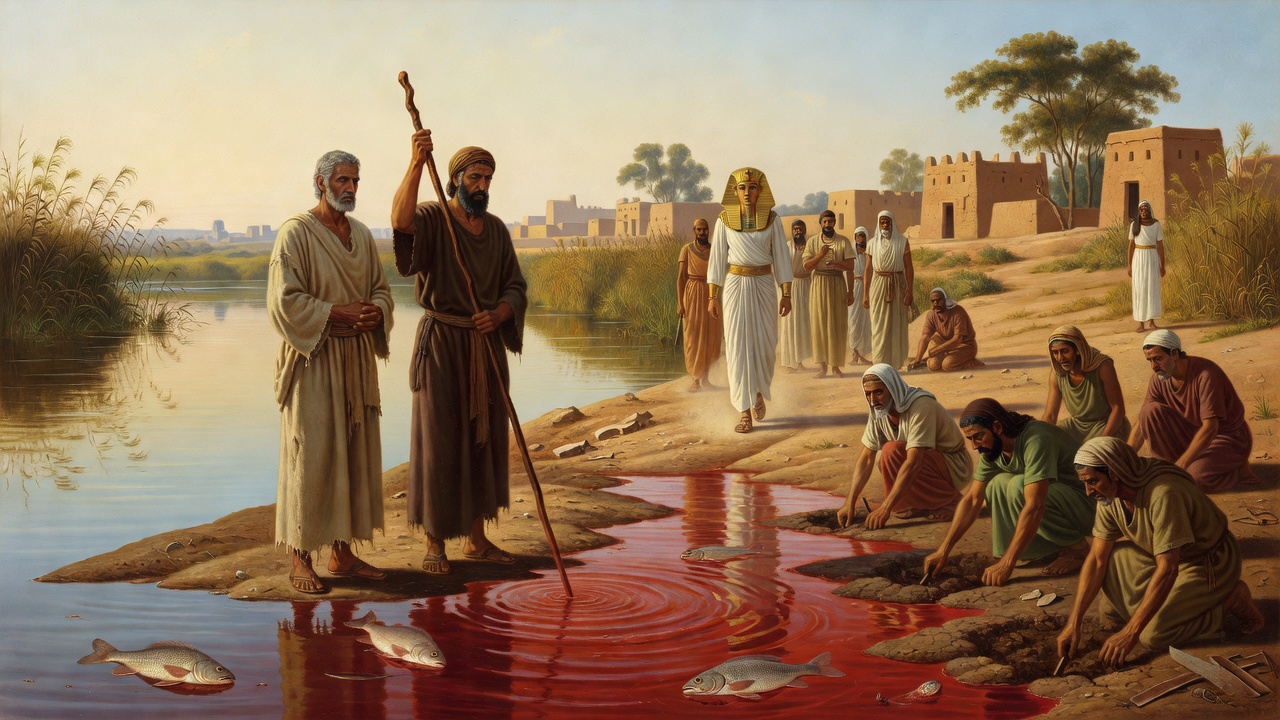
19Bala maṉḏa yuwalkthi Yärundhunydja ga Mawtjitjthunydja ŋunhi nhaltjarra maṉḏaku Garrayyu djäma ḻakaraŋala. Bala ŋayi Yärundhunydja warr‐way märraŋala wapitja'na bala yana gapuna marrtjina wutthurruna. Dhunupa gapunydja gulaŋdhinana; warrpam'nha gulaŋdhina ḻiw'maraŋala Yetjiptja. Ga ḏumurru'ŋunydja gapu mayaŋ gulaŋdhinayi yana, ga guyanydja marrtjina murrmurryurrunana, ga buŋgan boŋirriny'thinana ŋunhiyi gapunydja. Yakana walala ŋuriŋiyi Yetjippuyŋuyunydja yolŋu'‐yulŋuyu yukurrana ḻukana ŋuliŋurunydja gapu, liŋgu warrpam'nha gapunydja gulaŋdhinana yätjthinana.
22Bala walalanydja Yetjippuyŋuyunydja gaḏamanmirriyu walalay bitjarrayi liŋgu yana djäma gapu gulaŋguŋala. Bala ŋayi buŋgawanydja buluna rom‐ḏälthina; yakana ŋayi mäkiri'‐witjurruna maṉḏaku dhärukku.
Did you know?
Moses and Aaron before Pharaoh
- Moses was eighty years old and Aaron eighty-three when they spoke to Pharaoh. Easton's Bible Dictionary (1897) notes that Aaron, the eldest son of Amram and Jochebed, was born in Egypt three years before his brother Moses. In this chapter the LORD says he has made Moses "like God to Pharaoh," with Aaron as his prophet: Moses is to speak all that he is commanded, and Aaron is to tell Pharaoh to let the Israelites leave his land.Sources: the Bible text itself · Aaron
- Easton's Bible Dictionary (1897) notes that the name Nile is not found in Scripture; the Old Testament calls that river Sihor, "the black stream," or simply "the river," and also "the flood of Egypt." The Nile is formed by the White Nile and the Blue Nile, which meet at Khartoum, and it is the water Aaron strikes in this chapter. The fish died, the river stank, the Egyptians could not drink it and dug around the Nile for water, and seven full days passed.Sources: Nile · the Bible text itself
- Easton's Bible Dictionary (1897) says the Pharaoh of the Exodus was probably Menephtah I, the fourteenth and eldest surviving son of Rameses II, and that he resided at Zoan, where he had the interviews with Moses and Aaron recorded in Exodus. The same entry leaves the identification open: it is still a question whether Seti II or his father Menephtah was that Pharaoh, and some think the evidence favors Seti II.Sources: Pharaoh (of the Exodus) · the Bible text itself
Notes written with AI assistance from open sources (Theographic Bible Metadata, CC BY-SA 4.0; Easton’s Bible Dictionary, public domain) and reviewed before publishing.
Places in this chapter
- Egypt · 30.129, 31.308 · verses 3, 4, 5, 11, 19, 21, 22
- Nile · Today: Nile River · 31.465, 30.367 · verses 15, 17, 18, 20, 21, 24, 25
Only places identified with high confidence are shown (90% or more according to the scholarly sources compiled by OpenBible). Period map: DARE (Digital Atlas of the Roman Empire), CC BY 4.0; modern map: © OpenStreetMap contributors; places: OpenBible.info (CC BY 4.0).
Credits and license for this translation
Gumatj Bible
The Holy Bible in the Gumatj language of Australia
copyright © 1989, 2017 Bible Society of Australia
Language: Gumatj
Old Testament published 1989; New Testament published 2017
This translation is made available to you under the terms of the
Creative Commons Attribution-Noncommercial-No Derivatives license 4.0.
You may share and redistribute this Bible translation or extracts from it in any format, provided that:
You include the above copyright and source information.
You do not sell this work for a profit.
You do not change any of the words or punctuation of the Scriptures.
Pictures included with Scriptures and other documents on this site are licensed just for use with those Scriptures and documents.
For other uses, please contact the respective copyright owners.
2025-10-10
Source: http://ebible.org/gnn/ · eBible.org