1 Kings 1
Gumatj Bible · Tap a verse to see its cross-references.

About this book
About 1 Kings
- Easton's Bible Dictionary (1897) treats the authorship of the books of Kings as uncertain. A tradition that Jeremiah wrote them is, in Easton's view, supported by passages almost identical with parts of Jeremiah and by events Jeremiah knew personally, yet Easton thinks it more probable that Ezra, after the Captivity, compiled the books from earlier documents, perhaps written by David, Solomon, Nathan, Gad, and Iddo. Easton dates the composition between 561 B.C., when Jehoiachin was released from captivity by Evil-merodach, and 538 B.C., the decree of Cyrus.Sources: Easton: Kings, The Books of
- Easton says these books contain the annals of the kingdom from Solomon's accession until Nebuchadnezzar and the Babylonians subdued it, a period he estimates at about 453 years. 1 Kings opens while David is dying: Adonijah, his fourth son, who had become heir-apparent to the throne after the deaths of Amnon and Absalom, has himself proclaimed king, but Nathan and Bathsheba persuade David to enthrone Solomon at once. Solomon, David's son by Bathsheba, whose history is recorded in 1 Kings 1-11, came to the throne, Easton suggests, at about sixteen or eighteen.Sources: Easton: Kings, The Books of · Adonijah · Solomon
- In the Hebrew Scriptures the two books of Kings originally formed one book; the Septuagint first divided them and, with the Vulgate, numbers them as the third and fourth books of Kings, the books of Samuel being the first and second. Easton notes that Chronicles gives greater prominence to the priestly or Levitical office, while Kings gives greater prominence to the royal office, and that in the threefold division of the Scriptures by the Jews these books are ranked among the Prophets. The narrative points to earlier sources: the book of the acts of Solomon and the chronicles of the kings of Judah and of Israel.Sources: Easton: Kings, The Books of
- After Solomon's death the ten tribes revolted and invited Jeroboam, son of Nebat, to be their king; Easton calls him the first king of those tribes and dates his reign from 976 to 945 B.C. He had fled to Egypt under the protection of Shishak I, and later moved his residence from Shechem, his first capital, to Tirzah, which remained the chief residence of Israel's kings until Omri bought the hill of Shomeron from Shemer for two talents of silver and built Samaria. The later narrative includes Ahab, Omri's son and the seventh king of Israel, whose wife was Jezebel: to the calf worship introduced by Jeroboam he added the worship of Baal, and he was severely admonished by the prophet Elijah.Sources: Jeroboam · Tirzah · Samaria · Ahab
Notes written with AI assistance from open sources (Theographic Bible Metadata, CC BY-SA 4.0; Easton’s Bible Dictionary, public domain) and reviewed before publishing.
Djalamandja bitjarra buŋgawayinana ŋayi dharapulŋura Daypitkalana
1:1–53 (Solomon became King in David’s place)
1Daypittja liŋguna worruŋuyinana, galki ŋayi yurru rumbal‐winya'yunna, ga bitjanana liŋgu ŋayi ŋuli ŋorranha nhinanha bala'palaŋurana.
5Ga ŋulinyaramirriyuyi nhanŋu maḻamarr gäthu'mirriŋu Watanatja yäku ḏukṯukthina, ŋayi yurru ŋayina buŋgawayirri. Yurru ŋayi ŋunhi Watanatja ḻatju' ŋayi dhika rumbalnydja, ga beŋuru bili yana ŋunhi ŋayi yutjuwaḻaŋ'ka yana ḏarramu, ŋayi ŋuli djämanydja yukurranha nhanukiyingala ŋayi djälyu, ga bäpa'mirriŋuyu nhanukala Daypitthunydja yakana ŋuli ŋanya ḏaḏawmaranha ŋuliŋuru yätjŋurunydja malanyŋuŋuru.
7Bala ŋayi yana Watanatjayunydja garr'yurrunana marrtjina nhanŋuway ḻundu'mirriŋunhana walalanha, ga ŋathana ŋayi gurrunhara dhaŋaŋnha dhika walalaŋgu ḻukanharawu. Ga bitjarrayi liŋgu ŋayi gawaw'yurruna bala nhanukiyingala ŋayi wäŋalilinydja märraŋala ŋurru'‐ŋurruŋunha dhika buŋgawamirrinha yolŋu'‐yulŋunha ŋunhimalayi ŋathawu ḻukanharawu, ŋunhinha yana walalanha ŋayi garryu'‐garryurrunanydja ŋunhi walala nhanukala gali'kurru. Yurru yaka ŋayi garr'yurruna ŋanya wäwa'mirriŋunhanydja nhanŋuway ŋayi Djalamannhanydja, ga ŋanya Naythannha ŋunhi djawarrkmirrinha, ga ŋunhinha walalanha ŋunhi walala galkiŋuwuy wal'ŋu djäkamirrinha walalanha nhanŋu giŋgu.
11Ŋayinydja ŋunhala Naythandhunydja ŋäkulana, bala marrtjina ga ḻakaraŋala Batjipawuna, Djalamangalaŋuwu ŋäṉḏi'mirriŋuwuna, waŋananydja ŋayi bitjarrana gam' nhanukala ŋurikala, “Watanatjanydja ḏukṯukthina ŋunhi ŋayipi yana yurru buŋgawayirri dharapulŋura Daypitkalanydja, yurru Daypittja ŋunha dhuŋa yukurra yana nhina, yaka ŋayi ŋäkula ŋula. 12Ŋunhi yurru ŋayi Watanatjanydja buŋgawayirri ŋurruŋuyirri, ŋayinydja yurru buma rakunygumana nhuŋunydja yothu'nha waku'mirriŋunha Djalamannhanydja, ga nhunanydja. 13Nhämirri nhe ŋuli marrtji bala giŋgalanydja, ga waŋi biyakunydja nhanukala, ‘Nhe ŋäthilinydja dhawu'‐nherrara ŋarranha muka, ŋunhi boŋguŋu ŋarraku waku'mirriŋu Djalamandja buŋgawayi nhokalanydja dharapulŋura. Ga nhäkuna ŋunha ŋayinydja Watanatjanydja buŋgawayirri yurru?’ bitjarra.”
15Bala ŋayi marrtjinana Batjipanydja, ga waŋana yukurrana Daypitkala bitjarrayina, “Nhokala gäthu'mirriŋuyu Watanatjayunydja yukurra ŋathana ŋunha ŋäthilimirriyama, ga garr'yunna marrtji yolŋu'‐yulŋunhana ŋurru'‐ŋurruŋunhana, märr yurru walala ŋanya ŋurruŋukumana giŋgumana, yurru ŋayi yaka warray garr'yurruna ŋanya Djalamannhanydja. 20Daypit, nhenydja dhuwala ŋurruŋu muka, ga ŋunha yukurra bukmaktja Yitjuralpuyŋunydja nhuŋuway yana galkun, walala yukurra ḏukṯukthirrinydja nhuŋu, nhe yurru ḻakarama dhunupamirriyamana, yol nhokala dharapulŋuranydja yukurra yurru dhärra. 21Ŋuli nhe yurru yakanydja ŋula waḏutja ḻakarama, walalanydja yurru buŋgawakuma ŋunha Watanatjanhana, ga bumana walala yurru ŋarrakunydja waku'mirriŋunha Djalamannhanydja ga ŋarranhay.” Bitjarranydja yukurrana waŋana ḻakaraŋala Batjipayu.
22Ga ŋulinyaramirriyu liŋgu Naythannha burr‐way bunana ŋunhili, ga ŋayinydja ḻakaraŋala ŋunhi yana liŋgu waŋgany dhäwu.
28Bala ŋayinydja Giŋdhunydja ḻakaraŋalana yukurrana ŋurikala yolŋu'‐yulŋuwalana bitjarrana gam'. “Gäŋa ŋarraku gäthu'mirriŋunha Djalamannha lili, ga wapmaraŋa ŋanya ŋal'maraŋa ŋarrakala yarraman'lili. Nhuma yurru ḻiya ŋanya biḏi'yurra weyika'yu, ga yolŋu'‐yulŋuwunydja biyaka ḻakaraŋa, ‘Dhuwalana gay' Djalamannha giŋdja yurru ŋilimurruŋgu.’ Ga bopthurrana yiḏakinydja malanha, ḻiw'maraŋa yukirriya marrtjiya dhukarrkurru, märr yurru bukmaknha yolŋu'‐yulŋunydja marŋgithirri. 35Bala liliyi ŋanya roŋiyinmaraŋa, ga nherrala ŋunhina wal'ŋu garrwarlilina, ŋarrakalaynha dharapullili nhinanharawunydja. Ŋarralaynha gäthu'mirriŋu Djalamannha yana ŋunhi ŋarrapi wal'ŋu djarr'yurruna ŋanya, ŋayipi yana yurru yukurra malanydja ḏälkuma Yitjuralpuyŋunhanydja ga Djudanha bäpurru'nha.” Ga bitjarranydja yukurrana ŋayi Giŋ waŋana Daypit.
36Dhunupa walalanydja yana dhäruktja ŋanyapinyay märraŋala ŋunhi nhaltjarra Daypit waŋana. Yuwalkthi walala ḻiya‐ŋämira weyika'yu Djalamannha, bala walala gäŋalanydja ŋanya yukurrana dhukarr‐ŋupara ḻiw'maraŋala, bopthurruna marrtjina dhika. Ga yolŋu'‐yulŋunydja bukmaknha dhika yiŋgathinana marrtjina märr‐yiŋgathinana, bitjarrana walala waŋanhaminanydja marrtjina, “Weyinŋuwuna wal'ŋu nhinanharawu giŋ ŋanapurruŋgu dhuwalanydja Djalamandja.” Yatjunmina walala marrtjina dhika yiŋgathina, dhukarr‐ŋupara malthurrunana marrtjina bala nhanbala Djalamanba.
41Watanatjayunydja ga nhanukala ŋuriŋi ḻundu'mirriŋuyunydja walalay, walala ŋunhala ŋathana yukurrana ḻukana, ŋäkula warray walala rirrakay warray walalanha yulŋunydja, walala marrtjina yiŋgathina lili. Bala walala waŋanhamina bitjanminana, “Ga' ga'! Dhika nhä? Nhäku walala marrtji dhikanydja yiŋgathirri lili?” bitjarrana. Bur‐way walalambala ŋunhili dhäwu'mirrina, ga ḻakaraŋalana walalambala bitjarrana gam'. “Dhuḏitjnha dhuwala yulŋunydja bay'. Ŋunha Giŋ Daypitthunydja liŋguna buŋgawakuŋala Djalamannhana, ŋunhana ya' gäma yukurra ŋanya yulŋunydja, marrtji ŋayi yukurra yarraman'thuna, giŋgalana yarram'thu ŋuriŋi. 45Liŋguna walala ŋanya ḻiyanydjaŋämira ḻiya‐ḻupmaraŋalanydja, ga yolŋu'‐yulŋunydja marrtji yatjunmirrina, ‘Djalamannha dhuwala ŋilimurruŋgu giŋdja,’ ŋunhana ya' walala marrtji yiŋgathirrina.”
Bala Giŋ Daypittja wirrkina goŋmirriyina, buku‐ŋal'yurruna yukurrana ŋayi Godkuna, ga waŋana yukurrana bitjarrana, “Wokthunna Garraywuna, bili gäthuranydja dhuwala ŋarraku gäthu'mirriŋunydja liŋguna giŋnha.”
49Ŋunhi walala Watanatjawala ŋuriŋi yolŋu'‐yulŋuyunydja ḻundu'mirriŋuyunydja walalay ŋäkula ŋunhiyinydja, ga bena dhika walala beyaṉiyinyaminanydja; walala gaŋga'‐gathinana, bala yana wäŋgaŋalana gonha'yurrunana. 50Ga ŋayi Watanatjanydja bitjarrayi bili wirrkina beyaṉiyina nhanŋu Djalamangu, bala yana ŋayi waṉḏinana bala ŋunhimala Garraywalana Buṉbulili, walŋakunharamina ŋanyapinyay ŋayi. Ga waŋananydja ŋayi bitjarrana, “Ŋarra yurru dhiyala yana bili yukurra nhinanydja, ga yana liŋgu ŋarranha yurru Djalamandhu dhawu'‐nherraṉ walŋakunharawu.”
52Ga Djalamandhunydja ŋäkulana ŋurikiy, ŋayi waŋananydja bitjarrana, “Ŋuli ŋayi yurru ŋarrakuwaynydja malthun yukurra, ŋarrakalanydja gali'ŋura, yaka ŋarra yurru ŋula nhaltjan buma ŋanya. Ga ŋuli ŋayi yurru ŋarraku gali'‐nherraṉmirri, ga ŋurrkama ŋarranha, ga ŋunhinydja ŋayi yurru rakunydhirri warray.” 53Bala yana ŋayi Watanatjanhanydja djuy'yurrunana‐wala yana. “Gatjala, marrtjiya wäŋalilina,” bitjarrana yana.
Did you know?
The Succession to David's Throne
- As David's oldest surviving son after the deaths of Amnon and Absalom, Adonijah claimed the royal succession, backed by the military commander Joab and the high priest Abiathar. However, David chose his younger son Solomon, who was supported by the prophet Nathan, the priest Zadok, and the royal bodyguard under Benaiah.Sources: Adonijah · Solomon · the Bible text itself
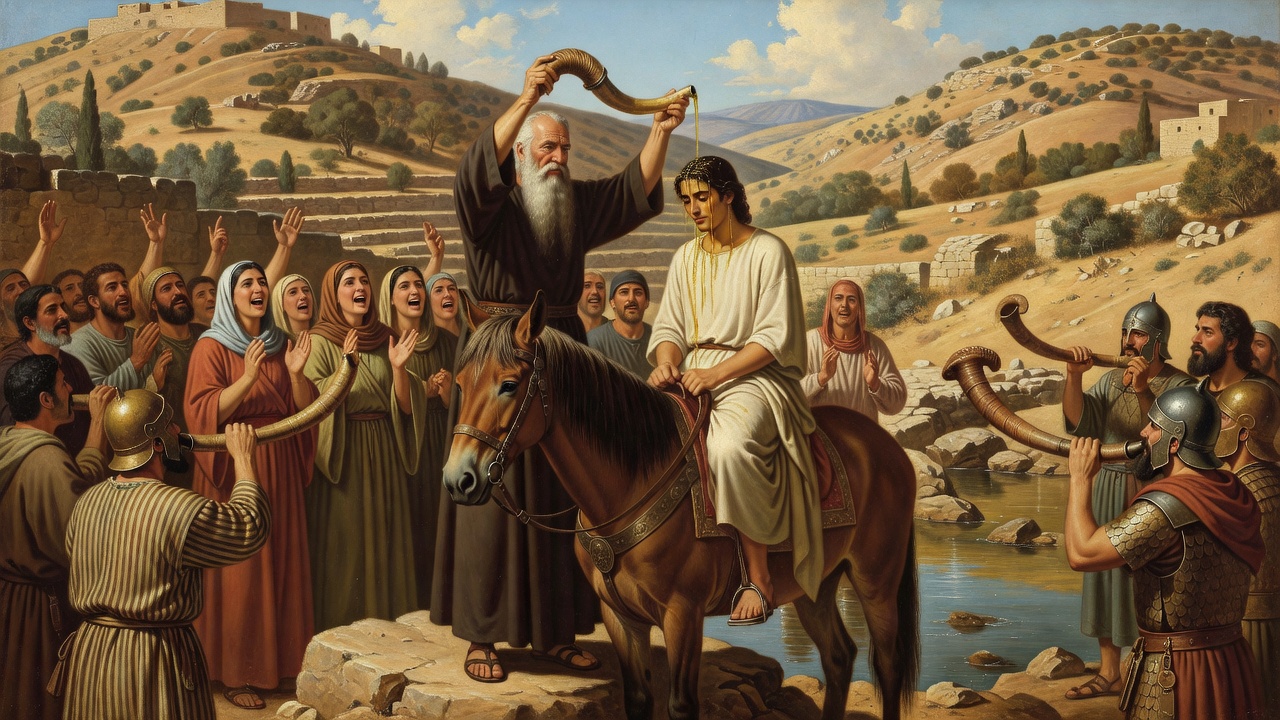
- Riding the king's own mule was a decisive public declaration of royal authority. By David's explicit instruction, Solomon was escorted down to the spring of Gihon, where Zadok anointed him king with oil taken from the tabernacle to the sound of ram's horns and popular celebration.Sources: Gihon · Zadok · the Bible text itself
- Upon hearing of Solomon's public coronation, Adonijah fled in terror and sought asylum by taking hold of the horns of the sacrificial altar. Solomon granted him conditional clemency, sparing his life so long as he proved himself a worthy man.Sources: Adonijah · the Bible text itself
Notes written with AI assistance from open sources (Theographic Bible Metadata, CC BY-SA 4.0; Easton’s Bible Dictionary, public domain) and reviewed before publishing.
Places in this chapter
- Shunem · Today: Sulam · 32.606, 35.334 · verse 3
- Serpent’s Stone · Today: within 100 m of Bir Ayub · 31.767, 35.236 · verse 9
- Gihon · Today: Gihon Spring · 31.773, 35.236 · verses 33, 38, 44, 45
- Jerusalem · 31.777, 35.234 · verse 40
Only places identified with high confidence are shown (90% or more according to the scholarly sources compiled by OpenBible). Period map: DARE (Digital Atlas of the Roman Empire), CC BY 4.0; modern map: © OpenStreetMap contributors; places: OpenBible.info (CC BY 4.0).
Credits and license for this translation
Gumatj Bible
The Holy Bible in the Gumatj language of Australia
copyright © 1989, 2017 Bible Society of Australia
Language: Gumatj
Old Testament published 1989; New Testament published 2017
This translation is made available to you under the terms of the
Creative Commons Attribution-Noncommercial-No Derivatives license 4.0.
You may share and redistribute this Bible translation or extracts from it in any format, provided that:
You include the above copyright and source information.
You do not sell this work for a profit.
You do not change any of the words or punctuation of the Scriptures.
Pictures included with Scriptures and other documents on this site are licensed just for use with those Scriptures and documents.
For other uses, please contact the respective copyright owners.
2025-10-10
Source: http://ebible.org/gnn/ · eBible.org