Malachi 1
Geeshsha Mexaafa · Tap a verse to see its cross-references.
About this book
About Malachi
- Easton's Bible Dictionary (1897) presents Malachi, a name meaning "messenger" or "angel," as the last of the minor prophets and the writer of the last book of the Old Testament canon. Nothing is known of him beyond what is contained in his book of prophecies.Sources: Easton: Malachi · Malachi
- Some have supposed that the name is simply a title for a messenger of Jehovah, not a proper name. Easton's Bible Dictionary (1897) concludes, however, that there is reason to regard Malachi as the prophet's ordinary name.Sources: Easton: Malachi · Malachi
- Easton's Bible Dictionary (1897) dates the prophecies to about 420 B.C., after Nehemiah's second return from Persia, or possibly before that return. Because Ezra does not mention him and he does not mention the restoration of the temple, the dictionary infers that he prophesied after Haggai and Zechariah.Sources: Easton: Malachi
- Easton's Bible Dictionary (1897) treats Malachi as a contemporary of Nehemiah, comparing Malachi 2:8 with Nehemiah 13:15 and Malachi 2:10-16 with Nehemiah 13:23. It also notes that the temple services were still in existence, citing Malachi 1:10, 3:1 and 3:10.Sources: Easton: Malachi
Notes written with AI assistance from open sources (Theographic Bible Metadata, CC BY-SA 4.0; Easton’s Bible Dictionary, public domain) and reviewed before publishing.
1Milkaasa baggara Isra7eele naytas yida GODAA qaala,
Xoossi Isra7eele Asaa Siiqides
2GODAY, «Ta inttena dosadis» gees; intte gidikko, «Ne nuna aazan dosadii?» geeta. Godaa Xoossi, «Eesawey Yaaqoobe isha gidennee? Ta Yaaqoobe dosadis. 3Gido attiin Eesawe ixxadis; iza deren diza zumata bazzo kessadis; iza gadezakka bazzon diza worakanatas aaththa immadis» gides. 4Eedoomey, «Nu katamati laalettiin istta zaari essana» istti giin Ubbaafe Wolqqama GODAA Xoossa qasse, «Istti zaaridi ooththana shin ta istti ooththoyssa zaara laallana; isttika, ‹Iita derenne GODAY mernaas hanqettida dere geetettana.› 5Hessaka intte intte ayfera beyana; intteka, ‹Isra7eele nayta dere dhassafe harasonkka GODAY gita gaana.
Borettiza Yarsho
6«Nay ba aawa, aylleyka ba Godaa bonchchees shin ta inttes aawa gidikko aazas tana bonchcheketii? Tani Godaa gidikko aazas taas yayyeketii? gees medheteththa goday; qeesetoo! Ta sunth kawushshizay inttena. ‹Intte qasse: nuni ne sunth wostti kawushshidonii?› geeta. 7Intte taas yarsho shiishshizason tunida kath woththeeta» Histti woththidi, «Nu nena wostti tunisidonii?» geeta. Intte, «GODAA maadday tooshettidaaza» guussanna; intte, «GODAA maadday kadhettidaaza guussanna. 8Intte qooqe mehe yarshos ehizayssi hessi qoho gidennee? Wobbe woykko sakettiza mehe intte yarshos shiishshizayssi hessi qoho gidennee? Heytantta mala inttena ayssiza daannatas intte immizaakko istti inttefe ufayssan ekkanee?» gees Ubbaafe Wolqqama GODAY.
9«Ha7i qasse izi nuus mishettana mala Xoossa woossite; hessa mala yarsho intte shiishshiin Xoossi inttefe ekkandee?» gees Ubbaafe Wolqqama GODAA Xoossay.
10«Taas Yarsho yarshizason go7ay baynda tama intte eeththontta mala inttefe issaadeyka Xoossa Keeththa penge gordizaakko aazee dizay! Ta inttenan ufayettikenne intte kusheppe ay yarshoka ekkike» gees Ubbaafe Wolqqama GODAA Xoossay. 11Awa arshey kezizasoppe doommidi arshey wullizaso gakkanaas ta sunththay dere ubbaa giddon bonchchettana; beettooson ubbaan ta sunththas exaaneynne geeshsha yarsho asay shiishshana; ta sunththi asa ubbaa achchan bonchchettana.
12«Intte qasse, ‹Godaa maadday tuna yarsho; kaththayka kadhettidayssa› giidi kawushsheeta. 13Qasseka, ‹Hayssi daabura› guussan leqo mixilth iza bolla mixilleeta» gees Ubbaafe Wolqqama GODAA Xoossay. «Bonqqi ekkida mehe wobbenne hargiza mehe intte yarsho shiishshiin intte kusheppe ta hessa ekkanaas bessizee?» gees Ubbaafe Wolqqama GODAA Xoossay. 14«Dorsata garsan lo7o dharshoy dizayssa immanaas adinettidi qasse baleththon iza bolla wosoy diza mehe Godaas yarsho shiishshizaadey qanggetto; ta gita kawo; ta sunththika dere kumeththi babbanaas bessiza sunththa» gees Ubbaafe Wolqqama GODAA Xoossay.
Did you know?
Honoring God and Defective Offerings
- The name Malachi means messenger or angel. While some have suggested it was a title rather than a proper name, scholars and traditions widely treat it as the prophet's personal name, placing his ministry during the period of Nehemiah, after Haggai and Zechariah.Sources: Malachi
- The opening dispute recalls the twin brothers Jacob and Esau, the ancestors of Israel and Edom. The text contrasts God's covenant love for Israel with the judgment and desolation coming upon the mountainous region of Edom.Sources: Esau (Edom) · Jacob (Israel) · Edom · the Bible text itself
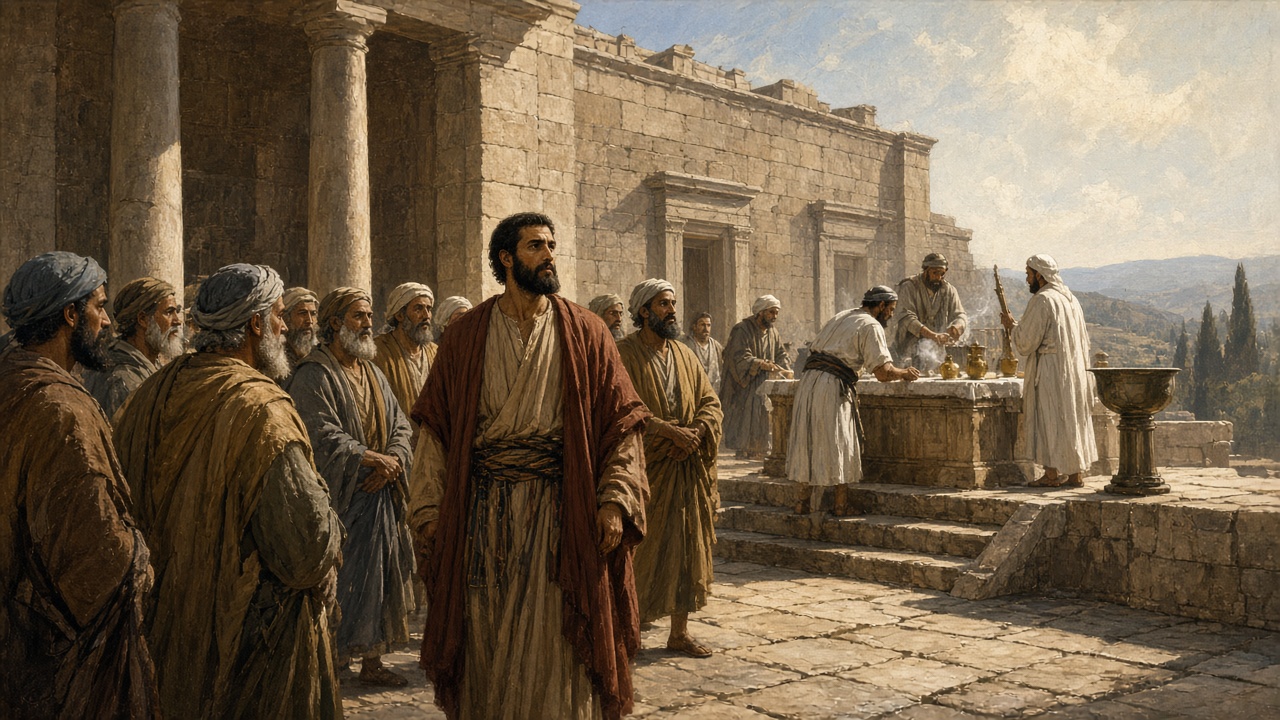
- The priests are rebuked for offering blind, lame, and diseased animals on the altar rather than unblemished livestock. Malachi exposes their disrespect by asking whether a civil governor would accept such inferior gifts.Sources: the Bible text itself
Notes written with AI assistance from open sources (Theographic Bible Metadata, CC BY-SA 4.0; Easton’s Bible Dictionary, public domain) and reviewed before publishing.
Places in this chapter
- Edom · 30.746, 35.604 · verse 4
Only places identified with high confidence are shown (90% or more according to the scholarly sources compiled by OpenBible). Period map: DARE (Digital Atlas of the Roman Empire), CC BY 4.0; modern map: © OpenStreetMap contributors; places: OpenBible.info (CC BY 4.0).
Credits and license for this translation
Geeshsha Mexaafa
The Holy Bible in the Gamo language of Ethiopia, Latin script
copyright © 2024 The Word for the World International
Language: Gamotso (Gamo)
Contributor: The Word for the World International
This translation is made available to you under the terms of the
Creative Commons Attribution Share-Alike license 4.0.
You have permission to share and redistribute this Bible translation in any format and to make reasonable revisions and adaptations of this translation, provided that:
You include the above copyright and source information.
If you make any changes to the text, you must indicate that you did so in a way that makes it clear that the original licensor is not necessarily endorsing your changes.
If you redistribute this text, you must distribute your contributions under the same license as the original.
Pictures included with Scriptures and other documents on this site are licensed just for use with those Scriptures and documents.
For other uses, please contact the respective copyright owners.
Note that in addition to the rules above, revising and adapting God's Word involves a great responsibility to be true to God's Word. See Revelation 22:18-19.
2025-05-03
Source: http://ebible.org/gmvl/ · eBible.org