1 Kings 1
Geeshsha Mexaafa · Tap a verse to see its cross-references.
About this book
About 1 Kings
- Easton's Bible Dictionary (1897) treats the authorship of the books of Kings as uncertain. A tradition that Jeremiah wrote them is, in Easton's view, supported by passages almost identical with parts of Jeremiah and by events Jeremiah knew personally, yet Easton thinks it more probable that Ezra, after the Captivity, compiled the books from earlier documents, perhaps written by David, Solomon, Nathan, Gad, and Iddo. Easton dates the composition between 561 B.C., when Jehoiachin was released from captivity by Evil-merodach, and 538 B.C., the decree of Cyrus.Sources: Easton: Kings, The Books of
- Easton says these books contain the annals of the kingdom from Solomon's accession until Nebuchadnezzar and the Babylonians subdued it, a period he estimates at about 453 years. 1 Kings opens while David is dying: Adonijah, his fourth son, who had become heir-apparent to the throne after the deaths of Amnon and Absalom, has himself proclaimed king, but Nathan and Bathsheba persuade David to enthrone Solomon at once. Solomon, David's son by Bathsheba, whose history is recorded in 1 Kings 1-11, came to the throne, Easton suggests, at about sixteen or eighteen.Sources: Easton: Kings, The Books of · Adonijah · Solomon
- In the Hebrew Scriptures the two books of Kings originally formed one book; the Septuagint first divided them and, with the Vulgate, numbers them as the third and fourth books of Kings, the books of Samuel being the first and second. Easton notes that Chronicles gives greater prominence to the priestly or Levitical office, while Kings gives greater prominence to the royal office, and that in the threefold division of the Scriptures by the Jews these books are ranked among the Prophets. The narrative points to earlier sources: the book of the acts of Solomon and the chronicles of the kings of Judah and of Israel.Sources: Easton: Kings, The Books of
- After Solomon's death the ten tribes revolted and invited Jeroboam, son of Nebat, to be their king; Easton calls him the first king of those tribes and dates his reign from 976 to 945 B.C. He had fled to Egypt under the protection of Shishak I, and later moved his residence from Shechem, his first capital, to Tirzah, which remained the chief residence of Israel's kings until Omri bought the hill of Shomeron from Shemer for two talents of silver and built Samaria. The later narrative includes Ahab, Omri's son and the seventh king of Israel, whose wife was Jezebel: to the calf worship introduced by Jeroboam he added the worship of Baal, and he was severely admonished by the prophet Elijah.Sources: Jeroboam · Tirzah · Samaria · Ahab
Notes written with AI assistance from open sources (Theographic Bible Metadata, CC BY-SA 4.0; Easton’s Bible Dictionary, public domain) and reviewed before publishing.
1Kawo Dawiti keehi cimmida gishshas izas ooththizayti iza meegoppe ashshanaas may7o iza bolla koriin aykkoka iza ho7anaas dandaybeenna. 2Hessa gishshas izas ooththizayti, «Kawoo! Nenara de7ashe nena lo7eththa naagana mala issi geela7o nees koyi ehinoo? Iza nenara aqikko nena ho7ana» gida. 3Isra7eele biitta ubbaan koyidi Abishaago geetettiza issi mala lo7o geela7iyo Suneme katamappe demmidi kawozas ehida. 4Izakka keeha mala lo7o; kawozara dashe izas ooththashe iza lo7eththa oykkadus; gido attiin izi izo ekkibeenna.
Kawotanaas Adoniyaasa Kosh
5Hagiti naa Adoniyaasi, «Ta kawotana koyays» gi dendides; para-gaaretanne parata qasseka izappe sinththe sinththe baanaas 50 asata giigsides. 6Iza aawaykka, «Ays hayssaththo ooththay?» gi mulekka seeri erenna. Adoniyaasi keehippe mala lo7o asa; izi Abeseloomes kaalo isha. 7Adoniyaasi Xuriya naa Iyo7aaberanne qeese Abiyaataarera ha yo7oza zorettides; isttika iza maaddanaas qofa qachchida. 8Gido attiin qeese Saadooqey, Yoodahe naa Bannayay, nabe Naataaney, Shim7ey, Era7eynne Dawite naagiza zabeti iza qofaa ekkibeettenna.
9Issi gallas Adoniyaasi En-Roogeele katama matan Zoheleete Zaalla geetettizason dorsata, booratanne ohala marata yarshides. Kawo nayta, ba ishata kawo shuume gidida Yuhuda asata ubbaa xeygides. 10Gido attiin nabe Naataane, Bannaya, kawo naagiza zabetanne ba isha Solomoone xeygibeenna.
Solomoone Kawoteth
11Hessafe guye Naataaney Solomoone aayo Bersaabeho, «Nu godaa Dawiti erontta dishin Hagiti naa Adoniyaasi kawotidayssa ne siyabeekkii? 12Ha7i neni ne shempponne ne naaza Solomoone shemppo wostta ashshanaakko ane ta nena zorays. 13Kawo Dawitekko baada, ‹Kawoo, ta godawu! Taas ne aylleys ne naa Solomooney taappe guyen kawotana; ta araatankka izi uttana gaada caaqqabeekkii? Histtiin Adoniyaasi waani kawotidee?› ga oychcha. 14Neni kawozara heen haasayan dishin ta gelada ne gidayssi tumu gididayssa qonccisana» gides.
15Suneme katamappe yida Abishaaga cimmida kawoza heemmiza ilpinne giddo Bersaabeha kawoza haasayssanaas geladus. 16Bersaabeha kawoza sinththan zaqullada ba kushe denththadus; qasseka iza sinththan gulbatadus.
Kawozikka izo, «Ay koyay?» giidi oychchides.
17Bersaabeha izas, «Ta godawu! Taas ne aylleys, ‹Taappe guyen ne naa Solomooney kawotana; ta araatankka izi uttana› gaada GODAAN, ne Xoossan neni caaqqadasa. 18Gido attiin ha7i Adoniyaasi kawotides; neni ta goday kawoy hessa erakka. 19Izi keehi daro meheta, ohala maratanne dorsata yarshides; Yarshishe kawo nayta ubbaa, qeese Abiyaataarenne ola gadawa Iyo7aabe xeygides; gido attiin ne aylleza Solomoone xeygibeenna. 20Ta godawu, kawoo! Neeppe guye ne kawoteththa araatan ooni uttanaakko eranaas Isra7eele asaa ubbaa ayfey nena xeelli uttides. 21Histtontta aggiko ta godaa kawoy hayqqidi ba aawatan gayttiza wode taninne ta naa Solomooney mooro ooththida asa mala qoodettana» gadus.
22Bersaabeha buro kawozara haasayan dishin nabe Naataaney gakki wodhdhides. 23Kawozas, «Nabe Naataaney yides» giidi yootida; izikka kawoza sinththan gufannidi ba kushe denththides.
24Hessafe guye Naataaney, «Ta godaa kawoo! Neeppe guye Adoniyaasi kawotana malanne ne araatan uttana mala erisadii? 25Hach izi duge biidi keehi daro meheta, ohala maratanne dorsata yarshishe kawo nayta ubbaa, ola gadawatanne qeese Abiyaataare xeygides; izi ha7i izara mishenne uyishe, ‹Kawo Adoniyaasi mernaas kawoto!› geeththa bolla deettes. 26Gido attiin tana ne aylle, qeese Saadooqe, Yoodahe naa Bannayanne ne aylle Solomoone xeygibeenna. 27Ta godaa kawoo! Neeppe guyera ne kawoteththa araatan ooni uttanaakko ne aylleta erisontta dashe hayssa Adoniyaasi kawotana mala ooththiday nenee?» gides.
28Histtiin Kawo Dawiti, «Bersaabeho taas xeygite» gides; izakka kawozi dizaso gelada iza sinththan eqqadus. 29He wode kawozi izis, «Tana meto ubbaafe ashshida de7o GODAY beyiin! 30GODAAN, Isra7eele Xoossan tani nees caaqqida caaqoza tumu hach polana; taappe guyen ne naa Solomooney kawotana; ta kawoteththa araatan izi uttana» gi caaqqides.
31Bersaabeha kawoza sinththan gufannada ba kushe denththadus; «Ta godaa, Kawo Dawiti mernaas kawoto!» gadus.
32Hessafe guye Kawo Dawiti, «Taas qeese Saadooqe, nabe Naataanenne Yoodahe naa Bannaya xeygite» gides; histtiin istti kawoza sinth shiiqida. 33Kawozi isttas, «Ta aylleta inttenara ekki biidi ta naa Solomoone ta baqulo togisidi duge Giyoone efte. 34Heen qeese Saadooqeynne nabe Naataaney iza tiydi Isra7eele asaa bolla kawoththetto; hessafe guye zaye punnidi intte qaala dhoqqu histtidi, ‹Kawo Solomooney mernaas kawoto!› giite. 35Hessafe guye intte iza azhabidi haa pude kezite; izi yiidi ta kawoteththa araatan utto; izi ta sohon uttidi deraa aysso; tani Isra7eele deraa bollanne Yuhuda deraa bolla iza shuumadis» gides.
36Yoodahe naa Bannayay kawozas zaaridi, «Amiin! Ta godaa kawoza, GODAY, Xoossay minththo! 37GODAY, ta godaa kawozara gidida mala Solomoonerakka gido; iza kawoteththaa araata ta godaa kawo Dawite araataappeka aaththidi gitaso» gides.
38Hessa gishshas qeese Saadooqey, nabe Naataaney, Yoodahe naa Bannayay, Kelitetinne Peliteti Solomoone Kawo Dawite baqulo togisidi duge Giyoone azhabi efida. 39Qeese Saadooqey Gaytoteththa Dunkaaneppe zayte kaceza ekkidi Solomoone tiydi kawoththides; hessafe guye zaye punnida; ubba asaykka ba qaala dhoqqu histtidi, «Kawo Solomooney mernaas kawoto!» gida. 40Asay ubbayka iza azhabidi pude bides; istti dinke punni punni kaa7ishe keehi ufayettida; asaa homboceththan biittay qaaxxides.
41Adoniyaasinne izara diza imaththati gibira mi wursishe hessa siyida; Iyo7aabey dinkeza giirissaa siyidi, «Hayssi katamaan seetettiza giirissay aazee?» gi oychchides.
42Izi buro haasayan dishin qeese Abiyaataare naa Yoonataaney gakki wodhdhides. Histtiin Adoniyaasi, «Ane haa gela; ne mala ammanettida asi lo7o wore ekki yontta aggenna» gides.
43Yoonataaneykka zaaridi, «Chii, yo7oy mulekka hessa mala gidenna; nu goday kawo Dawiti Solomoone kawoththides. 44Iza azhabana mala kawoy qeese Saadooqe, nabe Naataane, Yoodahe naa Bannaya, Kelitetanne Peliteta izara yeddides; istti iza kawaa baqulo togisida. 45Qeese Saadooqeynne nabe Naataaney, Giyoonen iza tiydi kawoththida; heeppe istti hombocishe pude bida; hessan katamay kooshumees; ha7i intte siyiza kooshunchchay hessa. 46Hessafe bollarakka Solomooney kawoteththa araatan uttides. 47Qasse kawo shuumeti nu godaa kawo Dawitekko yiidi, ‹Ne Xoossay Solomoone sunththaa ne sunththaafe dhoqqu histto! Iza kawoteththa araataakka neyssafe aadheth histto!› giidi anjjida; histtiin kawoy ba algan dishe hokki Xoossas goynnishe, 48‹Ta kawoteththa araatan uttidi ta sohon kawotizayssa tana hach ta ayfen bessida GODAA Isra7eele Xoossay galatetto!› gides» gi yootides.
49Hessa siyidi Adoniyaasi xeygida imaththati ubbay dagammi dendidi laalettida. 50Adoniyaasi gidikko Solomoones yayyidi bi yarshizasoza kaceta oykkides. 51Hessafe guye asay Solomoones, «Adoniyaasi kawo Solomoones yayyidi yarshizasoza kaceta oykkidi, ‹Kawo Solomooney tana ba aylleza giththa mashshan wodhdhontta mala taas hach caaqqo› gees» giidi yootida.
52Solomooney zaaridi, «Izi ba hemeth lo7eththiko haray attoshin iza hu7e binanappe issinakka gaden wodhdhuku; gido attiin iza bolla iitateththi beettiko izi hayqqana» gides. 53Hessafe guye kawo Solomooney as kiittiin istti biidi iza yarsho yarshizasoppe duge woththida; histtiin Adoniyaasi yiidi Solomoones ziggides; Solomooneykka iza, «Gede neso ba» gides.
Did you know?
The Succession to David's Throne
- As David's oldest surviving son after the deaths of Amnon and Absalom, Adonijah claimed the royal succession, backed by the military commander Joab and the high priest Abiathar. However, David chose his younger son Solomon, who was supported by the prophet Nathan, the priest Zadok, and the royal bodyguard under Benaiah.Sources: Adonijah · Solomon · the Bible text itself
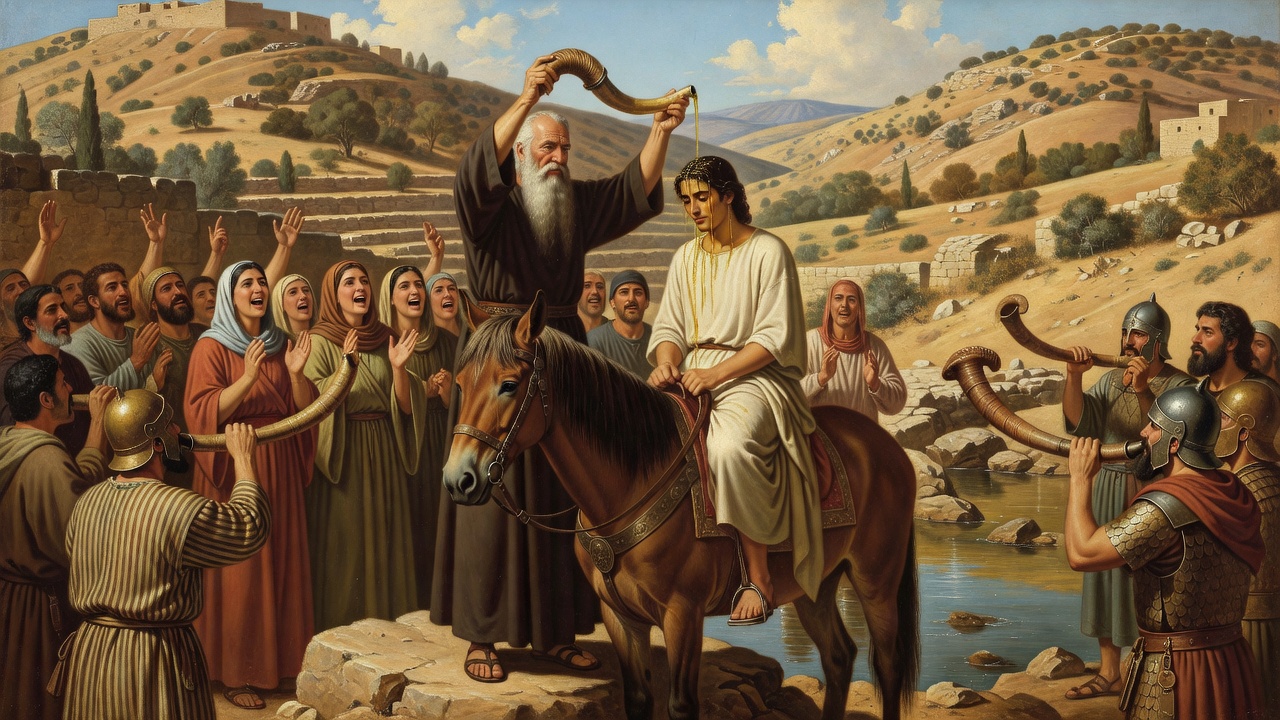
- Riding the king's own mule was a decisive public declaration of royal authority. By David's explicit instruction, Solomon was escorted down to the spring of Gihon, where Zadok anointed him king with oil taken from the tabernacle to the sound of ram's horns and popular celebration.Sources: Gihon · Zadok · the Bible text itself
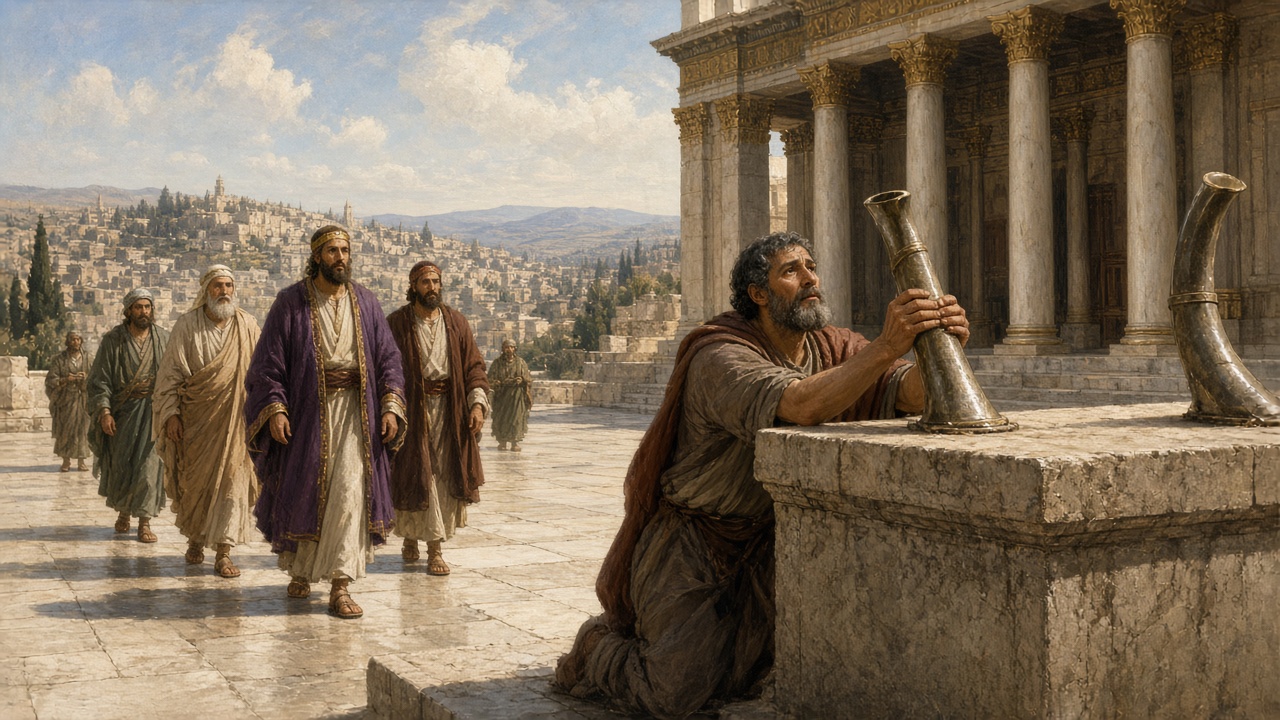
- Upon hearing of Solomon's public coronation, Adonijah fled in terror and sought asylum by taking hold of the horns of the sacrificial altar. Solomon granted him conditional clemency, sparing his life so long as he proved himself a worthy man.Sources: Adonijah · the Bible text itself
Notes written with AI assistance from open sources (Theographic Bible Metadata, CC BY-SA 4.0; Easton’s Bible Dictionary, public domain) and reviewed before publishing.
Places in this chapter
- Shunem · Today: Sulam · 32.606, 35.334 · verse 3
- Serpent’s Stone · Today: within 100 m of Bir Ayub · 31.767, 35.236 · verse 9
- Gihon · Today: Gihon Spring · 31.773, 35.236 · verses 33, 38, 44, 45
- Jerusalem · 31.777, 35.234 · verse 40
Only places identified with high confidence are shown (90% or more according to the scholarly sources compiled by OpenBible). Period map: DARE (Digital Atlas of the Roman Empire), CC BY 4.0; modern map: © OpenStreetMap contributors; places: OpenBible.info (CC BY 4.0).
Credits and license for this translation
Geeshsha Mexaafa
The Holy Bible in the Gamo language of Ethiopia, Latin script
copyright © 2024 The Word for the World International
Language: Gamotso (Gamo)
Contributor: The Word for the World International
This translation is made available to you under the terms of the
Creative Commons Attribution Share-Alike license 4.0.
You have permission to share and redistribute this Bible translation in any format and to make reasonable revisions and adaptations of this translation, provided that:
You include the above copyright and source information.
If you make any changes to the text, you must indicate that you did so in a way that makes it clear that the original licensor is not necessarily endorsing your changes.
If you redistribute this text, you must distribute your contributions under the same license as the original.
Pictures included with Scriptures and other documents on this site are licensed just for use with those Scriptures and documents.
For other uses, please contact the respective copyright owners.
Note that in addition to the rules above, revising and adapting God's Word involves a great responsibility to be true to God's Word. See Revelation 22:18-19.
2025-05-03
Source: http://ebible.org/gmvl/ · eBible.org