Psalms 53
Kitaaba Woyyuu · Tap a verse to see its cross-references.
Hammeenna Namaa
Sooressa faarfattootaatiif, wolaloo Daawitii, ta akka yoyyoma, «Mahalaat» jedhamee beekkamutti faarfatante.
1Gowwooleen gadhaa ifii keessatti,
«Waaqi hin jiru» jedhan;
isaan worra bada'a;
waan gadhee hujan;
isaan keessaa
ka waan dansaa huju tokkolle hin jiru.
2Worra qaroolee Waaqa barbaadu,
yoo jiraatane dhaggiisaaf,
Waaqi ol-gubbaa irraa,
gara ilmaan namaa gad ilaala.
3Isaan ammoo martinuu dudda itti galaneeran;
martinuu wolumatti worra badaa te'aneeran;
isaan keessaa ka waan dansaa huju hin jiru;
tokkolle hin jiru.
4Worri hamaaleyyiin womaa hin hubatuu?
Akkuma nami sagalee nyaatu
worri kolbaa tiyya nyaatu,
gara Waaqaa hin daadimatu.
5Isaan addee wonni sodaatanu hin jirretti,
sodaatanee bararaqan.
Waaqi lafee diina kolbaa ifii hin bittinneessa;
Waaqi waan isaan jibbeef,
isin kolbaan Waaqaa isaan hin qaanessitan.
6Xiyoon keessaa
Israa'eliif fayyinni adoo dhufee jiraatee!
Yennaa Waaqi boojuu kolbaa ifii deebisu,
sanyiin Yaaqoobii burraaxxuu ti;
kolbaan Israa'elii gammadduu ti.
Did you know?
A Reflection on Folly and Deliverance
- The psalm depicts God observing humanity from heaven to see if any seek Him, observing that all have turned aside and become corrupt.Sources: the Bible text itself
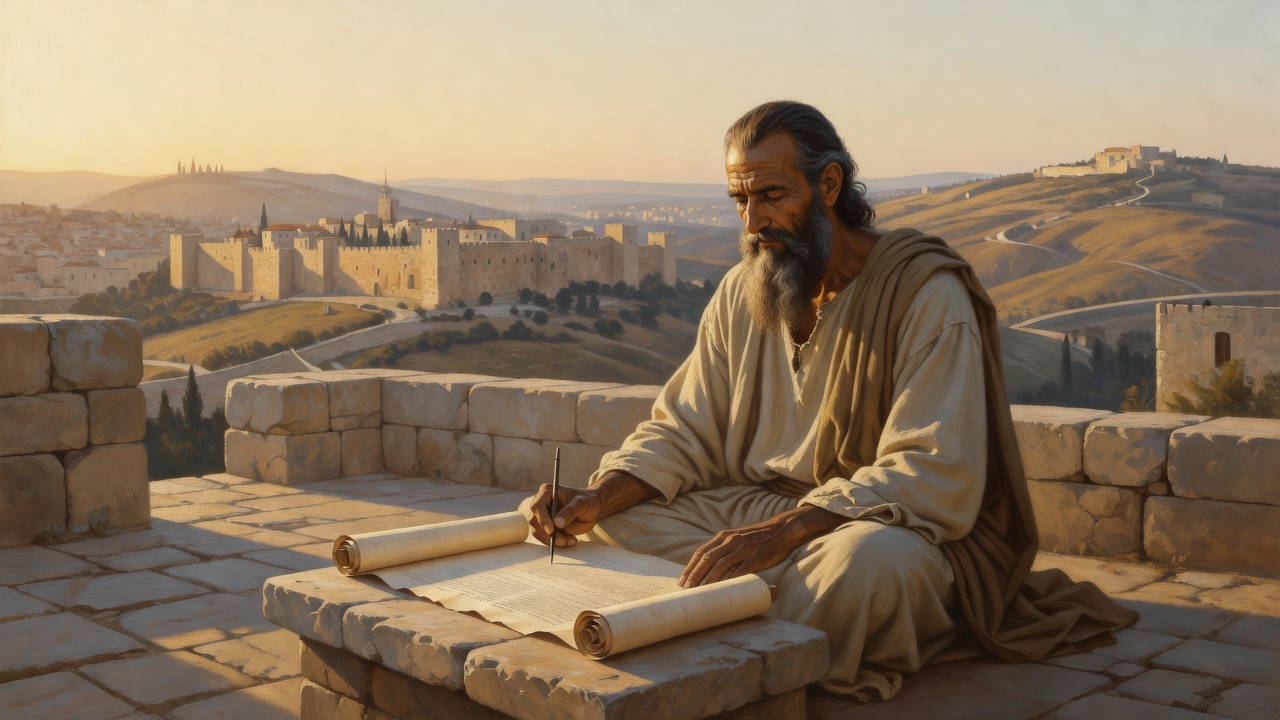
- The closing verse calls for salvation to come from Zion, the south-eastern hill of Jerusalem where David established his citadel and palace after capturing it from the Jebusites.Sources: the Bible text itself · Zion
- The poem concludes by pairing the names Jacob and Israel in a call for rejoicing, recalling the patriarch Jacob, the son of Isaac, who also bore the name Israel.Sources: the Bible text itself · Jacob (Israel)
Notes written with AI assistance from open sources (Theographic Bible Metadata, CC BY-SA 4.0; Easton’s Bible Dictionary, public domain) and reviewed before publishing.
Places in this chapter
- Zion · Today: Jerusalem · 31.777, 35.234 · verse 6
Only places identified with high confidence are shown (90% or more according to the scholarly sources compiled by OpenBible). Period map: DARE (Digital Atlas of the Roman Empire), CC BY 4.0; modern map: © OpenStreetMap contributors; places: OpenBible.info (CC BY 4.0).
Credits and license for this translation
Kitaaba Woyyuu
Oromo, Borana-Arsi-Guji: Kitaaba Woyyuu (Bible)
copyright © 2025 The Word for the World International
Language: gujii
Contributor: Bible Society of Ethiopia
This translation is made available to you under the terms of the
Creative Commons Attribution Share-Alike license 4.0.
You have permission to share and redistribute this Bible translation in any format and to make reasonable revisions and adaptations of this translation, provided that:
You include the above copyright and source information.
If you make any changes to the text, you must indicate that you did so in a way that makes it clear that the original licensor is not necessarily endorsing your changes.
If you redistribute this text, you must distribute your contributions under the same license as the original.
Pictures included with Scriptures and other documents on this site are licensed just for use with those Scriptures and documents.
For other uses, please contact the respective copyright owners.
Note that in addition to the rules above, revising and adapting God's Word involves a great responsibility to be true to God's Word. See Revelation 22:18-19.
2025-05-02
Source: http://ebible.org/gax/ · eBible.org