Malachi 4
Kitaaba Woyyuu · Tap a verse to see its cross-references.
Guyyaa Dhufa Mootii Waan Maraa
1Mootiin Waan Maraa Ka Waan Mara Dade, «Kunoo, guyyaan akka barbada ibiddaa gubu dhufaara; yennaa sanitti worri kooruu fi worri hantuu huju martinuu akka hicaace'ee ti; guyyaan dhufu sun isaan hin guba; hidda yookiin damee isaaniif hin lakkisu. 2Isin worra maqaa kiyya sodaattanuuf ammoo aduun balchummaa isiniif fidduu fi ta koolli isi'ii fayyinna ifi keessaa qabu isiniif hin baati; isin akka waatolee gooree keessaa gad baatee hin burraaxxan. 3Isin yennaa san worra hamoota san irra hin sirbitan; guyyaa ani waan kana godhu san faana teessan jalatti daadhaa hin te'an.
4«Barsiisa garbicha kiyya Muuse'ee, seerataa fi ajaja ani gaara Horeebii irratti kolbaa Israa'elii maraaf isatti kenne qaabadha'a.
5«Kunoo, guyyaan kiyya gudda'aa fi sodaachisaan sun adoo hin dhufiniin dura, ani Eliyaasii raagicha isiniif hin erga. 6Ani dhufee, lafa abaarsa itti buusee akka hin balleessine, inni gadhaa abbooti'ii gara ijoollee isaanii, gadhaa ijoollee isaanii gara abbootii isaanii hin deebisa» jedha.
Did you know?
The Day of the Lord and the Promise of Elijah
- Malachi calls on Israel to remember the law given to Moses at Mount Horeb. Horeb is a biblical name for the mountainous range where Mount Sinai stands, the site where the Israelites encamped and received divine statutes and ordinances.Sources: the Bible text itself · Horeb · Moses
- The passage concludes with the promise that Elijah the prophet will be sent before the great Day of the Lord to reconcile parents and children. In the biblical narrative, Elijah was a prophet from Tishbe who delivered messages during the reign of King Ahab.Sources: the Bible text itself · Elijah
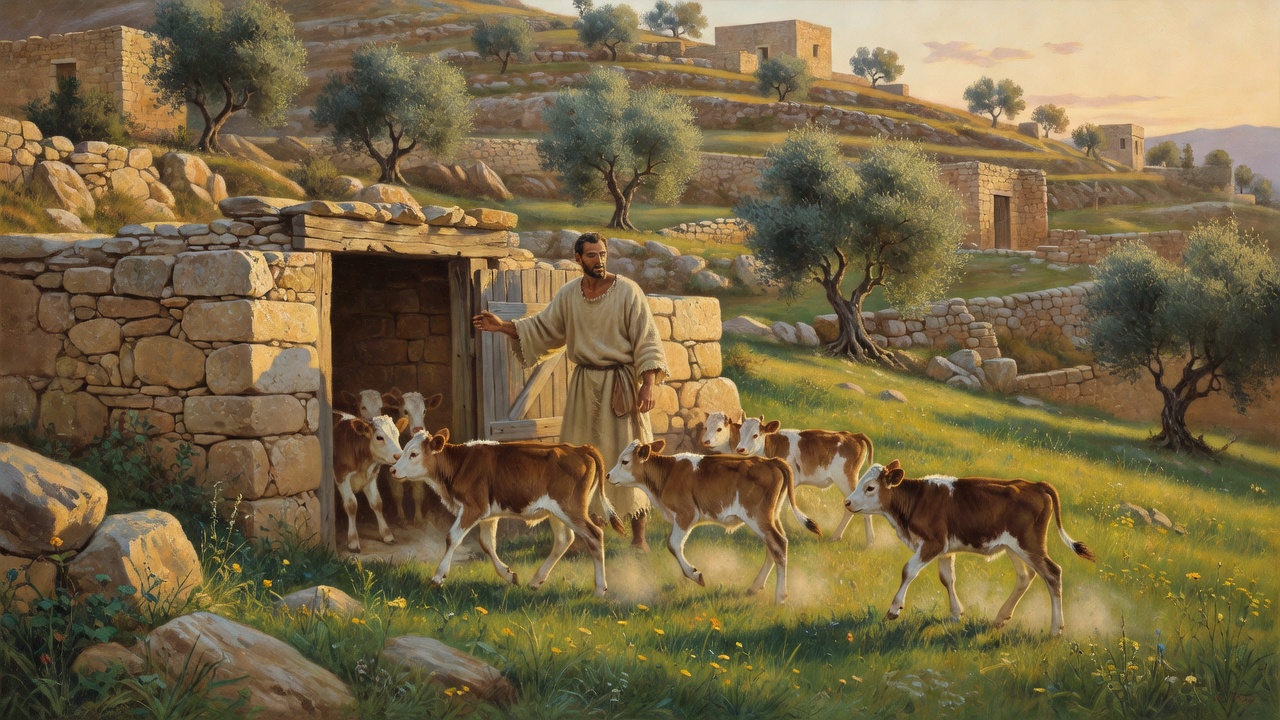
- Malachi uses vivid agricultural imagery to describe the coming judgment and restoration, contrasting evildoers reduced to dry stubble in a fire with the faithful, who are pictured leaping with joy like calves let out of a stall.Sources: the Bible text itself
Notes written with AI assistance from open sources (Theographic Bible Metadata, CC BY-SA 4.0; Easton’s Bible Dictionary, public domain) and reviewed before publishing.
Places in this chapter
- Mount Horeb · Today: Jebel Musa · 28.540, 33.973 · verse 4
Only places identified with high confidence are shown (90% or more according to the scholarly sources compiled by OpenBible). Period map: DARE (Digital Atlas of the Roman Empire), CC BY 4.0; modern map: © OpenStreetMap contributors; places: OpenBible.info (CC BY 4.0).
Credits and license for this translation
Kitaaba Woyyuu
Oromo, Borana-Arsi-Guji: Kitaaba Woyyuu (Bible)
copyright © 2025 The Word for the World International
Language: gujii
Contributor: Bible Society of Ethiopia
This translation is made available to you under the terms of the
Creative Commons Attribution Share-Alike license 4.0.
You have permission to share and redistribute this Bible translation in any format and to make reasonable revisions and adaptations of this translation, provided that:
You include the above copyright and source information.
If you make any changes to the text, you must indicate that you did so in a way that makes it clear that the original licensor is not necessarily endorsing your changes.
If you redistribute this text, you must distribute your contributions under the same license as the original.
Pictures included with Scriptures and other documents on this site are licensed just for use with those Scriptures and documents.
For other uses, please contact the respective copyright owners.
Note that in addition to the rules above, revising and adapting God's Word involves a great responsibility to be true to God's Word. See Revelation 22:18-19.
2025-05-02
Source: http://ebible.org/gax/ · eBible.org