Isaiah 54
Kitaaba Woyyuu · Tap a verse to see its cross-references.
Ulfinna Xiyoonii Ka Gara Duraa
1Mootiin Waan Maraa,
«Ijoollee dubartii abbaa
manaa qadduu caalaa,
ijoolleen dubartii qofi lakkifantee
waan heddatteef,
ati maseentittiin
ijjumaa deettee hin beenne,
ta ijjumaa ciniinsifattee hin beenne
gammadaan faarfadhuu, ilillisi!
2Addee dunkaanii teetii badhisi;
gollaa dunkaanii teetii
badhiisii diriirsi;
hin dhiphisin.
Wodaroo teeti dheeressi;
togaa keeti jabeessi.
3Ati gara middaa fi bita'aa
waan badhattuuf,
sanyiin teeti gosa biyya
adda addaa hin qabatti;
qachoota isaanii
ka one keessalle hin qubatti.
4«Ati waan hin qaanonneef,
hin sodaatin;
waan hin salphanneef,
hin rifatin.
Fokkoo yennaa dargaggummaa
teetii hin deeta;
qaanii yennaa
haadha hiyyeessummaa teetiille
haganaa achi hin qaabattu.
5Ani ka si dade
akka dhirsaa si'iif hin te'a;
maqaan kiyya Mootii Waan Maraa
Ka Waaqa Waan Mara Dade;
ka si wode
ana Woyyicha Israa'elii ti;
ani Waaqa lafa duudi'ii ti.
6«Ati akka dubartii
dargaggumma'aan heerumtee,
abbaan manaa isii lakkisee,
gadhaa ifii keessatti gadditee ti» jedha.
Mootiin Waan Maraa keeti ammoo,
gara ifii si waamee,
7«Ani yennaa diqqo'oof
si lakkiseeraayyu;
amma ammoo,
marartii guddo'oon
si deebisa.
8Ani guddoo waan sitti aareef,
yennaa diqqo'oof
fuula kiyya
si duraa dhoffadheeraayyu;
ammoo, jaalala kiyya
ka bara baraatiin
si hin marara» jedha ka si wodu.
9Ammalle Mootiin Waan Maraa
ka si mararu si'iin,
«Tun naaf akka bara Nohii
deebi'ee bisaaniin
lafa akka hin balleessine kakadhee ti;
maarre ani amma deebi'ee
akka sitti hin aarre,
deebi'eelle ijjumaa
akka si hin xindheef kakadheera.
10Gaaroti raafamanulle,
kooboti addee ifii irraa ka'anulle
jaalalli bara baraa
ka ani si'iif qabu,
ijjumaa hin raafantu;
gondooroon nageyaa tiyyalle hin diigantu.
11«Ee, ati qachaa Yerusaalemii,
ka rakkatte,
ka bubbee bokkeyaatiin raafante;
ka hin jajjabaatin.
Kunoo, ani dhakaa gatii guddo'ootiin
si hin ijaara;
dhakaa ‹Safiiros› jedhamuun
hundee teetille hin keya.
12Ani qaccee xelleephoo teetii
dooqa diima'aan,
karra teetiille dooqa cululuquun,
dalleya dhaka'aa keetille
dhakaa gatii guddo'ootiin hin ijaara.
13Ilmaan teeti marti
ana Mootii Waan Maraa irraa
ka baratte hin teeti;
ijoolleen teetille
nageya guddaa hin dhaggatti.
14Ati balchumma'aan
hin ijaaranta;
cunqurfamiisi si irraa hin fagaata;
wonni si sodaachisu hin jiraatu;
bararaqi si irraa hin fagaata;
si'ille'etti hin dhikaatu.
15Eennulle yoo si miidhe,
inni ka ani ergee moti;
nami si miidhu marti
harka sitti hin kennata.
16«Kunoo, nama cile'etti buufee bobeessu,
sibiila tumee,
meya woraanaa ka qopheessu,
ka dade ana.
Ka woy balleessu,
akka inni woy balleessuuf,
ka dade ana.
17Mey woraanaa
ka si balleessiisaaf qophowe,
si miidhuu hin dande'u;
worra si himatu mara
hin injifatta.
Kun qooda tajaajiltoota tiyyaa ti;
injifachaan ani isaaniif kennulle tana» jedha.
Did you know?
The Covenant of Peace and Restoration
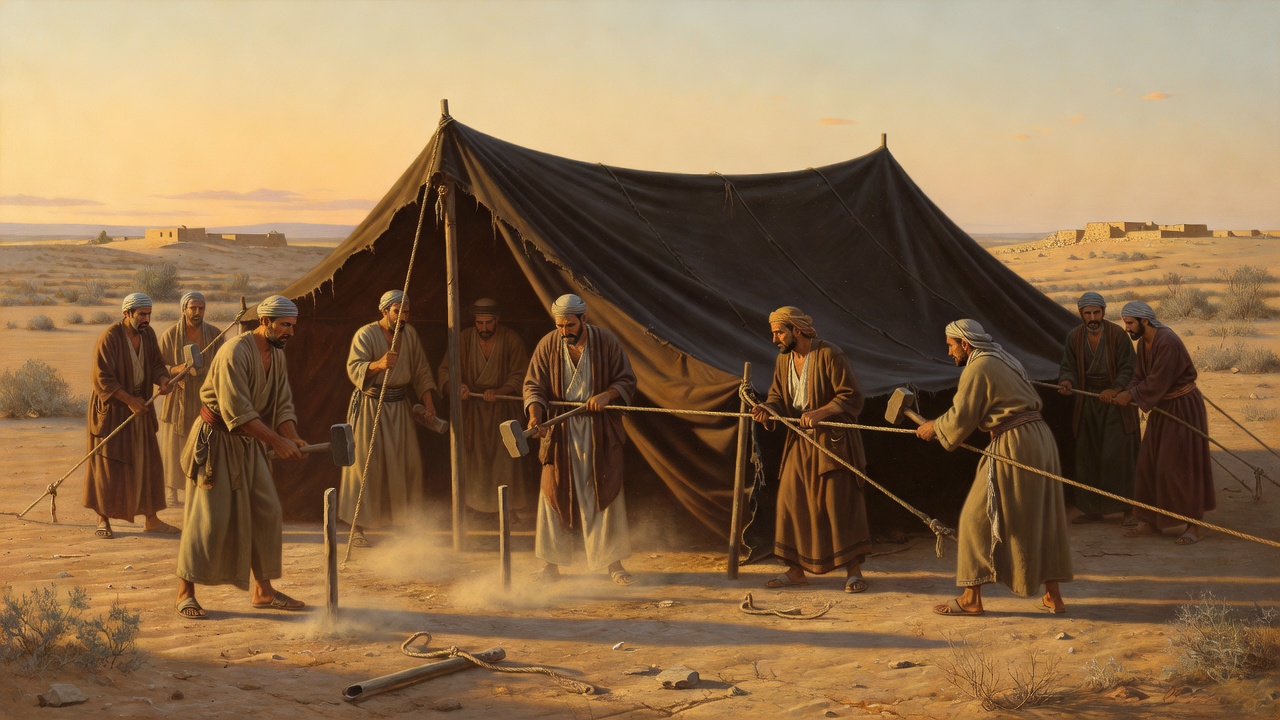
- Isaiah uses the imagery of enlarging a tent—lengthening ropes and driving stakes deep—to portray a barren and desolate woman making room for an unexpected multitude of descendants.Sources: the Bible text itself
- The text links God's enduring kindness to the days of Noah, recalling the oath that floodwaters would never again submerge the earth to assure that this covenant of peace will never be removed.Sources: the Bible text itself · Noah
- The chapter describes an afflicted, storm-tossed city being rebuilt with rare beauty, picturing its stones set in antimony, its foundations laid with sapphires, and its pinnacles made of rubies.Sources: the Bible text itself
Notes written with AI assistance from open sources (Theographic Bible Metadata, CC BY-SA 4.0; Easton’s Bible Dictionary, public domain) and reviewed before publishing.
Places in this chapter
Only places identified with high confidence are shown (90% or more according to the scholarly sources compiled by OpenBible). Period map: DARE (Digital Atlas of the Roman Empire), CC BY 4.0; modern map: © OpenStreetMap contributors; places: OpenBible.info (CC BY 4.0).
Credits and license for this translation
Kitaaba Woyyuu
Oromo, Borana-Arsi-Guji: Kitaaba Woyyuu (Bible)
copyright © 2025 The Word for the World International
Language: gujii
Contributor: Bible Society of Ethiopia
This translation is made available to you under the terms of the
Creative Commons Attribution Share-Alike license 4.0.
You have permission to share and redistribute this Bible translation in any format and to make reasonable revisions and adaptations of this translation, provided that:
You include the above copyright and source information.
If you make any changes to the text, you must indicate that you did so in a way that makes it clear that the original licensor is not necessarily endorsing your changes.
If you redistribute this text, you must distribute your contributions under the same license as the original.
Pictures included with Scriptures and other documents on this site are licensed just for use with those Scriptures and documents.
For other uses, please contact the respective copyright owners.
Note that in addition to the rules above, revising and adapting God's Word involves a great responsibility to be true to God's Word. See Revelation 22:18-19.
2025-05-02
Source: http://ebible.org/gax/ · eBible.org