Acts 4
ସତ୍ ଗାଲି · Tap a verse to see its cross-references.
ଜିଉଦି ମ୍ନାଃ କୁକପାର୍ନ୍ନିଆ ପିତର୍ ଆରି ଯହନ୍
1ପିତର୍ ଆରି ଯହନ୍ ରେମୁଆଁଇଂକେ ଦେକ୍ରକମ୍ ବୁଦି ବିଡିଙ୍ଗ୍ନେ ବେଲା ମନ୍ଦିର୍ନେ ଉଡ଼ିରୁଆ ପୁଜାରି ମନ୍ଦିର୍ ଉର୍ଣ୍ଡ୍ରେଇଂନେ ସେନାପତି ଆରି ଉଡ଼ିରୁଆ ସାଦୁକୀଇଂ ପିଙ୍ଗ୍ଚାଆର୍କେ । 2ମେଇଂ ରିସାଡିଙ୍ଗ୍ ୱେଲେଆର୍ଗେ ଡାଗ୍ଲା ପିତର୍ ଆରି ଯହନ୍ ରେମୁଆଁଇଂକେ ସିକ୍ୟା ବିଡିଙ୍ଗ୍ଗେ ଆରି ଜିସୁନେ ସାମୁଆଁ ସାଃଚେ ଗୁଏକ୍ନେ ରେମୁଆଁଇଂବାନ୍ ଗୁଏଚେ ତଃଡ଼୍ୟାନେ ବିସୟ୍ରେ ବାସଙ୍ଗ୍ଡିଂଗେ । 3ତେସା ମେଇଂ ଜେଲ୍କାନାନ୍ନିଆ ପିତର୍ ଆରି ଯହନ୍କେ ବନ୍ଦି ଆଡିଙ୍ଗ୍ବି ଆର୍କେ । ଆତେନ୍ ଦିନା ଜାବର୍ ଜିଲମ୍ ଡିଙ୍ଗ୍ ୱେଲେଲା ଆମେଇଂକେ ମାର୍ତଡ଼େ ଜାକ ଜେଲ୍କାନା ବିତ୍ରେ ବଆର୍କେ । 4ମାତର୍ ଗୁଲେ ରୁଆ ମେଇଂନେ ବୁଦି ଦ୍ରିଗ୍ଚେ ବିସ୍ବାସ୍ ଡିଙ୍ଗ୍ଆର୍କେ ଆରି ଙ୍ଗିରେଇଂନେ ସଂକ୍ୟା ମ୍ନାଚେ ପ୍ରାୟ୍ ମାଲ୍ ଅଜାର୍ ଡିଙ୍ଗ୍କେ ।
5ମାର୍ତଡ଼େ ଜିଉଦି ନେତାଇଂ ମନ୍ଦିର୍ ବିନ୍ବିନ୍ ରେମୁଆଁଇଂ ବାରି ଦରମ୍ ଗୁରୁଇଂ ଯିରୁସାଲାମ୍ ମୁଇଂ ଅରିଆ ଡିଙ୍ଗ୍ଆର୍କେ । 6ମେଇଂ ହାନାନ କୟାଫା ଜହନ୍ ଆଲେକ୍ଜାଣ୍ତାର୍ ବାରି ମ୍ନା ପୁଜାରି ଡୁଆଣ୍ଡ୍ରେନେ ବିନ୍ରେକେ କୁଡ଼େ ଆର୍କେ । 7ମେଇଂ ପ୍ରେରିତ୍ ସିସ୍ଇଂକେ ସାମ୍ନେ ଆତୁଆଁଚେ ସାଲିଆକୁଆର୍କେ, “ଜାନେ ବପୁରେ ବା ଜା ମ୍ନିରେ ଆକେନ୍ ଡିଙ୍ଗ୍ପେଡିଙ୍ଗ୍ ?”
8ପିତର୍ ପବିତ୍ର ଆତ୍ମାନେ ବପୁ ବାଚେ ଆମେଇଂକେ ଉତର୍ ବିକେ “ଜିଉଦି ଜାତିନେ ଇଃସାଙ୍ଗ୍ ଆରି ଦର୍ମ ନେତାଇଂ ! 9ଜଦି ଏକେ ନେ ଆକେନ୍ ଚଟା ନ୍ସା ଡିଙ୍ଗ୍ ନେବକ୍ନେ ବଲ୍ କାମ୍ ବିସୟ୍ରେ ପେଇଂ ପ୍ରସ୍ନ ଡିଙ୍ଗ୍ପେଡିଙ୍ଗ୍ ଆରି ମେଁ ଡିରକମ୍ ନିମାଣ୍ଡା ଡିଙ୍ଗ୍କେ ଡାଗ୍ଚେ ମ୍ୟାଃନ୍ସା ଚାଏଁପେଡିଙ୍ଗ୍କେ । 10ତେଲା ପେ ଆରି ଇଶ୍ରାୟେଲୀୟନେ ସାପା ମ୍ୟାନ୍ସା ଦର୍କାର୍ ଜେ ପେ ସାମ୍ନେଆ ତୁଆଁ ଲେକ୍ନେ ଆକେନ୍ ରେମୁଆଁ କେବଲ୍ ନାଜରିତିୟ ଜିସୁ କିସ୍ଟନେ ମ୍ନିନେ ବପୁରେ ପୁରାପୁରି ନିମାଣ୍ଡା ଡିଙ୍ଗ୍ଲେକେ । ଆତେନ୍ ଜିସୁକେ ପେ କୁରୁସ୍ନ୍ନିଆ ଆଡେଚେ ପେବାଗୁଏକେ । ମାତର୍ ଇସ୍ପର୍ ଆମେକେ ଗୁଏକ୍ନେ ବାନ୍ ଆତଡ଼ିଆବକେ । 11ଜିସୁନେ ବିସୟ୍ରେ ଆଃ ଦର୍ମସାସ୍ତର୍ନ୍ନିଆ ଗୁଆର୍ବକେ,
ଆଣ୍ଡିନେ ବ୍ରିକେ ଡୁଆ ଆରେଡ୍ରେ ଆମେକେ ଦର୍କାର୍ ଣ୍ଡୁ ଡାଗ୍ଚେ ଜଗ୍ତ୍ଲାଗ୍ବଗେ ।
ମାତର୍ ଆତେନ୍ ବ୍ରି ଏକେ କନ୍ନେ ମୁଲ୍ ବ୍ରି ଡିଙ୍ଗ୍ଲେକେ ।
12ଆମେ ଆନ୍ତାର୍ଲା ଆରି ଜାଡାଗ୍ରା ଉଦାର୍ ଣ୍ଡୁ; ଡାଗ୍ଲା ଜାନେ ବାନ୍ ଆନେକେ ଉଦାର୍ ବାନେ ଡିଂଏ କିତଂଇନି ଆଲ ରେମୁଆଁଇଂନେ ବିତ୍ରେବାନ୍ ଆରି ମେଃଡିଗ୍ ମ୍ନି ବିଆବକେ ଣ୍ଡୁ ।”
13ପିତର ଆରି ଜହନ୍ ଅସିକିତ୍ ଆରି ସାଦାସିଦା ରେମୁଆଁ ଲେଃଗେ ଡାଗ୍ଚେ ମ୍ନାଃ କୁକପାର୍ନେ ସଦସ୍ୟଇଂ ମ୍ୟାଃଲେଆର୍ଗେ । ତେସା ମ୍ୱାୟା ସିସ୍ନେ ସାହାସ୍ କେଚେ ମେଇଂ ବକୁଆ ଡିଙ୍ଗ୍ୱେଆର୍ଗେ । ବାରି ମେଇଂ ମ୍ୟାଃଲେଆର୍ଗେ, ଆତେନ୍ ମ୍ୱାୟା ଜିସୁ ଏତେ ଲେଆର୍ଗେ । 14ମାତର୍ ମେଇଂ ବିରଦ୍ ଡିଙ୍ଗ୍ଚେ ମେଃଡିଗ୍ ବାସଙ୍ଗ୍ ଆୟାଆର୍କେ ଣ୍ଡୁ; ଡାଗ୍ଲା ମେଁ ନିମାଣ୍ଡା ଡିଙ୍ଗ୍ଲେକ୍ନେ ରେମୁଆଁକେ ପିତର୍ ଆରି ଯହନ୍ ଏତେ ତୁଆଁଲେକ୍ନେ କେକେ । 15ମେଇଂ ସବାବାନ୍ ତାର୍ୱେ ନ୍ସା ଆଦେସ୍ ବିଃଆର୍କେ । ତେନ୍ ଇଡ଼ିଂ ନେତାଇଂ ମେଃ ଡିଙ୍ଗ୍ଆର୍ଏ, ଆତେନ୍ ବିସୟ୍ରେ ମେଇଂ ବିତ୍ରେ ବାଲିର୍ ବାତା ଡିଙ୍ଗ୍ ଆର୍କେ । 16ମେଇଂ ବାସଙ୍ଗ୍ଆର୍କେ “ନେ ଆକ୍ମେଇଂ ଆଡ଼ାତ୍ରା ମେଃ ନେଃଡିଂପା ? କିମେଇଂ ଡିଙ୍ଗ୍ବକ୍ନେ କାବା କାମ୍ ବିସୟ୍ରେ ଯିରୂଶାଲମ୍ନେ ସାପାରେ ମ୍ୟାଃଲେଆର୍ଗେ । ଆକେନ୍ ସତ୍କେ ନେ ଆରି ଅବିସ୍ବାସ୍ ଡିଙ୍ଗ୍ ନେୟା ଣ୍ଡୁ । 17ମାତର୍ ଆକେନ୍ ବ୍ନାଇର୍ ଜେନ୍ତିକି ରେମୁଆଁଇଂ ଡାଗ୍ରା ଜାବର୍ ଉଡ୍ରା ଆଡିଙ୍ଗ୍ ଆରି ଜିସୁନେ ମ୍ନିରେ ଜା ଡାଗ୍ରା ଡିଗ୍ ମେଃଡିଗ୍ ମାବାସଙ୍ଗ୍ ନ୍ସା ଆକ୍ମେଇଂକେ ନେ ସାବ୍ଦାନ୍ ଆଡିଙ୍ଗ୍ ନେବିପା ।”
18ତେସା ମେଇଂ ପିତର୍ ଆରି ଯହନ୍କେ ବାର୍ମୁଇଂତର୍ ବିତ୍ରେ ୱାଆର୍କେ ଆରି ଅନାଡିଗ୍ ଜିସୁନେ ମ୍ନିରେ ମେଃଡିଗ୍ ସାମୁଆଁ ମାବାସଙ୍ଗ୍ ନ୍ସା ଆରି ସିକ୍ୟା ମାବିନ୍ସା ତରକ୍ ଆଡିଙ୍ଗ୍ବି ଆର୍କେ । 19ମାତର୍ ପିତର ଆରି ଜହନ୍ ଆମେଇଂକେ ଉତର୍ ବିଃକେ, “ପର୍ମେସର୍ନେ ଆଦେସ୍ ଆନ୍ତାର୍ଚେ ପେନେ ଆଦେସ୍ ପାଲନ୍ ଡିଙ୍ଗ୍ନେ ନେନେ ଟିକ୍ କି ଣ୍ଡୁ, ଆତେନ୍ ପେ ବିଚାର୍ ଡିଙ୍ଗ୍ପା । 20ନେ ମେଃନେ କେନେଲେକେ ଆରି ଅଁନେଲେକେ ଆତେନ୍ ରେମୁଆଁଇଂକେ ମାବାସଙ୍ଗ୍ଚେ ଲେଃନେୟା ଣ୍ଡୁ ।” 21ଆତ୍ବା ମେଇଂ ରେମୁଆଁଇଂକେ କେଚେ ଆମେଇଂକେ ଡଣ୍ଡ୍ ବିନେ ମେଃଡିଗ୍ ଉପାୟ୍ ମାବାଚେ ଆମେଇଂକେ ଅଦିକ୍ ଆପ୍ଟଚେ ଆନ୍ତାର୍ବି ଆର୍କେ ତେସା ମେଃନେ ଗଟେ ଲେଃଗେ ଆତେନ୍ସା ରେମୁଆଁ ସାପାରେ ଇସ୍ପର୍ନେ ମଇମା ଡିଙ୍ଗ୍ଆର୍କେ । 22ମୁଡ଼ି ରେମୁଆଁ କାବା କାମ୍ରେ ନିମାଣ୍ଡା ଡିଙ୍ଗ୍ଲେଗେ ମେଁନେ ବୟସ୍ ଚାଲିସ୍ ମୁଆଃବାନ୍ ଅଦିକା ଲେଃଗେ ।
ସାହାସ୍ ବାନ୍ସା ପାର୍ତନା
23ପିତର୍ ଆରି ଯହନ୍କେ ଆନ୍ତାର୍ବିନେ ସଙ୍ଗେ ସଙ୍ଗେ ମେଇଂନେ ଦଲ୍ନ୍ନିଆ ଆଣ୍ଡେ ୱିଗ୍ଗେ ଆରି ମ୍ନା ପୁଜାରି ଆରି ଦର୍ମ ନେତାଇଂ ମେଃନେ ବାସଙ୍ଗ୍ବଗେ ଆତେନ୍ ଆମେଇଂକେ ଆମ୍ୟାଃକେ । 24ବିସ୍ବାସିଇଂ ସାପା ସାମୁଆଁ ଅଁକ୍ନେ ଇଡ଼ିଙ୍ଗ୍ ସାପାରେ ମୁଇଂନୁଗ୍ ରିସିଙ୍ଗ୍ଚେ ଇସ୍ପର୍ଡାଗ୍ରା ଆକେନ୍ ପାର୍ତନା ଡିଙ୍ଗ୍ଆର୍କେ “ଏ ମାପ୍ରୁ ! କିତଂଇନି ମଞ୍ଚ୍ପୁର୍ କେଣ୍ଡିଆ ଆରି ଆତ୍ ଅରିଆ ଲେଡିଙ୍ଗ୍କ୍ନେ ସାପା କିଚି ତିଆର୍ ଡିଙ୍ଗ୍ ନାବକେ ! 25ନେନେ ଅଃସେଣ୍ଡ୍ରେ ଦାଉଦ ନାନେ ସେବକ୍ ଲେଃଗେ । ମେଁ ପବିତ୍ର ଆତ୍ମାନେ ବାନ୍ ଆକେନ୍ ବ୍ନାଇର୍ ଗୁଆର୍ ବକେ
‘ଆକେନ୍ ଅଣଜିଉଦିଇଂ ମେଃନ୍ସା ୱିଙ୍ଗ୍ଆଃ ରିଙ୍ଗ୍ଆ ଡିଙ୍ଗ୍ ଆର୍ ଡିଙ୍ଗ୍କେ ?
ଆକେନ୍ ମଞ୍ଚ୍ପୁର୍ନେ ରେମୁଆଁଇଂ ମେଃନ୍ସା ପର୍ମେସର୍ ବିରଦ୍ରେ ଦଦ୍ୟା ଚିନ୍ତା ବାବେ ଡିଙ୍ଗ୍ ଆର୍ଙ୍କେ ? ଆକେନ୍ ସାପା ଦର୍କାର୍ ଣ୍ଡୁ ।
26ମାପ୍ରୁନେ ବିରଦ୍ରେ
ଆରି ମେଁନେ ମସିହନେ ବିରଦ୍ରେ ମଞ୍ଚ୍ପୁର୍ନେ ଇଃସାଙ୍ଗ୍ଇଂ ତୁଆଁ ଆର୍କେ
ଆରି ସାସନ୍ ଡିଂଣ୍ଡ୍ରେ ମୁଇଂନ୍ନିଆ ରିସିଙ୍ଗ୍ ଆର୍କେ ।’
27ଡାଗ୍ଲା ନାନେ ମୁଃଡ଼ି ପବିତ୍ର ଦାସ୍ ଜିସୁକେ ନାଁ ନାସ୍ରିକେ ପକ୍ରୁତ୍ରେ ଆକେନ୍ ନଗରିନ୍ନିଆ ହେରୋଦ ଆରି ପନ୍ତିୟ ପୀଲାତ ଅଣଜିଉଦି ଆରି ଇଶ୍ରାୟେଲୀୟନେ ରେମୁଆଁଇଂ ଏତେ କୁଡ଼େଚେ ପେବାନ୍ ବାଚେ ପେବକ୍ନେ ଜିସୁକେ ପେନେ ପବିତ୍ର ଦାସ୍ନେ ବିରଦ୍ରେ ଜଜ୍ନା ପେଡିଙ୍ଗ୍କେ । 28ପେନେ ବପୁ ଆରି ପେନେ ଇକ୍ଚାରେ ଜା ସାପା ଆଃଗଟେ ନ୍ସା ପେ ତିଆର୍ ଆଡିଙ୍ଗ୍ ପେବଗେ ମେଇଂ ରିସିଙ୍ଗ୍ଚେ ଆତେନ୍ ସାପା ଡିଙ୍ଗ୍ନ୍ସା ଲାଗେ ପଡ଼େଆର୍କେ । 29ଅ ମାପ୍ରୁ, ଏବେ ମେଇଂ ଆନେକେ ଡିରକମ୍ ଦମକ୍ ବିବକେ, ନା ଆତେନ୍ ବିସୟ୍ରେ ଦ୍ରିଗ୍ ଆରି ଦାସ ଦାସୀଇଂକେ ବର୍କସ୍ ବାବ୍ରେ ନାନେ ବ୍ନାଇର୍ ବାସଙ୍ଗ୍ ଅଲେଙ୍ଗ୍ ନ୍ସା ବପୁ ବିଲା । 30ନାନେ ବପୁ ଆନେକେ ଆସୁଏ ଜାଣ୍ଡେଃବାନ୍ କି ନେ ସାଆସ୍ରେ ନାନେ ପବିତ୍ର ଦାସ୍ ଜିସୁନେ ମ୍ନିରେ ରଗିଇଂକେ ନିମାଣ୍ଡା ଆଃଡିଙ୍ଗ୍ ନ୍ସା ଗୁଲେ ଚିନ୍ ଆସୁଏ ନ୍ସା ଆରି କାବା ରକମ୍ କାମ୍ ଡିଙ୍ଗ୍ ନେୟାଏ ।”
31ପାର୍ତନା ଡାକ୍ନେ ଇଡ଼ିଙ୍ଗ୍ ଆଣ୍ଡିନ୍ ଡୁଆନ୍ନିଆ ପାର୍ତନା ଡିଙ୍ଗ୍ଆର୍ଡିଙ୍ଗ୍ଗେ ଆତ୍ଅରିଆ ସାପାରେ ରିସିଙ୍ଗ୍ଲେ ଆର୍ଗେ । ଆତେନ୍ ଡୁଆ ଲିଗିର୍ ୱେକେ । ମେଇଂ ସାପାରେ ପବିତ୍ର ଆତ୍ମା ବାଚେ ପର୍ମେସର୍ନେ ସାମୁଆଁ ସାହାସ୍ରେ ବାସଙ୍ଗ୍ ଅଲେଙ୍ଗ୍ନ୍ସା ମୁଲେକେ ।
ବିସ୍ବାସିଇଂ ମେଇଂମେଇଂ ବିତ୍ରେ ଲିଜବ୍ରିକେ କୁଡ଼େଚେ ସ୍ଲେଆର୍କେ
32ବିସ୍ବାସ୍ ଡିଙ୍ଗ୍ଲେ ଆର୍କ୍ନେ ରେମୁଆଁଇଂନେ ମୁଇଂ ମନ୍ ମୁଇଂ ଆତ୍ମାରେ ଲେଃଆର୍ଗେ । ମେଇଂନେ ବିତ୍ରେ ଜାଡିଗ୍ ମେଁ ଜିନିସ୍କେ ଡିଗ୍ ନିଜେନେ ଡାଗ୍ଚେ ବାସଙ୍ଗ୍ ଆଡିଙ୍ଗ୍ ଆର୍ ଣ୍ଡୁ । ମେଇଂ ଡାଗ୍ରା ମେଁନେ ଲେଃଗେ ଆତ୍ଅରିଆ ସାପାରେନେ ବାଟା ଲେଃଗେ । 33ମାପ୍ରୁ ଜିସୁ ଜା ସତ୍ରେ ଗୁଏଚେ ତଃଡ଼୍ୟା ଲେଃକେ ଆକେନ୍ ପ୍ରେରିତ୍ ସିସ୍ଇଂ ମ୍ନା ବପୁରେ ସାକି ବିଆର୍କେ । ପର୍ମେସର୍ ସାପା ବିସ୍ବାସିଇଂକେ ଗୁଲେ ଅନୁଗ୍ରଅ ବିକେ । 34ମେଇଂନେ ବିତ୍ରେ ଆଜାକେ ଡିଗ୍ ଅବାବ୍ ଆଲେଗେ ଣ୍ଡୁ । ଜାନେ ଡୁଆ ବା ଲିଜ ଲେଃଗେ ମେଁ ଆତେନ୍ ସାପା ସଚେ ଡାବୁ ଡୁଂପାଙ୍ଗ୍ଚେ, 35ମେଇଂ ଆତେନ୍ ସମ୍ପତିକେ ପ୍ରେରିତ୍ ସିସ୍ଇଂନେ ଞ୍ଚଆଲ ବଡିଙ୍ଗ୍ଆର୍ଗେ । ସାପାରେକେ ନିଜେନେ ଉଡ଼ି ଦର୍କାର୍ ଅଃକେନ୍ ଇସାବ୍ରେ ଡାବୁ ବାଟା ବିଡିଙ୍ଗ୍ଗେ ।
36ଯସେପ୍ ମ୍ନିରେ ମୁଇଂ ବିସ୍ବାସ୍ ରେମୁଆଁ ଲେଃଗେ । ପ୍ରେରିତ୍ ସିସ୍ଇଂ ଆମେକେ “ବର୍ଣ୍ଣବା” ମ୍ନିରେ ୱାଡିଙ୍ଗ୍ ଆର୍ଗେ । ଆକେନ୍ ମ୍ନିନେ ଅର୍ତ “ସାଇଜ ଡିଙ୍ଗ୍ଣ୍ଡ୍ରେ” ମେଁ ସାଇପ୍ରସ୍ ମ୍ନିକ୍ନେ ଜାଗାନ୍ନିଆ ମୁଇଂ ଲେବୀୟ ବଂସନ୍ନିଆ ଜନମ୍ ଡିଙ୍ଗ୍ଲେଃଗେ । 37ଯସେପ୍ନେ ଇକୁଡ଼ା ଲିଜ ଲେଃଗେ । ମେଁ ଆମେକେ ସ ଜଗ୍ତ୍ଲାଗ୍ଚେ ସକ୍ନେ ସାପା ଡାବୁ ଡୁଂପାଙ୍ଗ୍ଚେ ପ୍ରେରିତ୍ ସିସ୍ଇଂକେ ବିଃକେ ।
Did you know?
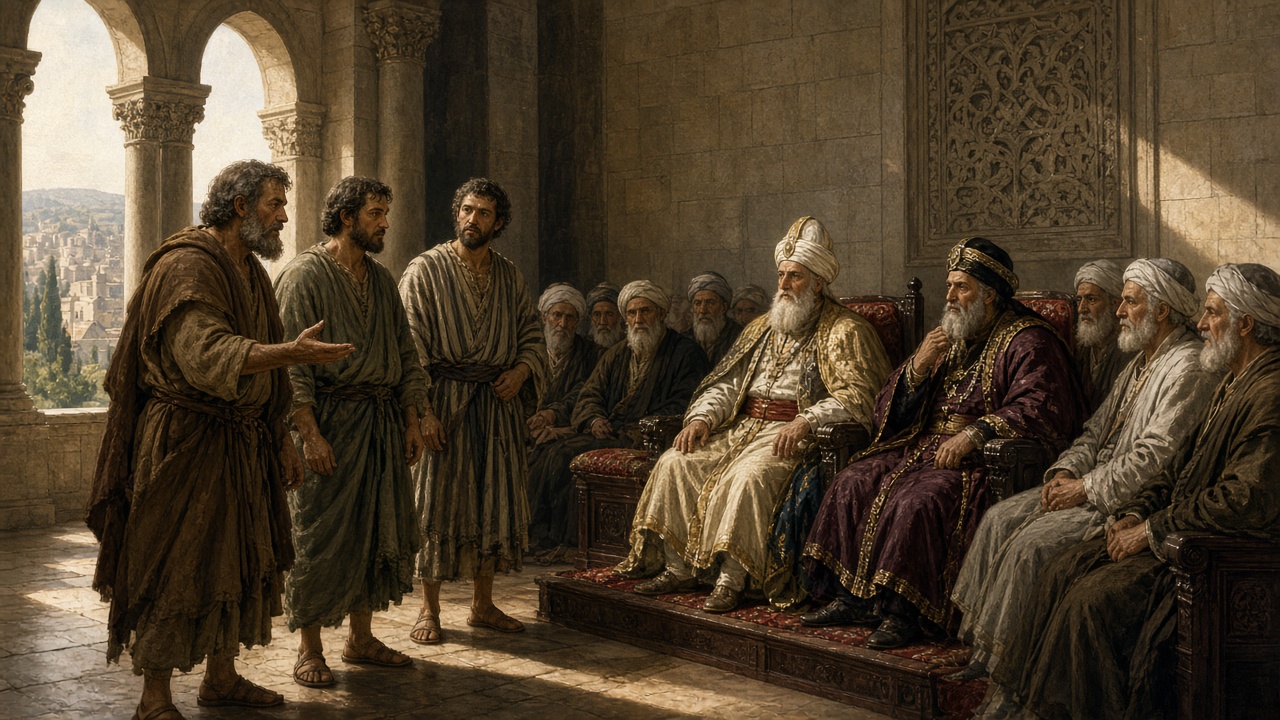
Peter and John before the Sanhedrin
- The priests, the captain of the temple guard, and the Sadducees seized Peter and John because they were teaching the people and proclaiming in Jesus the resurrection of the dead. Caiaphas, who sat with the assembly the next day, belonged to the Sadducees.Sources: the Bible text itself · Caiaphas
- Annas, called high priest here, had held that office from A.D. 7 to 14 until a Roman procurator deposed him. Caiaphas, who had married Annas's daughter, was raised to the office in A.D. 25; even so, some Jews may still have regarded Annas as the legal high priest, since Mosaic law treated the office as lifelong, and Annas was probably president or deputy of the Sanhedrin. John and Alexander, relatives of the high priest and otherwise unknown, sat with them.Sources: the Bible text itself · Annas · John (Relative of the High Priest) · Alexander (Son of Simon)
- Peter, a fisherman from Bethsaida, and John, also a fisherman and a son of Zebedee, were brought before the rulers, elders, and scribes. The council marveled at their boldness when it realized that they were unschooled, ordinary men, and took note that they had been with Jesus.Sources: the Bible text itself · Simon Peter · John the Apostle
Notes written with AI assistance from open sources (Theographic Bible Metadata, CC BY-SA 4.0; Easton’s Bible Dictionary, public domain) and reviewed before publishing.
Places in this chapter
- Jerusalem · 31.777, 35.234 · verses 5, 16
- Nazareth · 32.702, 35.298 · verse 10
- Cyprus · 35.000, 33.000 · verse 36
Only places identified with high confidence are shown (90% or more according to the scholarly sources compiled by OpenBible). Period map: DARE (Digital Atlas of the Roman Empire), CC BY 4.0; modern map: © OpenStreetMap contributors; places: OpenBible.info (CC BY 4.0).
Credits and license for this translation
ସତ୍ ଗାଲି The New Testament in the Gata’ language of India: ସତ୍ ଗାଲି (Bible) copyright © 2020 The Word for the World International Language: Didayi (Gata') Contributor: The Word for the World International ସତ୍ ଗାଲି ଯୀଶୁ ମାପ୍ରୁନେ ତ୍ମି ନିଅମ୍, 2020 The Gata Didayi Testament Language The Word for the World International This translation is made available to you under the terms of the Creative Commons Attribution license 4.0. You may share and redistribute this Bible translation or extracts from it in any format, provided that: You include the above copyright and source information. If you make any changes to the text, you must indicate that you did so in a way that makes it clear that the original licensor is not necessarily endorsing your changes. Pictures included with Scriptures and other documents on this site are licensed just for use with those Scriptures and documents. For other uses, please contact the respective copyright owners. Note that in addition to the rules above, revising and adapting God's Word involves a great responsibility to be true to God's Word. See Revelation 22:18-19. 2023-04-09
Source: http://ebible.org/gaq/ · eBible.org