Luke 23
Fulfulfe Burkina, Dewtere Laamɗo Amaana Keso · Tap a verse to see its cross-references.
No Pilaatu ƴamiri Iisaa
1Caggal ɗuum, yimɓe Saahiiɓe ɓeen fuu ummii, njaari Iisaa to Pilaatu hooreejo oon. 2Ɓe puɗɗi iɓe pela mo, iɓe mbi'a:
—Gorko o min tawi ina wosina lenyol amin, ina haɗa ɗum'en yoɓude kaananke mawɗo oon lampo, ina wi'a hoore muuɗum wo Almasiihu, kaananke.
3Pilaatu ƴami mo, wi'i:
—Aan woni kaananke Alhuudiyankooɓe naa?
Iisaa jaabii, wi'i:
—Aan e hoore maa haali.
4Pilaatu jaabii, wi'i hooreeɓe almaami'en e jamaa oon fuu:
—Mi yi'aay fuu feloore e makko.
5Ammaa ɓe ciini e haala maɓɓe sanne, iɓe mbi'a:
—Ko o waajotoo ɗuum ina waddundura yimɓe ley leydi Yahuudiya fuu, gilla Galili to o fuɗɗiri toon faa e ɗo.
6Wakkati Pilaatu nannoo ɗum, ƴami yalla gorko o wo Galilinkeejo. 7Nde o faamunoo Iisaa na ƴuura e ley laamu Hirudus ndeen, o nuldi ɗum Hirudus. Sabo ley balɗe ɗeen tawi Hirudus ina woni ley Urusaliima. 8Nde Hirudus yi'unoo Iisaa ndeen, ɓerndem weli sanne, sabo ɓooyii ko yiɗunoo yiide mo saabe ko nanannoo dow makko ɗuum. Katin du ina yeloo yiide mo imo waɗa ko haaynii. 9O ƴami ɗum ƴamɗe keewɗe, de Iisaa jaabaaki fay huunde. 10Hooreeɓe almaami'en e jannginooɓe Tawreeta na ndarii ɗoon, ina pelda mo no mbaawri fuu. 11Hirudus du huyfini mo, jalnorii mo, kam e sordaasiiɓe muuɗum, ɓorni mo saaya lobba, nultiri mo Pilaatu. 12Nyannde ndeen Pilaatu e Hirudus laatii yigiraaɓe, arande ɓe wanyundurnooɓe.
No Iisaa hiitoraa
13Pilaatu noddi hooreeɓe almaami'en e mawɓe Alhuudiyankooɓe ɓeen e yimɓe fuu, 14wi'i ɗum'en:
—On ngaddanii kam neɗɗo o hono wo o bosinoowo yimɓe. Ndaaree, mi ƴamii mo yeeso mon, de ley ko peloton mo ɗuum fuu, mi tawaay fuu sabaabu jukkotooɗo mo. 15Hirudus du yi'aay faa'e e makko, sabo yeccinii mo to meeɗen. Paamee, gorko o waɗaay fay huunde ko jeyi warude ɗum. 16Ndelle, mi fiyan mo, mi yoppa mo.
17Ina tilsi wakkati iidi Faltagol fuu Pilaatu yoofana ɓe kasunke gooto. 18Ɓe fuu ɓe ndukidi daande wootere, ɓe mbi'i:
—War mo, njoofanaa min Barabas!
19Barabas le wo uddanooɗo e kasu saabe muurtere waɗunoonde e ngalluure ndeen, e saabe war-hoore. 20Pilaatu haaldi e maɓɓe ɗiɗaɓerde saabe muuyo muuɗum yoofude Iisaa. 21Ammaa ɓe keddii iɓe nduka, iɓe mbi'a:
—Tontu mo! Tontu mo e leggal palaangal!
22Pilaatu wi'i ɓe tataɓerde:
—Ɗume o waɗi ko boni? Mi tawaay e makko sabaabu fuu ko haani warude mo! Ndelle, mi fiyan mo, mi yoppa mo.
23Ammaa ɓe ɓeydi feekaade peekaali mawɗi, iɓe mbi'a o tontee. Peekaali maɓɓe ɗiin njaaltii Pilaatu. 24O hokki ɓe laawol faa ko ɓe ŋaarii ɗuum laatoo. 25O yoofani ɓe mo ɓe ŋaarii yoofaneede oon, kam woni uddanooɗo ley kasu saabe muurtere e war-hoore. De Iisaa kaa, o watti ɗum e muuyɗe maɓɓe.
No Iisaa tontiraa dow leggal palaangal
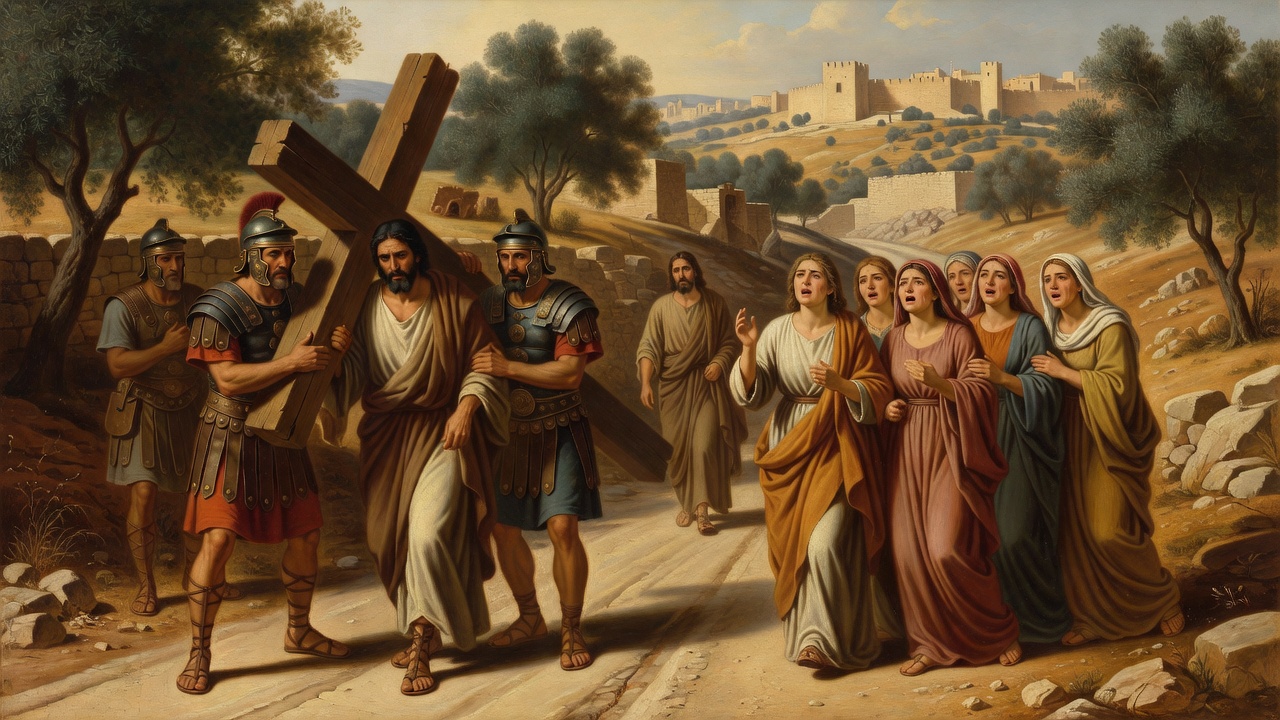
26Nde ɓe njaarannoo mo ndeen, ɓe nanngi gorko jeyaaɗo Sireene bi'eteeɗo Simon, ƴuuruɗo ley ladde. Ɓe mbakkini ɗum leggal palaangal ngaal faa jokka caggal Iisaa, yaara ngal. 27Yimɓe heewɓe na njokki ɗum. Rewɓe du ina ngoni ley maɓɓe, ina mboya ina piira ɓerɗe muɓɓen mettorgal saabe majjum. 28Iisaa hucciti e rewɓe ɓeen, wi'i ɗum'en:
—Rewɓe Urusaliima, taa mboyee kam, ammaa mboyee ko'e mooɗon e ɓiɓɓe mon! 29Sabo dey, balɗe ngaran nde yimɓe mbi'ata: «Barke woodanii rewɓe rimarɓe e ɓe ndeedaay e enɗi ɗi musinaaka.» 30Ndeen, yimɓe mbi'an baamle caama dow muɓɓen, mbi'a tile udda ɗum'en. 31Sabo si ɓe ngaɗii nii gilla liccal ngal wo keccal, noy laatoytoo si ngal yoorii?
32Ɓe njaaridi Iisaa e yimɓe ɗiɗo bonɓe. Ɓeen du wo wareteeɓe. 33Nde ɓe njottinoo nokkuure wi'eteende Laalagal Hoore ndeen, ɓe tonti mo e leggal palaangal, kanko e bonɓe ɗiɗo ɓeen, gooto gere nyaamo makko, gooto du gere nano makko. 34O wi'i:
—Baaba, yaafa ɓe sabo ɓe anndaa ko ɓe ngaɗata.
Ndeen ɓe pecciri kaddule makko cumnal. 35Yimɓe ndarii ɗoon ina ndaara. Hooreeɓe ɓeen du ndarii ina njalnoroo mo, ina mbi'a:
—O hisinii woɓɓe, o hisina hoore makko si o Almasiihu, Cuɓaaɗo Laamɗo.
36Sordaasiiɓe ɓeen du njalnorii mo. Ɓe ɓattii, ɓe kokki mo ndiyam lammuɗam, 37iɓe mbi'a:
—Si aan woni kaananke Alhuudiyankooɓe oon, hisin hoore maa!
38Tawi du alluwal takkaama dow hoore makko. Binndi dow maggal na mbi'a: O wo Kaananke Alhuudiyankooɓe.
39Gooto e bonɓe ɗiɗo tontidaaɓe e makko ɓeen ina mbonkoo mo, ina wi'a:
—Wanaa aan woni Almasiihu naa? Hisin hoore maa, de kisinaa min minen du!
40Ammaa gooto oon feli oyo oon, wi'i:
—A hulataa Laamɗo naa? Aan e makko fuu, on potu jukkungo. 41Enen, jukkungo meeɗen wo goonga jaati, sabo ko foti e ko ngolluɗen tan njoɓeteɗen. De kanko kaa, o waɗaay fay huunde ko boni.
42Ndeen o wi'i:
—Iisaa, miccitoɗaa kam wakkati ngartoyɗaa e laamu maa.
43Iisaa wi'i mo:
—Goonga kaalanammaami: hannden jaati a wondowan e am ley aljanna.
Haala maayde Iisaa
44Wakkati hakkunde naange, nimre waɗi e leydi fuu faa wakkati yamnde tati kiiral naange. 45Naange niɓɓi, lefol paliingol ley suudu dewal mawndu ngool seekii ceeke ɗiɗi. 46Iisaa feekii feekaango manngo, wi'i:
—Baaba, mi wattii yonki am ki ley junngo maa.
Gaɗa o haalii ɗum, o seedi e yonki. 47Caggal mawɗo sordaasi'en oon yi'ii ko laatii ɗuum, yetti Laamɗo, wi'i:
—Goonga, neɗɗo o wo dartiiɗo!
48Jamaa garuɗo ndaarude mo oon fuu yi'ii ko waɗi ɗuum. Ɓe njeccii, iɓe piya ɓerɗe maɓɓe. 49Ammaa annduɓe mo ɓeen fuu, ina ndarii to toowti ina ndaara ɗum fuu. Rewɓe jokkunooɓe mo gilla leydi Galili ɓeen ina ngoni ley maɓɓe.
No ɓanndu Iisaa wattiraa ley saabeere
50Ina woodi gorko bi'eteeɗo Yuusufi jeyaaɗo e waaldeere Saahiiɓe ndeen, wo o gorko lobbo, dartiiɗo. 51Kanko o jaɓaay ko Saahiiɓe ɓeen kaali e ko ɓe ngolli. Imo ƴuura Arimatiya, ngalluure ley leydi Yahuudiya. Imo heɗii ɓangugol laamu Laamɗo. 52O yehi to Pilaatu, o ŋaarii ɗum ɓanndu Iisaa, 53o jippini ɗum e leggal ngaal, o fiili ɗum e kasanke, o watti ɗum ley saabeere wasaande ley hayre, ɗo fay gooto wattaaka. 54Ɗum hawrii e nyannde segilanteende tawi nyannde fowteteende ɓadake fuɗɗude.
55Rewɓe wondunooɓe e Iisaa gilla Galili ɓeen njokki Yuusufi, nji'i saabeere ndeen e no o wattiraa ley mayre. 56Ɓe kooti, ɓe moƴƴinowi nebbeele uurɗe e turaaje.
Caggal ɗuum, ɓe powti nyannde fowteteende hono no yamiroore ndeen wi'iri.
Did you know?
Trial, Cross, and Burial
- Pontius Pilate, identified by Easton's Bible Dictionary (1897) as the sixth Roman procurator of Judea (A.D. 26–36), kept his headquarters at Caesarea but often went up to Jerusalem. The council’s accusations in this chapter are political: that Jesus was subverting the nation, forbidding the payment of taxes to Caesar, and proclaiming himself Christ, a king.Sources: Pontius Pilate · the Bible text itself
- When Pilate learned that Jesus was a Galilean and under Herod’s jurisdiction, he sent him to Herod Antipas, a son of Herod by Malthace, who was then in Jerusalem. Herod had long wanted to see Jesus and hoped for a miracle, but Jesus did not answer his questions. After Herod and his soldiers mocked Jesus and dressed him in a fine robe, they sent him back, and that day Herod and Pilate, who had been enemies, became friends.Sources: Herod Antipas · the Bible text itself
- The place of crucifixion is called The Skull; a Latin form, Calvaria, translated the Greek Kranion, which rendered the Hebrew Gulgoleth. It probably took this name from its shape, a low, rounded, bare rise somewhat like a human skull, and Scripture nowhere calls it a hill. The crucifixion took place outside the city walls and near a public road.Sources: Skull · the Bible text itself
Notes written with AI assistance from open sources (Theographic Bible Metadata, CC BY-SA 4.0; Easton’s Bible Dictionary, public domain) and reviewed before publishing.
Places in this chapter
- Galilee · 32.760, 35.527 · verses 5, 6, 7, 49, 55
- Jerusalem · 31.777, 35.234 · verses 5, 7, 19, 28
- Judea · Today: Judea 1 · 31.777, 35.234 · verses 5, 51
- Cyrene · 32.821, 21.851 · verse 26
Only places identified with high confidence are shown (90% or more according to the scholarly sources compiled by OpenBible). Period map: DARE (Digital Atlas of the Roman Empire), CC BY 4.0; modern map: © OpenStreetMap contributors; places: OpenBible.info (CC BY 4.0).
Credits and license for this translation
Fulfulfe Burkina, Dewtere Laamɗo Amaana Keso
Fulfulde Burkina New Testament
copyright © 2012 SIM International
Language: Fulfulde Burkina (Fulfulde, Western Niger)
Dialect: Burkina
Translation by: SIM International
Fulfulfe Burkina, Dewtere Laamɗo Amaana Keso
This translation, published by SIM International, was published in 2012.
If you are interested in obtaining a printed copy, please contact the SIM (Mission Protestante) , BP 1552, Ouagadougou 01, BURKINA FASO.
This translation text is made available to you under the
terms of the Creative Commons License: Attribution-Noncommercial-No Derivative Works.
( http://creativecommons.org/licenses/by-nc-nd/3.0/ )
In addition, you have permission to port the text to different file formats, as long as you
do not change any of the text or punctuation of the Bible.
You may share, copy, distribute, transmit, and extract portions
or quotations from this work, provided that you include the above copyright
information:
You must give Attribution to the work.
You do not sell this work for a profit.
You do not make any derivative works that change any of the actual words or punctuation of the Scriptures.
Permissions beyond the scope of this license may be
available if you contact
us with your request.
This translation is made available to you under the terms of the
Creative Commons Attribution-Noncommercial-No Derivatives license 4.0.
You may share and redistribute this Bible translation or extracts from it in any format, provided that:
You include the above copyright and source information.
You do not sell this work for a profit.
You do not change any of the words or punctuation of the Scriptures.
Pictures included with Scriptures and other documents on this site are licensed just for use with those Scriptures and documents.
For other uses, please contact the respective copyright owners.
2014-10-02
Source: http://ebible.org/fuhbkf/ · eBible.org