Luke 11
Fulfulfe Burkina, Dewtere Laamɗo Amaana Keso · Tap a verse to see its cross-references.
No Iisaa jannginiri taalibaaɓe muuɗum no du'ortee
1Nyannde gomma, Iisaa ina du'oo e nokku gomma. Nde o tilinoo ndeen, gooto e taalibaaɓe makko ɓeen wi'i mo:
—Joomii amin, janngin min no min ndu'ortoo, hono no Yaayaa jannginiri taalibaaɓe muuɗum noon.
2O wi'i ɓe:
—Nde ndu'otoɗon fuu, mbi'on:
«Baabiiwo,
innde maa laatoo seniinde,
laamu maa wara.
3Kokkoraa min nyannde fuu nyaamdu heƴooru min.
4Njaafonoɗaa min hakkeeji amin,
sabo minen du miɗen njaafoo waɗooɓe min hakkeeji fuu.
Taa accu min njarribee.»
5O wi'i ɓe katin:
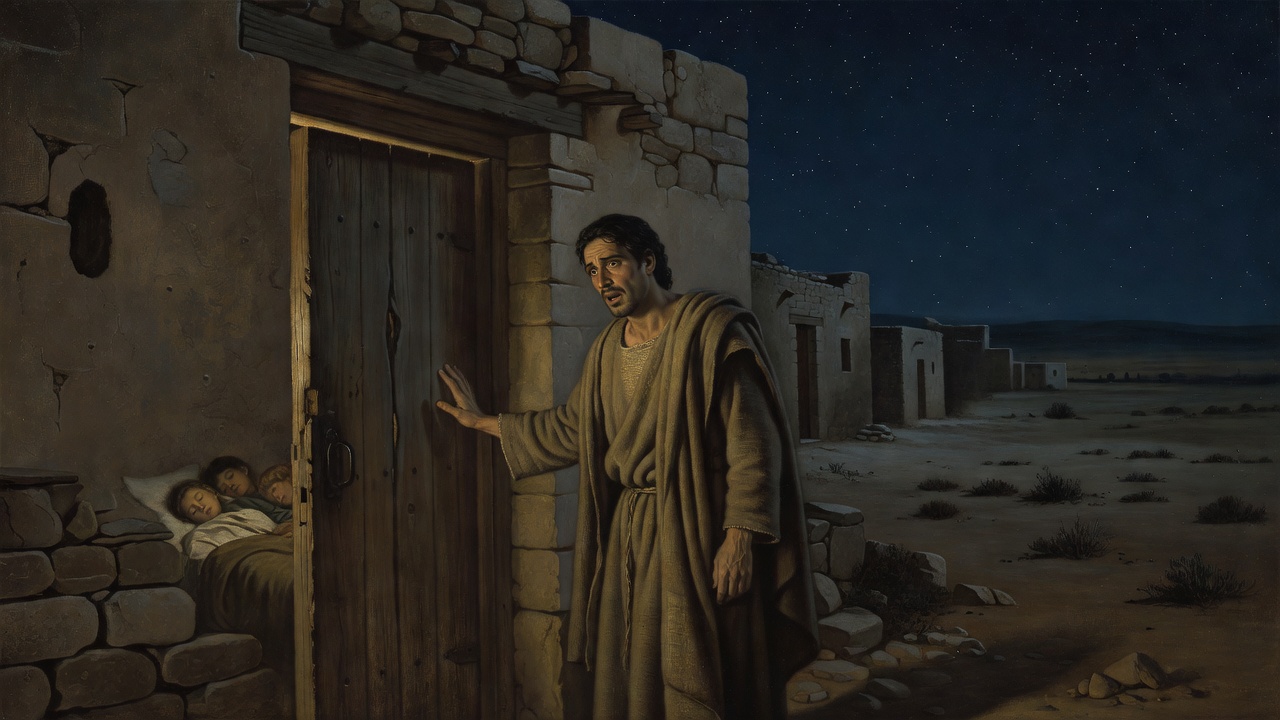
—Si gooto mon yehii to yigoo muuɗum hakkunde jemma, wi'ii ɗum: «Yigoo am, nyamlam buuruuje tati, 6sabo yigoo am gonɗo e laawol jippake wuro am, de mi walaa ko mi hokka ɗum», 7yalla yigoo maa oon jaabete ley galle toon, wi'e: «Taa torram, sabo dammbugal ngal sokaama, miin e sukaaɓe am du min pukkake, mi waawaa ummaade faa mi hokke fay huunde»? 8Miɗo wi'a on, fay si o ummaaki o hokkire saabe wo a yigiiko, o ummoto, o hokke haddi ko kaajaɗaa ɗuum, taa o hersa. 9Miin, miɗo wi'a on: ŋaaree, on keɓan. Pilee, on njiitan. Calminee, on omtante. 10Sabo ŋaariiɗo fuu heɓan. Piliiɗo fuu yiitan. Calminɗo fuu omtante. 11Moy e mooɗon woni baabiiwo mo ɓiyum ŋaarotoo liingu, de hokka ɗum mboddi? 12Naa ŋaaroo ɗum ɓoccoonde, de hokka ɗum yaare? 13Ndelle no mbonirɗon nii fuu, oɗon anndi no kokkirton ɓiɓɓe mooɗon kulle lobbe, sakko Baaba mooɗon gonɗo dow kammuuli. Ŋaariiɗo mo fuu, o hokkan ɗum Ruuhu Ceniiɗo.
No Iisaa riiwrata ginnaaji e Baawɗe Laamɗo
14Nyannde gomma, Iisaa ina riiwa ginnaaru muumɗinndu goɗɗo. Nde ginnaaru nduun wurtinoo ndeen, muumo oon fuɗɗi haalude. Ɗum haaynii jama'aaje ɗeen. 15De woɓɓe maɓɓe ina mbi'a:
—Wo e baawɗe Beeljebul, hooreejo ginnaaji oon, o riiwrata ginnaaji.
16Woɓɓe ŋaarii mo maande ƴuuroore dow kammu faa ndaartindoo mo. 17Kanko le, imo anndi miilooji maɓɓe, o wi'i ɓe:
—Laamu fuu pecciingu ina habda, halkan. Katin du, si galle feccake na habda fu, cankitoto. 18Si Seyɗaani e hoore mum feccake fu, noy laamu mum heddortoo? Miɗo wi'a on ɗum saabe ko mbiiɗon wo e baawɗe Beeljebul ndiiwrammi ginnaaji ɗuum. 19Si tawii miin miɗo riiwra ginnaaji e baawɗe Beeljebul, jokkuɓe on ɓeen le, moy ndiiwrata ɗi? Ndelle golle maɓɓe jaati kollata on ngalaa e goonga! 20Ammaa si tawii junngo Laamɗo ndiiwrammi ginnaaji, ɗum ina holla laamu Laamɗo warii to mooɗon. 21Gorko jom semmbe tiigiiɗo kaɓitirɗe, si haybii galle mum, jawdi mum reenoto. 22Ammaa si ɓurɗo ɗum semmbe warii to muuɗum, jaalake ɗum fu, teetan ɗum kaɓitirɗe mum ɗe yownoo hoolaare muuɗum dow muɓɓen ɗeen, fecca jawdi muuɗum ndiin e woɓɓe. 23Mo waldaa e am fuu, wo ganyo am. Mo wallataa kam mi hawrundura fuu, wo cankitoowo.
Haala yeccagol ginnaaru
24Si ginnaaru wurtake e neɗɗo fu, ndu yiiltoyto e nokkuuje joorɗe indu filoo ɗo ndu ŋootta, de ndu heɓataa. Ndeen ndu wi'an: «Mi yeccoto suudu am ndu eggunoomi e muuɗum nduun.» 25Nde ndu warti fu, ndu tawan suudu nduun fiisaama, moƴƴinaama. 26Ndeen, ndu yahan, ndu waddowa ginnaaji jeɗɗi ɓurɗi ndu bonde. Ɗi naata, ɗi koɗa ley toon. Nii cakitte neɗɗo oon ɓurdata arande muuɗum bonde.
Haala ɓurɗo heɓude barke
27Nde o haalannoo ɗum ndeen, debbo gooto ley jamaa oon ƴepti daande muuɗum, wi'i:
—Barke woodanii debbo deeduɗo ma mo muynuɗaa!
28Ammaa Iisaa jaabii, wi'i:
—Nanooɓe haala Laamɗo de njokki ka ɓeen, kam'en ɓuri heɓude barke!
No yimɓe pilorii maande
29Wakkati mo jama'aaje ɗeen ɓillunduri e makko ndeen, o fuɗɗi wi'ude:
—Yimɓe jamaanu o ɓeen wo yimɓe bonɓe. Iɓe piloo maande, de ɓe kokkataake si wanaa maande annabi Yuunusa ndeen. 30Sabo no Yuunusa laatoranii Niniwenkooɓe maande ni, hono noon Ɓii Neɗɗo du laatorantoo yimɓe jamaanu o maande. 31Nyannde darngal, kaananke debbo leydi horɗoore ummodoto e worɓe jamaanu o, hiitodoo e muɓɓen, de liɓa ɗum'en. Sabo o ƴuwii faa hoore leydi, o warii faa o hettindoo haalaaji Suleymaana kebbinaaɗi hakkilantaaku. Haya, ɓurɗo Suleymaana ina ɗo! 32Yimɓe Niniwe du ummodoto e yimɓe jamaanu o nyannde darngal, kiitodoo e muɓɓen, liɓa ɗum'en. Sabo ɓe tuubii gilla nde ɓe nannoo waaju Yuunusa ndeen. De inan, ɓurɗo Yuunusa ina ɗo!
Banndol annoora ɓanndu
33—Fay gooto huɓɓataa lampal, de suuɗa ɗum naa hippa ɗum kaakol. Ko waɗata dey, ngal ɓilete, faa ngal yaynana naatooɓe. 34Gite maa ngoni lampal ɓanndu maa. Si gite maa ina mbooɗi, ɓanndu maa fuu heewan annoora. Ammaa si ɗe mbooɗaa, ɓanndu maa fuu heewan nimre. 35Ndelle, haybu, taa annoora gonɗo e maaɗa oon niɓɓa. 36Sabo si ɓanndu maa fuu heewii annoora, tawa faa'e e mayru walaa e nimre, ndu fuu ndu heewan annoora hono no lampal yaynirante noon.
No Iisaa feliri Farisa'en e jannginooɓe Tawreeta
37Nde Iisaa tilinoo haalde ndeen, Farisaajo gooto noddi ɗum faa wottodoo e muuɗum. O naatowi, o jooɗii faa o nyaama. 38Farisaajo oon, ɗum haaynii ɗum nde yi'unoo o fuɗɗii nyaamude tawi o lootaay juuɗe makko. 39De Iisaa wi'i mo:
—Onon Farisa'en, oɗon lawƴa caggal kore e caggal kaake, tawee le, ɓerɗe mooɗon ina keewi nguyka e bonanda! 40Onon majjuɓe! Wanaa Taguɗo dow oon tagi ley du naa? 41Cakkee ko woni ley kore e kaake ɗeen. Ndeen, ko heddii ɗuum fuu laatanto on ko laaɓi.
42Bone woodanii on, onon Farisa'en! Sabo oɗon ittana Laamɗo jakka naanaa e jakka haako lekkoy ngokkoy e ko aawoton fuu. Kaa oɗon kuyfini dartaare, oɗon kuyfini yidde Laamɗo. Wo kanjum kaannoɗon waɗude tawee on njoppaay ko heddii ɗuum. 43Bone woodanii on, onon Farisa'en! Sabo oɗon njiɗi jooɗaade nokkuuje tedduɗe ley cuuɗi baajorɗi, oɗon njiɗi salmineede e nokkuuje ɗe yimɓe keewi. 44Bone woodanii on! Sabo oɗon nanndi hono caabeeje ɗe ngalaa maande, ɗe yimɓe njahata dow muɓɓen, tawee anndaa.
45Gooto e jannginooɓe Tawreeta jaabii Iisaa, wi'i:
—Moodibbo, no kaalirtaa ni, na huyfina min, minen du.
46O jaabii, o wi'i:
—Onon jannginooɓe Tawreeta du, bone woodanii on! Sabo oɗon ndonnda yimɓe doŋle tedduɗe, tawee onon e ko'e mon, on meemirtaa ɗe fay e hoore honndu mooɗon. 47Bone woodanii on, sabo oɗon moƴƴintinoo caabeeje annabaaɓe ɓe maamiraaɓe mon mbarnoo ɓeen. 48Ndelle oɗon ceedoo golle maɓɓe ɗeen ina mbeli on. Sabo kamɓe, ɓe mbarii annabaaɓe, onon du, oɗon moƴƴintinoo caabeeje muɓɓen! 49Ɗum le, Laamɗo hakkilanteejo wi'i: «Mi nuldan ɓe annabaaɓe e nulaaɓe, ɓe mbara yoga, ɓe torra yoga.» 50Ɗum waɗi de ƴiiƴam annabaaɓe ndufaaɗam gilla e fuɗɗoode adunaaru ɗaam, ina yomnitoree e yimɓe jamaanu o, 51gilla e ƴiiƴam Haabiila faa e ƴiiƴam Jakariyaa baraaɗo hakkunde hirsirde e suudu dewal mawndu nduun. Miɗo haalana on goonga: ɗum fuu ɗum yomnitorte e jamaanu o. 52Bone woodanii on, onon jannginooɓe Tawreeta! Sabo on teetii cokitirgal anndal. Onon e ko'e mon on naataay, de yiɗuɓe naatude ɓeen du, on accaay naata.
53Nde Iisaa dillunoo ɗoon, jannginooɓe Tawreeta e Farisa'en ina ɓernani ɗum sanne sanne. Iɓe ƴama mo kulle keewɗe, 54heddii iɓe tuufa mo faa ɓe keɓa e hunnduko makko ko ɓe nanngira mo.
Did you know?
Prayer, Signs, and Woes
- Jesus speaks of the blood of all the prophets, from the blood of Abel to the blood of Zechariah, who was killed between the altar and the sanctuary. Abel was the second son of Adam and Eve and was killed by his brother Cain. Easton's Bible Dictionary (1897) identifies this Zechariah as the son or grandson of the high priest Jehoiada, stoned at the king's command in the court of the house of the Lord after he condemned the king and the people, and notes that Jesus alludes to that murder in this chapter.Sources: the Bible text itself · Abel · Zacharias
- Jesus says this generation will be given no sign except the sign of Jonah: as Jonah was a sign to the Ninevites, so the Son of Man will be a sign to this generation, and the men of Nineveh, who repented at his preaching, will condemn it at the judgment, because someone greater than Jonah is here. Easton's Bible Dictionary (1897) describes Jonah, son of Amittai of Gath-hepher, as a prophet of Israel and a missionary to Nineveh, and calls him a type of the Son of Man. It describes Nineveh as a great and populous city, the flourishing capital of the Assyrian empire.Sources: the Bible text itself · Jonah · Nineveh
- After Jesus drives out a demon that was mute, some say he does it by Beelzebul, the prince of the demons. Easton's Bible Dictionary (1897) explains the name Satan as adversary or accuser, says the New Testament uses it interchangeably with the devil, and lists Beelzebub among his titles. Jesus answers that every kingdom divided against itself will be laid waste, and asks how Satan's kingdom can stand if Satan is divided against himself.Sources: the Bible text itself · Satan
Notes written with AI assistance from open sources (Theographic Bible Metadata, CC BY-SA 4.0; Easton’s Bible Dictionary, public domain) and reviewed before publishing.
Places in this chapter
Only places identified with high confidence are shown (90% or more according to the scholarly sources compiled by OpenBible). Period map: DARE (Digital Atlas of the Roman Empire), CC BY 4.0; modern map: © OpenStreetMap contributors; places: OpenBible.info (CC BY 4.0).
Credits and license for this translation
Fulfulfe Burkina, Dewtere Laamɗo Amaana Keso
Fulfulde Burkina New Testament
copyright © 2012 SIM International
Language: Fulfulde Burkina (Fulfulde, Western Niger)
Dialect: Burkina
Translation by: SIM International
Fulfulfe Burkina, Dewtere Laamɗo Amaana Keso
This translation, published by SIM International, was published in 2012.
If you are interested in obtaining a printed copy, please contact the SIM (Mission Protestante) , BP 1552, Ouagadougou 01, BURKINA FASO.
This translation text is made available to you under the
terms of the Creative Commons License: Attribution-Noncommercial-No Derivative Works.
( http://creativecommons.org/licenses/by-nc-nd/3.0/ )
In addition, you have permission to port the text to different file formats, as long as you
do not change any of the text or punctuation of the Bible.
You may share, copy, distribute, transmit, and extract portions
or quotations from this work, provided that you include the above copyright
information:
You must give Attribution to the work.
You do not sell this work for a profit.
You do not make any derivative works that change any of the actual words or punctuation of the Scriptures.
Permissions beyond the scope of this license may be
available if you contact
us with your request.
This translation is made available to you under the terms of the
Creative Commons Attribution-Noncommercial-No Derivatives license 4.0.
You may share and redistribute this Bible translation or extracts from it in any format, provided that:
You include the above copyright and source information.
You do not sell this work for a profit.
You do not change any of the words or punctuation of the Scriptures.
Pictures included with Scriptures and other documents on this site are licensed just for use with those Scriptures and documents.
For other uses, please contact the respective copyright owners.
2014-10-02
Source: http://ebible.org/fuhbkf/ · eBible.org