John 8
Fulfulfe Burkina, Dewtere Laamɗo Amaana Keso · Tap a verse to see its cross-references.
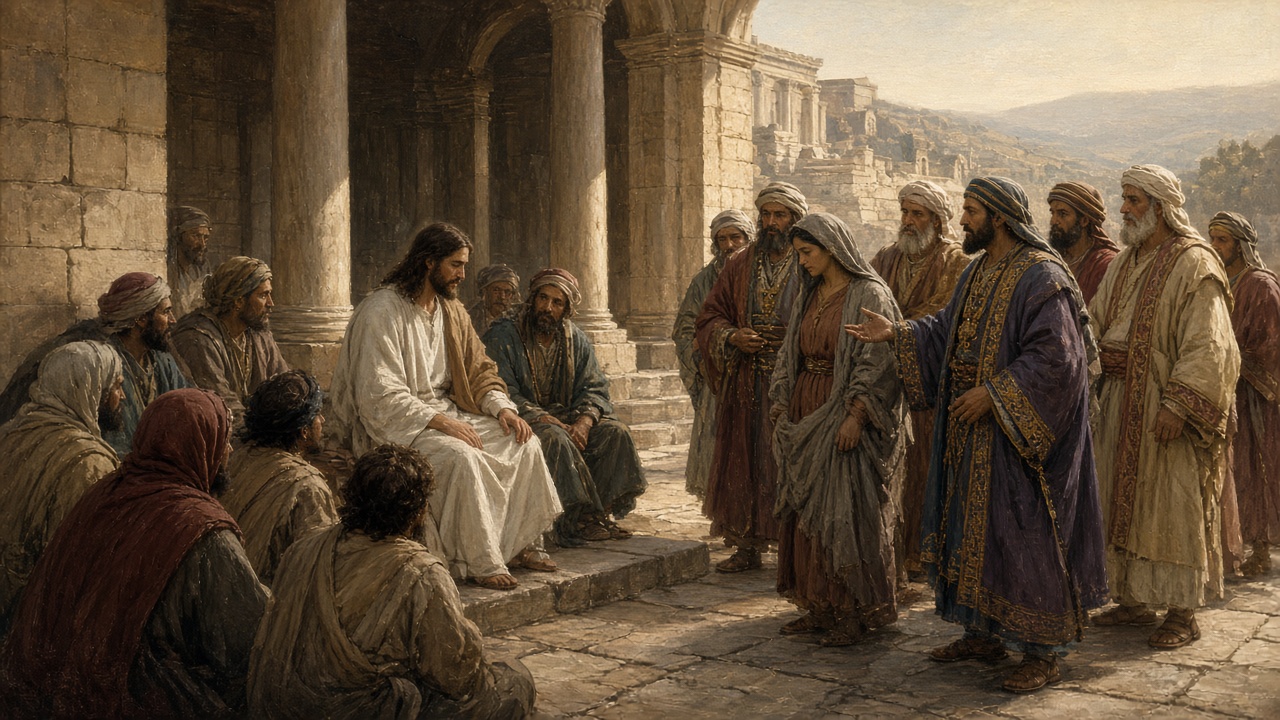
1Ndeen Iisaa ƴeeŋowi waamnde wi'eteende Jaytun. 2Gilla puɗal naange o warti ley suudu dewal mawndu. Jamaa oon fuu wari. O jooɗii, imo waajoo ɓe. 3Jannginooɓe Tawreeta e Farisa'en ngaddani mo debbo nanngaaɗo e jeenu. Ɓe ndarni ɗum hakkunde jamaa oon. 4Ɓe mbi'i Iisaa:
—Moodibbo, debbo o wo nanngaaɗo ina jeena. 5Muusaa yamirii min ley Tawreeta min mbarda hono ɓeen rewɓe kaaƴe. Aan le, ɗume mbi'ataa?
6Ɓe kaaldi nii faa ɓe tuufina mo, faa ɓe keɓa ko ɓe pelda mo. Iisaa kaa turii, ina diidira honndu muuɗum leydi. 7Ɓe keddii iɓe ƴama mo. Ndeen Iisaa turtii, wi'i ɓe:
—Neɗɗo mooɗon mo luttaay abada artoo limnude mo hayre.
8O turii katin, imo diida e leydi. 9Nde ɓe nannoo ɗum ndeen, ɓe ndilliri gooto gooto. Nayeeɓe ɓeen fuu artii dillude faa heddii Iisaa tan e debbo oon na darii hakkunde taliyaare ɗoon. 10Iisaa turtii, wi'i mo:
—Banndam debbo, toy felooɓe ma ɓeen ngoni? Fay gooto jukkaaki ma naa?
11O jaabii, o wi'i:
—Joomam, fay gooto.
Iisaa wi'i mo:
—Miin du, mi jukkataako ma. Yahu, taa luttaa katin.
No Iisaa wi'iri kam woni annoora adunaaru
12Iisaa waajii ɓe katin, wi'i:
—Miin woni annoora adunaaru ndu. Jokkuɗo kam fuu heɓan annoora nguurndam, yahataa ley nimre.
13Ndeen Farisa'en mbi'i mo:
—Aɗa seedanoo hoore maa, ndelle seedaaku maa sellataa.
14Iisaa jaabii ɓe, wi'i:
—Fay si ceedaniimi hoore am, seedaaku am wo goonga, sabo miɗo anndi ɗo ƴuurumi, miɗo anndi to njahammi du. Onon le, on anndaa ɗo ƴuurumi, on anndaa to njahammi. 15Onon, no njiiruɗon yimɓe noon carortoɗon ɗum'en. Miin kaa, mi sarataako fay gooto. 16Fay si miɗo saroo, sariya am wo goonga, sabo mi sarataako miin tan, Baabiiwo nulɗo kam oon ina wondi e am. 17Ina winndaa e ley Tawreeta mooɗon: seedaaku yimɓe ɗiɗo wo goonga. 18Miin, miɗo seedanoo hoore am. Baabiiwo nulɗo kam oon du, ina seedanoo kam.
19Ɓe mbi'i mo:
—Toy Baaba maa oon woni?
Iisaa jaabii, wi'i:
—On anndaa kam miin, sakko Baaba am. Si oɗon anndunoo kam, on anndanno Baaba am du.
20Iisaa haali haalaaji ɗiin nde waajotonoo ley suudu dewal mawndu, nokku ɗo keesuwal sadakaaji ngaal woni ɗoon. Fay gooto nanngaay mo, sabo wakkati makko yottaaki tafon.
21Iisaa wi'i ɓe katin:
—Inan miɗo dilla, de on piloto kam, ammaa on maaydan e hakkeeji mooɗon. On mbaawaa yaade to njahammi toon.
22Ndeen Alhuudiyankooɓe mbi'i:
—Ko o wi'i en mbaawaa yaade to o yahata toon, ɗum le, wo o bartoytooɗo naa?
23Iisaa wi'i ɓe:
—Onon, wo ley njeyaɗon. Miin le, wo dow njeyaami. Onon, e adunaaru njeyaɗon, de miin kaa, mi jeyaaka e mayru. 24Ɗum waɗi de mbiimi on: on maaydan e hakkeeji mon. Sabo si on ngoonɗinaay miin woni mo ngonumi oon, on maaydan e hakkeeji mon.
25Ɓe mbi'i mo:
—Aan wo a moy?
Iisaa jaabii:
—Ko mbi'unoomi on gilla arande ɗuum ngonumi. 26Miɗo joganii on ko heewi ko haaletee e ko saretee. Wooɗi Nulɗo kam oon wo goongante. Ko narrunoomi mo ɗuum kaalanammi yimɓe adunaaru.
27Ɓe paamaay wo haala Baabiiwo o haalanta ɓe. 28Ndeen Iisaa wi'i ɓe:
—Nde Ɓii Neɗɗo toownaa fuu, ndeen paamoton miin woni mo ngonumi oon. On paaman du mi waɗirtaa fay huunde e hoore am, ammaa ko Baabiiwo anndini kam, wo ɗuum kaalammi. 29Nulɗo kam oon ina wondi e am, o yoppaay kam mi perwuɗo, sabo ko weli mo tan ngaɗammi wakkati fuu.
No goonga rimɗinirta
30Nde Iisaa haalannoo haalaaji ɗi ndeen, heewɓe ngoonɗinii ɗum. 31Ndeen Iisaa wi'i Alhuudiyankooɓe goonɗinɓe ɗum ɓeen:
—Si oɗon keddii e konngol am, wo on taalibaaɓe am jaati. 32Ndeen anndoton goonga. Goonga oon du rimɗinan on.
33Ɓe njaabii mo:
—Minen, min ƴuwdi Ibrahiima, abada fay gooto maraay min. Noy mbiirataa min ndimɗan?
34Iisaa jaabii ɓe, wi'i:
—Goonga kaalanammi on: luttoowo fuu wo maccuɗo luttal. 35Maccuɗo tabitataa ley wuro, de ɓiɗɗo tabitan ley maggo faa abada. 36Si Ɓiɗɗo rimɗinii on, on laatoto rimɓe laaɓuɓe tal. 37Miɗo anndi on ƴuwdi Ibrahiima, ammaa oɗon piloo warude kam sabo waaju am naataay on. 38Miin, ko njiirumi Baaba am mbaajotoomi. Onon, ko narruɗon baaba mooɗon ngaɗoton.
39Ɓe njaabii mo, ɓe mbi'i:
—Ibrahiima woni baaba amin.
Iisaa wi'i ɓe:
—Si wo on ƴuwdi Ibrahiima fu on ngollan golle Ibrahiima. 40De joonin oɗon piloo warude kam, miin kaalanɗo on goonga mo narrumi Laamɗo oon. Ibrahiima kaa waɗaayno hono ɗum. 41Onon le, wo golle baaba mooɗon ngolloton.
Ɓe mbi'i mo:
—Minen, min nganaa jaali. Baaba gooto min njogii, kam woni Laamɗo.
42Iisaa wi'i ɓe:
—Si Laamɗo wonnoo baaba mooɗon fu, on njiɗanno kam, sabo to Laamɗo ƴuurumi, de ngarumi. Mi waddaay hoore am, wo kanko nuli kam. 43Ko waɗi de on paamataa haala am? Wo sabo on mbaawaa nanude ko kaalammi ɗuum. 44Onon, Ibiliisa woni baaba mooɗon. Muuyɗe baaba mooɗon ngolloton. O gaɗoowo bar-ko'e gilla fuɗɗoode. O walaa e goonga sabo goonga walaa e makko. Si o fenii fu, jikku makko tan o waɗi, sabo wo o penoowo, wo o baaba fewre du. 45De miin, saabe miɗo haala goonga waɗi de on ngoonɗinaay kam. 46Moy e mooɗon waawi felirde kam hakkeeji? Si mi haalii goonga, ko waɗi de on ngoonɗintaa kam? 47Neɗɗo Laamɗo hettintoo haala Laamɗo. Onon le, on kettintaako sabo on nganaa yimɓe Laamɗo.
No Iisaa ɓurdi Ibrahiima
48Alhuudiyankooɓe mbi'i mo:
—Wanaa min kaalii goonga ko min mbi'i a Samariyanke, a gonduɗo e ginnaaru naa?
49Iisaa jaabii, wi'i:
—Mi wanaa gonduɗo e ginnaaru, miɗo teddina Baaba am. Onon, oɗon kuyfina kam. 50Miin, mi filantaako hoore am teddeengal. Ina woodi pilantooɗo kam ngal. Oon woni carotooɗo. 51Goonga kaalanammi on: neɗɗo fuu jokkuɗo konngol am maayataa abada.
52Alhuudiyankooɓe mbi'i mo:
—Joonin kaa laaɓanii min a gonduɗo e ginnaaru. Ibrahiima e annabaaɓe fuu maayii, de aan kaa, aɗa wi'a neɗɗo fuu jokkuɗo konngol maa, meeɗataa ɗeɗɗere maayde. 53Yalla aɗa ɓuri baaba amin Ibrahiima naa? Oon le maayii, annabaaɓe du maayii. Ɗume cikkuɗaa ngonɗaa?
54Iisaa jaabii ɓe, wi'i:
—Miin, si hoore am mawninammi, manngu am wo ɓolum. Baaba am mo mbi'oton Laamɗo mooɗon oon, kam mawninta kam. 55On anndaa mo. Miin kaa, miɗo anndi mo. Si mi wi'ii mi anndaa mo, mi laatake penoowo hono mooɗon. Miɗo anndi mo, miɗo jokki konngol makko. 56Baaba mooɗon Ibrahiima ina seyorinoo yi'ude nyalaande am. O yi'ii nde, wooɗi o seyake.
57Alhuudiyankooɓe mbi'i mo:
—Fay duuɓi capanɗe joy a heɓaay tafon, de a yi'ii Ibrahiima naa?
58Iisaa jaabii ɓe:
—Goonga kaalanammi on: gilla Ibrahiima tagaaka, miin, miɗo woni.
59Nde Iisaa wi'unoo ɗum fu, ɓe kooƴi kaaƴe faa ɓe limna ɗum. Ammaa o uddii ley yimɓe, o yalti suudu dewal mawndu nduun.
Did you know?
Light, Law, and Abraham
- John 8 opens as Jesus goes to the Mount of Olives and returns early in the morning to the temple courts, where he sits and teaches the people who gather. The Mount of Olives is a ridge east of Jerusalem, separated from the city by the Kidron valley and named for the olive trees that cover its sides.Sources: the Bible text itself · Mount of Olives
- Scribes and Pharisees bring in a woman caught in adultery and ask Jesus what he says about Moses' command in the Law to stone such a woman, seeking to test him and to gain a basis for accusing him. Still in the temple courts, near the treasury, Jesus later says, "I am the light of the world." A dated event list places both episodes in AD 29, each lasting one day.Sources: the Bible text itself · Woman Caught in Adultery · Light of the World/I am discourse
- When Jesus says that the truth will set them free, his hearers answer that they are Abraham's descendants and have never been slaves to anyone. Abraham is called "father of a multitude"; he was the son of Terah and the heir of the promises. After Jesus declares, "before Abraham was born, I am," they pick up stones to throw at him.Sources: the Bible text itself · Abraham
Notes written with AI assistance from open sources (Theographic Bible Metadata, CC BY-SA 4.0; Easton’s Bible Dictionary, public domain) and reviewed before publishing.
Places in this chapter
- Mount of Olives · 31.778, 35.246 · verse 1
Only places identified with high confidence are shown (90% or more according to the scholarly sources compiled by OpenBible). Period map: DARE (Digital Atlas of the Roman Empire), CC BY 4.0; modern map: © OpenStreetMap contributors; places: OpenBible.info (CC BY 4.0).
Credits and license for this translation
Fulfulfe Burkina, Dewtere Laamɗo Amaana Keso
Fulfulde Burkina New Testament
copyright © 2012 SIM International
Language: Fulfulde Burkina (Fulfulde, Western Niger)
Dialect: Burkina
Translation by: SIM International
Fulfulfe Burkina, Dewtere Laamɗo Amaana Keso
This translation, published by SIM International, was published in 2012.
If you are interested in obtaining a printed copy, please contact the SIM (Mission Protestante) , BP 1552, Ouagadougou 01, BURKINA FASO.
This translation text is made available to you under the
terms of the Creative Commons License: Attribution-Noncommercial-No Derivative Works.
( http://creativecommons.org/licenses/by-nc-nd/3.0/ )
In addition, you have permission to port the text to different file formats, as long as you
do not change any of the text or punctuation of the Bible.
You may share, copy, distribute, transmit, and extract portions
or quotations from this work, provided that you include the above copyright
information:
You must give Attribution to the work.
You do not sell this work for a profit.
You do not make any derivative works that change any of the actual words or punctuation of the Scriptures.
Permissions beyond the scope of this license may be
available if you contact
us with your request.
This translation is made available to you under the terms of the
Creative Commons Attribution-Noncommercial-No Derivatives license 4.0.
You may share and redistribute this Bible translation or extracts from it in any format, provided that:
You include the above copyright and source information.
You do not sell this work for a profit.
You do not change any of the words or punctuation of the Scriptures.
Pictures included with Scriptures and other documents on this site are licensed just for use with those Scriptures and documents.
For other uses, please contact the respective copyright owners.
2014-10-02
Source: http://ebible.org/fuhbkf/ · eBible.org