Matthew 8
Alkawal Kesal · Tap a verse to see its cross-references.
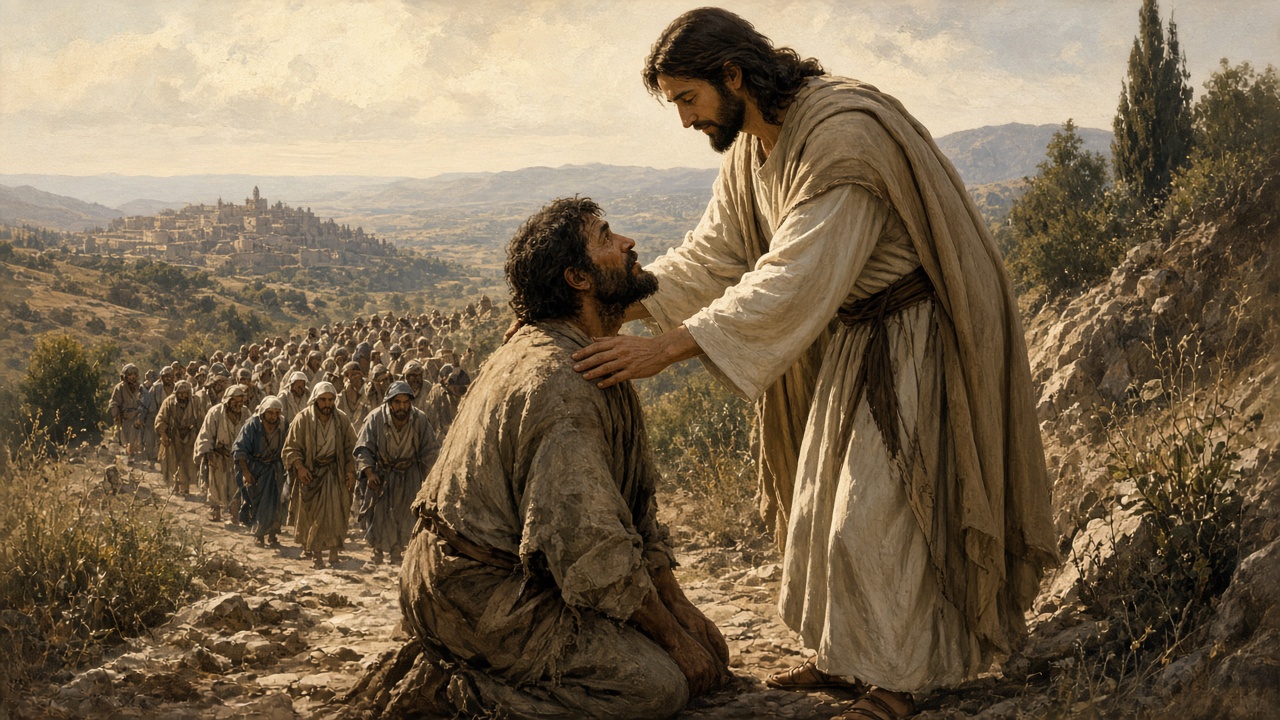
Yeesu nyawtii ceccefo gom
1Yeesu jippoyii diga dow waanne, go jama'aare ɗuunne e tokki mo. 2Wakkati mum, ceccefo gom wari, jiccii yeeso makko, wi'i mo: «Joomiraawo, to aa yiɗi, a waawan ko nyawtimmi.»
3Yeesu foorti junŋo mum, meemi mo, wi'i: «Mii yiɗi, nyawta!» Ɗon maa ɗon, gorko on nyawtii. 4Den Yeesu wi'i mo: «Hakkil! Taa batu ka goɗɗo. Amma yahu holloy hoore maa limaamiijo. Den, gaɗaa sadaka ka Muusa wi'i on gaɗon, gam anninaa ɓe a yoofake.»
Yeesu nyawtii jaggiiɗo hooreejo soogeeji Roma
5Yeesu e naata siire Kafarnahum, ɗon hooreejo soogeeji gom ɓattii mo, eeli mo, wi'i: 6«Joomiraawo, jaggiiɗo am na'on fukkii wuro, yanɗaa, faa juuɗe e koyɗe fu waatii, oo naawee sanne!» 7Yeesu wi'i mo: «Mi yahan, mi nyawta mo.» 8Amma hooreejo soogeeji on toontii, wi'i: «Joomiraawo, mi fotay naataa wuro am. Amma batu woliine woore tan, jaggiiɗo am yoofoto. 9Min e hoore am, mii woodi mawɓe ɓe ɗowtanii mi, min bo mii woodi ɗowtaniiɓe am. To mi wi'i, oo ɗo, ‟yahu”, o yahan. To mi wi'i, oo to, ‟war”, o waran. To mi wi'i, jaggiiɗo am, ‟waɗu nii”, o waɗan.»
10No Yeesu nani ka, haaynaare nanŋi ɗum, wi'i tokkuɓe ɗum: «E gooŋa batanmi on, mi yi'ay iri goonɗinki kii ɗo dow goɗɗo, baa der Isira'iilaaɓe. 11Mii bata on, ɗuuɓɓe waran diga lettugal e gorgal. Ɓe jooɗodo e Iburahiima e Isiyaaku e Yaakuubu, ɓe nyaamda der Laamaare Alla. 12Amma laatiiɓe ɓiɓɓe Laamaare, faɗɗete yaasi, der niwre. Ton ɓe bullata, ɓe ƴakkontira nyiiƴe.»
13Ɓaawo mum, Yeesu wi'i hooreejo soogeeji on: «Hootu! Ɗum laatanee hande no goonɗinirɗaa.» Wakkati mum, jaggiiɗo makko yoofii.
Yeesu nyawtii nyawɓe ɗuuɓɓe
14Yeesu yahi wuro Piyer. O tawi esiraawo Piyer debbo e fukkii, e yontaa. 15Yeesu meemi junŋo makko, yontere nen acci mo. Den o ummii, oo jagganoo ɓe.
16No kiikiiɗe waɗi, Yeesu waddanaa himɓe ɗuuɓɓe, ɓe ginnaaji woni e mum. O riiwi ɗi e haala makko, o nyawti nyawɓe fu. 17Hande non haala annabaaku Esaaya hebbiri, ka o wi'i:
«O jaɓii roonaago tampe meeɗen,
o nyawtii nyawuuji meeɗen.»
No haani Yeesu tokkiree
18Yeesu yi'i jama'aare ɗuunne e huuritii ɗum, o wi'i aahiiɓe makko ɓe jola fonŋo far to. 19Ɗon Moodibbo tawreeta gom ɓattii mo, wi'i: «Moodibbo, mi tokkete to jahataa fu.»
20Yeesu wi'i mo: «Dondonɗehon e woodi gayɗe, pooli bo e woodi daɗɗa mum, amma Ɓii neɗɗo woodaa to fukkinta hoore mum gam siwtoo.»
21Goɗɗo diga caka aahiiɓe wi'i mo: «Joomiraawo, accu mi yaha, mi uwaa baaba am taw.»
22Yeesu toontii mo, wi'i: «Tokkam, accu maayɓe uwa maayɓe mum.»
Yeesu deƴƴitinii hennu
23Yeesu naati der laana diyam, go aahiiɓe makko e tokki mo. 24Ɗon maa ɗon, hennu mawkol ummii e wifa dow maayo. Ŋol wifi, faa galmaaji diyam e yiɗi mutina ŋa. Amma Yeesu e ɗaani. 25Aahiiɓe ɓattii mo, finnini mo, wi'i: «Joomiraawo, faaba men! Men na'on kalka!»
26O toontii ɓe, o wi'i: «Gam ume ko kuluɗon? Onon ɓe goonɗinki paanɗuki!» Den, o ummii, o falmi hennu e maayo. Ɗum yeewi siriw! 27Ɓe fu, haaynaare nanŋi ɓe, ɓee bi'a: «Iri moy nun oo ɗo, faa hennu e maayo e ɗowtanoo mo?»
Yeesu nyawtii ginnaajiiɓe ɗiɗo
28Yeesu joli fonŋo maayo, yottii der leydi Gadarena. Ɗon worɓe ɗiɗo wooduɓe ginnaaji wurtii e caabeeje, fotti e makko. Ɓee kunnii puy, faa goɗɗo suusataa ko tokki laawol ŋol. 29Ɓe darii ɓee bata e semme, ɓee bi'a: «An Ɓiɗɗo Alla, ume jiɗuɗaa waɗugo men? A warii ɗo gam tooraa men diga wakkati waɗay na?»
30Fotii darne afaaji mawne gom e durannoo takkol ɗon. 31Ginnaaji ɗin eeli Yeesu, wi'i: «To a riiwii men, accu men naataa der darne afaaji nee ɗo.»
32O wi'i ɓe: «Jahee!» Ginnaaji ɗin wurtii, naatoy der afaaji ɗin. Ɗon maa ɗon, darne afaaji nen fu diirtii diga takkol waanne, simmitii der maayo, yoolii e diyam.
33Durooɓe afaaji ɗin doggi, hooti wuro. Ɓe batoy ko waɗi fu, e ko waɗi wooduɓe ginnaaji ɗiɗo ɓen. 34Den, himɓe siire nen fu wurtoy fotti e Yeesu. No ɓe ji'i mo, ɓe eeli mo o wurtoo leydi maɓɓe.
Did you know?
Healings, faith, and the sea
- Capernaum, which Jesus enters in this chapter, was a Galilean city not named in the Old Testament. Easton's Bible Dictionary (1897) says it became his “own city” after he left Nazareth, and it lists the centurion’s appeal and the healing at Peter’s house among the events set there.Sources: Capernaum · the Bible text itself
- Jesus says that many will come from east and west to share the banquet with Abraham, Isaac, and Jacob in the kingdom of heaven. Easton's Bible Dictionary (1897) calls Abraham the son of Terah and heir of the promises, Isaac Abraham’s only son by Sarah, and Jacob—also known as Israel—the younger twin son of Isaac and Rebekah.Sources: the Bible text itself · Abraham · Isaac · Jacob (Israel)
- Matthew presents that evening’s healings as fulfilling words spoken through the prophet Isaiah: “He took on our infirmities and carried our diseases.” Easton's Bible Dictionary (1897) identifies Isaiah as the son of Amoz, who prophesied in the reigns of Uzziah, Jotham, Ahaz, and Hezekiah.Sources: the Bible text itself · Isaiah
Notes written with AI assistance from open sources (Theographic Bible Metadata, CC BY-SA 4.0; Easton’s Bible Dictionary, public domain) and reviewed before publishing.
Places in this chapter
- Gadara · Today: Umm Qais · 32.656, 35.679 · verse 28
Only places identified with high confidence are shown (90% or more according to the scholarly sources compiled by OpenBible). Period map: DARE (Digital Atlas of the Roman Empire), CC BY 4.0; modern map: © OpenStreetMap contributors; places: OpenBible.info (CC BY 4.0).
Credits and license for this translation
Alkawal Kesal
Portions of the New Testament in the Fulfulde Borgu language of Benin
copyright © 2011 SIM International
Language: Fulfulde Borgu (Fulfulde, Borgu)
Translation by: SIM
This translation text is made available to you under the
terms of the Creative Commons License: Attribution-Noncommercial-No Derivative Works.
( http://creativecommons.org/licenses/by-nc-nd/3.0/ )
In addition, you have permission to port the text to different file formats, as long as you
do not change any of the text or punctuation of the Bible.
You may share, copy, distribute, transmit, and extract portions
or quotations from this work, provided that you include the above copyright
information:
You must give Attribution to the work.
You do not sell this work for a profit.
You do not make any derivative works that change any of the actual words or punctuation of the Scriptures.
Permissions beyond the scope of this license may be
available if you contact
us with your request.
This translation is made available to you under the terms of the
Creative Commons Attribution-Noncommercial-No Derivatives license 4.0.
You may share and redistribute this Bible translation or extracts from it in any format, provided that:
You include the above copyright and source information.
You do not sell this work for a profit.
You do not change any of the words or punctuation of the Scriptures.
Pictures included with Scriptures and other documents on this site are licensed just for use with those Scriptures and documents.
For other uses, please contact the respective copyright owners.
2014-10-16
Source: http://ebible.org/fue/ · eBible.org