1 Corinthians 15
Alkawal Kesal · Tap a verse to see its cross-references.
Pintol Almasiihu
1Banniraaɓe, mii yiɗi siwtorgo on linjiila ka baajiimi on, jaɓuɗon ko oon darii dow makka e semme. 2Diga e makka kisinteɗon to oon jogii ka hande no baajoriimi on. To hinaa non, goonɗinki mooɗon laatoto baanji.
3Aran, mi yottinii on ko keɓumi min e hoore am, kanjum woni. Almasiihu maayii gam hakkeeji meeɗen, hande no Dewtere wi'i. 4O uwaama, o fintii nyalaane tatawre, hande no Dewtere batiri. 5O hollitanake Piyer, ɓaawo majjum o hollitanii aahiiɓe sappo e ɗiɗo. 6Ɓaawo majjum o hollitanii banniraaɓe ko ɓuri keme joyo de woore. Ɗuuɓɓe maɓɓe e wuuri faa jooni, amma woɓɓe mum maayi. 7Ɓaawo majjum, o hollitanake Yaakuuba, den go o hollitanii lilaaɓe fu.
8Faa sakitiineere, o hollitanii am, min nanduɗo hande sukeel dimaaŋel lebbi mum hebbay. 9Gam min ɓuri lilaaɓe fu faanɗugo, mi fotay du noddeego lilaaɗo, gam mi tooriino eklesiya Alla. 10Gam moƴƴere Alla laatoriimi ko laatiimi. Moƴƴere ne o waɗanimmi bo laataaki baanji, gam mi gollake ko ɓuri lilaaɓe fu. Min bane waɗata ɗum, amma moƴƴere Alla wonne der am waɗata ɗum. 11To non, min nun, kamɓe nun, haala goota kan men piinata, kanka nun bo goonɗinɗon.
Pintol maayɓe
12To emen baajoo no Almasiihu fintii e maayde, den noy woɓɓe mooɗon wi'irta maayɓe fintataa? 13To pintol maayɓe walaa, Almasiihu e hoore mum bo fintay, 14to Almasiihu fintay bo, waaji amen laatake baanji, goonɗinki mooɗon bo laatake baanji. 15Ko ɓuri fu, to e gooŋa maayɓe fintataa, minon bo men laatake seedaniiɓe Alla fewre, gam emen ceedoo o fintinii Almasiihu, nani bo gooŋa bane, to maayɓe fintataa. 16Gam to maayɓe fintataa, Almasiihu e hoore mum fintay. 17To Almasiihu fintay, goonɗinki mooɗon laatake baanji, der hakkeeji mooɗon bo gonuɗon faa jooni, 18maayunooɓe e goonɗinki Yeesu bo halkii. 19To der duuniyaaru ɗo tan miiluɗen heɓugo riiba gonuka der kawtal men e Almasiihu, enen ɓurannoo himɓe fu yurminaago.
20Amma e gooŋa, Almasiihu fintii, o laatake arano der maayɓe fintooɓe. 21Hande no maayde naatiri der duuniyaaru diga neɗɗo, hande non bo pintol wariri diga e neɗɗo. 22Hande no himɓe fu maayirta gam kawtal mum e Aadamu, hande non himɓe heɓirta yonki gam kawtal mum e Almasiihu. 23Moy fu fintan e wakkati mum. Almasiihu laatii arano, ɓaawo mum, goonɗinɓe mo tokkina der nyalaane garki makko. 24Ɓaawo majjum, timmoode duuniyaaru waran. Almasiihu halkan hooreeɓe e wooduɓe baawɗe e semmeeji kalluɗi fu, den o hokka Alla Baaba meeɗen laamaare. 25Gam doole Almasiihu laamoo faa to Alla wattii wayɓe makko ley teppe makko. 26Ganyo cakitorteeɗo halkeego woni maayde. 27E winnaa: «Alla wattii huune fu ley koyɗe makko». Amma to wi'aama, «huune fu» Alla gattuɗo huune fu ley koyɗe makko bane wondaa. 28To Almasiihu laatake hooreejo dow huune fu, kanko Ɓiɗɗo bo, o hokkan Alla hoore makko, den Alla laamoo dow huune fu, e dow moy fu.
29To non, riiba kaye waɗeteeɓe batisi faa maayira woodi to maayɓe fintataa? Ume waɗi ko himɓe e waɗee batisi faa maayira? 30Enen e ko'e meeɗen bo, gam ume potteten wakkati fu kaliije maayde? 31Banniraaɓe, nyalaane fu der hunnuko maayde nun gonumi. Amma e nun fu mii juroro on gam daliila kawtal mooɗon e Joomiraawo meeɗen Yeesu Almasiihu. 32To e miilooji heɓugo goɗɗum der duuniyaaru ɗo nun gaɗirmi duuro der wanŋarde Efesu, kaɓumi e bisaaji ladde kalluɗi, ume ɗum nafatammi to maayɓe fintataa? Ɗum laatotono hande no ballool ŋol ɗo wi'i: «Nyaamen jaren, gam jaaŋo en maayan.» 33To on jammee ko'e mooɗon: «Yaadugo e kalluɗo biisan jikku booɗuŋu.» 34Pukkinee hakkillooji mooɗon hande no haani, to on gaɗee hakke. Mi batii ka gam centon, gam woɓɓe mooɗon annaa Alla.
35Amma, waɗoto goɗɗo ƴama: «Noy maayɓe fintirta? Ɓannu iri ŋole ɓe bittiroyta?» 36Onon ɓe galaa hakkillo! To a aawi awdi, doole ni waata go ni fuɗa. 37Awdi ni aawuɗaa fu, to gawri nun, ɗum bo awdi feereeri gom nun, gitel tan aawataa, puɗol e haako mum bane. 38Ɓaawo mum, Alla nun hokkata awdi fu iri puɗol mum no o yiɗiri, awdi fu bo e puɗol muuɗum nun. 39Kujje yonkinteeje fu bane woodi ɓannu gootol. Himɓe e woodi ɓannu mum, bisaaji e ɓannu mum, pooli e ɓannu mum, liƴƴi bo e ɓannu mum.
40E woodi ɓannu ŋol dow kammu, e ɓannu ŋol leydi. Ɓannu ŋol dow e ŋari mum, ŋol leydi bo e ŋari mum. 41Naaŋe e jayŋol mum, lewru e jayŋol mum, koode bo e jayŋol mum, baa koode ɗen jayŋol mum e suttontiri.
42Hande non, pintol maayɓe bo laatii. To ɓannu uwaama, ŋol nyola, to ŋol fintinaama, ŋol nyolataa. 43To ŋol uwaama ŋol woodaa tedduŋal, ŋol fintinee, eŋol woodi tedduŋal. To ŋol uwaama, ŋol tampuŋol, ŋol fintinee eŋol woodi semme. 44To ŋol uwaama ɓannu leydinkewol, ŋol fintinee eŋol laatii ɓannu ruuhunkewol. To ɓannu leydinkewol na'on, ɓannu ruuhunkewol bo na'on. 45E winnaa: «Aadamu neɗɗo aranneejo laatake yonkinteejo». Aadamu cakitiiɗo laatake Ruuhu kokkoowo yonki. 46Ruuhunkejum bane ardii, ɗum ɓannu nun ardii. Ɓaawo mum ko ɗum Ruuhu tokkii. 47Aadamu neɗɗo arandeejo e sollaare leydi nun tagiraa, e leydi o ƴiwi, neɗɗo ɗiɗaɓo bo, dow kammu ƴiwi. 48No tagiraaɗo e sollaare leydi wa'i, hande non wooduɓe ɓannu leydinkewol bo wa'i. No ƴiwuɗo dow kammu wa'i, hande non ɓe dow kammu bo waɗoyta. 49Hande no nandirɗen e neɗɗo tagiraaɗo sollaare leydi, hande non bo nandiroyten e neɗɗo ƴiwuɗo dow kammu.
50Banniraaɓe, ko jiɗum wi'ugo on nani: Ɓannu e ƴiiƴam waawataa ko roni Laamaare Alla, kade bo, nyoloojum waawataa ko roni ko nyolataa.
51Nani mi hollan on asiiri gom: en fu bane maayata, amma en fu en baylitinte, 52der wakkati gooti, der maƴƴande itere, to rimmo walaldu sakitiinewol nanaama. To ŋol fuuraama, maayɓe artan finta e ɓannu ŋol nyolataa, enen horiiɓe en baylitinte. 53Den fu, ɓannu nyoloowol ɓornoto ko nyolataa, ɓannu maayoowol bo ɓornoo ko maayataa. 54To ɓannu nyoloowol ɓorninaama ko nyolataa, maayoowol bo ɓoorninaama ko maayataa, den haala annabaaku binnaaka ka hebban:
«Maayde jaalaama, moɗaa.
55Maayde, toy jaalorgal maa woni?
Maayde, toy tooke maa woni?»
56Hakke woni tooke maayde, baawɗe hakke bo woni tawreeta. 57Yettoore laatanoo Alla kokkoowo en jaalaago diga e Joomiraawo meeɗen Yeesu Almasiihu.
58Gam majjum banniraaɓe am yiɗaaɓe, laatee tabitiiɓe, ɓe dimmataako. Wakkati fu kiinnee golle Joomiraawo, gam oon anni ko gaɗuɗon sabbu kawtal mooɗon e Joomiraawo yanataa baanji.
Did you know?
The Resurrection of the Dead
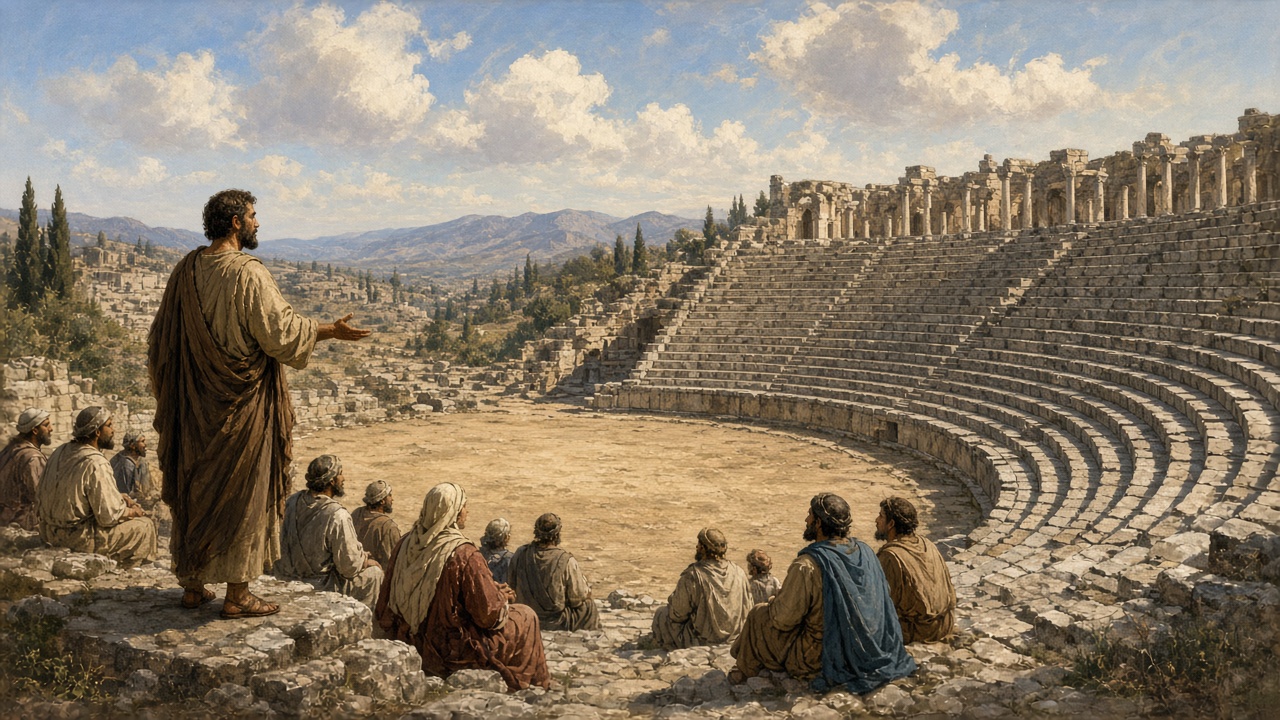
- When this chapter asks what was gained by fighting wild beasts in Ephesus, it names a city that Easton's Bible Dictionary calls the capital of proconsular Asia, known for an open-air theatre—the largest in the world, able to hold 50,000 spectators—where fights of wild beasts and of men with beasts were staged.Sources: Ephesus · the Bible text itself
- Easton's Bible Dictionary explains that Adam, a Babylonian word meaning red and the ordinary name for man in Hebrew and Assyrian, was the first man, formed from the dust of the earth, which is why he received that name. This chapter takes up that picture: death came through a man, the first man was of the dust, and the last Adam is a life-giving spirit.Sources: Adam · the Bible text itself
- Easton's Bible Dictionary (1897) identifies the James to whom Christ appeared after the resurrection, as this chapter records, as the brother or near kinsman of Jesus, also called James the Less, and says that he later headed the church in Jerusalem.Sources: James (Brother of Jesus) · the Bible text itself
Notes written with AI assistance from open sources (Theographic Bible Metadata, CC BY-SA 4.0; Easton’s Bible Dictionary, public domain) and reviewed before publishing.
Places in this chapter
- Ephesus · 37.939, 27.341 · verse 32
Only places identified with high confidence are shown (90% or more according to the scholarly sources compiled by OpenBible). Period map: DARE (Digital Atlas of the Roman Empire), CC BY 4.0; modern map: © OpenStreetMap contributors; places: OpenBible.info (CC BY 4.0).
Credits and license for this translation
Alkawal Kesal
Portions of the New Testament in the Fulfulde Borgu language of Benin
copyright © 2011 SIM International
Language: Fulfulde Borgu (Fulfulde, Borgu)
Translation by: SIM
This translation text is made available to you under the
terms of the Creative Commons License: Attribution-Noncommercial-No Derivative Works.
( http://creativecommons.org/licenses/by-nc-nd/3.0/ )
In addition, you have permission to port the text to different file formats, as long as you
do not change any of the text or punctuation of the Bible.
You may share, copy, distribute, transmit, and extract portions
or quotations from this work, provided that you include the above copyright
information:
You must give Attribution to the work.
You do not sell this work for a profit.
You do not make any derivative works that change any of the actual words or punctuation of the Scriptures.
Permissions beyond the scope of this license may be
available if you contact
us with your request.
This translation is made available to you under the terms of the
Creative Commons Attribution-Noncommercial-No Derivatives license 4.0.
You may share and redistribute this Bible translation or extracts from it in any format, provided that:
You include the above copyright and source information.
You do not sell this work for a profit.
You do not change any of the words or punctuation of the Scriptures.
Pictures included with Scriptures and other documents on this site are licensed just for use with those Scriptures and documents.
For other uses, please contact the respective copyright owners.
2014-10-16
Source: http://ebible.org/fue/ · eBible.org