Psalms 48
La Sainte Bible · Tap a verse to see its cross-references.
1L'Éternel est grand et très digne de louanges, dans la cité de notre Dieu, sur sa montagne sainte. 2Elle s'élève avec grâce, la montagne de Sion, joie de toute la terre; du côté du septentrion est la ville du grand Roi. 3Dieu, dans ses palais, est connu pour une haute retraite. 4Car voici, les rois s'étaient donné rendez-vous; ils s'étaient avancés ensemble. 5L'ont-ils vue? Frappés de stupeur, éperdus, ils se sont enfuis à la hâte. 6Là un tremblement les a saisis, une angoisse comme celle de la femme qui enfante; 7Ainsi par le vent d'orient tu brises les navires de Tarsis. 8Ce que nous avions entendu, nous l'avons vu, dans la ville de l'Éternel des armées, dans la ville de notre Dieu; Dieu la maintient à jamais. (Sélah.) 9O Dieu, nous avons attendu ta faveur au milieu de ton temple! 10Tel qu'est ton nom, ô Dieu, telle est ta louange jusqu'aux bouts de la terre; ta droite est pleine de justice. 11Que la montagne de Sion se réjouisse; que les filles de Juda tressaillent d'allégresse, à cause de tes jugements! 12Parcourez Sion, faites le tour de son enceinte, comptez ses tours. 13Considérez son rempart, examinez ses palais, pour le raconter à la génération future. 14Car ce Dieu-là est notre Dieu, à toujours et à perpétuité. Il nous conduira jusqu'à la mort.
Did you know?
Zion, the City of the Great King
- Mount Zion, originally the fortified southeastern hill of Jerusalem captured by David from the Jebusites, became known as the City of David and the site of his citadel. In Psalm 48, it is celebrated as God's holy mountain, elevated and fortified against advancing enemy kings.Sources: the Bible text itself · Mount Zion · Zion
- The psalm depicts God's power shattering enemy forces like an east wind wrecking the ships of Tarshish. Many scholars identify Tarshish with a distant Phoenician trading port in southwestern Spain, while other ancient traditions proposed locations such as Carthage or ports in the east.Sources: the Bible text itself · Tarshish
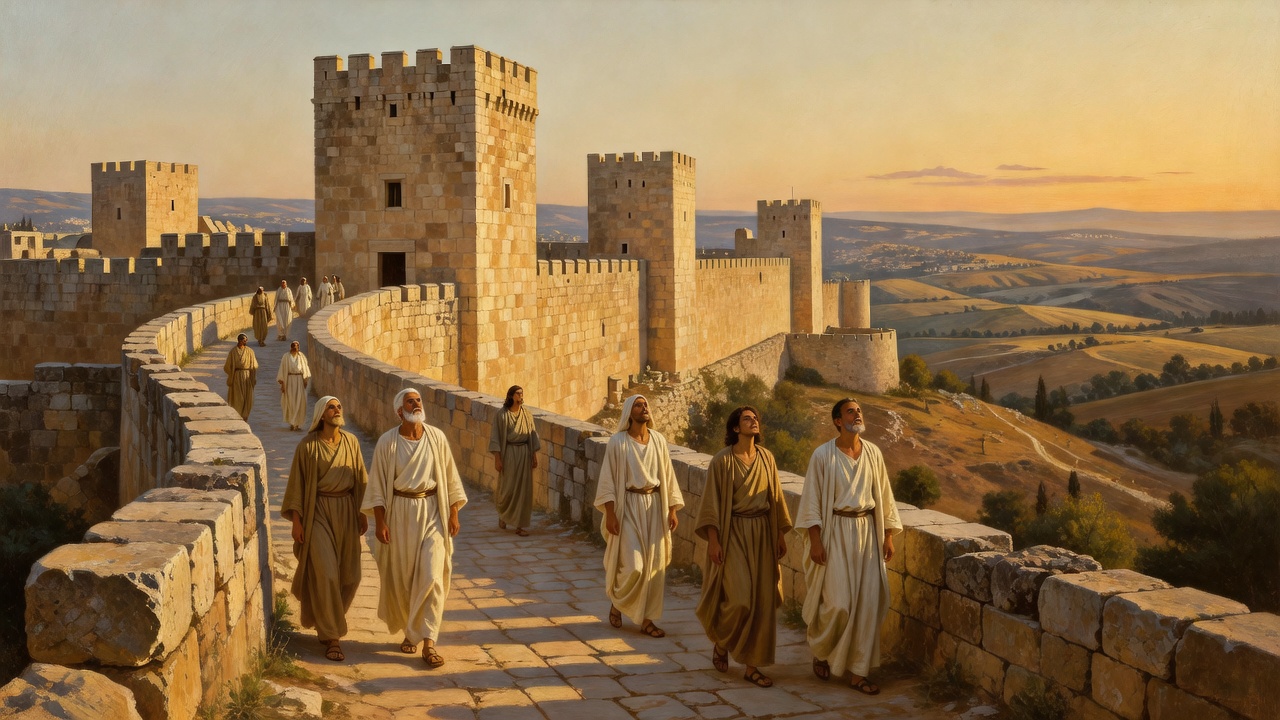
- Worshippers are invited to walk around the perimeter of Zion to inspect its ramparts, count its towers, and view its citadels. This survey of the city's defenses was meant to be recounted to future generations as a witness of God's steadfast protection.Sources: the Bible text itself
Notes written with AI assistance from open sources (Theographic Bible Metadata, CC BY-SA 4.0; Easton’s Bible Dictionary, public domain) and reviewed before publishing.
Places in this chapter
- Mount Zion · 31.772, 35.229 · verses 2, 11
- Zaphon · Today: Jebel Aqra · 35.953, 35.969 · verse 2
- Jerusalem · 31.777, 35.234 · verse 3
- Zion · Today: Jerusalem · 31.777, 35.234 · verse 12
Only places identified with high confidence are shown (90% or more according to the scholarly sources compiled by OpenBible). Period map: DARE (Digital Atlas of the Roman Empire), CC BY 4.0; modern map: © OpenStreetMap contributors; places: OpenBible.info (CC BY 4.0).
Credits and license for this translation
La Sainte Bible
The Holy Bible in French, Ostervald
Public Domain
Language: français (French)
Translation by: Ostervald
2026-10-03
Source: http://ebible.org/fra_fob/ · eBible.org