Jeremiah 47
Louis Segond 1910 · Tap a verse to see its cross-references.
Prophétie contre les Philistins
1La parole de l’Éternel qui fut adressée à Jérémie, le prophète, sur les Philistins, avant que Pharaon frappât Gaza.
2Ainsi parle l’Éternel:
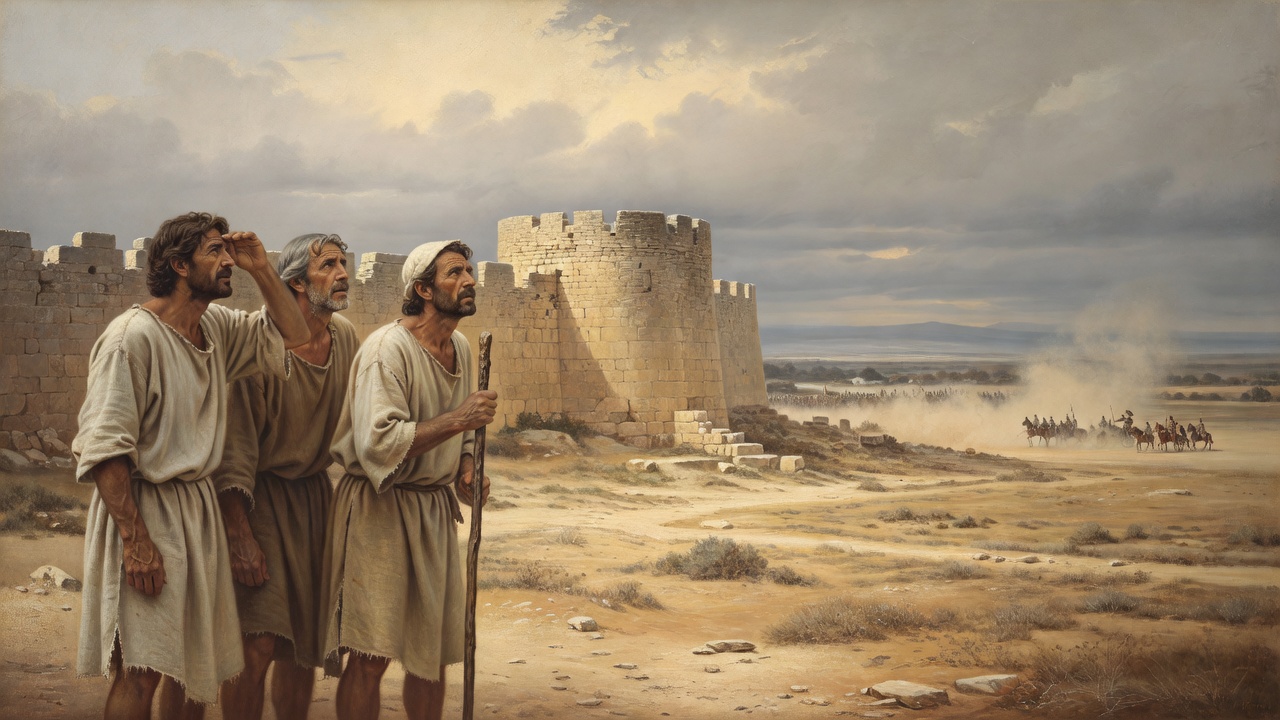
Voici, des eaux s’élèvent du septentrion,
Elles sont comme un torrent qui déborde;
Elles inondent le pays et ce qu’il contient,
Les villes et leurs habitants.
Les hommes poussent des cris,
Tous les habitants du pays se lamentent,
3A cause du retentissement des sabots de ses puissants chevaux,
Du bruit de ses chars et du fracas des roues;
Les pères ne se tournent pas vers leurs enfants,
Tant les mains sont affaiblies,
4Parce que le jour arrive où seront détruits tous les Philistins,
Exterminés tous ceux qui servaient encore d’auxiliaires à Tyr et à Sidon;
Car l’Éternel va détruire les Philistins,
Les restes de l’île de Caphtor.
5Gaza est devenue chauve,
Askalon est dans le silence, le reste de leur plaine aussi.
Jusques à quand te feras-tu des incisions?
6Ah! Épée de l’Éternel, quand te reposeras-tu?
Rentre dans ton fourreau,
Arrête, et sois tranquille!
7Comment te reposerais-tu?
L’Éternel lui donne ses ordres,
C’est contre Askalon et la côte de la mer qu’il la dirige.
Did you know?
Judgment on the Philistines
- Jeremiah refers to the Philistines as the remnant from the coasts of Caphtor. Biblical traditions identify Caphtor as the place of origin of the Philistines, a location widely associated by scholars with Crete or parts of the eastern Mediterranean coast.Sources: the Bible text itself · Caphtor
- The chapter directs its warnings against Gaza and Ashkelon, two of the five prominent Philistine cities along the Mediterranean coast. Both were ancient centers known for their strategic position and trade links connecting Egypt and the surrounding regions.Sources: the Bible text itself · Gaza · Ashkelon
- The prophecy notes that the coming destruction would cut off every remaining ally from Tyre and Sidon. These two major Phoenician ports to the north were key maritime centers whose interests were closely intertwined with the coastal region.Sources: the Bible text itself · Tyre · Sidon
Notes written with AI assistance from open sources (Theographic Bible Metadata, CC BY-SA 4.0; Easton’s Bible Dictionary, public domain) and reviewed before publishing.
Places in this chapter
- Gaza · Today: Tell Harube · 31.504, 34.464 · verses 1, 5
- Sidon · Today: Sandikli archaeological site in Sidon · 33.561, 35.372 · verse 4
- Tyre · 33.271, 35.196 · verse 4
- Ashkelon · Today: Tel Ashkelon · 31.664, 34.546 · verses 5, 7
- Great Sea · Today: Mediterranean Sea · 31.805, 34.170 · verse 5
- Philistia · 31.664, 34.546 · verse 5
Only places identified with high confidence are shown (90% or more according to the scholarly sources compiled by OpenBible). Period map: DARE (Digital Atlas of the Roman Empire), CC BY 4.0; modern map: © OpenStreetMap contributors; places: OpenBible.info (CC BY 4.0).
Credits and license for this translation
Louis Segond 1910
The Holy Bible in French, Louis Segond version of 1910
Public Domain
Language: français (French)
Translation by: Louis Segond
Contributor: Public Domain
The first edition of the Bible Segond was published in 1910
Cette Bible est dans le domaine public. Il n'est pas protégé par copyright.
This Bible is in the Public Domain. It is not copyrighted.
2026-10-03
Source: http://ebible.org/fraLSG/ · eBible.org