Hosea 6
Louis Segond 1910 · Tap a verse to see its cross-references.
Repentir et rechute
1Venez, retournons à l’Éternel!
Car il a déchiré, mais il nous guérira;
Il a frappé, mais il bandera nos plaies.
2Il nous rendra la vie dans deux jours;
Le troisième jour il nous relèvera,
Et nous vivrons devant lui.
3Connaissons, cherchons à connaître l’Éternel;
Sa venue est aussi certaine que celle de l’aurore.
Il viendra pour nous comme la pluie,
Comme la pluie du printemps qui arrose la terre.
4Que te ferai-je, Éphraïm?
Que te ferai-je, Juda?
Votre piété est comme la nuée du matin,
Comme la rosée qui bientôt se dissipe.
5C’est pourquoi je les frapperai par les prophètes,
Je les tuerai par les paroles de ma bouche,
Et mes jugements éclateront comme la lumière.
6Car j’aime la piété et non les sacrifices,
Et la connaissance de Dieu plus que les holocaustes.
7Ils ont, comme le vulgaire, transgressé l’alliance;
C’est alors qu’ils m’ont été infidèles.
8Galaad est une ville de malfaiteurs,
Elle porte des traces de sang.
9La troupe des sacrificateurs est comme une bande en embuscade,
Commettant des assassinats sur le chemin de Sichem;
Car ils se livrent au crime.
10Dans la maison d’Israël j’ai vu des choses horribles:
Là Éphraïm se prostitue, Israël se souille.
11A toi aussi, Juda, une moisson est préparée,
Quand je ramènerai les captifs de mon peuple.
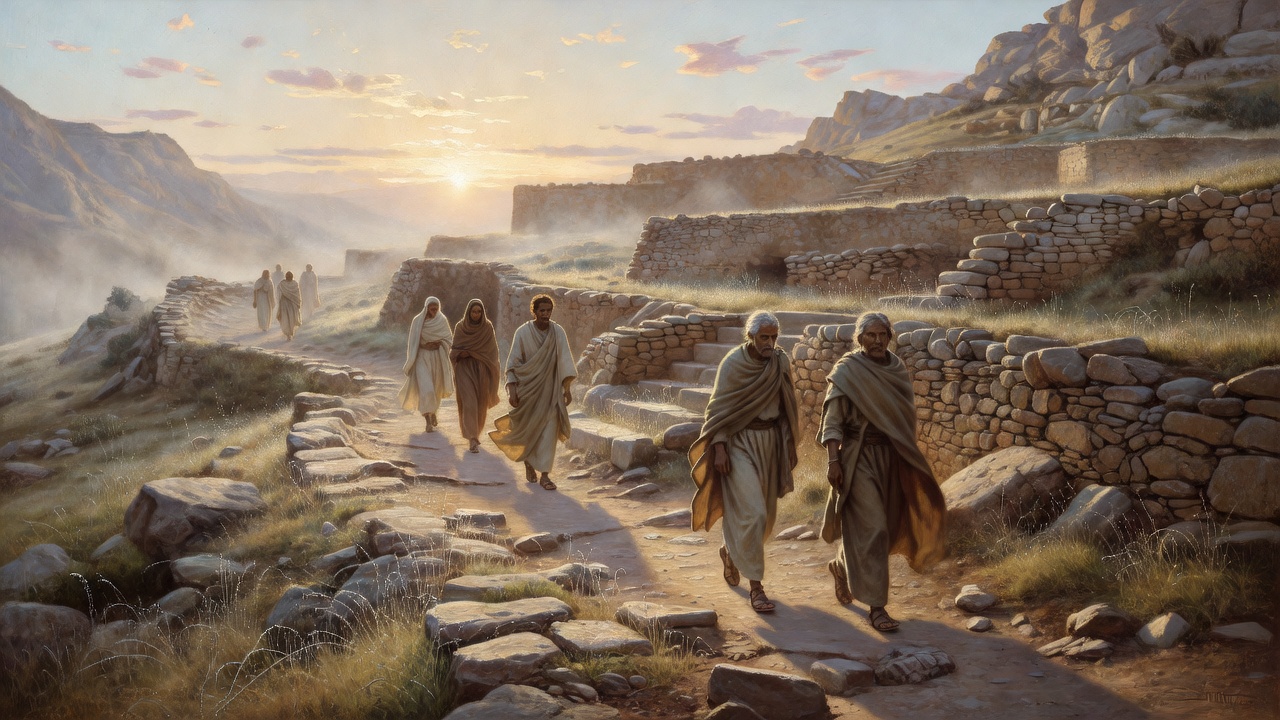
Did you know?
Fleeting Loyalty and True Devotion
- In Hosea 6:6, the prophet proclaims that God values mercy and the knowledge of God above ritual animal sacrifices and burnt offerings, emphasizing heartfelt covenant faithfulness over mere religious formalities.Sources: the Bible text itself
- The prophetic text compares the loyalty of Ephraim and Judah to morning mist and vanishing dew; Ephraim, originally named after Joseph's son for double fruitfulness, is frequently used in the book to address the northern kingdom of Israel.Sources: the Bible text itself · Ephraim
- The chapter condemns lawlessness in Gilead, a mountainous region located east of the Jordan River, and accuses corrupt bands of priests of committing violent ambushes on travelers along the road toward Shechem.Sources: the Bible text itself · Gilead
Notes written with AI assistance from open sources (Theographic Bible Metadata, CC BY-SA 4.0; Easton’s Bible Dictionary, public domain) and reviewed before publishing.
Places in this chapter
- Shechem · Today: Tell Balatah · 32.214, 35.282 · verse 9
Only places identified with high confidence are shown (90% or more according to the scholarly sources compiled by OpenBible). Period map: DARE (Digital Atlas of the Roman Empire), CC BY 4.0; modern map: © OpenStreetMap contributors; places: OpenBible.info (CC BY 4.0).
Credits and license for this translation
Louis Segond 1910
The Holy Bible in French, Louis Segond version of 1910
Public Domain
Language: français (French)
Translation by: Louis Segond
Contributor: Public Domain
The first edition of the Bible Segond was published in 1910
Cette Bible est dans le domaine public. Il n'est pas protégé par copyright.
This Bible is in the Public Domain. It is not copyrighted.
2026-10-03
Source: http://ebible.org/fraLSG/ · eBible.org