John 17
Aadi keyri: linjiila iisaa almasiihu · Tap a verse to see its cross-references.
No Iisaa duworii saabe taalibaaɓe mum
1Nde Iisaa waajinoo waajuuji ɗii ndee, tiggitii kammu, wii:
—Baabiraaɗo, wakkati oo warii, teddin Ɓiya, yalla Ɓiya oo duu ana teddine. 2Sabi a hokkii mo baawɗe dow neɗɗo fuu, yalla omo hokka ɓeen ɓe ndokku-ɗaa mo ɓee fuu nguurndam nduumiiɗam. 3Nguurndam nduumiiɗam woni ɓe annde, aan Laamɗo goongaraajo gooto oo, ɓe annda Iisaa Almasiihu mo nel-ɗaa oo. 4Mi teddinii ma e dow leydi ndii, mi yottinii golle mo ndokku-ɗaa kam mi golla oo. 5Jooni kaa, Baabiraaɗo, teddinam teddeengal ngal njoginoo-mi ɗo maa ɗoo gila aduna oo tagaaka ngal.
6Yimɓe ɓe ndokku-ɗaa kam e aduna oo ɓee, mi ɓannginanii ɗum'en innde maa. Aan jey ɓe, a hokkii kam ɓe, eɓe njokki konngol maa. 7Jooni kaa, ɓe anndii ko ndokku-ɗaa kam koo fuu to maa iwi, 8sabi mi haaltanii ɓe haalaaji ɗi kaalan-ɗaa kam ɗii, ɓe njaɓii ɗi. Ɓe keɓii taƴoral to maaɗa iwru-mi, ɓe ngoonɗinii aan neli kam. 9Miɗo ɲaagore saabe maɓɓe. Mi ɲaagortaako saabe aduna oo, miɗo ɲaagoroo saabe ɓe ndokku-ɗaa kam ɓee, sabi aan jey ɓe. 10Ɓe njey-mi fuu, aan jey, ɓe njey-ɗaa fuu, miin jey. Mi teddiniraama saabe maɓɓe. 11Kamɓe, ɓe keddoto e aduna oo, kaa miin, mi heddataako e makko. To maa njahan-mi. Aan Baabiraaɗo Ceniiɗo, reenir ɓe baawɗe maaɗa ɗe ndokku-ɗaa kam ɗee, yalla eɓe laatoo gooto hono no men nii. 12Nde ngondunoo-mi e maɓɓe ley aduna oo ndee, mi reenirii ɓe baawɗe maa ɗe ndokku-ɗaa kam ɗee, mi tiiɗii e maɓɓe. Fay gooto majjaali so wanaa yiitenke oo, yalla ko sappaa e Binndi ɗii koo ana tabita. 13Jooni kaa miɗo wara to maa. Miɗo haala ɗii haalaaji gila miɗo heddii e aduna oo tafon, yalla seyo am ana hiɓɓa e maɓɓe. 14Mi yottinii ɓe konngol maa. Aduna oo waɲii ɓe, sabi ɓe njeyaaka e makko, hono no miin duu mi jeyiraaka e makko nii. 15Mi ɲaagaaki ittaa ɓe e aduna oo, kaa miɗo ɲaage ndeenaa ɓe e Ibiliisa. 16Ɓe njeyaaka e aduna oo, hono no miin duu mi jeyiraaka e makko nii. 17Sennir ɓe goonga maa. Konngol maa woni goonga. 18Hono no nelir-ɗaa kam e oo aduna nii, miin duu non nelir-mi ɓe e makko. 19Miɗo sennira hoore am saabe maɓɓe, yalla kamɓe duu eɓe laatoo senniraaɓe goonga.
20Wanaa saabe maɓɓe tan ɲaagorto-maa-mi. Miɗo ɲaagoroo duu saabe ɓeen goonɗinirɓe kam waajuuji maɓɓe, 21yalla ɓe fuu eɓe laatoo gooto. Hono no aan Baabiraaɗo laatori-ɗaa e am, miin duu miɗo e maa nii, yalla kamɓe duu eɓe laatoo gooto e men, yalla aduna oo ana goonɗina aan neli kam. 22Mi waɗanii ɓe teddeengal ngal ngaɗan-ɗaa kam ngal, yalla eɓe laatoo gooto, hono no laatori-ɗen gooto nii. 23Miin miɗo e maɓɓe, aan aɗa e am, yalla ngootummaaku maɓɓe ana hiɓɓa, yalla aduna oo ana annda aan neli kam, mo annda duu aɗa yiɗi ɓe hono no njiɗir-ɗaa kam nii. 24Baabiraaɗo, miɗo yiɗi ɓe ndokku-ɗaa kam ɓee ngonda e am nokku fuu ɗo tawaa-mi, yalla eɓe njiya teddeengal ngal ngaɗan-ɗaa kam ngal sabi a yiɗii kam gila aduna oo diidaaka.
25Baabiraaɗo pooccitiiɗo, aduna oo anndaa ma, kaa miin noo miɗo anndu maa, ɓee ɗoo ana anndi aan neli kam. 26Mi anndinii ɓe ko ngon-ɗaa, mi ɓeydan anndinde ɓe, yalla jilli njiɗ-ɗaa kam ɗii ana tawee e maɓɓe, miin duu mi tawee e maɓɓe.
Did you know?
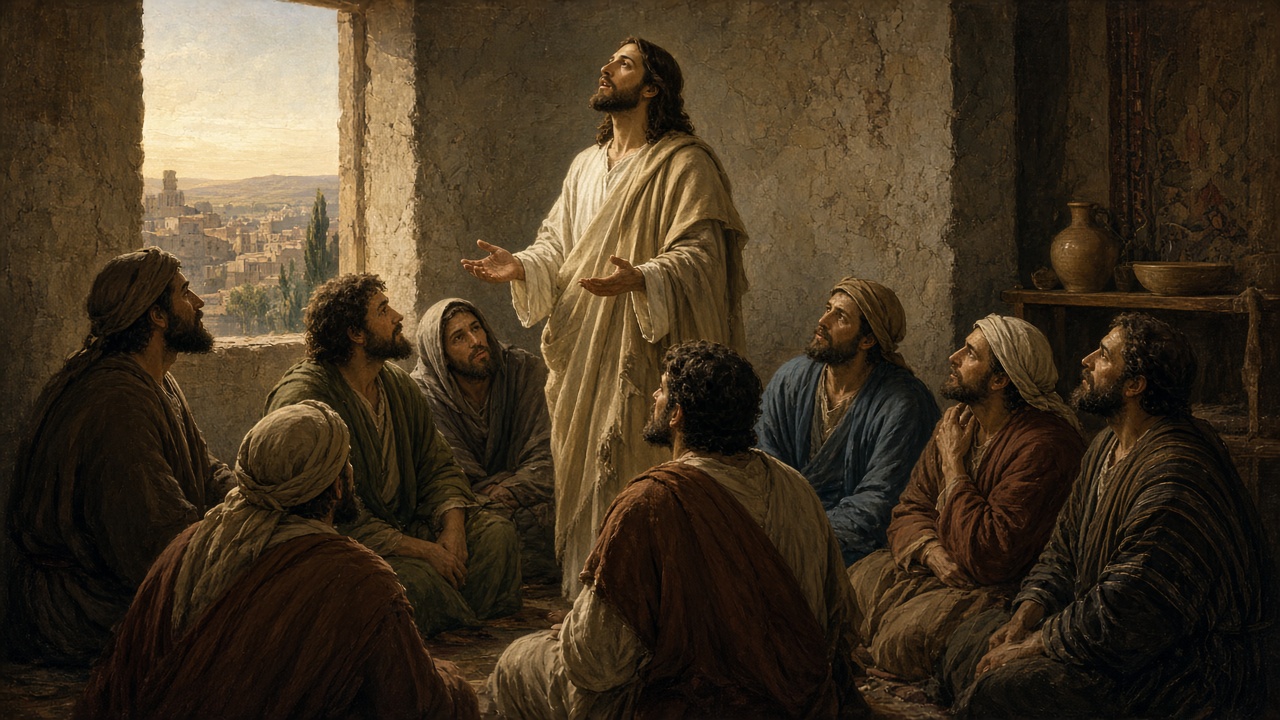
John 17: the hour has come
- The prayer opens when Jesus, having spoken these things, lifts his eyes to heaven and says that the hour has come. It is associated with the Upper Room Discourse, listed as lasting one day, and with Holy Week, listed as lasting eight days.Sources: the Bible text itself · Upper Room Discourse · Holy Week
- Here eternal life is knowing the only true God and Jesus Christ, whom the Father sent. Jesus also speaks of the glory he had with the Father before the world existed, and of the Father's love for him before the foundation of the world.Sources: the Bible text itself
- He prays for those the Father gave him out of the world, who have kept the word, and also for people who will believe through their message, asking that they may be one. He does not ask that they be taken out of the world, but that they be kept from the evil one and sanctified by the truth, which he identifies as the Father's word.Sources: the Bible text itself
Notes written with AI assistance from open sources (Theographic Bible Metadata, CC BY-SA 4.0; Easton’s Bible Dictionary, public domain) and reviewed before publishing.
Credits and license for this translation
Aadi keyri: linjiila iisaa almasiihu
New Testament in Fulfulde, Maasina
copyright © 2005 Wycliffe Bible Translators, Inc.
Language: Maasina Fulfulde (Fulfulde, Maasina)
Translation by: Wycliffe Bible Translators
Contributor: Wycliffe Bible Translators, Inc.
Copyright Information
© 2005,Wycliffe Bible Translators, Inc. All rights reserved.
This translation text is made available to you under the terms of the Creative Commons
License: Attribution-Noncommercial-No Derivative Works. ( http://creativecommons.org/licenses/by-nc-nd/3.0/ ) In addition, you have permission to
port the text to different file formats, as long as you do not change any of the text or
punctuation of the Bible.
You may share, copy, distribute, transmit, and extract portions or quotations from this work,
provided that you include the above copyright information:
You must give Attribution to the work.
You do not sell this work for a profit.
You do not make any derivative works that change any of the actual words or punctuation of
the Scriptures.
Permissions beyond the scope of this license may be available if you contact us with your
request.
The New Testament
in Fulfulde, Maasina
© 2005, Wycliffe Bible Translators, Inc. All rights
reserved.
This translation is made available to you under the terms of the
Creative Commons Attribution-Noncommercial-No Derivatives license 4.0.
You may share and redistribute this Bible translation or extracts from it in any format, provided that:
You include the above copyright and source information.
You do not sell this work for a profit.
You do not change any of the words or punctuation of the Scriptures.
Pictures included with Scriptures and other documents on this site are licensed just for use with those Scriptures and documents.
For other uses, please contact the respective copyright owners.
2015-03-17
Source: http://ebible.org/ffm/ · eBible.org