John 12
Aadi keyri: linjiila iisaa almasiihu · Tap a verse to see its cross-references.
No Mariyama wujiri koyɗe Iisaa nebam
1Balɗe jeegom fade iidi Paska yottaade, Iisaa yehi Baytaniya ɗo Laajaru mo o wuurtinnoo oo jeyaa ɗoo. 2Ɗon ɓe ndefani mo ɲaamdu. Marta feccani ɓe, Laajaru yo gooto e ɲaamdooɓe e Iisaa ɓee. 3Nden Mariyama ɓami feccitere liituru nebam laaɓuɗam, uuroojam, tiiɗuɗam coggu, wuji ɗam e koyɗe Iisaa, socciri ɗe sukundu mum. Suudu nduu fuu ukkiti. 4Gooto e taalibaaɓe Iisaa ɓee, ɗum woni Yahuuda Isikariyota jammbotooɗo mo oo, wii:
5—Ko saabii so ɗam nebam soottaaka buuɗi teemeɗe tati cardi, hokkee misikiina'en?
6Walaa ko o wiiri non so wanaa o gujjo, wanaa yurmeende misikiina'en. Kanko woni kawjotooɗo jawdi maɓɓe, omo woowi wujjitidde hen. 7Iisaa wii:
—Celee e debbo oo. O resirii ɗam ɲannde iretee-mi. 8Sabi misikiina'en ana tawdee e mon ɲannde fuu. Kaa miin, mi tawdataake e mon ɲannde fuu.
No hooreeɓe yottinooɓe sadaka anniyorii warde Laajaru
9Yahuudiyankooɓe heewɓe anndi Iisaa ana Baytaniya, njehi ton. Wanaa saabe Iisaa tan waddi ɓe, yalla eɓe njiya Laajaru guurtinaaɗo oo duu. 10Non hooreeɓe yottinooɓe sadaka ndawridi mbaran Laajaru duu, 11sabi Yahuudiyankooɓe heewɓe ana njoppa ɓe ngoonɗinoya Iisaa saabe Laajaru.
No Iisaa naatiri Urusaliima
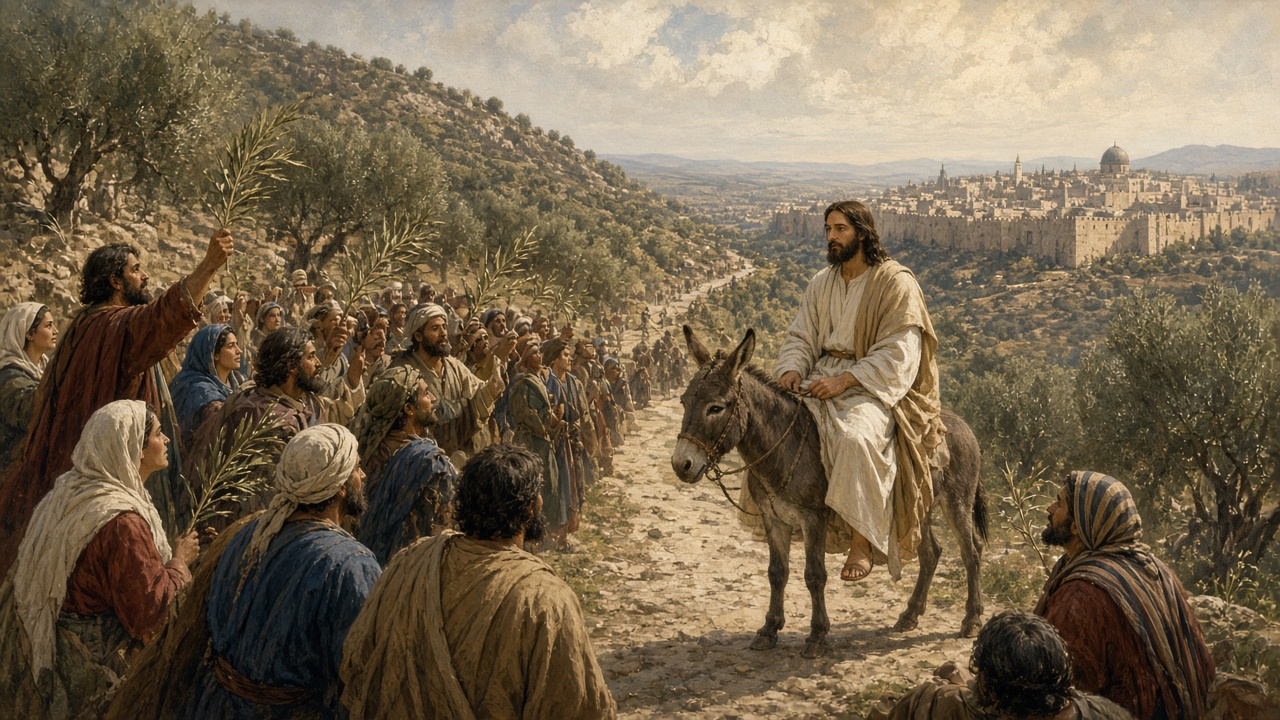
12Janngo mum, jamaa keewɗo garɗo hawrude e iidi oo nani Iisaa garoowo Urusaliima. 13Ɓe ɓami caɓe tamarooje, ɓe cakkitoyii mo. Eɓe kuljina, eɓe mbiya:
—Jettooje e barke ngoodanii gardoowo e dow innde Joomiraaɗo oo! Jettooje ngoodanii mo, kanko kaananke Israa'iila!
14Iisaa heɓi mola ndakiiwa, waɗɗii, hono no Binndi ɗii mbiiri ɗum nii:
15«Yimɓe ngalluure Siyona, pati kulee!
Ƴeew, kaananke mon ana wara,
ana waɗɗii mola ndakiiwa.»
16Nden taalibaaɓe makko ɓee paamaalino ko ɗum woni. Kaa caggal Iisaa teddinaama, ɓe miccitii ko mo sappananoo koo ɓe ngaɗi mo. 17Jamaa tawdanooɗo e makko nde o wuurtinnoo Laajaru, o noddi ɗum iwde e yanaande ndee, kaɲum'en duu ana ceettii. 18Ɗum waɗi so yimɓe heewɓe njehi cakkitoyii mo sabi ɓe nanii o waɗii ndee haaynde. 19Non Farisa'en mbiyondiri:
—On njii, walaa fuu ko mbaawan-ɗen mo, aduna oo fuu annii jokki e makko.
20Won Yunaninkooɓe tawaaɓe hakkunde warɓe Urusaliima faa ndewa ley ɲalaaɗe iidi ɗee. 21Ɓe ɓattitii Filipa jeyaaɗo Baytisayda ley leydi Galili, ɓe mbii ɗum:
—Moobbo, miɗen njiɗi yiide Iisaa.
22Filipa yehi haalanoyi Andire. Ɓe njottinoyi haala kaa Iisaa. 23Iisaa jaabii ɓe:
—Wakkati mo Laamɗo hollata teddeengal Ɓii Neɗɗo oo yottike. 24Miɗo haalana on goonga: so wabbere alkama yooraali aawaama e leydi, heddoto yo wabbere wootere. Kaa so nde yoorii nde aawaa fuu, nde riman faa heewa. 25Neɗɗo fuu jiɗɗo yonki mum, mursan ki, kaa jeebiiɗo yonki mum e aduna oo, damman ki, heɓan nguurndam nduumiiɗam. 26So won muuyɗo gollande kam, yo jokku e am. Ɗo ngon-mi fuu, ɗoo golloowo am duu wonata. Baabiraaɗo teddinan gollanoowo kam.
No Iisaa sapporii maayde mum
27—Jooni mi wemmbaama. Koɗum mbiyan-mi? Mi wiya Abba hisinam e oo wakkati naa? Mi waawaa wiide ɗum sabi kammari wakkati oo ngardu-mi. 28Abba, teddin innde maa.
Daande nanaa iwrude dow kammu:
—Mi teddinii nde, mi teddinan nde kasen.
29Nde yimɓe darinooɓe ton ɓee nanunoo nden daande ndee, mbii ɗum riggaango kammu. Woɓɓe mbii:
—Malaa'ika haaldi e makko!
30Iisaa wii ɓe:
—Wanaa saabe am daande ndee wardi, saabe mooɗon. 31Jooni woni sariya aduna oo. Jooni kaananke oo ɗoo aduna tippete sella. 32Miin, so mi toownaama iwde e leydi ndii, mi fooɗan yimɓe fuu warde e am.
33Tawi ɗii haalaaji o sapporii no mo maayrata nii. 34Yimɓe ɓee njaabii mo:
—Sariya oo anndinii min Almasiihu yo duumotooɗo. Hono aan mbiirataa kinaa Ɓii Neɗɗo oo toownee? Homo woni oo Ɓii Neɗɗo?
35Iisaa jaabii ɓe:
—Fooyre ana wondi e mon wakkati seeɗa tafon. Njahon gila fooyre ana heddii e mon, pati nimre hippoo on. Jahoowo ley nimre anndaa ɗo yahata. 36Ngoonɗinee fooyre gila ende e mon yalla oɗon laatoo yimɓe fooyre.
No yimɓe calorii goonɗinde Iisaa
Iisaa haalu ɗum tan, yehi suuɗoyii ɓe. 37Kaayɗe ɗe o waɗi yeeso maɓɓe ɗee fuu, waɗaali so ɓe ngoonɗini mo, 38yalla haala annabi Esaaya kaa ana tabita:
«Joomiraaɗo, homo goonɗini waaju amen oo?
Homo ɓannginanaa baawɗe Joomiraaɗo?»
39Ɓe mbaawaano goonɗinde, sabi Esaaya wii kasen:
40«O wumnii gite maɓɓe,
o helii hakkillaaji maɓɓe,
pati gite maɓɓe njiya,
pati hakkillaaji maɓɓe paama
sako ɓe tuuba, so mi sellina ɓe.»
41Ɗum Esaaya wii nde yiinoo teddeengal Iisaa, so haali haala makko ndee.
42Kaa ɗum fuu e taweede, hooreeɓe Yahuudiyankooɓe heewɓe ngoonɗinii Iisaa. Kaa saabe Farisa'en, ɓe kulii yaadirde pati ɓe njaltinee waajordu. 43Ɗum woni teddineede yimɓe ɓurani ɓe teddineede Laamɗo.
44Iisaa haali faa toowi, wii:
—Goonɗinɗo kam, wanaa miin tan o goonɗini, nelɗo kam oo duu o goonɗinii ɗum. 45Neɗɗo fuu jiiɗo kam, yii nelɗo kam oo. 46Miin, mi warii mi fooyre aduna oo, faa goonɗinɗo kam fuu pati heddoo ley nimre. 47So won nanɗo waaju am jokkaali ɗum, miin, mi sarataa ɗum. Sabi mi wardaali sarde aduna oo, faa mi hisina mo ngardu-mi. 48Oon calaniiɗo kam, so jaɓaali waajuuji am, ana jogii caroowo. Konngol ngol kaal-mi ngol sarata ɗum ɲalaande sakitotoonde. 49Sabi miin, mi haaldaali hiini hoore am. Baabiraaɗo nelɗo kam oo hokki kam yamiroore ko kaalan-mi e ko mbaajotoo-mi. 50Miin, miɗo anndi yamiroore makko, kaɲum woni nguurndam nduumiiɗam. Ko kaal-mi koo, no Baabiraaɗo haalaniri kam nii kaaltir-mi.
Did you know?
The Anointing at Bethany and the Entry into Jerusalem
- Bethany, where Jesus arrived six days before the Passover, lay about two miles east of Jerusalem on the southeastern slope of the Mount of Olives, along the road to Jericho, and took its name from the palm trees that grew there. It was the home of Lazarus, whom Jesus had raised from the dead after four days in the tomb, and of his sisters Martha and Mary; the chief priests planned to kill Lazarus as well, because on his account many people were believing in Jesus.Sources: the Bible text itself · Bethany · Lazarus
- At a dinner where Martha served and Lazarus reclined at the table, Mary anointed Jesus' feet with about a pint of expensive perfume made of pure nard and wiped them with her hair, so the house was filled with the fragrance. Judas Iscariot, son of Simon, whose surname means a man of Kerioth, asked why it was not sold for three hundred denarii for the poor; he was a thief who, as keeper of the money bag, used to take from what was put into it, and he was going to betray Jesus.Sources: the Bible text itself · Judas Iscariot · Simon
- The next day the great crowd that had come for the feast took palm branches and went out to meet Jesus as he came to Jerusalem, seated on a young donkey, shouting praise to the King of Israel, as it is written of the Daughter of Zion. Zion was the southeastern hill of Jerusalem, where David built a citadel and a palace after taking it, so that it became the city of David. At first his disciples did not understand these things, but after Jesus was glorified they remembered that they had also been written about him.Sources: the Bible text itself · Zion
Notes written with AI assistance from open sources (Theographic Bible Metadata, CC BY-SA 4.0; Easton’s Bible Dictionary, public domain) and reviewed before publishing.
Places in this chapter
- Jerusalem · 31.777, 35.234 · verses 11, 12, 20
- Zion · Today: Jerusalem · 31.777, 35.234 · verse 15
- Galilee · 32.760, 35.527 · verse 21
Only places identified with high confidence are shown (90% or more according to the scholarly sources compiled by OpenBible). Period map: DARE (Digital Atlas of the Roman Empire), CC BY 4.0; modern map: © OpenStreetMap contributors; places: OpenBible.info (CC BY 4.0).
Credits and license for this translation
Aadi keyri: linjiila iisaa almasiihu
New Testament in Fulfulde, Maasina
copyright © 2005 Wycliffe Bible Translators, Inc.
Language: Maasina Fulfulde (Fulfulde, Maasina)
Translation by: Wycliffe Bible Translators
Contributor: Wycliffe Bible Translators, Inc.
Copyright Information
© 2005,Wycliffe Bible Translators, Inc. All rights reserved.
This translation text is made available to you under the terms of the Creative Commons
License: Attribution-Noncommercial-No Derivative Works. ( http://creativecommons.org/licenses/by-nc-nd/3.0/ ) In addition, you have permission to
port the text to different file formats, as long as you do not change any of the text or
punctuation of the Bible.
You may share, copy, distribute, transmit, and extract portions or quotations from this work,
provided that you include the above copyright information:
You must give Attribution to the work.
You do not sell this work for a profit.
You do not make any derivative works that change any of the actual words or punctuation of
the Scriptures.
Permissions beyond the scope of this license may be available if you contact us with your
request.
The New Testament
in Fulfulde, Maasina
© 2005, Wycliffe Bible Translators, Inc. All rights
reserved.
This translation is made available to you under the terms of the
Creative Commons Attribution-Noncommercial-No Derivatives license 4.0.
You may share and redistribute this Bible translation or extracts from it in any format, provided that:
You include the above copyright and source information.
You do not sell this work for a profit.
You do not change any of the words or punctuation of the Scriptures.
Pictures included with Scriptures and other documents on this site are licensed just for use with those Scriptures and documents.
For other uses, please contact the respective copyright owners.
2015-03-17
Source: http://ebible.org/ffm/ · eBible.org