Matthew 3
Farongoe Lea Ana Fataleka · Tap a verse to see its cross-references.
Sa Jon saea wane ki kera // kai sasi akau fuana // daolae to'ona na Christ
1Ma bara fangali burina, kada sa Jesus nia baita na, sa Jon wane ni Siuabu ka dao mai, ka safalia na famanatalae laona lofaa 'eke'eke 'i Jiudea, ka fata 'uri, 2“Mulu kari abulo fasia ta'alae kamulu ki, sulia kada ne God kai gwaungai ana wane nia ki 'e karangi dao na.”
3Sa Jon, na wane be profet Aesaea nia fata mai sulia, ma ka 'uri,
“Te wane nia akwa laona lofaa 'eke'eke,
Ma nia ka 'uri, ‘Na 'Aofia kai dao mai!
Mulu fasaga na taale fuana!’”
4Sa Jon rufia na maku ana ifuna kamel, ma ka bitia na fosae nia salafana ana na 'ungana buluka. Ma fanga nia ne siko ki ma ngingidue kwasi 5Ma na wane 'oro kera leka mai siana fasia 'i Jerusalem, ma na fere ki tafau laona lofaa 'i Jiudea, ma fasia fere ki tafau karangia kafo 'i Jodan. 6Ma kera ka fulangainia ta'alae kera ki, ma nia ka siuabuda laona kafo 'i Jodan.
7Ma kada sa Jon nia ada to'ona wane 'oro ana Farasi ki ma Sadusi ki ne kera leka laugo mai siana fua sae nia ka siuabuda, nia ka fata 'uri fuada, “Mulu dia go amulu kaela baeko tolo ki! Nau nao si saea lau fua mulu ne na siuabue kai fatafi kamulu fasia na kwaekwaee God, sui boroi 'ana mulu nao si kari abulo. 8Mulu sasia lalau ru ki ne fatainia kamulu kari abulo na fasia abulo ta'alae kamulu ki. 9Ma nao mulu si manata 'uri laona liomulu, ‘Kalu wane ne futa na mai ana kwalafa sa Abraham ne. 'Afitai ta kwaekwaee fasia God ka dao to'omalu.’ Ma nau ku sae 'o'olo fua mulu, nia ngwaluda ga 'ana fua God ka ngalia tani gwa fau ana fau ne ki, ma ka saungainia ana kwalafa sa Abraham! 10Ana kada ne, God sasi akau na ana kwaekwaee, dia ta wane be nia dau ana irome, ka sasi akau fua tofulana 'ai ki. Ma 'ai ki tafau ne nao si fungu ana fue 'ai lea ki, nia kai tofuda ma ka 'ui 'anida laona ere.
11“Nau ku siuabu kamulu ana kafo fua ka fatainia ne mulu kari abulo na fasia abulo ta'alae kamulu ki. Boroi ma te wane ne kai leka mai buriku, nia kai siuabu kamulu ana na Anoeru Abu ma na ere. Ma nia talingai ka liufi nau. Nao nau si lea ka bobola fuana ngalilana tae butu nia ki. 12Ma nia sasi akau na fuana ketolana wane ki tafau, ka dia ta wane be nia efoa na mege ru lea ki fasia na tataeru ki. Ma nia ka konia na mege ru lea ki laona na lume ni konirue. Ma nia ka sungia na tataeru ki laona ere ne saru si mae.”
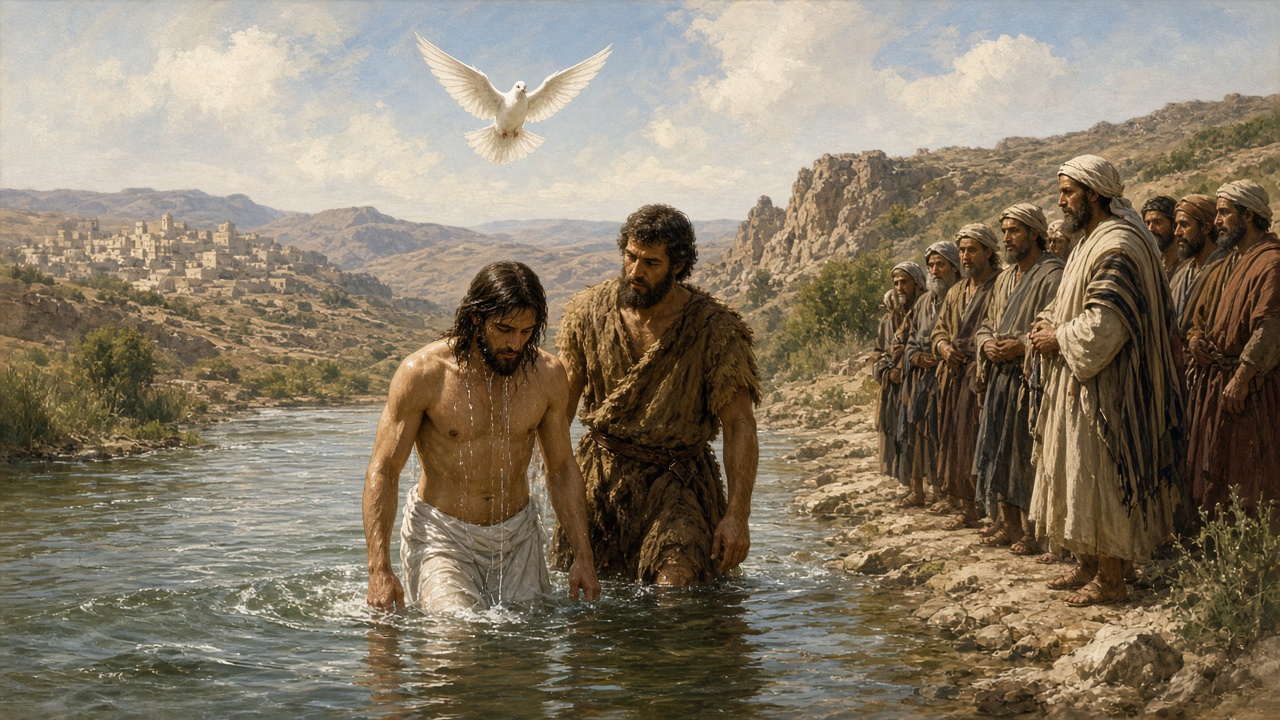
Na siuabulae sa Jesus
13Ana kada nai, sa Jesus 'e leka mai fasia lofaa 'i Galili 'uria kafo 'i Jodan siana sa Jon fua sa Jon ka siuabua. 14Boroi ma sa Jon ka sasi 'uria na talalana na manatana sa Jesus, ka 'uri, “Nia bobola fainia 'oe ne kai siuabu nau, ma 'oe leka lalau mai siaku fua nau kai siuabu 'oe.”
15Ma sa Jesus ka olisia ka fata 'uri, “Sui boroi 'ana ka 'urinai, 'oe sasia na mai 'amu ru ne fuaku, sulia sasilana na ru ne, koro sasia ru ki tafau ne God nia doria.” Ma sa Jon ka ala na fafia.
16Ma kada sa Jesus nia siuabu suina, nia ka tatae mai fasia kafo. Ma na lofana salo ka 'ifi fuana, ma nia ka ada to'ona na Anoeru Abu God 'e koso mai dia ta bole, ma ka to 'i fafona. 17Ma te lingeru nia talo mai fasia 'i langi ma ka 'uri, “Nia na ne wele mutai nau ne nau ku kwaimani 'asiana ana, ma nau ku eele 'asiana fainia.”
Did you know?
Repentance and Baptism at the Jordan
- Matthew identifies John the Baptist as the one spoken of through the prophet Isaiah: a voice calling in the wilderness, “Prepare the way for the Lord.” Easton's Bible Dictionary (1897) records that John’s mission was the subject of prophecy, citing this passage, Isaiah 40:3, and Malachi 3:1, and that he was of priestly descent—his father Zacharias a priest of the course of Abia, and his mother Elisabeth of the daughters of Aaron. A chronology dates both the beginning of John’s ministry and his baptism of Jesus to AD 26.Sources: the Bible text itself · John the Baptist · John the Baptist Begins Ministry · John Baptizes Jesus
- John came preaching in the wilderness of Judea, and people went out to him from Jerusalem, all Judea, and the whole region around the Jordan, confessing their sins and being baptized in the Jordan River. Easton's Bible Dictionary (1897) notes that under the Romans, in the time of Christ, Judea denoted the southernmost of the three divisions of Palestine, as distinguished from Galilee and Samaria, and included the territories of Judah, Benjamin, Dan, Simeon, and part of Ephraim. Jesus came from Galilee—called Galil by the Jews—to the Jordan to be baptized by John.Sources: the Bible text itself · Judea · Galilee
- John warned the Pharisees and Sadducees not to rely on the claim, “We have Abraham as our father,” saying that God could raise up children for Abraham from the stones. Easton's Bible Dictionary (1897) explains the name Abraham as “father of a multitude” and describes him as the son of Terah, named before his older brothers because he was the heir of the promises.Sources: the Bible text itself · Abraham
Notes written with AI assistance from open sources (Theographic Bible Metadata, CC BY-SA 4.0; Easton’s Bible Dictionary, public domain) and reviewed before publishing.
Places in this chapter
- Judea · Today: Judea 1 · 31.777, 35.234 · verses 1, 5
- Jerusalem · 31.777, 35.234 · verse 5
- Jordan · Today: Jordan River · 31.761, 35.558 · verses 5, 6, 13
- Galilee · 32.760, 35.527 · verse 13
Only places identified with high confidence are shown (90% or more according to the scholarly sources compiled by OpenBible). Period map: DARE (Digital Atlas of the Roman Empire), CC BY 4.0; modern map: © OpenStreetMap contributors; places: OpenBible.info (CC BY 4.0).
Credits and license for this translation
Farongoe Lea Ana Fataleka
The New Testament in the Fataleka language of the Solomon Islands
Niu Testament long langguis Fataleka
copyright © 2017 Wycliffe Bible Translators, Inc.
Language: Fataleka
Translation by: SITAG
This translation is made available to you under the terms of the
Creative Commons Attribution-No Derivatives license 4.0.
You may share and redistribute this Bible translation or extracts from it in any format, provided that:
You include the above copyright and source information.
You do not make any derivative works that change any of the actual words or punctuation of the Scriptures.
Pictures included with Scriptures and other documents on this site are licensed just for use with those Scriptures and documents.
For other uses, please contact the respective copyright owners.
2017-11-13
Source: http://ebible.org/far/ · eBible.org