Zephaniah 1
Biblica® Se aɖeke mebla Biblia zazã o Agbenya La™ · Tap a verse to see its cross-references.
About this book
About Zephaniah
- Easton's Bible Dictionary (1897) presents Zephaniah, whose name it explains as "Jehovah has concealed" or "Jehovah of darkness," as the son of Cushi and great-grandson of Hezekiah, and as the ninth of the minor prophets. It dates his prophecy to the reign of Josiah, king of Judah (641–610 B.C.), and says he was contemporary with Jeremiah, with whom he had much in common.Sources: Easton: Zephaniah · Zephaniah · Cushi
- Amon, Josiah's father, restored idolatry in Judah, and Easton reads Zephaniah 1:4 and 3:4, 11 as referring to that reign. The same dictionary links Zephaniah 1:4–6 with the worship of Baal and Zephaniah 1:5 with Malcham, described as the national idol of the Ammonites. Josiah, who came to the throne at eight, is presented as later acting against the idolatry that prevailed.Sources: Amon · Josiah · Baal · Malcham
- Easton's Bible Dictionary outlines the book as an introduction announcing judgment on the world and on Israel because of their transgressions (1:1–6), a description of the judgment (1:7–18), an exhortation to seek God while there is still time (2:1–3), judgment on other peoples (2:4–15), what it calls the hopeless misery of Jerusalem (3:1–7), and a promise of salvation (3:8–20).Sources: Easton: Zephaniah
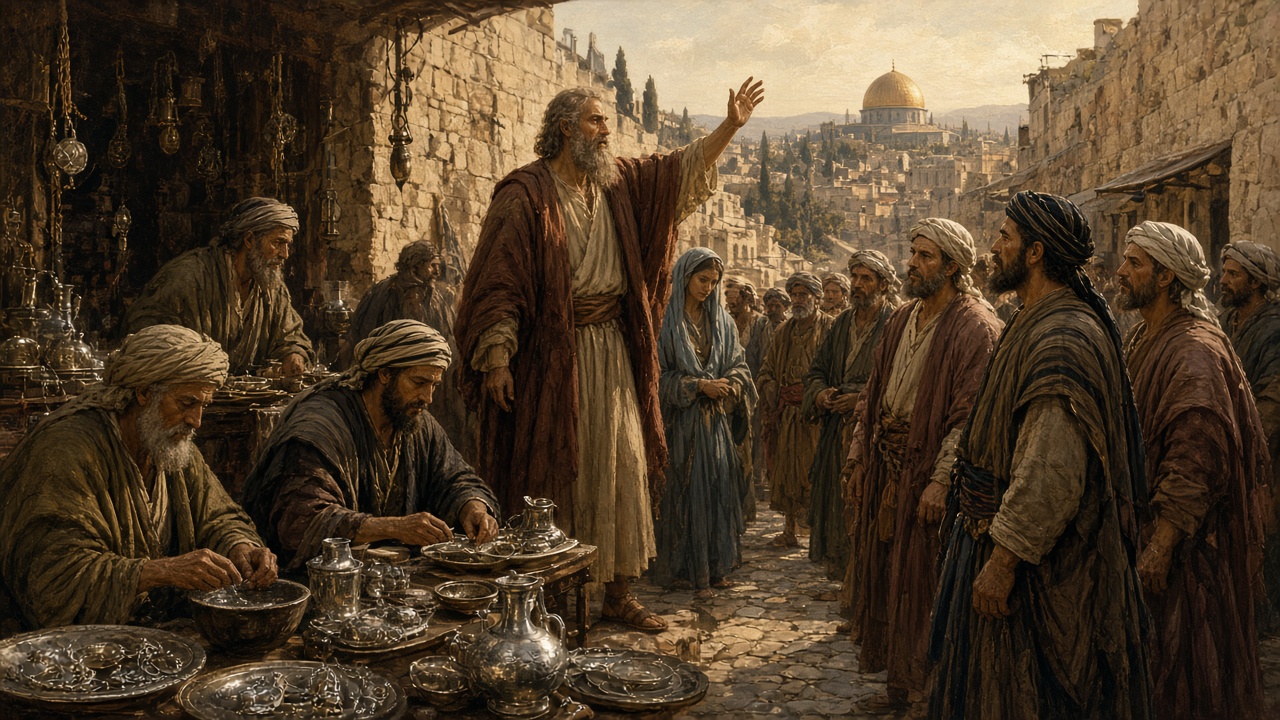
- Zephaniah 1:11 names the Mortar, a place in or near Jerusalem inhabited by silver merchants. It has been conjectured that this was the Phoenician quarter of the city, where traders of that nation lived.Sources: Mortar
Notes written with AI assistance from open sources (Theographic Bible Metadata, CC BY-SA 4.0; Easton’s Bible Dictionary, public domain) and reviewed before publishing.
1Esiae nye Yehowa ƒe nya si va na Zefania, Kusi ƒe vi. Kusi fofoe nye Hezekia, Hezekia fofoe nye Amaria, eye Amaria fofoe nye Gedalia. Gbedeasi la va le Yuda fia Yosia, Amon ƒe vi ŋɔli.
Nuxɔxlɔ̃ amewo tso tsɔtsrɔ̃ si gbɔna la ŋuti
2“Makplɔ nu sia nu si
le miaƒe anyigba dzi la ɖa ƒioƒioƒio.”
Yehowae gblɔe.
3“Matsrɔ̃ amewo kple lãwo siaa;
Matsrɔ̃ dziƒoxeviwo
kple lã siwo le atsiaƒu me la hã
kple nu vɔ̃ɖi wɔlawo.”
“Ne metsrɔ̃ amegbetɔwo katã
le anyigba dzi,”
Yehowae gblɔe.
Nugbeɖoɖo ɖe Yuda ŋu
4“Mado nye asi ɖe Yuda
kple ame siwo katã le Yerusalem la gbɔ.
Maɖe nu siwo katã susɔ na Baal la ɖa le teƒe sia;
maɖe trɔ̃nuawo kple nunɔla
siwo gasubɔa trɔ̃ hã ƒe ŋkɔwo ɖa,
5ame siwo dea ta agu le xɔwo tame hesubɔa dziƒoŋunuwo,
hekpe ɖe ame siwo dea ta agu na Yehowa,
gake wogakaa atam na Molek,
6kple ame siwo trɔ le Yehowa yome,
eye womedinɛ alo biaa eta sena o la siaa ŋu.”
7Mizi ɖoɖoe le Aƒetɔ Yehowa ŋkume,
elabena Yehowa ƒe ŋkeke la tu aƒe.
Yehowa dzra vɔsa ɖo, eye wòkɔ ame
siwo wòkpe la hã ŋuti.
8“Le Yehowa ƒe vɔsagbea la,
mahe to na Yuda ƒe dumegãwo kple fiaviŋutsuwo,
kpakple ame siwo ta dutatɔwo ƒe avɔwo.
9Le ŋkeke ma dzi la,
mahe to na ame siwo katã tia kpo flɔa kpui
siwo le trɔ̃xɔwo nu, eye woyɔa woƒe trɔ̃xɔwo me
kple ŋutasesẽ kple beble.”
10Yehowa be:
“Le ŋkeke ma dzi la,
avifafa aɖi tso Tɔmelãgbo la nu,
asiƒunu aɖi tso dua ƒe akpa evelia,
eye howɔwɔ gã aɖe aɖi tso togbɛwo dzi.
11Mifa avi, mi ame siwo le asiɖoƒe ƒe nutowo me,
miaƒe asitsalawo katã atsrɔ̃,
eye ame siwo katã dzraa klosalonuwo la hã atsrɔ̃.
12Le ɣe ma ɣi me la,
masi akaɖi adi ɖekematsɔlemetɔwo
le Yerusalem ahe to na wo,
ame siwo le abe wain ƒe aƒe ene,
eye wogblɔ le woƒe dzi me be,
‘Yehowa mawɔ naneke mí,
eɖanye nyui alo vɔ̃ o.’
13Woava ha woƒe kesinɔnu gbogboawo adzoe,
woagbã woƒe aƒewo,
woatso aƒewo, ke womanɔ wo me o,
woade waingblewo, ke womano wain tso wo me o.”
Yehowa ƒe ŋkeke gã la
14Yehowa ƒe ŋkeke ma tu aƒe vɔ,
egbɔna kpuie.
Miɖo to,
le Yehowa ƒe ŋkeke ma dzi la,
woado ɣli kple vevesese,
aʋawɔlawo ƒe ɣlidodo ade dzi le afi ma.
15Anye ŋkeke si dzi woatrɔ Mawu ƒe dɔmedzoe akɔ ɖe anyi;
anye hiãgbe kple xaxagbe,
anye dzɔgbevɔ̃e kple tsɔtsrɔ̃gbe.
Ŋkeke sia anye blukɔ kple vivitidogbe,
afu kple tsizidogbe,
16Anye aʋakpẽkugbe kple aʋaɣlidogbe,
ɖe du siwo woɖo gli sesẽwo ƒo xlãe
kple gbetakpɔxɔ siwo le dzogoe dzi ŋu.
17“Mahe xaxa va ameawo dzi,
eye woazɔ abe ŋkugbagbãtɔwo ene,
elabena woda vo ɖe Yehowa ŋu.
Woƒe ʋu akɔ ɖi abe ʋuʋudedi ene,
eye woƒe dɔmenuwo akaka abe gbeɖuɖɔ ene.
18Le Yehowa ƒe dɔmedzoeŋkeke sia dzi la,
woƒe klosalo alo sika
mate ŋu aɖe wo o.”
Yehowa ƒe ŋuʋaʋã ƒe dzo
afia xexea me katã,
elabena atsrɔ̃ ame siwo katã
le anyigba dzi la kpata.
Did you know?
The Day of the LORD and Judgment on Idolatry
- Zephaniah traces his lineage back four generations to Hezekiah, dating his prophetic ministry to the reign of King Josiah of Judah. Josiah came to power after his father, King Amon, had restored idolatry across Judah before being assassinated by his own servants.Sources: the Bible text itself · Josiah · Amon · Hizkiah
- The chapter denounces religious syncretism in Jerusalem, where people bowed on rooftops to the host of heaven and combined their devotion to the LORD with oaths to Baal and Malcham, the national idol of the Ammonites.Sources: the Bible text itself · Baal · Malcham
- The prophecy specifies landmarks in Jerusalem that would experience turmoil, including the Fish Gate and the Mortar (or Hollow), a district inhabited by merchants who weighed out silver.Sources: the Bible text itself · Fish Gate · Mortar
Notes written with AI assistance from open sources (Theographic Bible Metadata, CC BY-SA 4.0; Easton’s Bible Dictionary, public domain) and reviewed before publishing.
Places in this chapter
- Jerusalem · 31.777, 35.234 · verses 4, 12
- Fish Gate · Today: in Jerusalem · 31.777, 35.234 · verse 10
- Second Quarter · Today: in Jerusalem · 31.777, 35.234 · verse 10
- Canaan · 32.767, 35.333 · verse 11
- Mortar · Today: in Jerusalem · 31.777, 35.234 · verse 11
Only places identified with high confidence are shown (90% or more according to the scholarly sources compiled by OpenBible). Period map: DARE (Digital Atlas of the Roman Empire), CC BY 4.0; modern map: © OpenStreetMap contributors; places: OpenBible.info (CC BY 4.0).
Credits and license for this translation
Biblica® Se aɖeke mebla Biblia zazã o Agbenya La™ Éwé: Biblica® Se aɖeke mebla Biblia zazã o Agbenya La™ (Bible) of Ghana copyright © 1988, 2006, 2020 Biblica, Inc. Language: eʋegbe Contributor: Biblica, Inc. Dɔwɔƒe si na wò asi ka agbalẽ sia lae nye Creative Commons Attribution-ShareAlike 4.0 International License (CC BY-SA). Ne èdi be yeakpɔ laisensi alo mɔɖegbalẽ sia la, yi ɖe http://creativecommons.org/licenses/by-sa/4.0 alo ŋlɔ agbalẽ na Creative Commons Dɔwɔƒea to adrɛsi sia dzi: Creative Commons, PO Box 1866, Mountain View, CA 94042, USA. Biblica, Inc. na wode Biblica® kple eƒe dzesidenu agbalẽ me, eye woaŋlɔ agbalẽ axɔ mɔɖeɖe tso Biblica, Inc. gbɔ hafi woawɔ Biblica® ƒe dzesidenu la ŋu dɔ. Le CC BY-SA ƒe mɔɖeɖe ƒe sewo nu la, àte ŋu azã agbalẽ sia me nyawo le dɔ bubuwo wɔwɔ me gake ele be nàde dzesi Biblica ƒe dzesidenu la abe ale si wòle ene. Ne ètrɔ asi le agbalẽ sia ŋu alo zãe le mɔ bubu nu la, ele be nàɖe Biblica® ƒe dzesidenu la ɖa. Ele be nàde dzesi tɔtrɔ siwo nèwɔ la ɖe agbalẽ la me eye nàde dzesii be: “Àte ŋu akpɔ Biblica, Inc. ƒe dɔ gbãtɔ le www.biblica.com kple open.bible femaxee.” Ele be nutɔnyenye ƒe dzeside nadze le agbalẽ la ƒe axa si tanya alo nutɔnyenye ƒe dzesi nɔna la ale: Biblica® Se aɖeke mebla Biblia zazã o Agbenya La™ Nutɔnyenye © 1988, 2006, 2020 Biblica, Inc. Biblica® Open Ewe Contemporary Scriptures™ Copyright © 1988, 2006, 2020 by Biblica, Inc. Biblica, Inc. na Dɔwɔƒe si Kpɔa Nutɔnyenye kple Adzɔdodo ƒe Nyawo dzi le Amerika la de “Biblica” kple eƒe dzesidenu agbalẽ me. Woaxɔ mɔɖeɖe na ezazã. “Biblica” is a trademark registered in the United States Patent and Trademark Office by Biblica, Inc. Used with permission. Ele be nàna míaƒe asi naka wò agbalẽ la le laisensi alo mɔɖeɖe ƒe se (CC BY-SA) sia nu. Ne èdi be yeana nyanya Biblica, Inc. tso agbalẽ sia zazã ŋu la, anyo be nàdo ta ɖe mía gbɔ le https://open.bible/contact-us. This work is made available under the Creative Commons Attribution-ShareAlike 4.0 International License (CC BY-SA). To view a copy of this license, visit http://creativecommons.org/licenses/by-sa/4.0 or send a letter to Creative Commons, PO Box 1866, Mountain View, CA 94042, USA. Biblica® is a trademark registered by Biblica, Inc., and use of the Biblica® trademark requires the written permission of Biblica, Inc. Under the terms of the CC BY-SA license, you may copy and redistribute this unmodified work as long as you keep the Biblica® trademark intact. If you modify a copy or translate this work, thereby creating a derivative work, you must remove the Biblica® trademark. On the derivative work, you must indicate what changes you have made and attribute the work as follows: “The original work by Biblica, Inc. is available for free at www.biblica.com and open.bible.” Notice of copyright must appear on the title or copyright page of the work as follows: Biblica® Se aɖeke mebla Biblia zazã o Agbenya La™ Nutɔnyenye © 1988, 2006, 2020 Biblica, Inc. Biblica® Open Ewe Contemporary Scriptures™ Copyright © 1988, 2006, 2020 by Biblica, Inc. Biblica, Inc. na Dɔwɔƒe si Kpɔa Nutɔnyenye kple Adzɔdodo ƒe Nyawo dzi le Amerika la de “Biblica” kple eƒe dzesidenu agbalẽ me. Woaxɔ mɔɖeɖe na ezazã. “Biblica” is a trademark registered in the United States Patent and Trademark Office by Biblica, Inc. Used with permission. You must also make your derivative work available under the same license (CC BY-SA). If you would like to notify Biblica, Inc. regarding your translation of this work, please contact us at https://open.bible/contact-us. This translation is made available to you under the terms of the Creative Commons Attribution Share-Alike license 4.0. You have permission to share and redistribute this Bible translation in any format and to make reasonable revisions and adaptations of this translation, provided that: You include the above copyright and source information. If you make any changes to the text, you must indicate that you did so in a way that makes it clear that the original licensor is not necessarily endorsing your changes. If you redistribute this text, you must distribute your contributions under the same license as the original. Pictures included with Scriptures and other documents on this site are licensed just for use with those Scriptures and documents. For other uses, please contact the respective copyright owners. Note that in addition to the rules above, revising and adapting God's Word involves a great responsibility to be true to God's Word. See Revelation 22:18-19. 2025-05-01
Source: http://ebible.org/ewe/ · eBible.org