Song of Songs 2
Biblica® Se aɖeke mebla Biblia zazã o Agbenya La™ · Tap a verse to see its cross-references.
Lɔlɔ̃tɔwo di wo nɔewo vevie
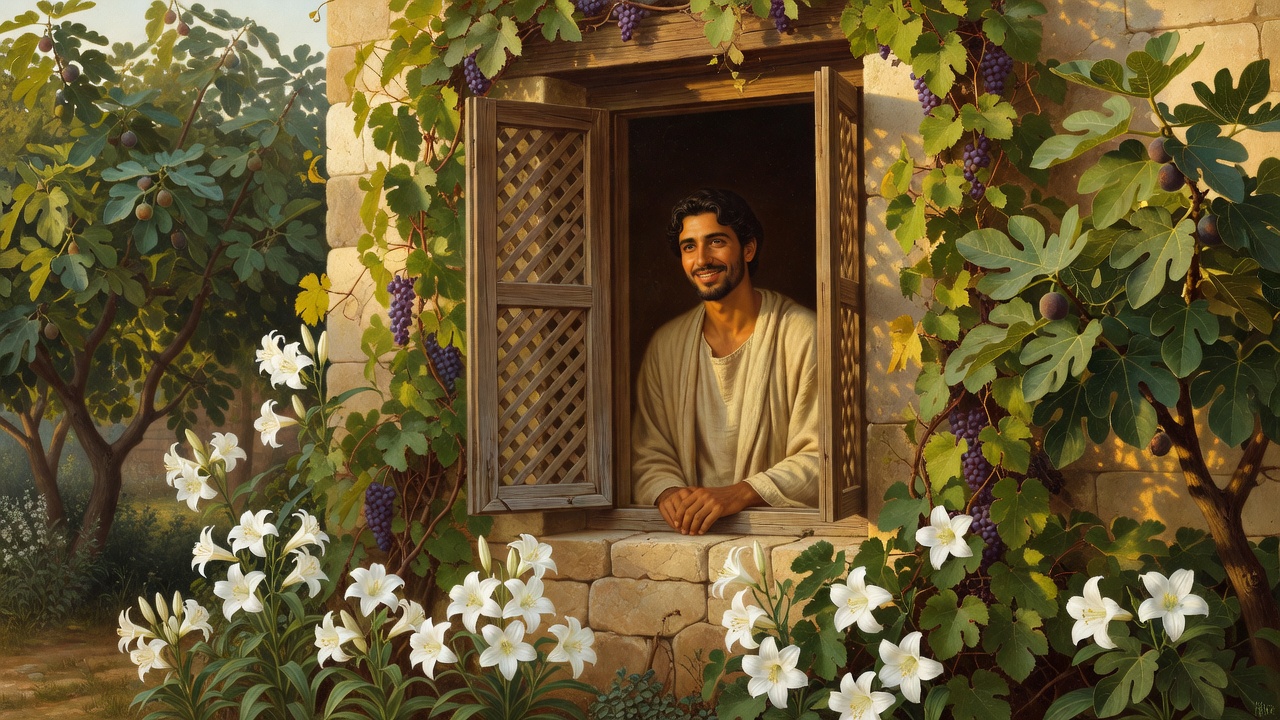
1Nyee nye Saron seƒoƒo
kple dzogbenya le balimewo.
2Abe ale si dzogbenya le ŋuwo domee ene la,
nenemae nye nye lɔlɔ̃tɔ le ɖetugbiwo dome.
3Abe ale si apluti nɔna le avemetiwo dome ene la,
nenemae nye nye lɔlɔ̃tɔ le ɖekakpuiwo dome.
Melɔ̃a anyinɔnɔ ɖe eƒe vɔvɔli te,
eye eƒe kutsetse vivia nunye ŋutɔ.
4Ekplɔm yi ɖe afi si woɖo kplɔ̃ ɖo,
eye lɔlɔ̃ nye aflaga si wòtsɔ tsyɔ dzinye.
5Etsɔ waintsetsebolo do ŋusẽm kple aplu fa dzi nam,
elabena lɔlɔ̃ na meku ƒenyi.
6Etsɔ eƒe miabɔ de nye ta te,
eye wòtsɔ eƒe ɖusibɔ kpla kɔ nam.
7Yerusalem nyɔnuviwo,
meta sãde kple zinɔ le gbe me be,
“Migaʋuʋu lɔlɔ̃ alo anyɔe o,
va se ɖe esime eya ŋutɔ lɔ̃ hafi.”
8Nye lɔlɔ̃tɔ, ɖo to afii!
Kpɔ ɖa, nye lɔlɔ̃tɔe nye ekem gbɔna,
le kpo tim flɔ towo, eye wòle kpo dzom
le togbɛwo tame.
9Nye lɔlɔ̃tɔ le abe sãde alo zivi ene.
Kpɔ ɖa, eyae nye ekem
le tsitre ɖe míaƒe kpɔ godo,
le nu kpɔm to fesre nu,
eye wòdo ŋku ɖa to fesrenuvɔ me.
10Nye lɔlɔ̃tɔ ƒo nu kplim be,
“Nye dzi lɔlɔ̃a, tsi tsitre,
eye nye tugbefia, va dze yonyeme.
11Kpɔ ɖa, vuvɔŋɔli nu va yi,
tsidzadza ke, eye enu va yi.
12Seƒoƒo ke ɖe anyigba dzi,
hadzidzi ƒe ɣeyiɣi ɖo,
eye wose akpakpawo ƒe xɔxlɔ̃
le míaƒe anyigba dzi.
13Gbotiwo de asi tsetse me xoxo,
eye wainkawo ƒe seƒoƒo le ya ɖem nyuie.
Tso va, nye dzi lɔlɔ̃a;
nye tugbefia, va dze yonyeme.”
14Nye ahɔnɛ le agakpewo tome,
le towo ƒe bebeƒewo,
do wò mo ɖa, eye na mase wò gbe,
elabena wò gbe vivina, eye wò mo nya kpɔna.
15Milé abeiwo nam,
abeivi siwo le wainkawo gblẽm,
eye wole míaƒe wainka siwo ƒo se la gblẽm.
16Nye lɔlɔ̃tɔ nye tɔnye, eye nye hã menye etɔ,
eya ame si le tsa ɖim le dzogbenyawo dome.
17Nye lɔlɔ̃tɔ, trɔ gbɔ hafi ŋu nake,
viviti nasi dzo, eye nànɔ abe sãde
alo zivi le togbɛ tsakliwo dzi ene.
Did you know?
Springtime and Awakening Love
- Sharon was a fertile coastal plain stretching between the Mediterranean Sea and the hill country west of Jerusalem, celebrated for its beauty and vegetation, which gave rise to imagery like the rose of Sharon.Sources: Saron · the Bible text itself
- The poem marks the arrival of spring through natural changes in the countryside, such as the end of winter rains, the cooing of turtledoves, ripening fig trees, and flowering grapevines that needed protection from foraging foxes.Sources: the Bible text itself
- The speaker repeatedly appeals to the daughters of Jerusalem, framing her cautions about love around wild animals of the open hills, such as gazelles and does of the field.Sources: Jerusalem · the Bible text itself
Notes written with AI assistance from open sources (Theographic Bible Metadata, CC BY-SA 4.0; Easton’s Bible Dictionary, public domain) and reviewed before publishing.
Places in this chapter
Only places identified with high confidence are shown (90% or more according to the scholarly sources compiled by OpenBible). Period map: DARE (Digital Atlas of the Roman Empire), CC BY 4.0; modern map: © OpenStreetMap contributors; places: OpenBible.info (CC BY 4.0).
Credits and license for this translation
Biblica® Se aɖeke mebla Biblia zazã o Agbenya La™ Éwé: Biblica® Se aɖeke mebla Biblia zazã o Agbenya La™ (Bible) of Ghana copyright © 1988, 2006, 2020 Biblica, Inc. Language: eʋegbe Contributor: Biblica, Inc. Dɔwɔƒe si na wò asi ka agbalẽ sia lae nye Creative Commons Attribution-ShareAlike 4.0 International License (CC BY-SA). Ne èdi be yeakpɔ laisensi alo mɔɖegbalẽ sia la, yi ɖe http://creativecommons.org/licenses/by-sa/4.0 alo ŋlɔ agbalẽ na Creative Commons Dɔwɔƒea to adrɛsi sia dzi: Creative Commons, PO Box 1866, Mountain View, CA 94042, USA. Biblica, Inc. na wode Biblica® kple eƒe dzesidenu agbalẽ me, eye woaŋlɔ agbalẽ axɔ mɔɖeɖe tso Biblica, Inc. gbɔ hafi woawɔ Biblica® ƒe dzesidenu la ŋu dɔ. Le CC BY-SA ƒe mɔɖeɖe ƒe sewo nu la, àte ŋu azã agbalẽ sia me nyawo le dɔ bubuwo wɔwɔ me gake ele be nàde dzesi Biblica ƒe dzesidenu la abe ale si wòle ene. Ne ètrɔ asi le agbalẽ sia ŋu alo zãe le mɔ bubu nu la, ele be nàɖe Biblica® ƒe dzesidenu la ɖa. Ele be nàde dzesi tɔtrɔ siwo nèwɔ la ɖe agbalẽ la me eye nàde dzesii be: “Àte ŋu akpɔ Biblica, Inc. ƒe dɔ gbãtɔ le www.biblica.com kple open.bible femaxee.” Ele be nutɔnyenye ƒe dzeside nadze le agbalẽ la ƒe axa si tanya alo nutɔnyenye ƒe dzesi nɔna la ale: Biblica® Se aɖeke mebla Biblia zazã o Agbenya La™ Nutɔnyenye © 1988, 2006, 2020 Biblica, Inc. Biblica® Open Ewe Contemporary Scriptures™ Copyright © 1988, 2006, 2020 by Biblica, Inc. Biblica, Inc. na Dɔwɔƒe si Kpɔa Nutɔnyenye kple Adzɔdodo ƒe Nyawo dzi le Amerika la de “Biblica” kple eƒe dzesidenu agbalẽ me. Woaxɔ mɔɖeɖe na ezazã. “Biblica” is a trademark registered in the United States Patent and Trademark Office by Biblica, Inc. Used with permission. Ele be nàna míaƒe asi naka wò agbalẽ la le laisensi alo mɔɖeɖe ƒe se (CC BY-SA) sia nu. Ne èdi be yeana nyanya Biblica, Inc. tso agbalẽ sia zazã ŋu la, anyo be nàdo ta ɖe mía gbɔ le https://open.bible/contact-us. This work is made available under the Creative Commons Attribution-ShareAlike 4.0 International License (CC BY-SA). To view a copy of this license, visit http://creativecommons.org/licenses/by-sa/4.0 or send a letter to Creative Commons, PO Box 1866, Mountain View, CA 94042, USA. Biblica® is a trademark registered by Biblica, Inc., and use of the Biblica® trademark requires the written permission of Biblica, Inc. Under the terms of the CC BY-SA license, you may copy and redistribute this unmodified work as long as you keep the Biblica® trademark intact. If you modify a copy or translate this work, thereby creating a derivative work, you must remove the Biblica® trademark. On the derivative work, you must indicate what changes you have made and attribute the work as follows: “The original work by Biblica, Inc. is available for free at www.biblica.com and open.bible.” Notice of copyright must appear on the title or copyright page of the work as follows: Biblica® Se aɖeke mebla Biblia zazã o Agbenya La™ Nutɔnyenye © 1988, 2006, 2020 Biblica, Inc. Biblica® Open Ewe Contemporary Scriptures™ Copyright © 1988, 2006, 2020 by Biblica, Inc. Biblica, Inc. na Dɔwɔƒe si Kpɔa Nutɔnyenye kple Adzɔdodo ƒe Nyawo dzi le Amerika la de “Biblica” kple eƒe dzesidenu agbalẽ me. Woaxɔ mɔɖeɖe na ezazã. “Biblica” is a trademark registered in the United States Patent and Trademark Office by Biblica, Inc. Used with permission. You must also make your derivative work available under the same license (CC BY-SA). If you would like to notify Biblica, Inc. regarding your translation of this work, please contact us at https://open.bible/contact-us. This translation is made available to you under the terms of the Creative Commons Attribution Share-Alike license 4.0. You have permission to share and redistribute this Bible translation in any format and to make reasonable revisions and adaptations of this translation, provided that: You include the above copyright and source information. If you make any changes to the text, you must indicate that you did so in a way that makes it clear that the original licensor is not necessarily endorsing your changes. If you redistribute this text, you must distribute your contributions under the same license as the original. Pictures included with Scriptures and other documents on this site are licensed just for use with those Scriptures and documents. For other uses, please contact the respective copyright owners. Note that in addition to the rules above, revising and adapting God's Word involves a great responsibility to be true to God's Word. See Revelation 22:18-19. 2025-05-01
Source: http://ebible.org/ewe/ · eBible.org