Numbers 6
Biblica® Se aɖeke mebla Biblia zazã o Agbenya La™ · Tap a verse to see its cross-references.
Nazaritɔnyenye ŋuti sewo
1Yehowa gblɔ na Mose be, 2“Ƒo nu na Israelviwo, eye nàgblɔ na wo be, ‘Ne ŋutsu aɖe alo nyɔnu aɖe di be yeaɖe adzɔgbe tɔxɛ aɖe hekɔ eɖokui ŋu na Yehowa abe Nazaritɔ ene la, 3mele nɛ be wòano wain alo nu muame aɖeke alo aha sesẽ si wowɔ tso wain me alo aha si wotsɔ ɖo ƒãe o. Mano waintsetse me tsi alo aɖu waintsetse o. 4Ŋkeke ale si wònye Nazaritɔ ko la, maɖu naneke si do tso waintsetse me o; maɖu kuawo alo tsroa gɔ̃ hã o.
5“ ‘Le ɣeyiɣi mawo katã me la, mele be wòako ta alo alũ ge gɔ̃ hã o, elabena enye ame kɔkɔe, eye wokɔ eŋuti na Yehowa. Eya ta ele nɛ be wòagblẽ eƒe ɖa ɖi wòato ʋluyaa.
6“ ‘Le ɣeyiɣi si me wòɖe eɖokui ɖe aga na Yehowa la, mate ɖe ame kuku ŋu o. 7Ne eya ŋutɔ fofoa alo dadaa alo nɔvia ŋutsu alo nɔvia nyɔnu gɔ̃ hã ku la, magblẽ kɔ ɖo na eɖokui le wo ta o, elabena eƒe ɖokuitsɔtsɔ na Mawu ƒe dzesi le ta dzi nɛ, 8eye wokɔ eŋuti na Yehowa to ɣeyiɣi la katã me.
9“ ‘Ne ame aɖe ku le exa la, ame kuku la gblẽ kɔ ɖo nɛ, ekema ako ta le ŋkeke adre megbe. Ekema eŋuti akɔ tso ale si amea nɔ egbɔ hafi ku la ta. 10Le ŋkeke enyilia gbe la, ele be wòatsɔ akpakpa eve alo ahɔnɛvi eve ayi na nunɔla le agbadɔ la ƒe mɔnu. 11Nunɔla la atsɔ xeviawo dometɔ ɖeka asa nu vɔ̃ vɔsa, eye wòatsɔ evelia asa numevɔe. Ale wòalé avu le ale si wògblẽ kɔ ɖoe la ta. Agbugbɔ eƒe adzɔgbe la aɖe gbe ma gbe, eye wòana eƒe ɖa nagade asi toto me. 12Ŋkeke siwo wòwɔ eƒe adzɔgbeɖeɖe dzi hafi gblẽ kɔ ɖo la, megale eme o. Ele nɛ be wòagadze eƒe adzɔgbeɖeɖe la dzi wɔwɔ gɔme kple eƒe adzɔgbe yeye la, eye wòana alẽ si xɔ ƒe ɖeka hena eƒe nu vɔ̃ ŋuti vɔsa.
13“ ‘Ne adzɔgbe si wòɖe be yeaɖe ye ɖokui ɖe aga na Yehowa ƒe ɣeyiɣi wu enu la, ele be wòayi agbadɔ la ƒe mɔnu, 14eye wòasa numevɔ na Yehowa kple alẽ si xɔ ƒe ɖeka, eye wòde blibo. Ele be wòagana alẽnɔ si xɔ ƒe ɖeka, eye wòde blibo hena nu vɔ̃ ŋuti vɔsa kple agbo ɖeka si de blibo la na ŋutifafavɔsa. 15Kpe ɖe esiawo ŋu la, agana abolo si wowɔ kple amɔ maʋamaʋã kusi ɖeka, akpɔnɔ siwo wowɔ kple wɔ memee si dzi wokɔ ami ɖo, aboŋgo si wowɔ kple wɔ maʋamaʋã si dzi wokɔ ami ɖo, eye wòagatsɔ nuɖuvɔsa kple nunovɔsa akpe ɖe nu siawo ŋu.
16“ ‘Nunɔla la atsɔ nunana siawo ada ɖe Yehowa ŋkume. Atsɔ nu vɔ̃ ŋuti vɔsa la ana gbã, emegbe la, wòana numevɔsa la. 17Le esiawo megbe la, atsɔ agbo la hena ŋutifafavɔsa na Yehowa kple abolo maʋamaʋã la ƒe kusi, eye wòawu enu kple nuɖuvɔsa la kple nunovɔsa la.
18“ ‘Azɔ la, adzɔgbeɖela la ako eƒe ɖa ʋluya la, si nye eƒe adzɔgbeɖeɖe ƒe dzesi. Awɔ nu sia le agbadɔ la ƒe mɔnu. Le esia megbe la, woatsɔ ɖa si wòko la ade dzo me le ŋutifafavɔsa la te.
19“ ‘Le takoko na adzɔgbeɖela la megbe la, nunɔla la atsɔ agbo la ƒe abɔ memee, abolo maʋamaʋãwo kple aboŋgo maʋamaʋãwo dometɔ ɖeka, eye wòatsɔ wo katã ade asi na adzɔgbeɖela la. 20Nunɔla la anye wo katã le yame, tso afii yi afi mɛ le Yehowa ŋkume abe vɔsa ene. Wonye nunana kɔkɔe na nunɔla la kpe ɖe eƒe axa kple abɔ siwo wònye le yame le Yehowa ŋkume la ŋuti. Le esia megbe la, adzɔgbeɖela la ate ŋu ano wain azɔ, elabena evo tso eƒe adzɔgbeɖeɖe me.
21“ ‘Esiawoe nye se siwo ku ɖe ame si ɖe adzɔgbe be yeaɖe ye ɖokui ɖe aga ɣeyiɣi aɖe na Yehowa kple eƒe vɔsawo ne ɣeyiɣi la wu enu la ŋu. Hekpe ɖe vɔsa siawo ŋu la, ele be adzɔgbeɖela la nagana nu bubu siwo ŋugbe wòdo le eƒe adzɔgbeɖeɣi.’ ”
22Eye Yehowa ƒo nu kple Mose be, 23“Gblɔ na Aron kple via ŋutsuwo be: ‘Ale miayra Israelviwo, agblɔe nye esi:
24“ ‘ “Yehowa ayra wò,
eye wòakpɔ dziwò!
25Yehowa akɔ ŋkume ɖe wò,
eye wòave nuwò!
26Yehowa atrɔ mo ɖe gbɔwò,
eye wòana ŋutifafa wò.” ’
27“Ale woayɔ nye ŋkɔ atɔ ɖe Israelviwo ŋu, eye mayra wo.”
Did you know?
The Nazirite Vow and the Priestly Blessing
- The Nazirite vow was a voluntary period of special consecration to God available to both men and women. During this time, the person had to abstain completely from grape products and fermented drinks, leave their hair uncut, and avoid ritual defilement from any dead body, even that of an immediate family member.Sources: the Bible text itself
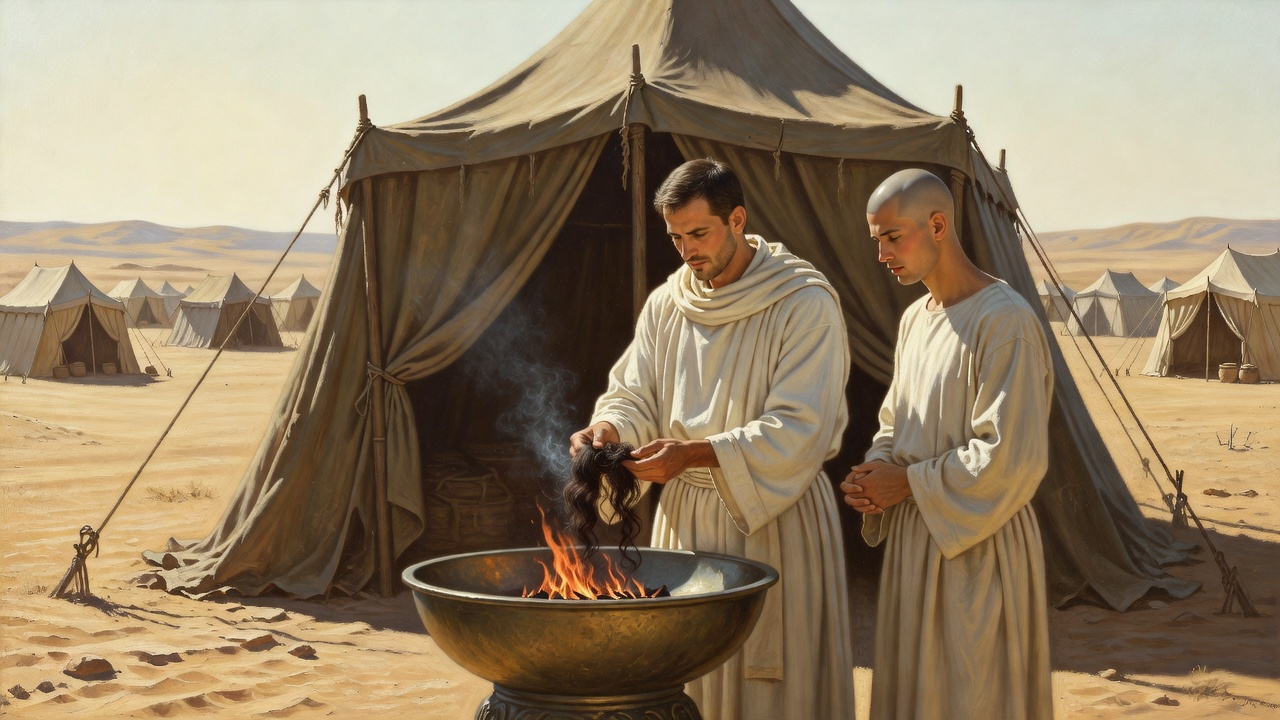
- When the period of separation ended, the Nazirite brought sacrifices to the entrance of the Tent of Meeting, shaved their head of hair, and burned the hair in the fire beneath the peace offering sacrifice. After the priest offered the required portions before God, the vow concluded and the person was allowed to drink wine again.Sources: the Bible text itself
- The chapter concludes with the priestly blessing that God instructed Moses to give to Aaron and his sons. By invoking God's protection, shining face, grace, and peace, the priests placed the divine name upon the people of Israel.Sources: the Bible text itself · Moses · Aaron
Notes written with AI assistance from open sources (Theographic Bible Metadata, CC BY-SA 4.0; Easton’s Bible Dictionary, public domain) and reviewed before publishing.
Credits and license for this translation
Biblica® Se aɖeke mebla Biblia zazã o Agbenya La™ Éwé: Biblica® Se aɖeke mebla Biblia zazã o Agbenya La™ (Bible) of Ghana copyright © 1988, 2006, 2020 Biblica, Inc. Language: eʋegbe Contributor: Biblica, Inc. Dɔwɔƒe si na wò asi ka agbalẽ sia lae nye Creative Commons Attribution-ShareAlike 4.0 International License (CC BY-SA). Ne èdi be yeakpɔ laisensi alo mɔɖegbalẽ sia la, yi ɖe http://creativecommons.org/licenses/by-sa/4.0 alo ŋlɔ agbalẽ na Creative Commons Dɔwɔƒea to adrɛsi sia dzi: Creative Commons, PO Box 1866, Mountain View, CA 94042, USA. Biblica, Inc. na wode Biblica® kple eƒe dzesidenu agbalẽ me, eye woaŋlɔ agbalẽ axɔ mɔɖeɖe tso Biblica, Inc. gbɔ hafi woawɔ Biblica® ƒe dzesidenu la ŋu dɔ. Le CC BY-SA ƒe mɔɖeɖe ƒe sewo nu la, àte ŋu azã agbalẽ sia me nyawo le dɔ bubuwo wɔwɔ me gake ele be nàde dzesi Biblica ƒe dzesidenu la abe ale si wòle ene. Ne ètrɔ asi le agbalẽ sia ŋu alo zãe le mɔ bubu nu la, ele be nàɖe Biblica® ƒe dzesidenu la ɖa. Ele be nàde dzesi tɔtrɔ siwo nèwɔ la ɖe agbalẽ la me eye nàde dzesii be: “Àte ŋu akpɔ Biblica, Inc. ƒe dɔ gbãtɔ le www.biblica.com kple open.bible femaxee.” Ele be nutɔnyenye ƒe dzeside nadze le agbalẽ la ƒe axa si tanya alo nutɔnyenye ƒe dzesi nɔna la ale: Biblica® Se aɖeke mebla Biblia zazã o Agbenya La™ Nutɔnyenye © 1988, 2006, 2020 Biblica, Inc. Biblica® Open Ewe Contemporary Scriptures™ Copyright © 1988, 2006, 2020 by Biblica, Inc. Biblica, Inc. na Dɔwɔƒe si Kpɔa Nutɔnyenye kple Adzɔdodo ƒe Nyawo dzi le Amerika la de “Biblica” kple eƒe dzesidenu agbalẽ me. Woaxɔ mɔɖeɖe na ezazã. “Biblica” is a trademark registered in the United States Patent and Trademark Office by Biblica, Inc. Used with permission. Ele be nàna míaƒe asi naka wò agbalẽ la le laisensi alo mɔɖeɖe ƒe se (CC BY-SA) sia nu. Ne èdi be yeana nyanya Biblica, Inc. tso agbalẽ sia zazã ŋu la, anyo be nàdo ta ɖe mía gbɔ le https://open.bible/contact-us. This work is made available under the Creative Commons Attribution-ShareAlike 4.0 International License (CC BY-SA). To view a copy of this license, visit http://creativecommons.org/licenses/by-sa/4.0 or send a letter to Creative Commons, PO Box 1866, Mountain View, CA 94042, USA. Biblica® is a trademark registered by Biblica, Inc., and use of the Biblica® trademark requires the written permission of Biblica, Inc. Under the terms of the CC BY-SA license, you may copy and redistribute this unmodified work as long as you keep the Biblica® trademark intact. If you modify a copy or translate this work, thereby creating a derivative work, you must remove the Biblica® trademark. On the derivative work, you must indicate what changes you have made and attribute the work as follows: “The original work by Biblica, Inc. is available for free at www.biblica.com and open.bible.” Notice of copyright must appear on the title or copyright page of the work as follows: Biblica® Se aɖeke mebla Biblia zazã o Agbenya La™ Nutɔnyenye © 1988, 2006, 2020 Biblica, Inc. Biblica® Open Ewe Contemporary Scriptures™ Copyright © 1988, 2006, 2020 by Biblica, Inc. Biblica, Inc. na Dɔwɔƒe si Kpɔa Nutɔnyenye kple Adzɔdodo ƒe Nyawo dzi le Amerika la de “Biblica” kple eƒe dzesidenu agbalẽ me. Woaxɔ mɔɖeɖe na ezazã. “Biblica” is a trademark registered in the United States Patent and Trademark Office by Biblica, Inc. Used with permission. You must also make your derivative work available under the same license (CC BY-SA). If you would like to notify Biblica, Inc. regarding your translation of this work, please contact us at https://open.bible/contact-us. This translation is made available to you under the terms of the Creative Commons Attribution Share-Alike license 4.0. You have permission to share and redistribute this Bible translation in any format and to make reasonable revisions and adaptations of this translation, provided that: You include the above copyright and source information. If you make any changes to the text, you must indicate that you did so in a way that makes it clear that the original licensor is not necessarily endorsing your changes. If you redistribute this text, you must distribute your contributions under the same license as the original. Pictures included with Scriptures and other documents on this site are licensed just for use with those Scriptures and documents. For other uses, please contact the respective copyright owners. Note that in addition to the rules above, revising and adapting God's Word involves a great responsibility to be true to God's Word. See Revelation 22:18-19. 2025-05-01
Source: http://ebible.org/ewe/ · eBible.org