Luke 6
Biblica® Se aɖeke mebla Biblia zazã o Agbenya La™ · Tap a verse to see its cross-references.
Nusrɔ̃lawo ŋe bli le Sabat dzi
1Gbe ɖeka le Dzudzɔgbe ŋkekea dzi esi Yesu kple eƒe nusrɔ̃lawo zɔ to bligble aɖewo me va yina la, nusrɔ̃lawo ŋe bli aɖewo, klẽ tsro le wo ŋu henɔ ɖuɖum.
2Farisitɔ aɖewo nɔ afi ma kpɔ wo, eye wogblɔ na Yesu be, “Nu ka ta miewɔ nu si mele se nu be woawɔ le Dzudzɔgbe ŋkeke dzi o mahã?”
3Yesu ɖo eŋu na wo be, “Alo miexlẽ nu tso nu si David wɔ esi dɔ wu eya kple eŋutimewo ŋu oa? 4Eyi ɖe Mawu ƒe aƒe la me, eye wòtsɔ abolo tɔxɛ si wotsɔ ɖo Mawu ŋkume la, eye wòɖui, togbɔ be mele se nu be ame aɖeke naɖu abolo sia o negbe nunɔlawo ko.” 5Yesu gblɔ kpe ɖe eŋu be, “Nye Amegbetɔ Vi lae nye Aƒetɔ na Dzudzɔgbe ŋkeke la gɔ̃ hã.”
Ŋutsu aɖe si tsitsi lé asi na
6Le Dzudzɔgbe bubu gbe esi wònɔ nu fiam le ƒuƒoƒe la, ekpɔ ame aɖe si tsitsi lé asi na la le afi ma. 7Esi wònye Dzudzɔgbe ŋkeke dzie ta la, agbalẽfialawo kple Farisitɔwo ɖe ŋku ɖe edzi gãa henɔ ekpɔm be ada gbe le amea ŋu le ŋkekea dzi hã. Wonɔ ŋku lém ɖe eŋu elabena wodi be wòawɔ vodada aɖe be yewoatsɔ nya ɖe eŋu.
8Yesu nya nu si bum ame siawo nɔ xoxoxo, gake egblɔ na ŋutsua be, “Tso va nɔ tsitre ɖe afii be ame sia ame nakpɔ wò.” Ŋutsu la tso ɖe tsitrenu abe ale si wògblɔ nɛ ene.
9Azɔ Yesu trɔ ɖe Farisitɔwo kple agbalẽfialawo gbɔ, eye wògblɔ na wo be, “Biabia aɖe le asinye na mi. Ɖe woɖe mɔ be woawɔ nyui le Dzudzɔgbe ŋkekea dzi loo alo woawɔ vɔ̃a? Enyo be woaxɔ ame ɖe agbe loo alo woawuia?”
10Etsa ŋku le wo katã dzi ɖekaɖeka, eye wògblɔ na ŋutsua be, “Dzɔ wò asi.” Edzɔ asia kasia eƒe asi gaɖɔ ɖo. 11Nuwɔna sia do dziku na Yesu ƒe futɔwo ŋutɔ. Wode asi ɖoɖowɔwɔ me le nu si woate ŋu awɔ Yesu la ŋuti.
Yesu tia eƒe nusrɔ̃la wuieveawo eye wòfia nu wo
12Le nu siawo megbe la, Yesu yi to aɖe dzi gbe ɖeka be yeado gbe ɖa. Edo gbe ɖa na Mawu zã blibo katã. 13Esi ŋu ke la, eyɔ eyomenɔlawo katã ƒo ƒui, eye wòtia ame wuieve le wo dome bena woanye yeƒe nusrɔ̃lawo. Ame siawoe woyɔ be apostolowo.
14Ameawo ƒe ŋkɔwoe nye, Simɔn (ame si wòna ŋkɔe be Petro), Andrea si nye Simɔn nɔviŋutsu,
Yakobo,
Yohanes,
Filipo,
Bartolomeo,
15Mateo,
Toma,
Yakobo si nye Alfeo vi,
Simɔn ame si nye Zelote dunyaheha sesẽ aɖe me nɔla;
16Yuda si nye Yakobo vi,
kple Yuda Iskariɔt ame si va zu yomemɔfiala.
Yesu fia nu ameha gã aɖe
17Esi wòɖi tso toa dzi la, nusrɔ̃lawo kple eyomenɔlawo va ƒo ƒu ɖe Yesu ŋuti le gbadzaƒe aɖe. Ameha gã aɖe hã va ɖe to ɖe wo, amewo tso Yudea nutowo me katã kple Yerusalem. Ɖewo tso keke Sidon kple Tiro ƒutaduwo me ke 18va be yewoaɖo toe alo be wòada gbe le yewo ŋu. Gbe ma gbe la, enya gbɔgbɔ vɔ̃ geɖewo le amewo me. 19Ame geɖewo ŋutɔ nɔ didim be yewoaka asi eŋu, elabena ŋusẽ do go tso eme, eye wòda gbe le wo katã ŋu.
Yayrawo kple babadonamewo
20Azɔ etrɔ ɖe eƒe nusrɔ̃lawo gbɔ hegblɔ na wo be,
“Dzidzɔ gã ŋutɔ le mi ame siwo nye ame dahewo la lalalm,
elabena miawo tɔe nye mawufiaɖuƒe la.
21Dzidzɔ gã ŋutɔ le mi
ame siwo wum dɔ le la lalam,
elabena miawoe aɖi ƒo.
Dzidzɔ gã ŋutɔ le mi
ame siwo le avi fam fifia la lalam,
elabena ɣeyiɣi gbɔna esi miava ko nu.
22Dzidzɔ gã ŋutɔ le mia lalam,
ne amewo lé fu mi,
ɖe mi le woƒe ha me,
eye wodzu mi, heƒo ɖi miaƒe ŋkɔ ɖe Amegbetɔ Vi la ta!
23“Dzi nedzɔ mi, eye mitso aseye, elabena fetu nyui le mia lalam le dziƒo. Alea tututue wo fofowo wɔ ɖe nyagblɔɖila siwo do ŋgɔ na mi la hã ŋuti.
24“Ao, baba na mi kesinɔtɔwo,
elabena wokpɔ dzidzɔ le anyigba sia dzi xoxo.
25Babaa na mi ame siwo ƒe ƒodo yɔ,
elabena dɔwuame sesẽ aɖe le ŋgɔ na wo gbɔna.
26Woƒe nukoko ɖe yame fifia ava zu konyifafa na wo.
Babaa na mi ame siwo ŋu amewo aƒo nu nyui le,
elabena nenema kee wo fofowo wɔ na aʋatsonyagblɔɖilawo.
Lɔlɔ̃ na ketɔwo
27“Ke mi ame siwo le to ɖom la, mele egblɔm na mi be: Milɔ̃ miaƒe futɔwo, eye miawɔ nyui na ame siwo lé fu mi la. 28Miyra ame siwo ƒo fi de mi la, eye mido gbe ɖa ɖe ame siwo wɔa fu mi la ta.
29“Nenye be ame aɖe ƒo wò tome ɖeka la, trɔ evelia hã nɛ wòaƒo! Nenye be ame aɖe tsɔ wò dziwui la, mègagbe wò awutewuitsɔtsɔ nɛ o. 30Ne nu le asiwò, eye ame aɖe bia wò la, nae eye mègabia be netrɔe vɛ na ye o. 31Ale si tututu nèdina be amewo newɔ na ye la, wò hã wɔ na wo nenema.
32“Ne mielɔ̃ mia lɔ̃lawo ɖeɖe ko ɖe, miebui be miewɔ nanea? Ame siwo nye nu vɔ̃ wɔlawo hã lɔ̃a wo xɔlɔ̃wo. 33Ne miewɔa dɔmenyo na ame siwo wɔa dɔmenyo na mi ko ɖe, akpedada kae li na mi? Nu vɔ̃ wɔlawo gɔ̃ hã wɔna nenema! 34Ne miedoa ga na ame siwo miele mɔ kpɔm na be woagaxee na mi emegbe ɖe, nu nyui kae wònye miewɔ? Nu vɔ̃ɖi wɔla akuakuawo hã doa nu na wo tɔ nu vɔ̃ɖi wɔlawo be yewoaxɔ nenema ke emegbe.
35“Milɔ̃ miaƒe ketɔwo, eye miwɔ dɔmenyo na wo. Mido nu na wo, eye migakpɔ mɔ na exɔxɔ o. Ne miewɔ esia la, ekema miaƒe fetu asɔ gbɔ le dziƒo, eye mianye Dziƒoʋĩtɔ la ƒe viwo elabena eya ŋutɔ nyoa dɔme na akpemadalawo kple tagbɔ sesẽ tɔwo hã.
36“Mizu nublanuikpɔlawo abe ale si mia Fofo hã nye nublanuikpɔla ene.
Migadrɔ̃ ʋɔnu ame bubuwo o
37“Migadrɔ̃ ʋɔnu ame aɖeke, eye Mawu hã nadrɔ̃ ʋɔnu mi o. Migabu fɔ ame aɖeke, eye Mawu hã nabu fɔ mi o. Mitsɔ amewo ƒe nu vɔ̃wo ke wo, eye Mawu hã natsɔ miaƒe nu vɔ̃wo ake mi. 38Mina nu, eye woana nu miawo hã. Nu siwo katã miena la, woatrɔ wo vɛ na mi woasɔ gbɔ agbã go sãa wu esi sinu miena, eye woatsɔe aɖo akɔ na mi. Dzidzenu si mietsɔ dzidze nui na amewo la, eya kee woatsɔ dzidze nui na miawo hã.”
39Yesu yi edzi do lo sia na wo be, “Ɖe ŋkugbãtɔ ate ŋu akplɔ ŋkuagbãtɔa? Ɖe wo kple eve la mage adze do me oa? 40Nusrɔ̃la mewua eƒe nufiala o. Ke ame sia ame si xɔ hehe nyuitɔ la anɔ ko abe eƒe nufiala ene.
41“Nu ka ta nèkpɔa ati fefi si le nɔviwò ƒe ŋku dzi, gake mèkpɔa atikpo si le wò ŋutɔ wò ŋku dzi o mahã? 42Aleke wɔ nàgblɔ na nɔviwò be, ‘Nɔvi, na maɖe ati fefi si le wò ŋku dzi la ɖa na wò,’ esi màte ŋu akpɔ gãa si le wò ŋutɔ wò ŋkuwo dzi aɖe o? Alakpanuwɔla, ɖe atikpo si le wò ŋku dzi la ɖa gbã ekema àte ŋu akpɔ nu nyuie, ale be nàte ŋu aɖe nɔviwò ƒe ati fefi la ɖa nɛ.
Sidzedze ati kple eƒe kutsetse
43“Ati nyui aɖeke mate ŋu atse ku manyomanyo o, eye ati manyomanyo mate ŋu atse ku nyui o. 44Ku si ati aɖe tsena lae wotsɔna dzea si ati si ƒomevi wònye lae; elabena womegbea gbowo le ŋutiwo dzi o, alo wotsoa wainkpo le ŋuve me. 45Ame nyui ƒe nuƒo fiana be nu nyui wɔwɔ yɔ eƒe dzi me. Ke ame vɔ̃ɖi ya ƒe dzi me yɔna fũu kple nu vɔ̃, eye eƒe nuƒo ɖea vɔ̃ɖivɔ̃ɖi sia fiana.
Xɔgɔmeɖoɖo ƒomevi eveawo
46“Nu ka tae mieyɔam be ‘Aƒetɔ, Aƒetɔ’, evɔ miewɔa nye gbe dzi o? 47Ame sia ame si vaa gbɔnye, eye wòsea nye nya, eye wòwɔa edzi la, mafia ame si wòɖi mi. 48Eɖi ame aɖe si tu xɔ, eɖe do goglo, eye wòɖo gɔmeɖokpe nyuie ɖe kpe gbadza dzi, ke esi tɔ ɖɔ, eye tsi ɖe xɔa la, mete ŋu mui o, elabena wotui nyuie. 49Ke ame si sea nye nya, eye mewɔna ɖe edzi o la le abe ame aɖe si tu eƒe xɔ ɖe anyigba, eye meɖo gɔmeɖokpe nɛ o la ene. Esi tsi dza ɖɔ ɖe eŋu la, xɔ sia mu gbloo, hegbã gudugudu.”
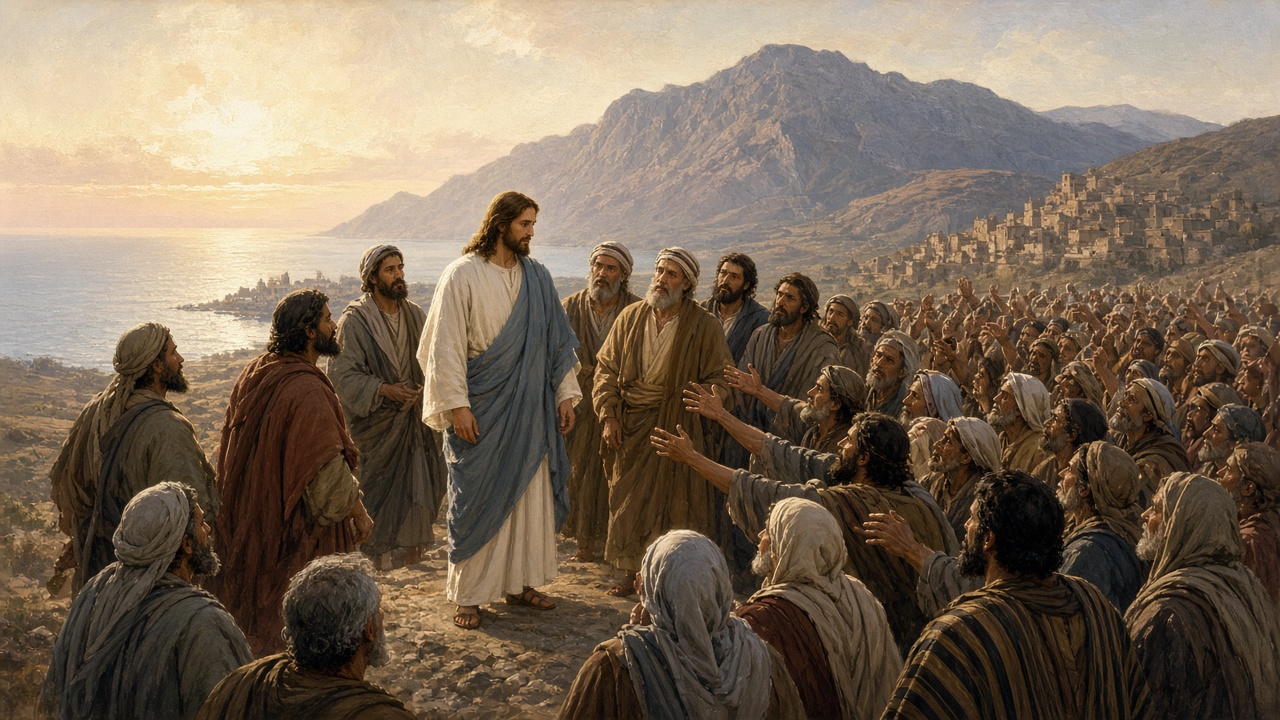
Did you know?
The Sabbath, the Twelve, and the Plain
- On a Sabbath, as Jesus passed through the grainfields, his disciples picked heads of grain, rubbed them in their hands, and ate them, and some Pharisees called this unlawful. Jesus recalled that David and his hungry companions ate consecrated bread from the house of God, bread lawful only for the priests, and said that the Son of Man is Lord of the Sabbath. On another Sabbath he restored a man’s withered right hand in the synagogue while scribes and Pharisees watched for a reason to accuse him; a chronology dates both episodes to AD 28.Sources: the Bible text itself · Corn on the Sabbath · Healing a Withered Hand
- After spending the night in prayer on the mountain, Jesus called his disciples and chose twelve, whom he designated apostles. Among them were Simon, whom he named Peter, and Peter’s brother Andrew, fishermen from Bethsaida on the western coast of the Sea of Galilee, and Matthew, a tax collector at Capernaum who had formerly been known as Levi.Sources: the Bible text itself · Simon Peter · Andrew · Matthew
- Jesus came down with them and stood on a level place, where people from Judea, Jerusalem, and the sea coast of Tyre and Sidon had gathered to hear him and to be healed. Tyre and Sidon were ancient Phoenician cities on the Mediterranean; Sidon, the older city, lay about twenty-five miles north of Tyre. A chronology dates this teaching to AD 28 and titles it the Sermon on the Mount, though the narrative places Jesus on level ground after he came down from the mountain.Sources: the Bible text itself · Tyre · Sidon · Sermon on the Mount
Notes written with AI assistance from open sources (Theographic Bible Metadata, CC BY-SA 4.0; Easton’s Bible Dictionary, public domain) and reviewed before publishing.
Places in this chapter
- Jerusalem · 31.777, 35.234 · verse 17
- Judea · Today: Judea 1 · 31.777, 35.234 · verse 17
- Sidon · Today: Sandikli archaeological site in Sidon · 33.561, 35.372 · verse 17
- Tyre · 33.271, 35.196 · verse 17
Only places identified with high confidence are shown (90% or more according to the scholarly sources compiled by OpenBible). Period map: DARE (Digital Atlas of the Roman Empire), CC BY 4.0; modern map: © OpenStreetMap contributors; places: OpenBible.info (CC BY 4.0).
Credits and license for this translation
Biblica® Se aɖeke mebla Biblia zazã o Agbenya La™ Éwé: Biblica® Se aɖeke mebla Biblia zazã o Agbenya La™ (Bible) of Ghana copyright © 1988, 2006, 2020 Biblica, Inc. Language: eʋegbe Contributor: Biblica, Inc. Dɔwɔƒe si na wò asi ka agbalẽ sia lae nye Creative Commons Attribution-ShareAlike 4.0 International License (CC BY-SA). Ne èdi be yeakpɔ laisensi alo mɔɖegbalẽ sia la, yi ɖe http://creativecommons.org/licenses/by-sa/4.0 alo ŋlɔ agbalẽ na Creative Commons Dɔwɔƒea to adrɛsi sia dzi: Creative Commons, PO Box 1866, Mountain View, CA 94042, USA. Biblica, Inc. na wode Biblica® kple eƒe dzesidenu agbalẽ me, eye woaŋlɔ agbalẽ axɔ mɔɖeɖe tso Biblica, Inc. gbɔ hafi woawɔ Biblica® ƒe dzesidenu la ŋu dɔ. Le CC BY-SA ƒe mɔɖeɖe ƒe sewo nu la, àte ŋu azã agbalẽ sia me nyawo le dɔ bubuwo wɔwɔ me gake ele be nàde dzesi Biblica ƒe dzesidenu la abe ale si wòle ene. Ne ètrɔ asi le agbalẽ sia ŋu alo zãe le mɔ bubu nu la, ele be nàɖe Biblica® ƒe dzesidenu la ɖa. Ele be nàde dzesi tɔtrɔ siwo nèwɔ la ɖe agbalẽ la me eye nàde dzesii be: “Àte ŋu akpɔ Biblica, Inc. ƒe dɔ gbãtɔ le www.biblica.com kple open.bible femaxee.” Ele be nutɔnyenye ƒe dzeside nadze le agbalẽ la ƒe axa si tanya alo nutɔnyenye ƒe dzesi nɔna la ale: Biblica® Se aɖeke mebla Biblia zazã o Agbenya La™ Nutɔnyenye © 1988, 2006, 2020 Biblica, Inc. Biblica® Open Ewe Contemporary Scriptures™ Copyright © 1988, 2006, 2020 by Biblica, Inc. Biblica, Inc. na Dɔwɔƒe si Kpɔa Nutɔnyenye kple Adzɔdodo ƒe Nyawo dzi le Amerika la de “Biblica” kple eƒe dzesidenu agbalẽ me. Woaxɔ mɔɖeɖe na ezazã. “Biblica” is a trademark registered in the United States Patent and Trademark Office by Biblica, Inc. Used with permission. Ele be nàna míaƒe asi naka wò agbalẽ la le laisensi alo mɔɖeɖe ƒe se (CC BY-SA) sia nu. Ne èdi be yeana nyanya Biblica, Inc. tso agbalẽ sia zazã ŋu la, anyo be nàdo ta ɖe mía gbɔ le https://open.bible/contact-us. This work is made available under the Creative Commons Attribution-ShareAlike 4.0 International License (CC BY-SA). To view a copy of this license, visit http://creativecommons.org/licenses/by-sa/4.0 or send a letter to Creative Commons, PO Box 1866, Mountain View, CA 94042, USA. Biblica® is a trademark registered by Biblica, Inc., and use of the Biblica® trademark requires the written permission of Biblica, Inc. Under the terms of the CC BY-SA license, you may copy and redistribute this unmodified work as long as you keep the Biblica® trademark intact. If you modify a copy or translate this work, thereby creating a derivative work, you must remove the Biblica® trademark. On the derivative work, you must indicate what changes you have made and attribute the work as follows: “The original work by Biblica, Inc. is available for free at www.biblica.com and open.bible.” Notice of copyright must appear on the title or copyright page of the work as follows: Biblica® Se aɖeke mebla Biblia zazã o Agbenya La™ Nutɔnyenye © 1988, 2006, 2020 Biblica, Inc. Biblica® Open Ewe Contemporary Scriptures™ Copyright © 1988, 2006, 2020 by Biblica, Inc. Biblica, Inc. na Dɔwɔƒe si Kpɔa Nutɔnyenye kple Adzɔdodo ƒe Nyawo dzi le Amerika la de “Biblica” kple eƒe dzesidenu agbalẽ me. Woaxɔ mɔɖeɖe na ezazã. “Biblica” is a trademark registered in the United States Patent and Trademark Office by Biblica, Inc. Used with permission. You must also make your derivative work available under the same license (CC BY-SA). If you would like to notify Biblica, Inc. regarding your translation of this work, please contact us at https://open.bible/contact-us. This translation is made available to you under the terms of the Creative Commons Attribution Share-Alike license 4.0. You have permission to share and redistribute this Bible translation in any format and to make reasonable revisions and adaptations of this translation, provided that: You include the above copyright and source information. If you make any changes to the text, you must indicate that you did so in a way that makes it clear that the original licensor is not necessarily endorsing your changes. If you redistribute this text, you must distribute your contributions under the same license as the original. Pictures included with Scriptures and other documents on this site are licensed just for use with those Scriptures and documents. For other uses, please contact the respective copyright owners. Note that in addition to the rules above, revising and adapting God's Word involves a great responsibility to be true to God's Word. See Revelation 22:18-19. 2025-05-01
Source: http://ebible.org/ewe/ · eBible.org