Psalms 95
Londona Biblio · Tap a verse to see its cross-references.
1Venu, ni kantu al la Eternulo;
Ni ĝoje kriu al la rifuĝejo de nia helpo.
2Ni venu antaŭ Lian vizaĝon kun glorado,
Per psalmoj ni ĝoje kriu al Li.
3Ĉar granda Dio estas la Eternulo
Kaj granda Reĝo super ĉiuj dioj,
4Kiu havas en Sia mano la profundaĵojn de la tero,
Kaj al kiu apartenas la altaĵoj de la montoj;
5Al kiu apartenas la maro, kaj Li ĝin faris,
Kaj la sekteron Liaj manoj kreis.
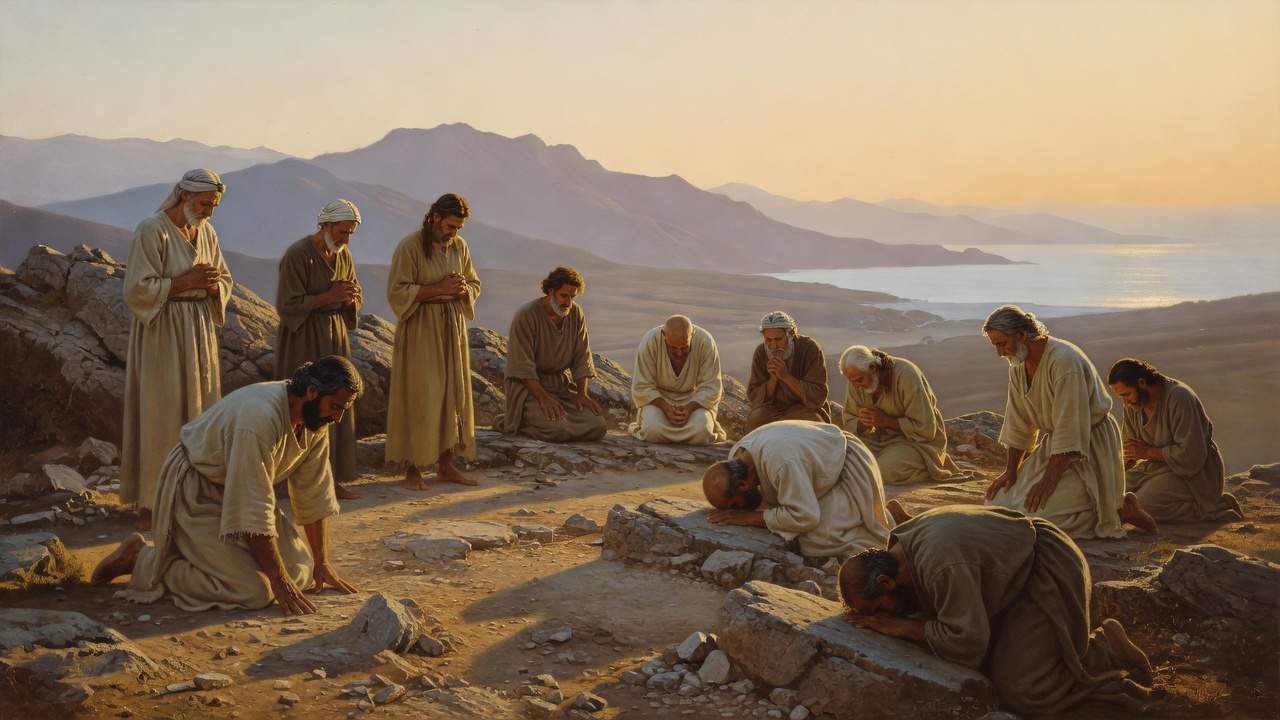
6Venu, ni kliniĝu, ni ĵetu nin teren,
Ni genuu antaŭ la Eternulo, nia Kreinto.
7Ĉar Li estas nia Dio,
Kaj ni estas la popolo de Lia paŝtejo kaj la ŝafoj de Lia mano.
Hodiaŭ, se vi aŭskultas Lian voĉon,
8Ne obstinigu vian koron, kiel en Meriba,
Kiel en la tago de Masa en la dezerto,
9Kiam viaj patroj Min incitis,
Esploris kaj vidis Mian faron.
10Kvardek jarojn Mi indignis kontraŭ tiu generacio,
Kaj Mi diris: Ili estas popolo kun koro malĝusta,
Kaj ili ne volas koni Miajn vojojn;
11Tial Mi ĵuris en Mia kolero,
Ke ili ne venos en Mian ripozejon.
Did you know?
A Call to Praise and a Solemn Warning
- Psalm 95 begins as an invitation to worship God with singing and thanksgiving, celebrating Him as a great King, the Creator of the seas and mountains, and the shepherd caring for His people. The psalm calls the community not only to shout with joy, but also to bow down and kneel before their Maker.Sources: the Bible text itself
- In the second half of the psalm, the tone shifts abruptly to a divine warning against hardening one's heart. It recalls the rebellion at Meribah and Massah in the wilderness, where the people tested God for forty years despite seeing His works, leading to the divine oath that they would not enter His rest.Sources: the Bible text itself
Notes written with AI assistance from open sources (Theographic Bible Metadata, CC BY-SA 4.0; Easton’s Bible Dictionary, public domain) and reviewed before publishing.
Places in this chapter
- Meribah · Today: within 500 m of Wadi Rufaiyil · 28.623, 33.880 · verse 8
Only places identified with high confidence are shown (90% or more according to the scholarly sources compiled by OpenBible). Period map: DARE (Digital Atlas of the Roman Empire), CC BY 4.0; modern map: © OpenStreetMap contributors; places: OpenBible.info (CC BY 4.0).
Credits and license for this translation
Londona Biblio
The Holy Bible in Esperanto (1910)
Public Domain
Language: Esperanto
2020-02-13
Source: http://ebible.org/epo/ · eBible.org