Psalms 80
Londona Biblio · Tap a verse to see its cross-references.
Al la ĥorestro. Por ŝoŝanoj. Atesto de Asaf. Psalmo.
Ho Paŝtisto de Izrael, aŭskultu;
Vi, kiu kondukas Jozefon, kiel ŝafojn,
Vi, kiu sidas sur keruboj, aperu!
2Antaŭ Efraim kaj Benjamen kaj Manase veku Vian forton,
Kaj venu, por savi nin.
3Ho Dio, revenigu nin kaj lumigu Vian vizaĝon,
Por ke ni estu savitaj.
4Ho Eternulo, Dio Cebaot,
Ĝis kiam Vi kolere repuŝos la preĝon de Via popolo?
5Vi manĝigis al ili panon larman,
Kaj Vi trinkigis al ili larmojn per granda mezuro.
6Vi faris nin objekto de disputo por niaj najbaroj;
Kaj niaj malamikoj nin mokas.
7Ho Dio Cebaot! revenigu nin kaj lumigu Vian vizaĝon,
Por ke ni estu savitaj.
8Vinberbranĉon el Egiptujo Vi elportis,
Vi forpelis popolojn kaj ĝin plantis;
9Vi purigis lokon por ĝi;
Kaj ĝi profundigis siajn radikojn kaj plenigis la tutan landon;
10Montojn kovris ĝia ombro,
Kaj ĝiaj branĉoj fariĝis kiel cedroj de Dio.
11Ĝi etendis siajn branĉojn ĝis la maro
Kaj siajn branĉetojn ĝis la Rivero.
12Kial Vi detruis ĝiajn barilojn,
Ke ĉiuj pasantoj ĝin ŝiras?
13Subfosas ĝin arbara apro,
Kaj kampa besto ĝin mordas.
14Ho Dio Cebaot, returniĝu;
Rigardu el la ĉielo kaj vidu, kaj rememoru tiun vinbertrunkon,
15Kaj ŝirmu tion, kion plantis Via dekstra mano,
Kaj la kreskaĵidon, kiun Vi fortikigis por Vi.
16Ĝi estas bruligita de fajro, krevinta;
De Via minaca vizaĝo ili pereis.
17Via brako estu super la viro de Via dekstra mano,
Super la homido, kiun Vi fortikigis por Vi.
18Kaj ni ne foriros de Vi;
Vivigu nin, kaj ni vokos Vian nomon.
19Ho Eternulo, Dio Cebaot! revenigu nin, lumigu Vian vizaĝon,
Por ke ni estu savitaj.
Did you know?
A Prayer for the Uprooted Vine
- The psalm specifically mentions Ephraim, Benjamin, and Manasseh, tribes closely linked by descent from Rachel through Joseph and Benjamin. During Israel's wilderness wanderings, these three tribes were assigned to camp and march together on the western side of the tabernacle.Sources: Benjamin (patriarch) · Manasseh (son of Joseph) · the Bible text itself
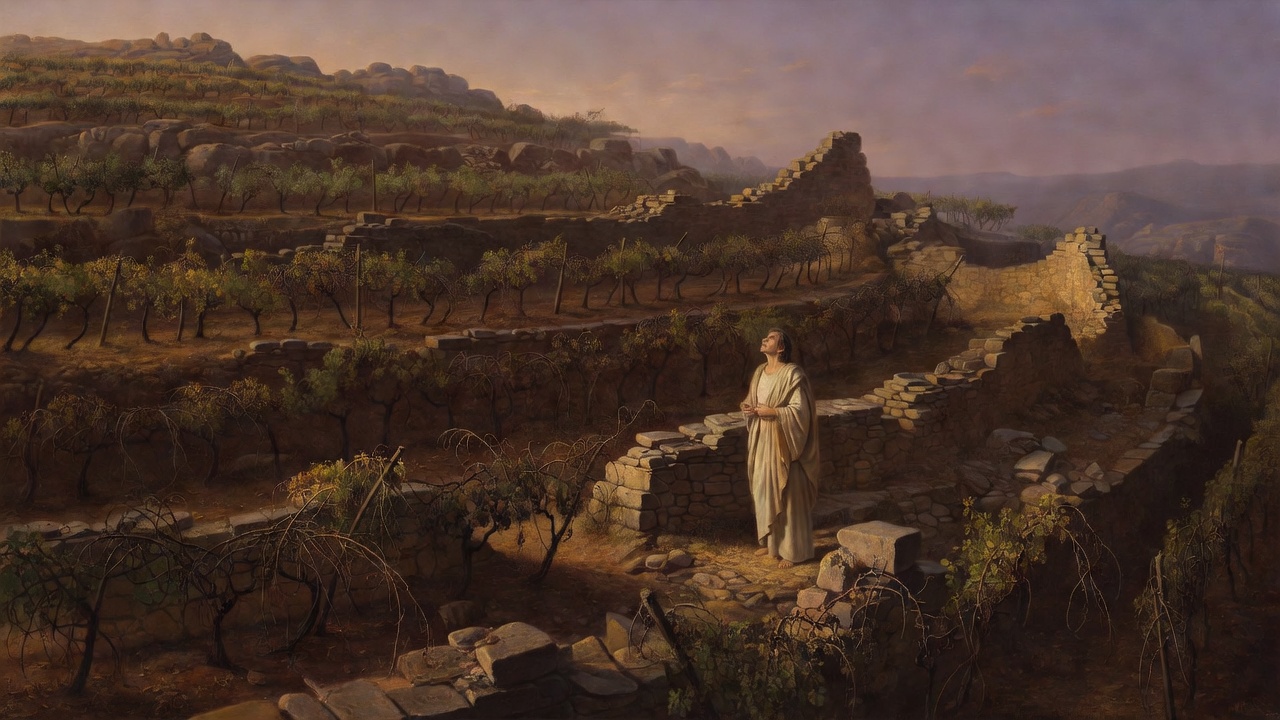
- The author uses an extended allegory comparing the nation of Israel to a grapevine brought out of Egypt and replanted in Canaan. The song laments that God had torn down the protective vineyard walls, leaving the fruitful vine exposed to wild beasts and passersby.Sources: Egypt · the Bible text itself
- This poem is part of a distinct collection spanning Psalms 73 through 83 attributed to Asaph. The biblical record describes Asaph as a leading Levite musician in the time of King David whose musical guild or descendants continued his tradition in temple worship.Sources: Asaph (Levite) · the Bible text itself
Notes written with AI assistance from open sources (Theographic Bible Metadata, CC BY-SA 4.0; Easton’s Bible Dictionary, public domain) and reviewed before publishing.
Places in this chapter
- Egypt · 30.129, 31.308 · verse 8
- Euphrates · Today: Euphrates River · 31.004, 47.442 · verse 11
- Great Sea · Today: Mediterranean Sea · 31.805, 34.170 · verse 11
Only places identified with high confidence are shown (90% or more according to the scholarly sources compiled by OpenBible). Period map: DARE (Digital Atlas of the Roman Empire), CC BY 4.0; modern map: © OpenStreetMap contributors; places: OpenBible.info (CC BY 4.0).
Credits and license for this translation
Londona Biblio
The Holy Bible in Esperanto (1910)
Public Domain
Language: Esperanto
2020-02-13
Source: http://ebible.org/epo/ · eBible.org