Malachi 1
Londona Biblio · Tap a verse to see its cross-references.
About this book
About Malachi
- Easton's Bible Dictionary (1897) presents Malachi, a name meaning "messenger" or "angel," as the last of the minor prophets and the writer of the last book of the Old Testament canon. Nothing is known of him beyond what is contained in his book of prophecies.Sources: Easton: Malachi · Malachi
- Some have supposed that the name is simply a title for a messenger of Jehovah, not a proper name. Easton's Bible Dictionary (1897) concludes, however, that there is reason to regard Malachi as the prophet's ordinary name.Sources: Easton: Malachi · Malachi
- Easton's Bible Dictionary (1897) dates the prophecies to about 420 B.C., after Nehemiah's second return from Persia, or possibly before that return. Because Ezra does not mention him and he does not mention the restoration of the temple, the dictionary infers that he prophesied after Haggai and Zechariah.Sources: Easton: Malachi
- Easton's Bible Dictionary (1897) treats Malachi as a contemporary of Nehemiah, comparing Malachi 2:8 with Nehemiah 13:15 and Malachi 2:10-16 with Nehemiah 13:23. It also notes that the temple services were still in existence, citing Malachi 1:10, 3:1 and 3:10.Sources: Easton: Malachi
Notes written with AI assistance from open sources (Theographic Bible Metadata, CC BY-SA 4.0; Easton’s Bible Dictionary, public domain) and reviewed before publishing.
1Profeta vorto de la Eternulo al Izrael per Malaĥi.
2Mi ekamis vin, diras la Eternulo. Vi demandas: En kio Vi nin ekamis? Ĉu Esav ne estas frato de Jakob? diras la Eternulo; tamen Mi ekamis Jakobon, 3kaj Esavon mi malamis, kaj Mi dezertigis liajn montojn, kaj lian posedaĵon Mi donis al la ŝakaloj de la dezerto. 4Se la Edomidoj diras: Ni estas ruinigitaj, sed ni revenos kaj rekonstruos la ruinojn — la Eternulo Cebaot diras tiele: Ili konstruos, kaj Mi detruos, kaj oni nomos ilin lando de malpieco, kaj popolo, kontraŭ kiu la Eternulo koleras eterne. 5Viaj okuloj tion vidos, kaj vi diros: Granda estas la Eternulo super la limoj de Izrael.
6Filo respektas patron, kaj sklavo sian sinjoron; sed se Mi estas patro, kie estas la respekto al Mi? kaj se Mi estas sinjoro, kie estas la timo antaŭ Mi? diras la Eternulo Cebaot al vi, ho pastroj, kiuj malhonoras Mian nomon. Kaj vi diras: Per kio ni malhonoras Vian nomon? 7Vi alportas sur Mian altaron panon malpuran, kaj tamen vi diras: Per kio ni malpuriĝis antaŭ Vi? Per tio, ke vi diras: La tablo de la Eternulo estas senvalora. 8Kaj kiam vi alportas oferon blindan, ĉu tio ne estas malbona? aŭ kiam vi alportas laman aŭ malsanan, ĉu tio ne estas malbona? Provu alporti ĝin al via regionestro — ĉu vi tiam plaĉos al li, kaj ĉu li akceptos vin favore? diras la Eternulo Cebaot. 9Preĝu de nun al Dio, ke Li indulgu nin; se tio estas farita de viaj manoj, ĉu Li povas favore akcepti vin? diras la Eternulo Cebaot. 10Estus bone, se iu el vi ŝlosus la pordon, por ke vi ne bruligu vane fajron sur Mia altaro. Vi ne estas agrablaj al Mi, diras la Eternulo Cebaot; kaj donacon el via mano Mi ne akceptos favore. 11Ĉar de la sunleviĝejo ĝis la sunsubirejo Mia nomo estos granda inter la nacioj, kaj sur ĉiu loko oni incensos kaj alportos oferojn al Mia nomo, oferojn purajn; ĉar granda estos Mia nomo inter la nacioj, diras la Eternulo Cebaot. 12Sed vi malhonoras ĝin per tio, ke vi diras: La tablo de la Eternulo estas malsankta, kaj la manĝaĵo sur ĝi estas senvalora. 13Kaj vi diras: Tio estas nur klopodoj! Kaj vi malŝatas tion, diras la Eternulo Cebaot, kaj vi alportas tion, kio estas ŝtelita, lama, aŭ malsana, kaj vi alportas ankaŭ tiaspecan farunoferon. Ĉu Mi povas favore akcepti tion el via mano? diras la Eternulo. 14Malbenata estu la hipokritulo, kiu havas en sia brutaro sendifektan virbruton, sed, farinte sanktan promeson, li alportas ofere al la Sinjoro kriplaĵon; ĉar Mi estas Reĝo granda, diras la Eternulo Cebaot, kaj Mia nomo estas timata inter la nacioj.
Did you know?
Honoring God and Defective Offerings
- The name Malachi means messenger or angel. While some have suggested it was a title rather than a proper name, scholars and traditions widely treat it as the prophet's personal name, placing his ministry during the period of Nehemiah, after Haggai and Zechariah.Sources: Malachi
- The opening dispute recalls the twin brothers Jacob and Esau, the ancestors of Israel and Edom. The text contrasts God's covenant love for Israel with the judgment and desolation coming upon the mountainous region of Edom.Sources: Esau (Edom) · Jacob (Israel) · Edom · the Bible text itself
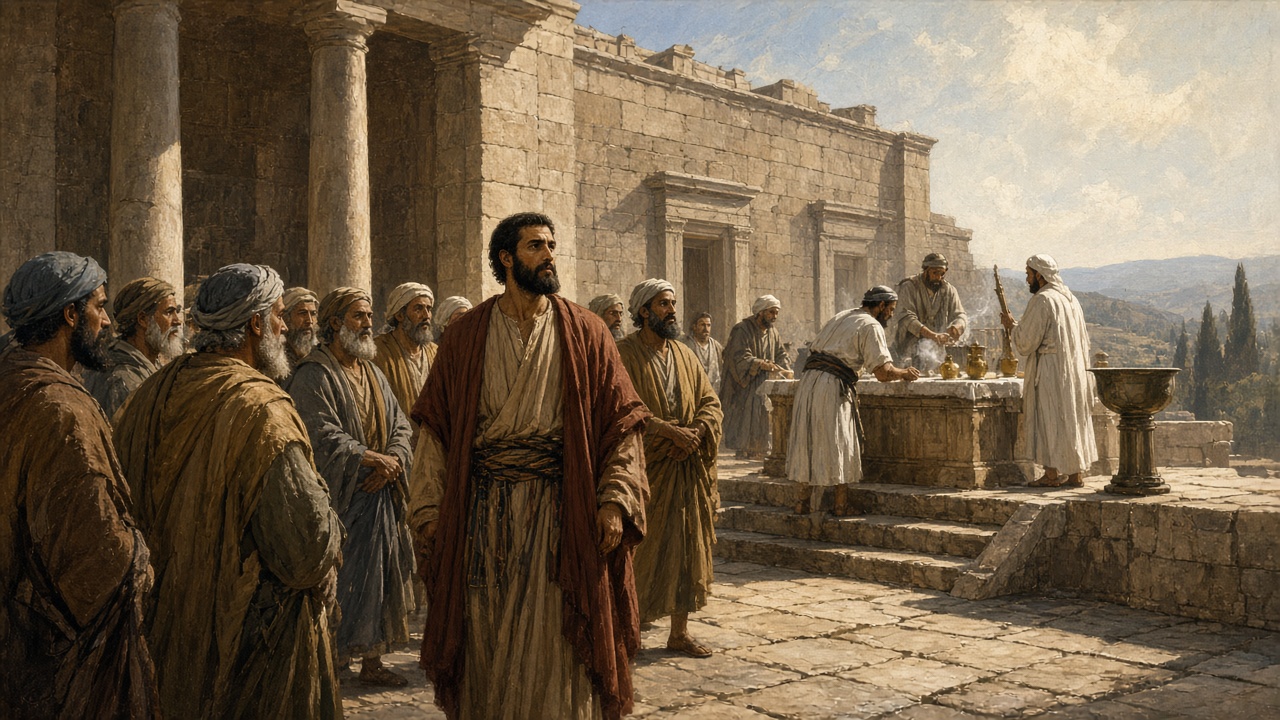
- The priests are rebuked for offering blind, lame, and diseased animals on the altar rather than unblemished livestock. Malachi exposes their disrespect by asking whether a civil governor would accept such inferior gifts.Sources: the Bible text itself
Notes written with AI assistance from open sources (Theographic Bible Metadata, CC BY-SA 4.0; Easton’s Bible Dictionary, public domain) and reviewed before publishing.
Places in this chapter
- Edom · 30.746, 35.604 · verse 4
Only places identified with high confidence are shown (90% or more according to the scholarly sources compiled by OpenBible). Period map: DARE (Digital Atlas of the Roman Empire), CC BY 4.0; modern map: © OpenStreetMap contributors; places: OpenBible.info (CC BY 4.0).
Credits and license for this translation
Londona Biblio
The Holy Bible in Esperanto (1910)
Public Domain
Language: Esperanto
2020-02-13
Source: http://ebible.org/epo/ · eBible.org