Isaiah 64
Londona Biblio · Tap a verse to see its cross-references.
1Ho, se Vi disfendus la ĉielon kaj malsuprenirus, antaŭ Vi ektremus la montoj; 2aperu kiel fajro, kiu bruligas lignerojn, kiel akvo, kiu bolas de fajro, por konigi Vian nomon al Viaj malamikoj; antaŭ Via vizaĝo ektremu la popoloj! 3Kiam Vi faris miraklojn, kiujn ni ne atendis, kiam Vi malsupreniris, antaŭ Vi ektremis la montoj. 4Neniam oni tion aŭdis, ne eksciis per la orelo, nek okulo tion vidis, ke iu dio krom Vi tion faras por tiuj, kiuj esperas je li. 5Vi renkontis tiujn, kiuj ĝoje faris justaĵon kaj memoris Vin sur Viaj vojoj; kvankam Vi koleris, kiam ni pekis, tamen per ili ni ĉiam estis savataj. 6Ni ĉiuj fariĝis kiel malpuruloj, kaj nia tuta virto estas kiel makulita vesto; ni ĉiuj velkas kiel folio, kaj niaj pekoj portas nin kiel vento. 7Kaj neniu vokas Vian nomon, nek vekiĝas, por forte sin teni je Vi; ĉar Vi kovris Vian vizaĝon antaŭ ni kaj lasas nin perei per niaj pekoj. 8Sed nun, ho Eternulo, Vi estas nia Patro; ni estas la argilo, kaj Vi estas nia formanto, kaj ni ĉiuj estas la produkto de Via mano. 9Ne koleru, ho Eternulo, tro forte, kaj ne eterne memoru la kulpon; ho, rigardu, ni ĉiuj estas Via popolo. 10Viaj sanktaj urboj fariĝis dezerto, Cion fariĝis dezerto, Jerusalem ruino. 11Nia sankta kaj belega domo, en kiu niaj patroj Vin laŭdadis, estas forbruligita per fajro, kaj ĉiuj niaj dezirindaĵoj fariĝis ruinoj. 12Ĉu malgraŭ ĉio ĉi tio Vi retenos Vin, ho Eternulo? ĉu Vi silentos kaj tiel forte nin premos?
Did you know?
A Prayer for Mercy Amid Ruin
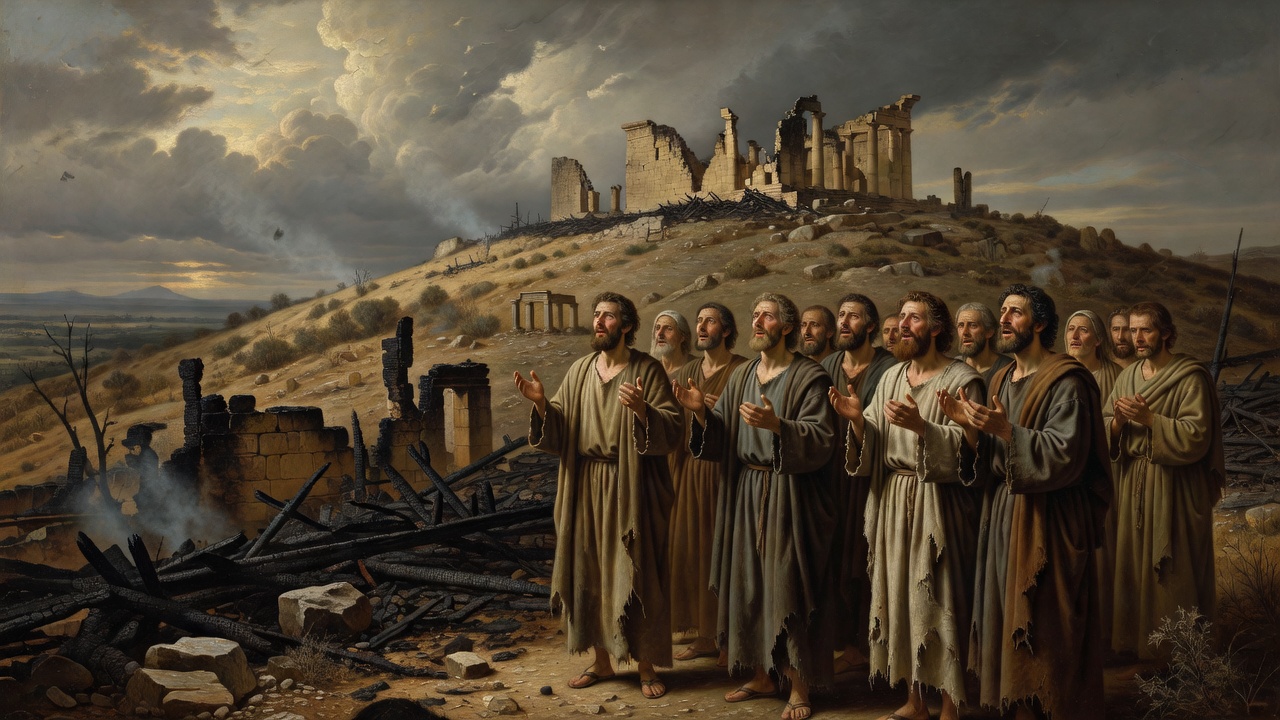
- The passage opens with a plea for God to rend the heavens and descend with world-shaking power, like fire that kindles brushwood. Yet it contrasts this desire for divine presence with a confession of human unworthiness, comparing people to withering leaves swept away by their own iniquities.Sources: the Bible text itself
- In Isaiah 64, the community appeals to God as a Father and craftsman, declaring, "we are the clay, and You are the potter." This imagery emphasizes human frailty and total dependence on God, pleading for divine mercy despite their acknowledged guilt.Sources: the Bible text itself
- The chapter laments the destruction of sacred spaces, describing Zion and Jerusalem as desolate wastelands. It specifically mourns the burning and ruin of the holy temple where past generations had offered praise.Sources: the Bible text itself · Zion · Jerusalem
Notes written with AI assistance from open sources (Theographic Bible Metadata, CC BY-SA 4.0; Easton’s Bible Dictionary, public domain) and reviewed before publishing.
Places in this chapter
Only places identified with high confidence are shown (90% or more according to the scholarly sources compiled by OpenBible). Period map: DARE (Digital Atlas of the Roman Empire), CC BY 4.0; modern map: © OpenStreetMap contributors; places: OpenBible.info (CC BY 4.0).
Credits and license for this translation
Londona Biblio
The Holy Bible in Esperanto (1910)
Public Domain
Language: Esperanto
2020-02-13
Source: http://ebible.org/epo/ · eBible.org