Malachi 4
Young's Literal Translation · Tap a verse to see its cross-references.
The Day of the LORD
1For, lo, the day hath come, burning as a furnace, And all the proud, and every wicked doer, have been stubble, And burnt them hath the day that came, Said Jehovah of Hosts, That there is not left to them root or branch, 2And risen to you, ye who fear My name, Hath the sun of righteousness — and healing in its wings, And ye have gone forth, and have increased as calves of a stall. 3And ye have trodden down the wicked, For they are ashes under the soles of your feet, In the day that I am appointing, Said Jehovah of Hosts. 4Remember ye the law of Moses My servant, That I did command him in Horeb, For all Israel — statutes and judgments. 5Lo, I am sending to you Elijah the prophet, Before the coming of the day of Jehovah, The great and the fearful. 6And he hath turned back the heart of fathers to sons, And the heart of sons to their fathers, Before I come and have utterly smitten the land!
Did you know?
The Day of the Lord and the Promise of Elijah
- Malachi calls on Israel to remember the law given to Moses at Mount Horeb. Horeb is a biblical name for the mountainous range where Mount Sinai stands, the site where the Israelites encamped and received divine statutes and ordinances.Sources: the Bible text itself · Horeb · Moses
- The passage concludes with the promise that Elijah the prophet will be sent before the great Day of the Lord to reconcile parents and children. In the biblical narrative, Elijah was a prophet from Tishbe who delivered messages during the reign of King Ahab.Sources: the Bible text itself · Elijah
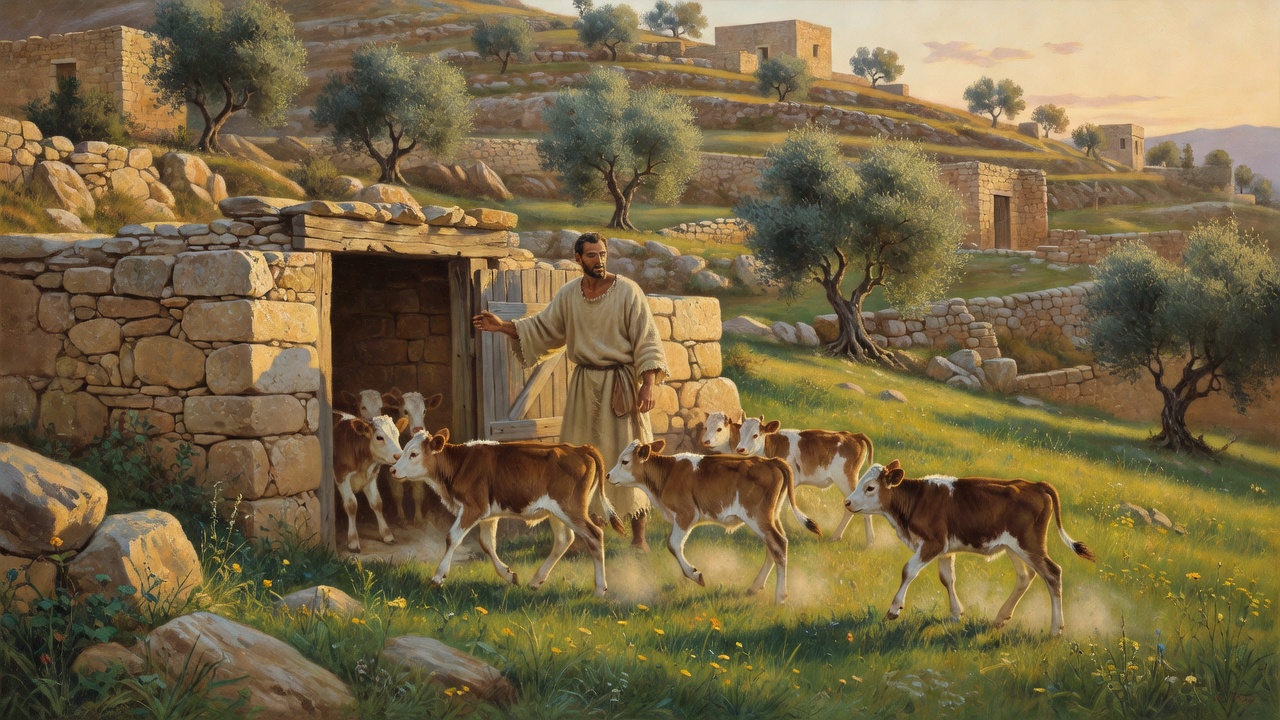
- Malachi uses vivid agricultural imagery to describe the coming judgment and restoration, contrasting evildoers reduced to dry stubble in a fire with the faithful, who are pictured leaping with joy like calves let out of a stall.Sources: the Bible text itself
Notes written with AI assistance from open sources (Theographic Bible Metadata, CC BY-SA 4.0; Easton’s Bible Dictionary, public domain) and reviewed before publishing.
Places in this chapter
- Mount Horeb · Today: Jebel Musa · 28.540, 33.973 · verse 4
Only places identified with high confidence are shown (90% or more according to the scholarly sources compiled by OpenBible). Period map: DARE (Digital Atlas of the Roman Empire), CC BY 4.0; modern map: © OpenStreetMap contributors; places: OpenBible.info (CC BY 4.0).
Credits and license for this translation
Young's Literal Translation
Young's Literal Translation of the Holy Bible
Public Domain
Language: ENGLISH (English)
Dialect: archaic British
Translation by: Robert Young
This public domain Bible translation is brought to you courtesy of eBible.org.
If you would like to make a donation to help keep free Bible access like this going, please visit https://eBible.org/give.php .
2019-10-20
Section headings adapted from the Berean Standard Bible (public domain); they are not part of this translation’s text.
Source: http://ebible.org/engylt/ · eBible.org