Isaiah 64
Young's Literal Translation · Tap a verse to see its cross-references.
A Prayer for God’s Power
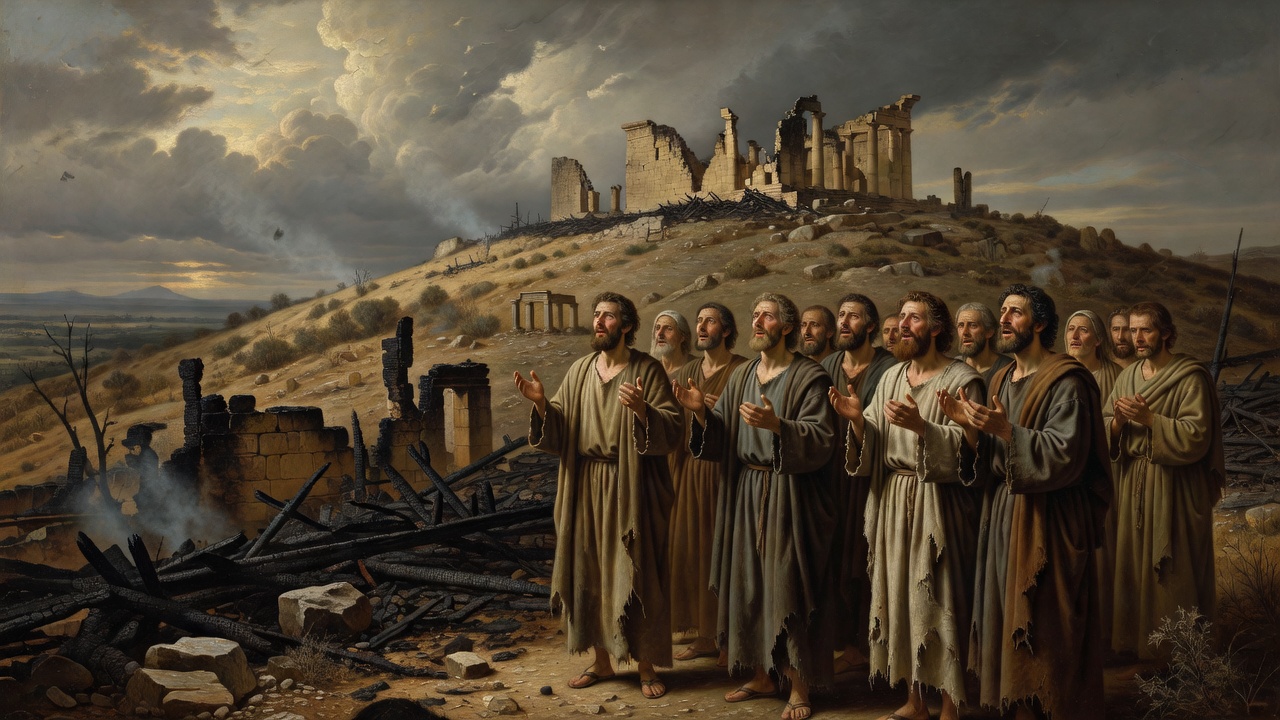
1Didst Thou not rend the heavens? Thou didst come down, From thy presence did mountains flow, 2(As fire kindleth stubble — Fire causeth water to boil,) To make known Thy name to Thine adversaries, From Thy presence do nations tremble. 3In Thy doing fearful things — we expect not, Thou didst come down, From Thy presence did mountains flow. 4Even from antiquity [men] have not heard, They have not given ear, Eye hath not seen a God save Thee, He doth work for those waiting for Him. 5Thou hast met with the rejoicer And the doer of righteousness, In Thy ways they remember Thee, Lo, Thou hast been wroth when we sin, By them [is] continuance, and we are saved. 6And we are as unclean — all of us, And as a garment passing away, all our righteous acts; And we fade as a leaf — all of us. And our iniquities as wind do take us away. 7And there is none calling in Thy name, Stirring up himself to lay hold on Thee, For Thou hast hid Thy face from us, And thou meltest us away by our iniquities. 8And now, O Jehovah, thou [art] our Father, We [are] the clay, and Thou our Framer, And the work of Thy hand — all of us. 9Be not wroth, O Jehovah, very sore, Nor for ever remember iniquity, Lo, look attentively, we beseech Thee, Thy people [are] we all. 10Thy holy cities have been a wilderness, Zion a wilderness hath been, Jerusalem a desolation. 11Our holy and our beautiful house, Where praise Thee did our fathers, Hath become burnt with fire, And all our desirable things have become a waste. 12For these dost Thou refrain Thyself, Jehovah? Thou art silent, and dost afflict us very sore!'
Did you know?
A Prayer for Mercy Amid Ruin
- The passage opens with a plea for God to rend the heavens and descend with world-shaking power, like fire that kindles brushwood. Yet it contrasts this desire for divine presence with a confession of human unworthiness, comparing people to withering leaves swept away by their own iniquities.Sources: the Bible text itself
- In Isaiah 64, the community appeals to God as a Father and craftsman, declaring, "we are the clay, and You are the potter." This imagery emphasizes human frailty and total dependence on God, pleading for divine mercy despite their acknowledged guilt.Sources: the Bible text itself
- The chapter laments the destruction of sacred spaces, describing Zion and Jerusalem as desolate wastelands. It specifically mourns the burning and ruin of the holy temple where past generations had offered praise.Sources: the Bible text itself · Zion · Jerusalem
Notes written with AI assistance from open sources (Theographic Bible Metadata, CC BY-SA 4.0; Easton’s Bible Dictionary, public domain) and reviewed before publishing.
Places in this chapter
Only places identified with high confidence are shown (90% or more according to the scholarly sources compiled by OpenBible). Period map: DARE (Digital Atlas of the Roman Empire), CC BY 4.0; modern map: © OpenStreetMap contributors; places: OpenBible.info (CC BY 4.0).
Credits and license for this translation
Young's Literal Translation
Young's Literal Translation of the Holy Bible
Public Domain
Language: ENGLISH (English)
Dialect: archaic British
Translation by: Robert Young
This public domain Bible translation is brought to you courtesy of eBible.org.
If you would like to make a donation to help keep free Bible access like this going, please visit https://eBible.org/give.php .
2019-10-20
Section headings adapted from the Berean Standard Bible (public domain); they are not part of this translation’s text.
Source: http://ebible.org/engylt/ · eBible.org