Isaiah 42
Young's Literal Translation · Tap a verse to see its cross-references.
Here Is My Servant
1Lo, My servant, I take hold on him, My chosen one — My soul hath accepted, I have put My Spirit upon him, Judgment to nations he bringeth forth. 2He doth not cry, nor lift up, Nor cause his voice to be heard, in the street. 3A bruised reed he breaketh not, And dim flax he quencheth not, To truth he bringeth forth judgment. 4He doth not become weak nor bruised, Till he setteth judgment in the earth, And for his law isles wait with hope. 5Thus said God, Jehovah, preparing The heavens, and stretching them out, Spreading out the earth and its productions, Giving breath to the people on it, And spirit to those walking in it. 6I, Jehovah, did call thee in righteousness, And I lay hold on thy hand, and keep thee, And I give thee for a covenant of a people, And a light of nations. 7To open the eyes of the blind, To bring forth from prison the bound one, From the house of restraint those sitting in darkness. 8I [am] Jehovah, this [is] My name, And Mine honour to another I give not, Nor My praise to graven images. 9The former things, lo, have come, And new things I am declaring, Before they spring up I cause you to hear.
A New Song of Praise
10Sing to Jehovah a new song, His praise from the end of the earth, Ye who are going down to the sea, and its fulness, Isles, and their inhabitants. 11The wilderness and its cities do lift up [the voice], The villages Kedar doth inhabit, Sing do the inhabitants of Sela, From the top of mountains they cry. 12They ascribe to Jehovah honour, And His praise in the isles they declare. 13Jehovah as a mighty one goeth forth. As a man of war He stirreth up zeal, He crieth, yea, He shrieketh, Against His enemies He showeth Himself mighty. 14I have kept silent from of old, I keep silent, I refrain myself, As a travailing woman I cry out, I desolate and swallow up together. 15I make waste mountains and hills, And all their herbs I dry up, And I have made rivers become isles, And ponds I dry up. 16And I have caused the blind to go, In a way they have not known, In paths they have not known I cause them to tread, I make a dark place before them become light, And unlevelled places become a plain, These [are] the things I have done to them, And I have not forsaken them. 17Removed backward — utterly ashamed, Are those trusting in a graven image, Those saying to a molten image, 'Ye [are] our gods.'
Israel Is Deaf and Blind
18Ye deaf, hear; and ye blind, look to see. 19Who [is] blind but My servant? And deaf as My messenger I send? Who [is] blind as he who is at peace, Yea, blind, as the servant of Jehovah? 20Seeing many things, and thou observest not, Opening ears, and he heareth not. 21Jehovah hath delight for the sake of His righteousness, He magnifieth law, and maketh honourable. 22And this [is] a people seized and spoiled, Snared in holes — all of them, And in houses of restraint they were hidden, They have been for a prey, And there is no deliverer, A spoil, and none is saying, 'Restore.' 23Who among you giveth ear [to] this? Attendeth, and heareth afterwards. 24Who hath given Jacob for a spoil, And Israel to the spoilers? Is it not Jehovah — He against whom we sinned? Yea, they have not been willing in His ways to walk, Nor have they hearkened to His law. 25And He poureth on him fury, His anger, and the strength of battle, And it setteth him on fire round about, And he hath not known, And it burneth against him, and he layeth it not to heart!
Did you know?
The Servant of the LORD and the Global Song of Praise
- Isaiah 42 introduces God's chosen Servant, appointed to bring justice quietly to the nations and serve as a light to prisoners without breaking a bruised reed. Later in the same chapter, Israel is also addressed as a servant, though portrayed as blind, deaf, and plundered for not obeying God's law.Sources: the Bible text itself
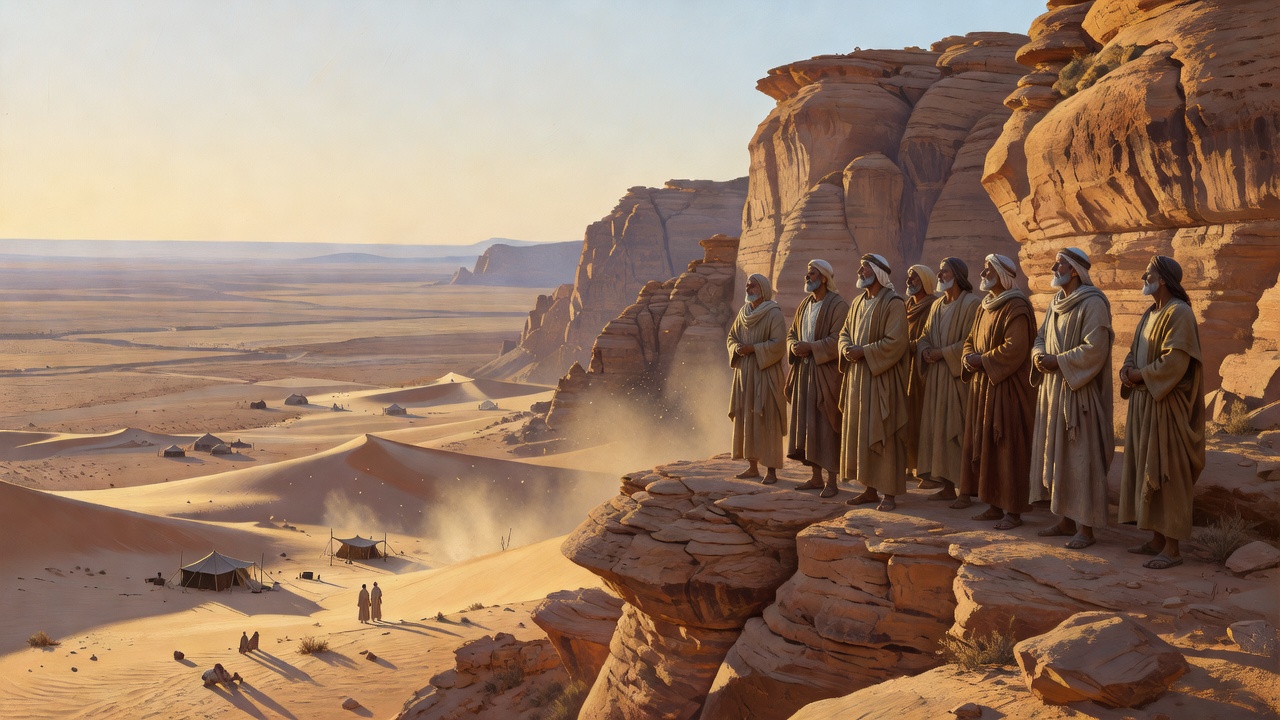
- The prophetic call to praise extends to remote desert regions, specifically naming the settlements of Kedar and the cliffs of Sela. Kedar designates nomadic Arab tribes who dwelled in black hair-tents in northwestern Arabia, while Sela, meaning rock, was a capital stronghold in Edom, later known in history as Petra.Sources: the Bible text itself · Kedar · Sela
Notes written with AI assistance from open sources (Theographic Bible Metadata, CC BY-SA 4.0; Easton’s Bible Dictionary, public domain) and reviewed before publishing.
Places in this chapter
- Kedar · 29.811, 39.868 · verse 11
Only places identified with high confidence are shown (90% or more according to the scholarly sources compiled by OpenBible). Period map: DARE (Digital Atlas of the Roman Empire), CC BY 4.0; modern map: © OpenStreetMap contributors; places: OpenBible.info (CC BY 4.0).
Credits and license for this translation
Young's Literal Translation
Young's Literal Translation of the Holy Bible
Public Domain
Language: ENGLISH (English)
Dialect: archaic British
Translation by: Robert Young
This public domain Bible translation is brought to you courtesy of eBible.org.
If you would like to make a donation to help keep free Bible access like this going, please visit https://eBible.org/give.php .
2019-10-20
Section headings adapted from the Berean Standard Bible (public domain); they are not part of this translation’s text.
Source: http://ebible.org/engylt/ · eBible.org