Psalms 15
Wycliffe's Bible with Modern Spelling (Enhanced) · Tap a verse to see its cross-references.
Who May Dwell on Your Holy Mountain?
1The psalm of David. Lord, who shall dwell in thy tabernacle; either who shall rest in thine holy hill? ( A song by David. Lord, who shall rest in thy Temple? who shall live on thy holy hill?)
2He that entereth without wem; and worketh rightfulness. He that speaketh truth in his heart; (He who goeth on the way without blemish, or without fault; and doeth what is right. He who speaketh the truth from his heart;)
3which did not guile in his tongue. Nor did evil to his neighbour; and took not reproof against his neighbours. (and did not deceive with his tongue. Yea, he who did no evil to his neighbours; nor took up any reproach, or spreadeth any rumour, against them.)
4A wicked man is brought to nought in his sight; but he glorifieth them that dread the Lord. He that sweareth to his neighbour, and deceiveth him not; (He who regardeth the wicked as worthless; but he honoureth those who fear the Lord or those who revere the Lord. He who sweareth an oath, or who promiseth, to his neighbour, and deceiveth him not;)
5which gave not his money to usury; and took not gifts upon the innocent. He, that doeth these things, shall not be moved [into] without end. (who did not put out his money to usury; and who took no gifts, or bribes, to be against the innocent. He, who doeth these things, shall never be moved, or shaken, from his secure place in the Lord.)
Did you know?
Dwelling in God's Presence
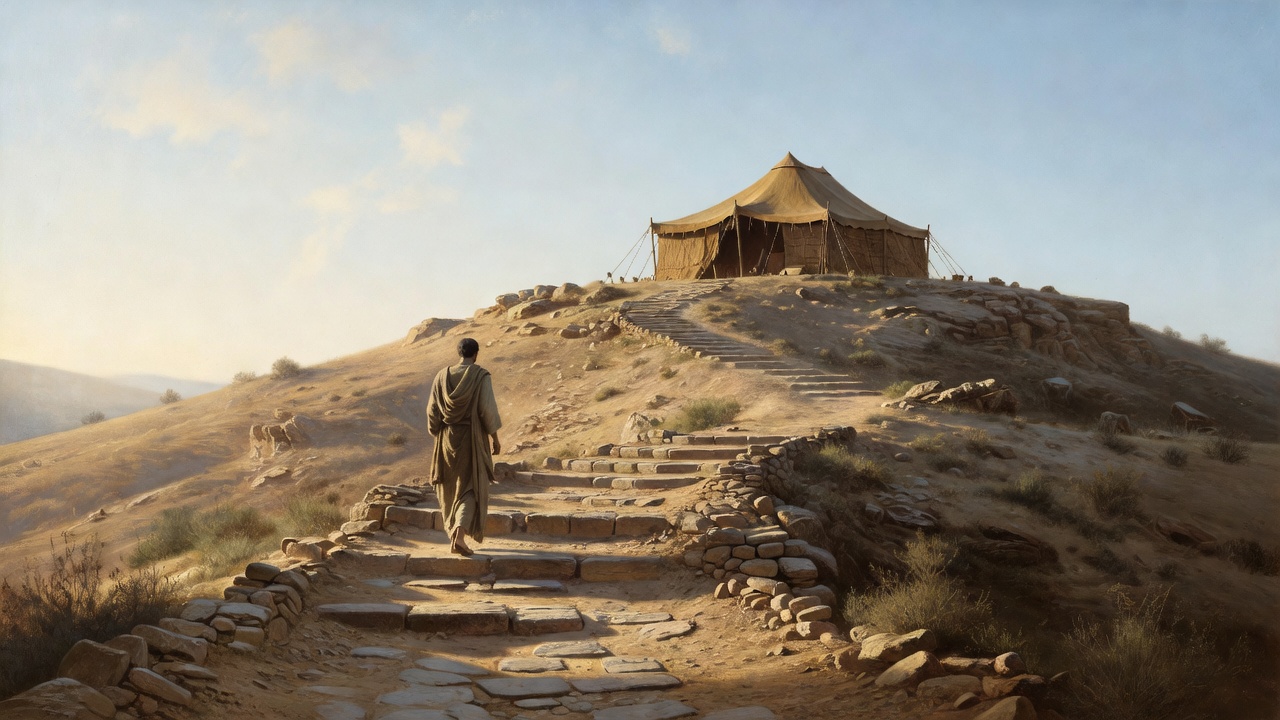
- Psalm 15 is framed around an opening question asking who is permitted to abide in the Lord's sacred tent and dwell on His holy mountain.Sources: the Bible text itself
- Rather than focusing on ritual offerings, the psalm outlines qualifications based on ethical integrity, truthful speech, keeping costly oaths, and financial justice such as rejecting bribes and lending without interest.Sources: the Bible text itself
Notes written with AI assistance from open sources (Theographic Bible Metadata, CC BY-SA 4.0; Easton’s Bible Dictionary, public domain) and reviewed before publishing.
Credits and license for this translation
Wycliffe's Bible with Modern Spelling (Enhanced)
English: Wycliffe's Bible Modern Spelling (Enhanced) (with Deuterocanon)
Copyright © 2001,2010,2011,2012,2013,2015 Terry Noble
Language: English
Dialect: Archaic
Translation by: Terry Noble
Wycliffe's Bible with Modern Spelling (Enhanced)
Wycliffe’s Bible with Modern Spelling (Enhanced) is a composite of my Wycliffe’s Bible, a modern-spelling version of the 14th century Middle English translation, consisting of Wycliffe’s Old Testament and Wycliffe’s New Testament, and my modern-spelling version of Wycliffe’s Apocrypha. These books contain literally tens of thousands of rewritten verses, presented in parentheses “( ) “, to provide help in comprehending the 14th century Middle English vocabulary and grammar. Wycliffe’s Apocrypha also includes the books of the Apocrypha from the 1st edition of the King James Version of the Bible.
This translation is made available to you under the terms of the
Creative Commons Attribution-Noncommercial-No Derivatives license 4.0.
You may share and redistribute this Bible translation or extracts from it in any format, provided that:
You include the above copyright and source information.
You do not sell this work for a profit.
You do not change any of the words or punctuation of the Scriptures.
Pictures included with Scriptures and other documents on this site are licensed just for use with those Scriptures and documents.
For other uses, please contact the respective copyright owners.
2019-09-25
Section headings adapted from the Berean Standard Bible (public domain); they are not part of this translation’s text.
Source: http://ebible.org/engwyc2018/ · eBible.org